Bet You Didn't Know: Halloween History
A festival of the dead, a Church that renamed it, medieval beggars who traded prayers for cakes, and immigrants who turned it all into trick-or-treating. How Halloween became a six-billion-dollar night, and how English glues two words into one: family-friendly.
Warm-up
Ask and answer with a partner, or with me. Tap a card when you have answered it.

Bet you didn't know where Halloween comes from. Most people picture costumes, candy and a parade of tiny ghosts; the real story starts two thousand years ago, with a festival of the dead. Today we follow it from the ancient Celts to the candy aisle, and we learn how English glues two words together to make one: family-friendly.
Useful language
Match the words
All eight appear in the reading. Click a word, then click its definition. Correct pairs turn green. The audio button says the word.
Complete the sentences
Click a word in the bank, then click a gap. Click a filled gap to clear it. Every sentence explains itself: read the whole thing before you choose.

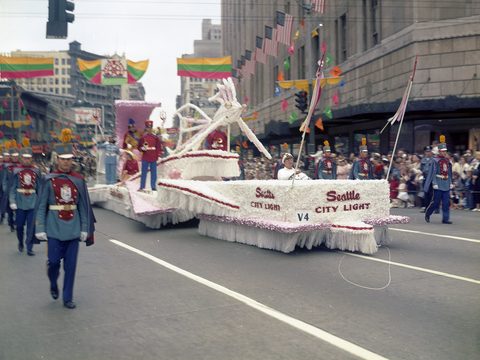 Thousands of people lined the main street to watch the
_____: floats, marching bands and dancers passed by for two hours.
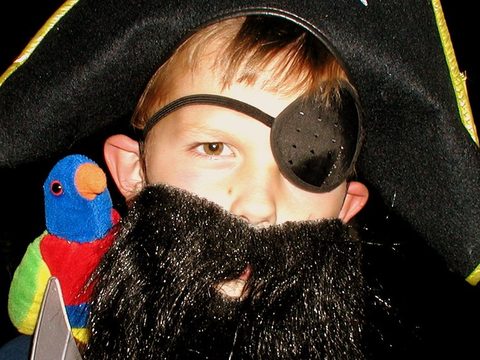 My little brother loves to
_____ as a pirate for his birthday party: he puts on the hat, the eye patch and a plastic sword.
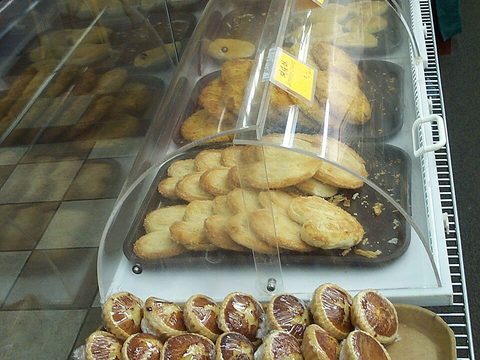 The bakery window was full of
_____: croissants, cinnamon rolls and little fruit tarts.
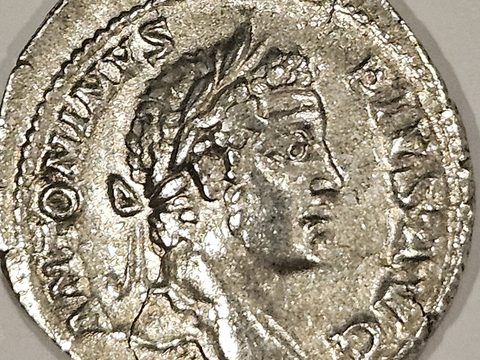 Archaeologists dug up some
_____ coins in a field: they are much older than any building in town.
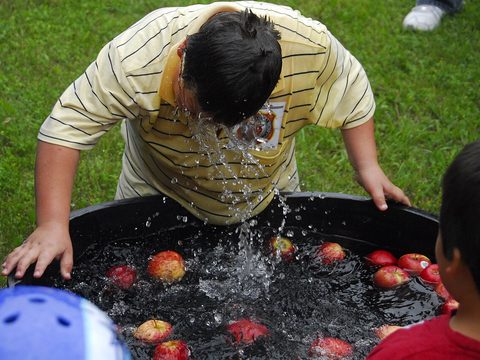 The kids' favorite game at the party was
_____: hands behind your back, face in the water, and try to catch one with your teeth.
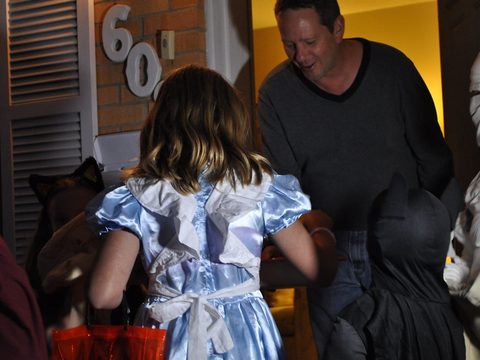 Mom bought three bags of candy: tonight, dozens of little witches and princesses will ring our doorbell to
_____.
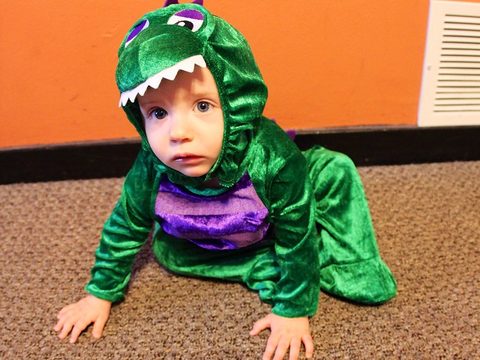 Her
_____ won first prize at the party: a full dragon suit with wings, green scales and a tail that moved.
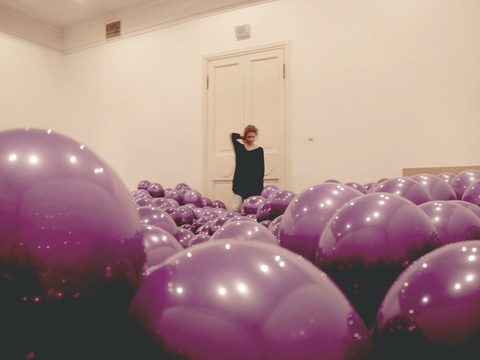 The older students are famous for their
_____ on the last day of school: last year they filled the principal's office with balloons, and even he laughed.
From the Celts to the candy aisle
Watch the video first, with the captions on: under two minutes. Then read the story, which retells the video in new words. The two compound adjectives from the video are in bold. Tap a dotted word to see what it means; the audio button reads each paragraph aloud.
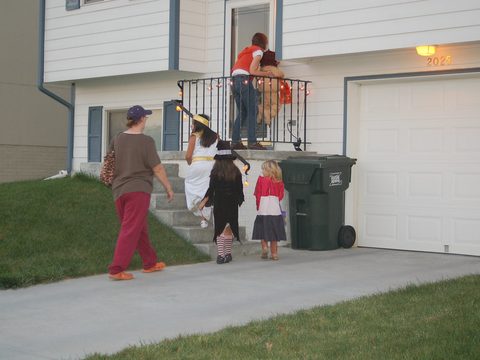
Picture an American street on Halloween night: children in costumes going door to door, a parade of ghosts and superheroes, a tub of water for bobbing for apples. It looks like pure family fun.
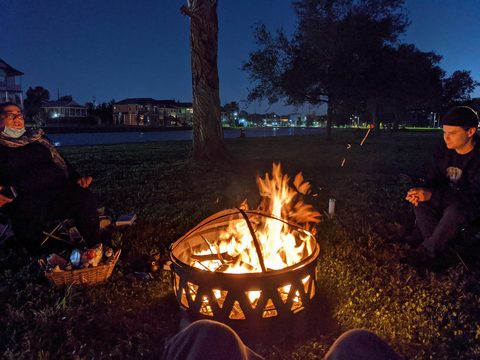
But the story begins some two thousand years ago, with the ancient Celts. They celebrated a festival called Samhain on November 1, and on the night before, they believed, the dead came back as ghosts.
Because ghosts were roaming, people protected themselves. They put food and wine outside their doors to keep the spirits away, and wore masks outdoors so the ghosts would think they were ghosts too.
Centuries later, the Christian Church took over the date. In the eighth century, Samhain became All Saints' Day, or All Hallows. The night before was All Hallows' Eve, a name people eventually shortened to Halloween.
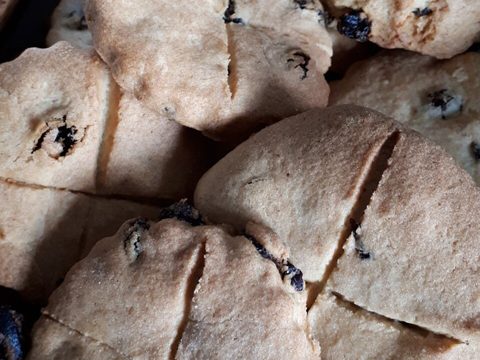
In medieval Britain, the Christian date grew new customs. On All Souls' Day, November 2, the poor begged for pastries called soul cakes and, in exchange, prayed for the dead of each family: souling.
A second custom, guising, was for young people. They would dress up in costumes, sing a song, recite a poem or tell a joke, and get food, wine or money in return.
These traditions crossed the ocean much later. In nineteenth-century America, Irish and Scottish immigrants revived souling and guising, and the two old customs turned into something new: trick-or-treating.
At first, though, the tricks mattered more than the treats. Early trick-or-treating was mostly pranks and hijinks: mischief on a dark fall night, meant to be funny rather than harmful.
The big change came in the 1950s, when the custom became what we know today: family-friendly and kid-centered, built around costumes and candy instead of tricks and mischief.
Today Halloween is big business: more than 2.5 billion dollars a year on costumes alone. Add the candy, and Americans spend an estimated 6 billion, second only to Christmas among commercial holidays.
Multiple choice
The stamp shows the moment in the video. Click an answer and read why.

-
Where does the story of Halloween begin, according to the video? 00:15
"It all goes back some 2,000 years to the ancient Celtic festival known as Samhain." The Church and the immigrants come much later in the same story.
-
What did people believe happened on the night before Samhain? 00:23
"People believed that the dead returned as ghosts." That belief explains everything that follows: the food, the wine and the masks.
-
Why did people leave food and wine on their doorsteps? 00:27
"To keep roaming spirits at bay": at bay means at a distance. The food and wine were for the ghosts, so that they would stay outside. Feeding the poor is a different tradition, souling, and it comes later.
-
Why did people wear masks when they left the house? 00:31
"So they would be mistaken for fellow ghosts." If you look like a ghost, the real ghosts leave you alone. Not a bad idea for a night when the dead walk.
-
What did the Christian Church do in the eighth century? 00:37
The Church did not ban the festival; it kept the date and changed its meaning: "turned Samhain into All Saints' Day, or All Hallows, in the 8th century".
-
Where does the name Halloween come from? 00:42
All Hallows was the holiday; the night before it was All Hallows' Eve, "later shortened to Halloween". Eve is the evening or day before a holiday, as in Christmas Eve.
-
What was souling? 00:57
On All Souls' Day, November 2, "the needy would beg for pastries known as soul cakes; in return, they would pray for people's dead relatives. This was called souling." Singing and jokes belong to the other custom, guising.
-
In guising, what did young people offer in exchange for food, wine or money? 01:07
"In exchange for singing, reciting poetry or telling jokes." Guising was a performance: you dressed up, you entertained, you were paid in food, wine or money. The prayer was souling's currency, not guising's.
-
Who revived the old traditions in nineteenth-century America? 01:20
"Irish and Scottish immigrants revived these old traditions. The result was trick-or-treating." Souling and guising were British customs, and the people who carried them across the ocean came from Ireland and Scotland.
-
What was early trick-or-treating mostly about? 01:28
"First it was much more about the tricks, in the form of pranks and hijinks, than the treats." The candy came to dominate only later.
-
What happened in the 1950s, and what is Halloween today? 01:33
"It wasn't until the 1950s that the custom took on its current family-friendly, kid-centered form. Today Halloween is big business": more than 2.5 billion dollars on costumes, up to 6 billion with the candy, second only to Christmas among commercial holidays.
-
Which sentence best summarizes the story?
The whole video is that chain: Samhain, All Hallows, souling and guising, trick-or-treating, six billion dollars. The other two sentences take one link of the chain and turn it into the whole story, or put the links in the wrong order.
Watch again: true or false?
Fourteen statements from the class slides. Decide without looking at the text; then watch the video again and check the ones you got wrong. Every false statement has one wrong detail, and the explanation tells you what it is.
-
a · Samhain was a festival celebrated by the Celts 2,000 years ago. 00:15
True. "It all goes back some 2,000 years to the ancient Celtic festival known as Samhain."
-
b · Samhain was celebrated on October 31. 00:21
False. Samhain was "celebrated on November 1st". October 31 was the night before it, the night of the ghosts.
-
c · People would leave money by their doorsteps to keep spirits away. 00:27
False. They would leave "food and wine" on their doorsteps, not money.
-
d · The Christian Church transformed Samhain into All Saints' Day. 00:37
True. "The Christian Church turned Samhain into All Saints' Day."
-
e · The other name for All Saints' Day was All Hallows, in the 9th century. 00:39
False. The name is right, the century is wrong: "All Saints' Day, or All Hallows, in the 8th century".
-
f · The night before All Hallows was called All Hallows' Eve, later Halloween. 00:42
True. "The night before became All Hallows' Eve, later shortened to Halloween."
-
g · Trick-or-treating, souling and guising originated in medieval France. 00:53
False. "All three of these traditions originated in medieval Britain."
-
h · On November 2, needy people would beg for soul cakes; in return, they would work for the family. 01:02
False. The date and the cakes are right, but the payment was a prayer, not work: "in return, they would pray for people's dead relatives".
-
i · Guising was the tradition of dressing up and asking for food, drinks and money in return for singing and reciting poetry. 01:07
True. "Young people would dress up in costume and accept food, wine, money and other offerings in exchange for singing, reciting poetry or telling jokes."
-
j · In the 20th century, these traditions were revived by immigrants in America. 01:20
False. It was "19th-century America": the 1800s, one century earlier.
-
k · Pranks and hijinks were a form of trick-or-treating in the past. 01:28
True. "First it was much more about the tricks, in the form of pranks and hijinks, than the treats."
-
l · In the 1950s, trick-or-treating took on the family-friendly, kid-centered form it has today. 01:33
True. "It wasn't until the 1950s that the custom took on its current family-friendly, kid-centered form."
-
m · In America, people spend more than 2.5 million dollars on costumes nowadays. 01:42
False. Million is far too small: "more than 2.5 billion on costumes annually". A billion is a thousand million.
-
n · Halloween is the second most commercial holiday after Christmas. 01:51
True. Up to 6 billion dollars a year, "making it the second most commercial holiday after Christmas".
Compound adjectives: family-friendly

Listen to the video at 00:07: "bobbing for apples and other family-friendly activities." Two words, one hyphen, one idea: activities that are friendly to families. English builds hundreds of adjectives this way, and once you see the patterns you can read any of them, and make your own.
- Adjective + noun: a full-time job · a high-speed train
- Noun + present participle (-ing): an eye-catching poster · a record-breaking run
- Noun + past participle (-ed): a wind-powered boat · a home-cooked meal
- Noun + adjective: a sugar-free drink · a world-famous singer
- Adjective + past participle (-ed): a hard-boiled egg · a ready-made sauce
- Three rules. The hyphen appears before a noun: a well-known actor, but the actor is well known. The noun inside stays singular: a ten-minute walk, never
ten-minutes. And the compound answers the question what kind of?: what kind of activities? Family-friendly ones.
Use your knowledge of parts of speech: which pattern does each compound follow? The last two are from the video.
-
long-distance (a long-distance call)
Long is an adjective and distance is a noun: a long-distance call is a call over a long distance.
-
time-saving (a time-saving app)
Time is a noun and saving ends in -ing: the app saves time. In these compounds the noun is usually the object of the verb.
-
sun-dried (sun-dried tomatoes)
Sun is a noun and dried ends in -ed: tomatoes dried by the sun. With a past participle, the noun is often the one doing the action.
-
cruelty-free (cruelty-free cosmetics)
Cruelty is a noun and free is an adjective: free of cruelty, which for cosmetics means not tested on animals.
-
mouth-watering (a mouth-watering dessert)
Mouth is a noun and watering ends in -ing: the dessert makes your mouth water. Same pattern as time-saving.
-
deep-fried (deep-fried chicken)
Deep is an adjective and fried ends in -ed: fried in deep oil, so the food is completely covered.
-
family-friendly (family-friendly activities) 00:07
Family is a noun and friendly is an adjective, even though it ends in -ly: friendly to families. Same pattern as cruelty-free.
-
kid-centered (a kid-centered custom) 01:36
Kid is a noun and centered ends in -ed: centered on kids. Notice the singular kid, even though the custom is for many kids.
Complete the questions, then answer them
Click a compound in the bank, then click a gap. Each one fits only one question. When all six are green, ask and answer the questions with a partner.
- a) What kind of dessert do you find really _____: the kind that makes you hungry just by looking at it?
- b) Have you ever bought anything from _____ brands, the ones that never test their products on animals? Which one(s)?
- c) Would you keep a _____ relationship if your partner moved to another city, or even another country?
- d) What _____ gadgets can't you live without: the ones that give you back a few minutes every day?
- e) Do you prefer fresh tomatoes or the _____ ones, dark and chewy, that are left out in the sun for days?
- f) Is there any _____ food you refuse to eat, however crispy it comes out of the hot oil?
Halloween compounds
Six sentences from the class game, all with a Halloween flavor: three compounds you already know and three new ones. Choose the one that completes each sentence, then say which pattern it follows.

-
The haunted house attraction was designed to give visitors ___ scares.
Spine-chilling (noun + present participle): so frightening that it chills your spine, your backbone. Bone-chilling works the same way.
-
The candies were ___: the cook dropped them into hot oil and served them crunchy.
Hot oil and a crunchy result: deep-fried (adjective + past participle). Fried candy really exists at American fairs.
-
The black cats appreciate the use of ___ products at our Halloween party.
Cats care about one thing here: products not tested on animals. Cruelty-free, noun + adjective.
-
Wearing a ___ costume, she looked fang-tastic at the costume contest.
Vampire-inspired (noun + past participle): a costume inspired by vampires. And fang-tastic is a joke: fantastic with fangs, the long teeth of a vampire.
-
I will visit my ___ boyfriend on Halloween.
A boyfriend you have to visit lives far away: a long-distance relationship, adjective + noun.
-
Little witches and goblins roamed the neighborhood in search of candy during their ___ adventure.
Costumes, the neighborhood and candy: a trick-or-treating adventure. Three words and two hyphens, and it still works as one adjective.
Talking points
Part A is about the video and the text. Part B is about you. Part C is for opinions. Try to use one compound adjective in every answer. Tap a card when you have discussed it.
Useful language
Podcast: the origins of Halloween
You host a podcast about festivals around the world. In today's episode, use what you learned in the video to explain where Halloween comes from, then describe how people celebrate it in your country. Write your opening and your notes below (80–120 words, with at least two compound adjectives), then record the episode: two to three minutes, and your partner is the co-host who asks the questions.

- Hook: welcome the listeners and promise them a surprise. Bet you didn't know…
- The Celts: two thousand years ago, a festival, a night of ghosts, food on the doorstep, masks.
- The Church: a new name for the same date, and where the word Halloween comes from.
- Medieval Britain: souling and guising, cakes for prayers, songs for wine.
- America: the immigrants, the pranks, the 1950s, the six billion dollars.
- Your country: is Halloween celebrated? How? What is the local festival that everyone knows instead?
Useful language
My results
Check your score, then copy it and send it to your teacher on WhatsApp.

One job for this week. Hunt for compound adjectives in the wild: on packaging, in ads, on menus. Sugar-free, hand-made, five-star, award-winning. Collect five, write down the pattern of each one, and bring them to class.