Breast Cancer Survivor Story
Kimberly Stanke lost her mother to breast cancer in 1997. Then one day she felt a lump herself, and right after starting chemotherapy she walked with twenty thousand people. The words of a diagnosis, and the tense that puts the patient, not the doctor, at the center of the sentence.
Warm-up
Build a mind map about breast cancer with a partner, or with me: one branch per card. Say what you know or what you have heard; nobody has to share a personal story. Then open "Compare your mind map". Tap a card when you have answered it.

Today we listen to one woman's story in a little over a minute, and we learn the words that a diagnosis brings with it. First, let's see what the class already knows about the disease itself.
- Genetic risk · Other risk factors · Preventive measures · Some treatments
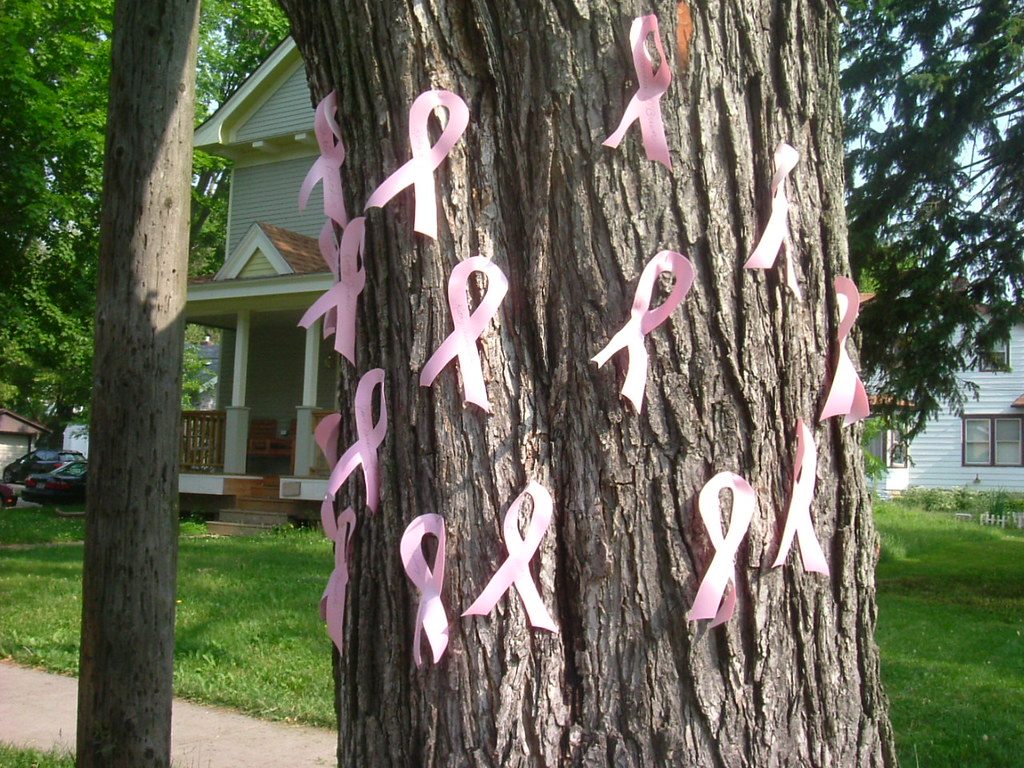
Compare your mind map
What it is: a disease in which cells in the breast grow out of control and form a tumor. Genetic risk: a family history (a mother or a sister with the disease) raises the risk, and some inherited gene changes, such as BRCA1 and BRCA2, raise it a lot. Other risk factors: some cannot be changed, like age and family history; others can, like diet, exercise, smoking, alcohol and some hormone treatments. Preventive measures: there is no sure way to prevent it, but a healthy lifestyle lowers the risk, and regular check-ups and screening mammograms find the disease early, when treatment works best. Some treatments: surgery, radiation therapy, chemotherapy and hormone therapy, often combined.
Useful language
The words of a diagnosis
Seven words come from the class deck and one from the title of the video. Click a word, then click its definition. Correct pairs turn green. The audio button says the word.
Complete the sentences
Click a word in the bank, then click a gap. Click a filled gap to clear it. Each sentence has its own clues: only one word fits.

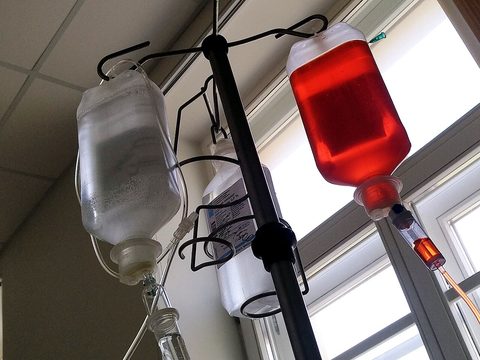 Because it uses strong chemicals to attack the sick cells,
_____ can make patients feel very tired and sick for days.
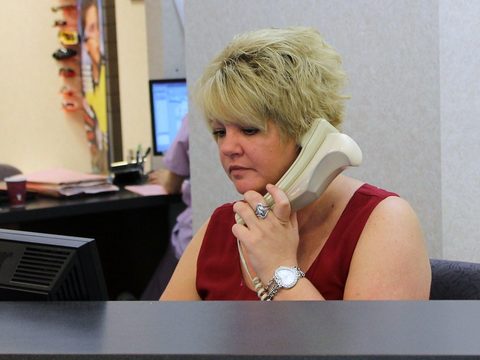 I'd like to make an
_____ with Dr. Evans, please. Is Tuesday at ten possible?
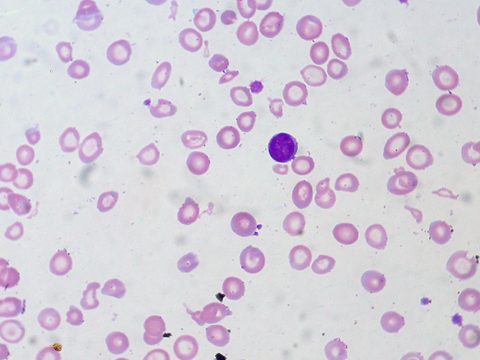 Red ones carry oxygen and white ones fight infection: under a microscope, the two kinds of
_____ are easy to tell apart.
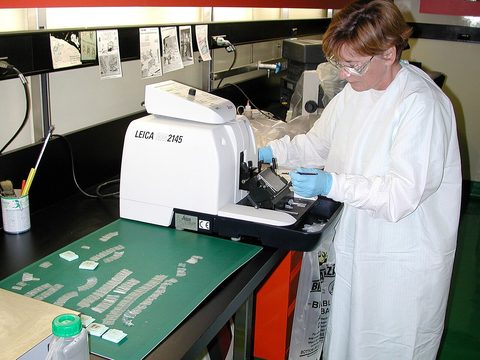 The doctor removed a tiny piece of tissue and sent it to the lab; now she is waiting for the results of the
_____.
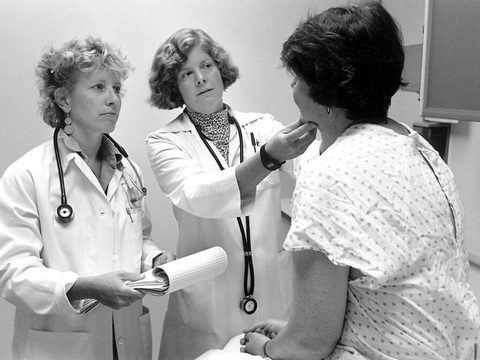 She noticed a small, hard
_____ under the skin of her neck and decided to have it checked.
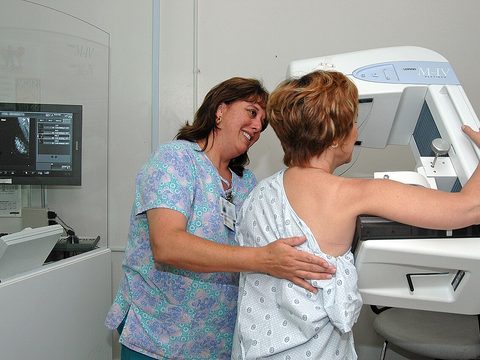 Every year she goes to the clinic for a
_____: an X-ray of the breasts that takes only a few minutes.
 After several tests, his condition was
_____ as a rare type of blood disorder.
 Ten years after the crash, the only
_____ still visits the memorial every spring and leaves flowers for the others.
One of twenty thousand
Watch the video first: a minute and a quarter with Kimberly Stanke, with captions. While you watch, take notes on three topics: risk factors, discovery steps and positive aspects. Then read the story. The past simple passive is in bold. Tap a dotted word to see what it means.
Kimberly Stanke tells her story in a little over a minute, for the American Cancer Society. It begins in 1997, the year her mother was diagnosed with breast cancer and passed away.
Because of her mother's illness, Kimberly knew that she could face breast cancer one day too. So when she felt a lump, she did not wait.
She went in for a mammogram, and then a biopsy was done. The result was the news she had feared for years: it was breast cancer.
When she heard those words, she says, she simply stopped listening. Her first worry was not the illness but her family: would she still be alive for her son and her husband?
Treatment started, and her life changed fast. She lost her hair in no time, and her days were filled with doctor's appointments and regular counts of her white blood cells.
Then, right after she started chemotherapy, she did something unexpected. She walked in Making Strides Against Breast Cancer, a walk where thousands of people raise money and support for the cause.
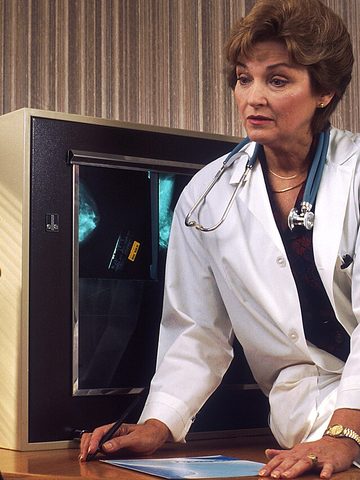
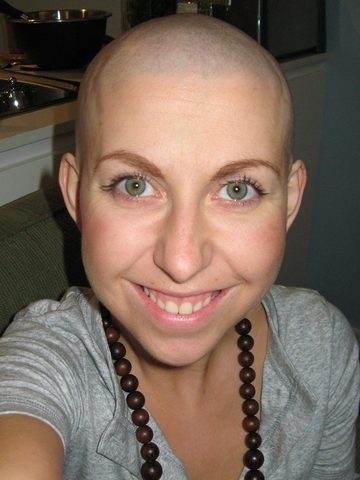
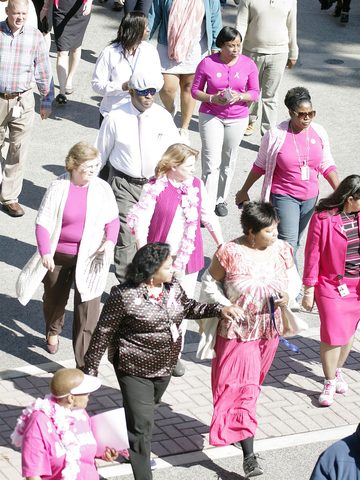
The experience, she says, was really emotional. The atmosphere was electric, and she was surrounded by hope and love, two things that she describes as very powerful.
Life with cancer can be very isolating. But at the walk, Kimberly was one of twenty thousand people, and the disease had touched every one of their lives in some way.
That crowd told her something simple: she was not alone. Other people were fighting for the same cause she was, and they were walking right next to her.
Today, Kimberly wants people to know that life goes on after a cancer diagnosis. The disease changes you forever, she admits, but for her, the change has been a positive one.
Multiple choice
The stamp shows the moment in the video. Click an answer and read why.

-
What happened to Kimberly's mother in 1997? 00:01
The story opens with her mother: diagnosed, and then gone, in 1997. That is why Kimberly knew the disease might be an issue for her one day.
-
Why did Kimberly expect that breast cancer might be an issue for her one day? 00:05
A mother with breast cancer means a family history, and Kimberly lived with that knowledge. No doctor's warning and no tiredness appear in the video.
-
What was the first sign that something was wrong? 00:10
"Felt the lump, went in": the lump came first, and it sent her to the doctor. The hair came out later, during treatment, not before the diagnosis.
-
Which two tests did she have, and in what order? 00:12
First the X-ray photograph of the breast, then the small piece of tissue examined in a lab. The order matters: the mammogram shows that something is there; the biopsy says what it is.
-
What did she do when she heard the words "it's breast cancer"? 00:16
"At that point I just kind of stopped listening." A common reaction: after the word cancer, the rest of the conversation disappears.
-
What were her first thoughts after the diagnosis? 00:20
Her first thoughts were about her family, not about herself: "Am I still going to be here for my son and my husband?"
-
How did her life change during treatment? 00:24
Three details in a row: hair came out very quickly, doctor's appointments, white blood cell counts. Treatment took over her calendar, week after week. Nothing is said about work, diet or moving.
-
When did she walk in Making Strides Against Breast Cancer? 00:34
"I walked right after I started chemotherapy." She did not wait to feel better: she went while the treatment was just beginning.
-
How does she describe the walk? 00:38
"Really emotional" and "the atmosphere is very electric": full of energy and feeling. Nothing quiet about twenty thousand people, and she never talks about exercise.
-
Why does being with twenty thousand people matter so much to her? 00:49
"A cancer diagnosis can be so isolating." The crowd is the answer to that loneliness: other people, touched by the disease in one way or another, walking next to you. Money is never mentioned in the video.
-
What does she say about life after a cancer diagnosis? 01:03
"There is life after a cancer diagnosis. Yes, it changes you forever, but in my case it changed me in a positive direction." Changed, not ruined, and not the same as before either.
-
Which sentence best summarizes the story?
Every paragraph is one step of the same road: the mother, the lump, the tests, the fear, the treatment, the walk, and the message at the end. The tests appear, but they are not the point, and no doctor speaks.
Complete the summary
Listen again and complete the summary with the words Kimberly says. Write the exact words: the stamp shows where to listen.
-
Kimberly Stanke had a family history of breast cancer: her mother ___ from this disease in 1997. 00:01
-
She felt a lump, went in, and had a ___ and then a biopsy. 00:12
-
When she discovered her diagnosis, she could only think about her ___. 00:20
-
She had chemotherapy, and one side effect was losing her ___. 00:24
-
Her life became doctor's appointments and white ___ counts. 00:28
-
She walked right after she started ___. 00:36
-
The atmosphere at the walk is very ___. 00:45
-
She was there with ___ people who had been touched by the disease in one way or another. 00:52
-
She describes the walk as a powerful experience, where other people are fighting for the ___. 00:58
-
Cancer changed her life, in her case, in a ___. 01:07
The past simple passive

The patient at the center. Kimberly says, "My mom was diagnosed." Who diagnosed her? A doctor, of course, and it does not matter which one. The passive puts the person the sentence is about first, and lets the doer disappear.
- Positive: The lump was found during a check-up. · The results were sent the next day.
- Negative and question: The test wasn't repeated. · Was the meeting canceled? — Yes, it was. / No, it wasn't.
- We don't know who did it: Our office was robbed last night.
- It isn't important who did it: My mom was diagnosed in 1997. The fact matters, not the doctor.
- The thing that received the action is the topic: This hospital was built in 1950.
- A doctor diagnosed her mom. → Her mom was diagnosed (by a doctor). The object becomes the subject; the verb becomes was/were + participle; the old subject goes after by, or disappears.
- By + agent only when the agent matters: a name, a surprise. Hamlet was written by Shakespeare. Nobody writes "by someone" or "by them".
- Participles: regular verbs take -ed (examined, organized); irregular ones need memory: done, found, taken, stolen, built, sent, given.
-
"My mom was diagnosed and passed away from breast cancer." Which part of the sentence is in the passive? 00:01
Was + the participle diagnosed. Passed away is active past simple: her mom did the action.
-
We form the past simple passive with the verb ___ in the past simple + the past participle.
The verb be in the past: was or were. Have + participle would be the present perfect, a different tense.
-
Why does Kimberly use the passive in "my mom was diagnosed"?
The diagnosis and what came after it are the story. The doctor is not part of it, so he or she disappears from the sentence.
-
The hospital bill ___ paid last week.
One bill, and last week is the past: was. Is paid would be the present passive, and were goes with plural subjects.
-
The flowers ___ delivered to her room yesterday.
Flowers is plural, so were. The verb be agrees with the new subject, not with the person who delivered them.
-
Which sentence is in the passive?
Only the second has was + participle (held, from hold). In the other two, the subject does the action: the people joined, the walk started.
-
"Someone stole my bike." In the passive, this is…
Participle, not past simple: stolen. And someone simply disappears; "by someone" adds nothing.
-
When do we add by + the agent?
Hamlet was written by Shakespeare: the name is the interesting part. Our office was robbed: no agent, because we don't know who did it.
-
Which sentence is WRONG?
After was we need the participle, chosen, never the base form choose.
Transform the sentences into the passive
Start with the object. Keep the agent with by only when it is a name or a job (Picasso, the doctor, volunteers); drop she, he, they and someone. Keep the rest of the sentence.
-
aShe recognized the burglar.
-
bHe took the book without anyone seeing it.
-
cPicasso painted Guernica.
-
dSomeone stole my camera while I was on vacation.
-
eThey built their own house with the help of some neighbors.
-
fThe doctor examined the lump.
-
gThe nurse took a blood sample.
-
hVolunteers organized the walk.
-
iThey did the biopsy on Monday.
Which syllable is stressed?
In a long word, one syllable is louder and longer than the others. Press the audio button, say the word, and choose the syllable in capitals that carries the stress.

- diagnose /ˈdaɪ.əɡ.noʊs/ or /ˌdaɪ.əɡˈnoʊs/ · diagnosis /ˌdaɪ.əɡˈnoʊ.sɪs/ · mammogram /ˈmæm.ə.ɡræm/ · biopsy /ˈbaɪ.ɑːp.si/ · appointment /əˈpɔɪnt.mənt/
- chemotherapy /ˌkiː.moʊˈθer.ə.pi/ · blood cell /ˈblʌd ˌsel/ · lump /lʌmp/ · survivor /sɚˈvaɪ.vɚ/
- The mark ˈ comes right before the stressed syllable. Say it clearly and make the other syllables short.
-
diagnosis
/ˌdaɪ.əɡˈnoʊ.sɪs/: the stress is on the third syllable, no, which rhymes with go. The verb is less fixed: in American English you hear both DI-ag-nose and di-ag-NOSE.
-
mammogram
/ˈmæm.ə.ɡræm/: first syllable. The middle one is a weak uh sound, like in most long words in English.
-
biopsy
/ˈbaɪ.ɑːp.si/: first syllable, pronounced like buy. Speakers of Portuguese often push the stress to the middle; keep it at the front.
-
appointment
/əˈpɔɪnt.mənt/: the middle syllable, point. The first and the last are weak.
-
chemotherapy
/ˌkiː.moʊˈθer.ə.pi/: the main stress is on ther, the third syllable, with a smaller stress on che, which sounds like key.
-
blood cell
A compound noun: the stress goes on the first word, like BLOOD test and CHECK-up. Stressing cell would sound like two separate words.
-
survivor
/sɚˈvaɪ.vɚ/: the middle syllable, pronounced like vie. The verb survive keeps the same stress: sur-VIVE.
-
How many syllables does chemotherapy have?
che-mo-ther-a-py: five. The -py at the end is a short ee sound, not a separate pi + y.
Talking points
Part A is about the video and the story, Part B about your own experience of health and campaigns, Part C about the ideas behind them. Before Part C, watch the second video: ninety seconds of Making Strides Against Breast Cancer, with music and no words. Talk for about a minute about each card and ask your partner follow-up questions.
About Making Strides Against Breast Cancer
Making Strides Against Breast Cancer is the American Cancer Society's series of fundraising walks: nearly a hundred and fifty walks across the United States, many of them in October, breast cancer awareness month. Participants collect donations from friends and family and walk together. The money pays for breast cancer research and for free services for patients: a 24-hour helpline, rides to treatment and places to stay near the hospital during treatment.
Useful language
A campaign where you live
80–120 words. Describe a campaign, a walk or a fundraising event that you took part in, saw, or know about: who organized it, when and where it was held, what was collected and what the money was used for. Use at least four sentences in the past simple passive. Example: The walk was organized by a local hospital.

My results
Check your score, then copy it and send it to your teacher on WhatsApp.

One job for this week. Every evening, say three things about your day in the past simple passive, without saying who did them: "The meeting was moved to Friday", "My order was delivered", "The dishes were washed". Thirty seconds, out loud, in English.