Why Facts Don't Convince People
A birth certificate that must be fake, a brain that treats a new idea like physical danger, and a fire you should never fight with water. Why facts alone don't change minds, and what does, with either … or and neither … nor.
Warm-up
Tap every card that is true for you. Then compare your cards with a partner, or with me, and explain your choices.

Be honest with the cards. Nobody is completely rational, and today's video explains why. At the end of the class, we come back to your cards to see if anything changed.
Useful language
Words from the video
All eight words are in the video and in the text. Click a word, then click its definition. Correct pairs turn green. The audio button says the word.
Complete the sentences
Click a word in the bank, then click a gap. Click a filled gap to clear it. Each sentence has its own clues: only one word fits.

 The two candidates will meet on TV tonight for a
_____ about the economy: each one gets two minutes to answer, and then the other can respond.
 The
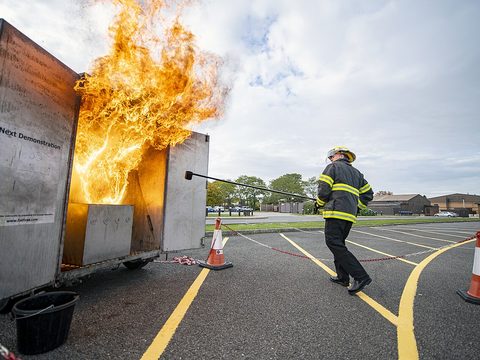
_____ started when she left a pan of hot oil on the stove; in seconds the flames reached the curtains.
 The weather forecast was surprisingly
_____: it said rain at three o'clock, and at three o'clock it rained.
 When the ball flew toward her face, she
_____ closed her eyes and put her hands up; she didn't think about it.
 The dark clouds over the mountain were a clear
_____ to the climbers, so they turned back before the storm arrived.
 Her
_____ that hard work always pays off comes from her parents, who built a business from nothing.
 The flight was so
_____ that the baby slept from takeoff to landing without a single bump.
 In the rainforest, each
_____ has its own language, its own chief and its own way of hunting and fishing.
Water on a grease fire
Watch the video first: under three minutes, with captions. The captions have a few typos, so trust the audio. Then read the text, which retells the video in one thread. Neither … nor and either … or are in bold. Tap a dotted word to see what it means.
A man is sure that President Obama was not born in the United States. His friends think the same. Then somebody shows him the president's birth certificate, and he says the document is fake.
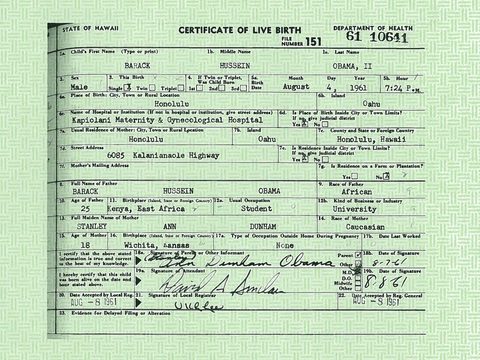

That conclusion is neither rational nor accurate, but for his brain it makes sense. The brain evolved to keep us alive, not to get facts right, so we follow the tribe before the facts.
Following the tribe is the safer choice. You can either agree with your group and stay united, even when it is wrong about the facts, or disagree and isolate yourself.
The brain protects more than the tribe: it also protects our worldview and our sense of identity. When somebody challenges that worldview, the part of the brain that reacts to physical danger switches on.
That is why people can get so aggressive when information shows they are wrong: the fact feels like an attack. It also explains why an intelligent political debate is so hard to have.
Worse, studies show that facts against a belief can make it stronger: people end up even more certain of their first idea. This backfire effect makes facts work like water on a grease fire.
The same tribal instinct has a darker side. Once people are split into groups of any kind, they instinctively feel less empathy for anyone outside their group: another race, another nationality, even another sports team.
In history, this instinct to see other groups as less human is what made slavery and genocide possible. So what can you do when somebody refuses a fact that clashes with their beliefs?
To change a mind, first stop it from seeing you as a threat. Find something that makes you part of the same tribe: the same family, both parents, both still playing Pokémon Go.
Second, ask yourself whether you might be wrong. If you are, admitting it shows the other person that being wrong is okay. It is never easy or smooth, but a stable society depends on it.
Multiple choice
The stamp shows the moment in the video. Click an answer and read why.

-
What does the man in the story say when he sees the president's birth certificate? 00:18
This is the video's example: a tribe believes the president is not American, and when a member sees the "hard proof", the US birth certificate, he decides the proof is fake. The video calls that conclusion neither rational nor accurate, but from a tribal perspective it makes sense.
-
According to the video, what did the human brain evolve to do? 00:10
Survival, not accuracy. That is why we respond better to social and tribal dynamics than to intellectual analysis, the video says, and why we make most decisions with emotions instead of facts.
-
Why is it safer to agree with your tribe, even when the tribe is wrong? 00:34
Staying "united ideologically" keeps you inside the group; disagreeing costs you your place in it. For a brain built for survival, the group is worth more than the facts. The video never says the tribe is right: the example is a tribe that is wrong.
-
What happens in the brain when somebody challenges your worldview? 00:46
The brain is constantly protecting our worldview and our sense of identity, so a challenge to the worldview is processed like a physical threat: the same part of the brain gets activated.
-
Why do people get so aggressive when a fact shows they are wrong? 00:55
If the brain treats a challenge like physical danger, then the fact that proves you wrong is an attack, and you defend yourself. The video adds that this is why it is so hard to have an intelligent political debate.
-
What is the backfire effect? 01:03
Several studies, the video says, show that facts that contradict a current belief do not weaken it; they strengthen it. People end up more convinced of their original ideas.
-
Why does the video compare facts to water on a grease fire? 01:11
Water on burning oil seems like the obvious answer, but it spreads the flames. Facts against a belief seem like they should work too, and, because of the backfire effect, they make the whole thing worse.
-
What happens when humans are divided into groups of any kind? 01:24
Divided into groups of any kind, humans instinctively empathize less with the members of the other group: other races, other nationalities, even other sports teams. The video calls it a lack of empathy, and says it happens for survival's sake.
-
In history, what did this instinct make possible, according to the video? 01:40
The video's words are strong: seeing other groups as less human is what makes things like slavery and genocide possible in a society. Sports teams and parties are examples of groups, not of what the instinct produces.
-
What is the first step if you want somebody to consider a fact that clashes with their beliefs? 01:53
First you have to stop their brain from seeing you as a personal threat, so you look for anything that puts you both in the same tribe: the same family, both parents, both Pokémon Go players. The facts come later, if they come at all.
-
What is the second step? 02:13
Maybe the facts are not on your side. If you admit it, you model to the other person that it is okay to be wrong, and that makes it easier for them to do the same one day.
-
Which sentence best summarizes the video?
The video's last idea: none of this is easy or smooth, but a stable society has to get past its natural biases, and only then can it move toward a better future. The other two sentences contradict the video: minds can change, and more facts alone backfire.
Cause and effect, and the exact words
Part 1: click a keyword, then click what the video connects it to. Part 2: six sentences from the video with a missing word. Choose the word you remember, then watch the moment on the stamp and check.
-
"If you spent any time on Earth, you might have noticed that humans are not the most ___ creatures." 00:00
Rational means "guided by reason". The next sentence explains it: we make decisions based mostly on emotions instead of facts. So we are emotional creatures, and not the most rational ones.
-
"Part of the problem is that the human brain ___ to help us survive, and not necessarily to help us be factually ___." 00:10
The brain evolved, changed slowly over a very long time, and the video's word for "correct about the facts" is accurate, the same word that describes the man's conclusion later: neither rational nor accurate.
-
"It's safer to agree with your tribe and stay ___ ideologically, even if you're wrong about the facts, than to disagree and ___ yourself." 00:34
Two opposites: united with the tribe, or isolated from it. To isolate yourself is to separate yourself from the others, which, for a brain built for survival, is the dangerous option.
-
"… and this is why it's often so hard to have an intelligent ___ debate." 00:58
Politics is where worldviews and identities clash most, so a political debate is the video's example of a discussion that gets aggressive fast.
-
"When people encounter facts that ___ their current beliefs, they actually become more ___ of their original ideas." 01:07
To contradict is to say the opposite. Facts that contradict a belief should weaken it, but people become more convinced, more sure, of their original ideas: that is the backfire effect.
-
"Consider the possibility that you may be ___." 02:13
The second step of the video's advice. Maybe the facts are not on your side; admitting that you may be wrong shows the other person that being wrong is okay.
Either … or and neither … nor

Two words for two options. The man's conclusion is neither rational nor accurate: not one, and not the other. And you can either agree with your tribe or isolate yourself: one of the two. Either chooses, neither refuses both, and each one has its own partner: or and nor.
- Either … or = one of the two: We can either take the bus or walk. · Either my mom or my dad will pick you up at the airport. It also works as a warning: Either you leave now, or you miss the last train.
- Neither … nor = not the first and not the second: The movie was neither funny nor exciting. · Neither my sister nor my brother speaks Spanish. Neither is already negative, so the verb stays positive: never isn't neither.
- Before a singular noun: Either candidate is prepared for the job (this one or that one, it doesn't matter) · Neither restaurant is open on Mondays (this one isn't, and that one isn't). The verb is singular.
- With of + plural: neither of the cats can jump · either of them could win. In formal English the verb is singular (neither of them is); in conversation you will also hear are.
- Compare: both … and = the two together (Both candidates are ready, plural verb) · none of = zero of three or more (None of the four candidates convinced me).
- At the end of a negative sentence, either means too: I can't swim, and my cousin can't either. To agree with a negative, neither + auxiliary + subject: "I don't like horror movies." "Neither do I."
-
"That conclusion is neither rational nor accurate." What does the sentence mean? 00:30
Neither … nor says no to both adjectives: not rational, and not accurate. The video then adds "but from a tribal perspective it makes sense", which is a third idea, not a correction of the first two.
-
In this debate, candidates ___ win ___ lose. It depends on them.
"It depends on them" means that both results are possible, and only one will happen: either win or lose. Neither … nor would mean that nobody wins and nobody loses, and a candidate can't win and lose at the same time.
-
___ Matt ___ Tom will help you with your homework. They are both busy at the moment.
They are both busy, so no help from Matt, and no help from Tom: neither … nor. The other two pairs promise help from at least one of them, which contradicts the second sentence.
-
This is my offer. You ___ take it ___ leave it.
Two options, one choice: either take it or leave it. You can't do both, and neither … nor would leave you with nothing to do with the offer.
-
At a restaurant, I always order ___ meat ___ pasta. I like both, but I can only eat one meal.
One meal, so one of the two: either meat or pasta. Both … and would be two meals, and neither … nor contradicts "I like both".
-
People believed ___ the president ___ his secretary. They thought that both were lying.
Both were lying, so people believed nobody: neither the president nor his secretary. Notice that the verb stays positive (believed), because neither carries the negative.
-
___ James ___ Sarah will write the report. Just ask one of them.
"Just ask one of them" is the clue: one person will do it, and it doesn't matter which. Both … and would mean the two of them together, and neither … nor would leave the report unwritten.
-
___ you return the money you stole, ___ I'll call the police.
A warning with two futures: either you return the money, or the police come. Either … or can connect two whole clauses, each with its own subject and verb.
-
The house was dark and empty: ___ Maria ___ Eduardo was at home.
An empty house means nobody was there: neither Maria nor Eduardo. With two singular names, the verb is singular: was. Both … and would need were, and it contradicts "empty".
-
The room was ___ too large ___ too small. It was the right size.
The right size is not too large and not too small: neither … nor. A room can't be both at once, and either … or would mean that it had one of the two problems.
Say it with either or neither
Read the two sentences, then complete the new sentence with the word on the left. Write only the missing words. Watch the partner word (or, nor), the auxiliary and the position.
-
neither … norHis answer wasn't polite, and it wasn't honest. → His answer was ___ honest.
-
either … orYou can change your mind. Or you can lose the argument. → You can ___ lose the argument.
-
neitherA: "I never watch political debates." B: "___ I."
-
eitherMy brother doesn't like debates. I don't like them. → My brother doesn't like debates, and I ___.
-
neither ofBoth explanations were wrong. → ___ the explanations was right.
-
eitherThe blue pen is fine. The black pen is fine too. → ___ pen is fine.
-
neither … norThe manager isn't here. The assistant isn't here. → ___ the assistant is here.
Talking points
Talk for about a minute about each card and ask your partner follow-up questions. Part A is about the video, Part B about your life, and Part C is a class debate: use either … or, neither … nor, both and none of.

Useful language
How to convince somebody
80–120 words. Think of a belief that somebody you know defends against the facts: a health myth, a superstition about a sports team, a rumor about your city. Write the advice you would give to a friend who wants to convince that person, using the video's two steps. Use either … or and neither … nor at least once each.
My results
Check your score, then copy it and send it to your teacher on WhatsApp.

One job for this week. The next time somebody disagrees with you, find one thing you have in common before you answer, and say it out loud. Then ask yourself, in English: could I be the one who is wrong? Either you try it once a day, or it stays theory.