10 UK Christmas Traditions Explained
A tree from Germany, a pie that used to be full of meat, eight reindeer, a cracker with a joke inside and a holiday named after a box. Ten British customs, told in order, and the grammar that tells them: the passive voice.
Warm-up
Talk with a partner, or with me. Tap a card when you have answered it.

Every family has its own Christmas. Today you compare yours with a British one, tradition by tradition, and you learn to say what is done, eaten, sung and pulled without always saying who does it.
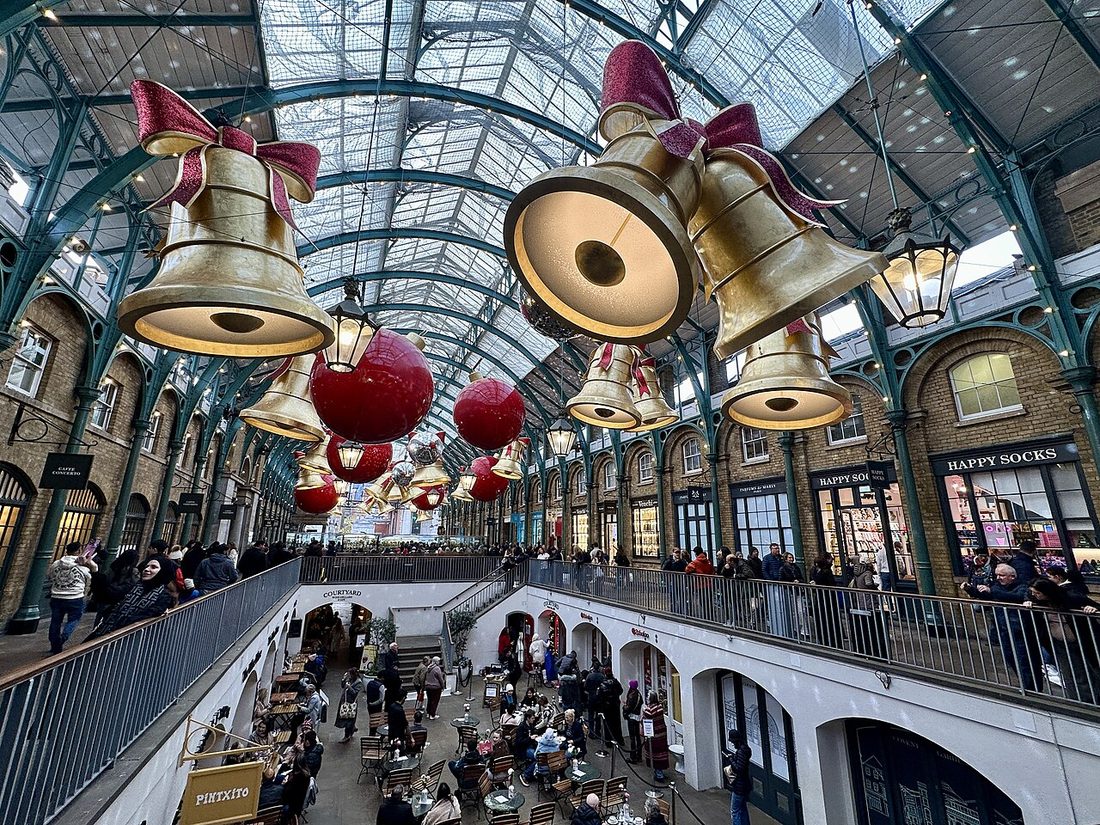
Useful language
Symbols of Christmas
All eight appear in the video and in the reading. Click a word, then click its definition. Correct pairs turn green. The audio button says the word.
Complete the sentences
Click a word in the bank, then click a gap. Click a filled gap to clear it. Read the whole sentence: the clues are all there.

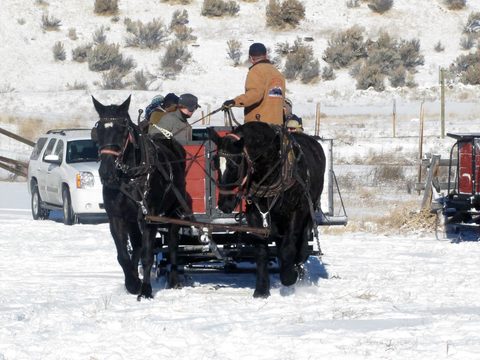 The road was covered in snow, so the farmer took the old
_____ instead of the cart: two horses pulled it easily over the ice.
 The tired
_____ lay down in the snow to rest, and its huge antlers looked like the branches of a tree.
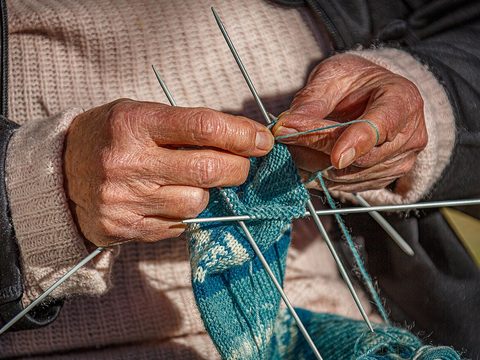 Grandma knitted me a pair of long wool
_____ that go all the way up to my knees; they are perfect for a cold night.
 The truck was loaded with twenty
_____ of coffee beans, each one so heavy that two men had to lift it.
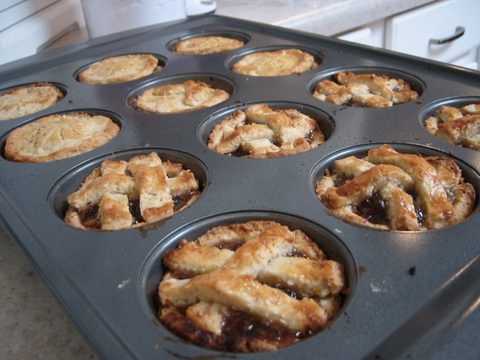 Would you like a
_____ with your coffee? I baked a dozen this morning, and they're still warm.
 The meat was a little dry, so Dad poured some hot
_____ over it, and suddenly everybody wanted more.
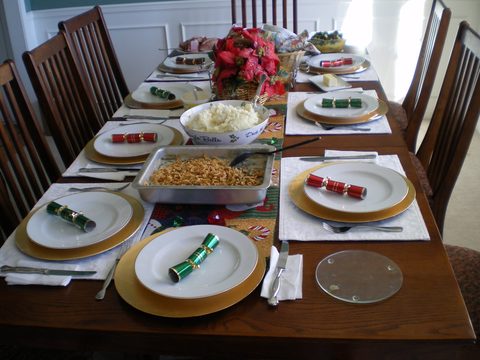 Mom put
_____ on every plate, and the kids couldn't wait to pull them apart and hear the loud bang.
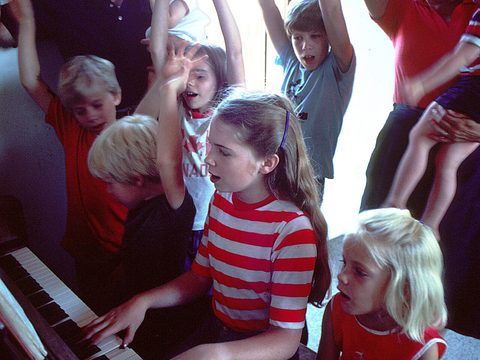 We sat around the piano and sang
_____ all evening; my grandmother knew every verse by heart.
One British Christmas, in order
Watch the video first: four minutes, with captions, ten traditions in order. Then read the story, which retells the video in its own words. Passive verbs are in bold. Tap a dotted word to see what it means.
For a British family, the season starts with the tree, which is put up on any day from December 1 to 24. The custom was brought from Germany by Prince Albert, Queen Victoria's husband.
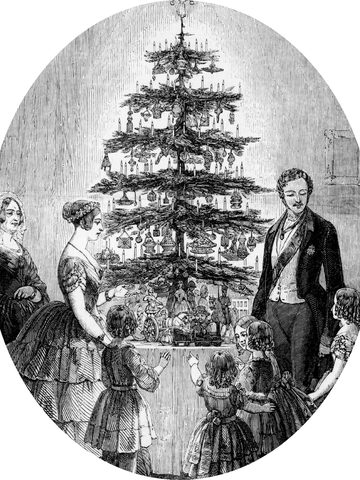
Albert's custom spread fast: when a picture of the royal family around their tree was printed, every home wanted one. With the tree up, the season's first treat appears: the mince pie.
At first, mince pies were filled with meat, like lamb, and serving them showed off a family's wealth. The modern pie is sweet: buttery pastry with dried fruit and spices inside.
On Christmas Eve, the children hang stockings above the fireplace and leave empty sacks by the tree. Then they wait in bed, hoping to spot Father Christmas and the eight reindeer that pull his sleigh.
Their visitor is based on Saint Nicholas, who was seen as a bringer of miracles and gifts. His reindeer are thought to come from northern Scandinavia, as deer prefer the cold.
On Christmas morning, children and adults tear the paper off their presents to find out what Father Christmas left for them. Then comes the big lunch, which is eaten at about 2 p.m.
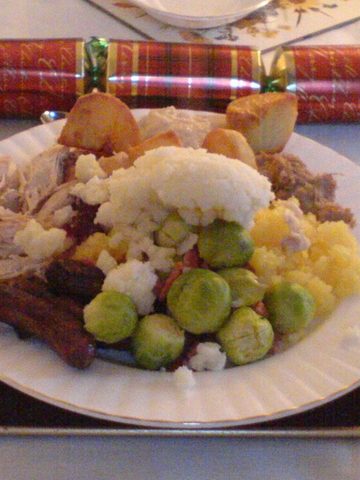
At the table, crackers are pulled, and out fall a toy, a paper crown and a joke. The turkey is served with gravy, roast potatoes, greens and stuffing, a mix of bread and herbs.
After lunch, the Queen gives her yearly speech, a look back at the past year. The next day, December 26, is Boxing Day, a bank holiday that was once the day for opening presents.
The name has a story: it is thought that the holiday was created so that workers could receive a box, or gift. Today, many Brits spend the day off traveling to see family.
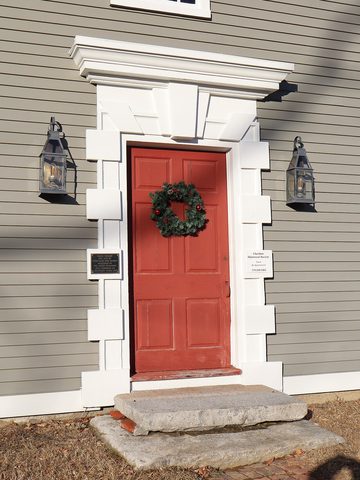
Carols can be heard in churches, and sometimes on the street or at the door. On the door hangs a wreath: a Christian welcome to Christ's spirit, and a Roman sign of victory.
Multiple choice
The stamp shows the moment in the video. Click an answer and read why.

-
Who brought the Christmas tree tradition to England? 00:17
Not the Queen herself: the narrator says her husband, Albert. A picture of the royal family with their tree made everybody want one. The video dates it 1846; the famous engraving, the first photo in the reading, was printed in a London newspaper in 1848.
-
When do British people put up the tree? 00:27
"Every year between the 1st and the 24th of December," says the video. Not November, and not only on Christmas Eve: any day of those twenty-four.
-
What were the first mince pies like? 00:34
Real meat, such as lamb, and a sign of wealth: they showed that people had money. The sweet pastry with dried fruit and spices is the modern version, not the first one.
-
What do the children wait for on Christmas Eve? 00:58
Eight, not seven. The video also says who Father Christmas is based on: Saint Nicholas, a figure who was seen as a giver of miracles and presents, at 01:08.
-
According to the video, when are the presents opened nowadays? 01:32
"On Christmas morning, the next day, the celebrations begin," and the wrapping is ripped open. Later, at 02:40, the video says Boxing Day used to be the day for presents, but that has changed in recent decades.
-
When is Christmas lunch eaten? 01:43
Not noon: the narrator says "usually eaten around 2 p.m." And the Queen's speech comes after lunch, not before it.
-
What is inside a Christmas cracker? 01:50
"Filled with a toy, a crown and a joke." No money inside, and no pie: the cracker is paper, and the surprise is small.
-
What does the Queen talk about in her speech? 02:24
"All the things that happened during the year": the past year, not the plans for the next one. The video calls it the Queen's speech; since 2022, it has been the King's speech.
-
What is Boxing Day, and how has it changed? 02:32
Three facts in one answer: December 26, a bank holiday; a box, or gift, for the workers, which gives the day its name; and, nowadays, a day off for travel and family. The Queen speaks on Christmas Day, the presents are opened on Christmas morning, and boxing matches have nothing to do with the name.
-
Where can carols be heard? 03:03
The narrator says they are usually sung in churches, but can occasionally be seen on the main street, or even turning up at the door: the singers come to you. Shopping centers are not in the video.
-
What are the two origins of the Christmas wreath? 03:15
Two origins: by hanging a wreath on the door, Christians were inviting the spirit of Christ into their home, and some believe the custom goes back to ancient Rome, where wreaths on doors represented victory.
-
Which sentence best summarizes the story?
Ten customs from the tree to the wreath, most of them with a story: Germany, meat pies, Saint Nicholas, a box for the workers, Rome. Only the tree came from Germany, and churches are one place among many.
Ten traditions in order
In which order does the video present the ten traditions? Write the number, 1 to 10, next to each one. Watch again if you need to.
-
aMince pies
-
bThe Queen's speech
-
cChristmas Day
-
dChristmas crackers
-
eChristmas dinner
-
fChristmas tree
-
gBoxing Day
-
hChristmas wreaths
-
iChristmas Eve
-
jChristmas carols
Active and passive voice
Three questions about two sentences from the video, then seven sentences to label: active or passive.

Two ways to tell the same fact. Active: the family decorates the tree. Passive: the tree is decorated. Same tree, different focus: in the passive, the thing that receives the action comes first, and the doer can disappear.
- Active to passive: People sell the trees. → The trees are sold (by people). The object of the active sentence becomes the subject of the passive one.
- Every tense: is sold (present simple) · was invented (past simple) · has been changed (present perfect) · will be served, can be found, must be kept (modals).
- When we use it: the action or the thing affected matters more than the doer, or the doer is unknown or obvious. Traditions love it, because nobody in particular does them: The streets are decorated in December.
- The doer, only if it matters, comes after by: This cake was baked by my grandmother. A doer that says nothing (by people, by somebody) is left out.
- It is thought that… / It is said that… reports what people believe without saying who: It is said that the house was built in one week.
- Not every -ed is passive: The children waited patiently is active. They did the waiting. With regular verbs the past simple and the past participle look the same (decorated), so look for be: is decorated is passive, decorated alone is not.
-
"Christmas lunch is eaten around 2 p.m." and "Carols are usually sung in churches." Both sentences are in the…
Is eaten, are sung: be + past participle. The lunch does not eat and the carols do not sing; something is done to them.
-
In the passive voice, the focus is on…
The object of the active sentence (people eat lunch) becomes the subject of the passive (lunch is eaten) and takes the focus. The doer moves to the end, after by, or disappears.
-
After the verb be, the main verb is in the…
Eaten, sung, brought: the third form of the verb. With regular verbs the past simple and the past participle look the same (decorated), so look for be in front.
-
"Santa Claus was seen as a symbol of miracles."
Was + seen. People saw him; he was seen.
-
"People usually hang wreaths around the house."
People do the hanging: subject + verb + object, and no be.
-
"The first Christmas tree in England was brought from Germany."
Was + brought. The tree did not bring anything; it was brought, and the sentence does not say by whom.
-
"Boxing Day is celebrated on December 26."
Is + celebrated. A regular verb, so celebrated alone could be past simple; the is in front makes it passive.
-
"After lunch, the Queen makes her annual speech."
The Queen does it: makes, present simple, active. Her speech is the object.
-
"Nowadays, many Brits use Boxing Day to visit their relatives."
Many Brits do the using. No be, no participle.
-
"It is generally thought that the day was created as a holiday for the workers to receive a gift."
Two passives in one sentence: is thought and was created. Nobody knows exactly who created the day, or who thinks so: that is exactly when the passive is useful.
Change the voice
Rewrite each sentence from Exercise 07 in the other voice. The label says which voice to write, and the beginning is given: write the rest. Keep the tense. In a passive sentence, keep by + doer when the doer is a real name or group, and leave it out when it is only people or somebody.
-
activeSanta Claus was seen as a symbol of miracles. → People…
-
passivePeople usually hang wreaths around the house. → Wreaths…
-
activeThe first Christmas tree in England was brought from Germany. → Somebody…
-
activeBoxing Day is celebrated on December 26. → People…
-
passiveAfter lunch, the Queen makes her annual speech. → After lunch, the annual speech…
-
passiveNowadays, many Brits use Boxing Day to visit their relatives. → Nowadays, Boxing Day…
-
activeIt is generally thought that the day was created as a holiday for the workers to receive a gift. → People…
Write the passive form
Use the verb on the left in the passive. Read the whole sentence first: the time words and the modals tell you which tense. Short forms are fine.

-
bringThe Christmas tree tradition ___ to England from Germany in the nineteenth century.
-
fillToday, mince pies ___ with dried fruit and spices, not with meat.
-
openIn most British homes today, the presents ___ on Christmas morning, not the night before.
-
pullThe crackers ___ at the table, and everybody puts on a paper crown.
-
seeCarol singers can sometimes ___ on the main street in December.
-
createIt is thought that Boxing Day ___ so that workers could receive a gift.
-
hangSince Roman times, wreaths ___ on doors, first as a sign of victory and later as a Christmas decoration.
-
watchThe Christmas speech ___ by millions of people again next year.
Talking point
Part A is about the video, Part B is about your world, and Part C is for your opinions. Use the passive whenever the doer does not matter: the presents are opened, the turkey is carved, it was started by…
Useful language
10 Brazilian Christmas Traditions
120–180 words. You are writing the script for a documentary called "10 Brazilian Christmas Traditions". List ten traditions and write a sentence or two about each one, in order, like the video. Mix active and passive sentences: at least five passive verbs (is eaten, are exchanged, was brought…). With a partner, one of you lists and the other explains.

My results
Check your score, then copy it and send it to your teacher on WhatsApp.

One job for this week. Every day, describe one tradition of your family in two sentences, one active and one passive: My uncle carves the turkey. The turkey is carved by my uncle. Seven days, fourteen sentences, and the passive is yours.