Wednesday Addams: Inside the Character
The creators, the director Tim Burton and the actress Jenna Ortega explain how they took a girl from an old cartoon and made her real. Eight words to describe a personality, twelve more to sort, and one grammar point: what comes after wish.
Warm-up
Read the information from a TV website first, then ask and answer with a partner, or with me. Tap a card when you have answered it.

A girl in black, two braids, no smile. Wednesday Addams has lived in cartoons, TV shows and movies for decades, and in 2022 Netflix gave her a series of her own. Today we hear the people who made it, and we learn the words they use to describe her.
- The series follows Wednesday Addams' years as a student, as she tries to control a new psychic ability, stop a series of killings and solve a mystery that involved her parents.
- Creators: Alfred Gough and Miles Millar · Stars: Jenna Ortega, Gwendoline Christie, Riki Lindhome
- TV-14: a rating that means the show may not be suitable for viewers under fourteen.
Useful language
Words to describe a character
Click a word, then click its meaning. Correct pairs turn green. The audio button says the word. Four of the eight are in the text; the other four are in Wednesday's own lines in the video.
Complete the sentences
Click a word in the bank, then click a gap. Click a filled gap to clear it. Read the whole sentence first: each one gives you the clue.

 My grandfather refuses to use a smartphone, even though the whole family has explained it to him a hundred times. He is so
_____.
 Nobody elected him. He simply started calling himself the
_____ leader of the group.
 At the party I didn't know anyone, so I stood in a corner holding my drink and feeling very
_____.
 The Eiffel Tower is so
_____ that a simple drawing of it means "Paris" to people all over the world.
 In the meeting she looked the boss in the eye and said clearly what she wanted. Everyone noticed how
_____ she was.
 He thinks about that video game all day and all night, and he can't talk about anything else. His mom says he has become
_____ about it.
 After the scandal, his old friends stopped calling and nobody invited him anywhere. He became an
_____ in his own town.
 At home she never talked or worried about the race, but in training she had one goal and let nothing distract her. Her coach admired how
_____ she was.
Making Wednesday real
Watch the video first: three minutes, captions on. The creators, the director and the actress speak, and short scenes from the series appear between them. Then read the story. Dotted words have a definition — hover or tap them. The audio button reads each paragraph aloud.
The story opens with a girl being thrown out of school. Wednesday Addams, socially awkward and dressed in black, is expelled after an attempted murder. Her only regret? She failed.
So she goes to Nevermore, a school where every student is an outcast. Besides a new place and new people, she soon faces a dark mystery full of killings and monsters.

All of this is new, and the creators want it clear: the series is not a remake or a reboot. It opens a new stage in Wednesday's life, as she grows into an adult.
Director Tim Burton wanted that new stage to feel real. Wednesday is the typical outsider, who sees everything in black and white, mostly black, but older versions felt like cartoons.
A real Wednesday needed the right actress. For the creators, finding her was the most important part of the recipe, and Jenna Ortega was the one: people had compared her to Wednesday all her life.
Jenna, however, did not want to copy earlier actresses. Her Wednesday is a little more uncomfortable with people, she keeps her confidence concealed, and she brings her own dry humor to the role.
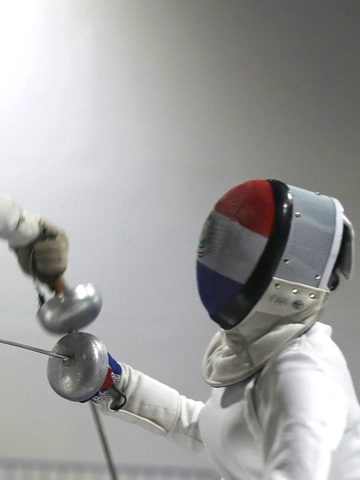
The role made her nervous, because she wanted to get it right. So she took fencing and cello lessons twice a week, and walked like Wednesday until people thought she was a bit crazy.
All that work had one aim: an assertive Wednesday, sure of every step. That attitude is what makes her iconic: she won't smile for anyone, and says what most of us wish we could say.
Jenna saw one more chance: to represent her community. Wednesday is technically Latina, but no version had ever shown it; now the Addams family keeps a Día de los Muertos altar in the living room.
The director's verdict says it all. Like a star of silent movies, Jenna can convey feelings without saying a word, and Burton loved watching the life inside her. He can't picture any other Wednesday.
Multiple choice
The stamp shows the moment in the video. Click an answer and read why.

-
What happens to Wednesday at the very start of the story? 00:09
The creators say it in the first line: a socially awkward girl getting expelled. Nobody asks her opinion, and she is not looking for new friends either.
-
How does Wednesday feel about the attempted murder? 00:13
"Terrible," she says, but not for the reason you expect: everyone would know she failed to get the job done. That is Wednesday's dark humor in one line.
-
Besides a new school and new people, what does Wednesday face at Nevermore? 00:24
Nevermore is "a school for all outcasts", and the creators describe a serious investigation around her, with serial killers, murders and monsters. Solving that mystery is the heart of the series.
-
What did the creators want to make clear about the series? 00:39
"Not a remake or a reboot." A remake tells the same story again; a reboot starts the story from zero. This series adds a new chapter: her journey into adulthood.
-
According to Tim Burton, what did the team try to do this time? 00:56
Burton calls the earlier incarnations "very cartoony". A longer series gave him room to make her real, and, in his words, he loved it.
-
What do the creators call "the key ingredient" of the show? 01:48
"When we found Jenna, it was just like she was the one." Jenna had watched the movies as a child and had been compared to Wednesday her entire life.
-
What do Jenna and Wednesday have in common, according to the creators? 02:05
Jenna "inherently has a dry sense of humor", and she brought it into the role. Dry humor: funny things said with a serious face, as if they were not jokes at all.
-
How is Jenna's Wednesday different from the earlier versions? 01:12
Jenna wanted to do something different, even though the character had been done "so flawlessly" before: the confidence is still there, but concealed.
-
What did Jenna do to prepare for the role? 02:20
Twice a week each. She also worked on the physicality: she walked like Wednesday in daily life, because she wanted the character to be specific, certain and assertive.
-
What does Jenna say about representation? 01:31
"Any time that I have an opportunity to represent my community, I want that to be seen." The show answers with a year-long Día de los Muertos altar in the family's living room.
-
Why does the director compare Jenna to a silent movie actress? 02:35
Silent movie actors had only their faces and bodies. Burton saw that "inner life" in Jenna, which is why he cannot imagine any other Wednesday.
-
Which sentence best summarizes the story?
Every part of the text points to the same idea: not a remake, but a real Wednesday, and Jenna Ortega as the one who could carry her.
Wednesday's lines
Between the interviews, the video shows short scenes from the series. Here are five of them: watch each moment on the stamp, with captions on, and choose what Wednesday means. Four words from Exercise 02 are hiding in her lines.
-
"When I look at you, the following emojis come to mind. Rope. Shovel. Hole." What is Wednesday telling the girl? 01:01
Rope to tie, shovel to dig, hole to bury. Said with a straight face: that is the dry humor the creators talk about. The girl gets the message.
-
"I know I'm stubborn, single-minded and obsessive, but those are all traits of great writers and serial killers." What is she doing here? 01:16
She admits the three adjectives and then defends them: great writers have them too. The "serial killers" at the end is the twist, and the mystery she is about to enter.
-
"I haven't always been against birthdays. Each one reminds me I'm a year closer to death's cold embrace." What does she say about birthdays? 01:55
Not anger, not boredom: for Wednesday, a birthday is a countdown, and she says it as calmly as a weather report.
-
"You must be the self-appointed queen bee. Interesting thing about bees: pull out their stingers and they drop dead." What is the message to the queen bee? 02:11
"Self-appointed": nobody chose this girl as queen; she chose herself. And a bee without its stinger dies, so the sentence is a threat wrapped in a science fact.
-
"OMG, you look purr-fect! Only thing, where are your whiskers?" "Ask again, and you'll be down to eight lives." What does Wednesday mean? 02:52
In English, cats have nine lives. "Down to eight" means she would take one, so the girl should not ask about whiskers again. "Purr-fect" is the girl's joke: perfect, with the sound a cat makes.
Positive, negative or neutral?
Twelve more adjectives to describe a personality. Decide whether each one is a compliment, a criticism or neither. The explanation gives you the meaning, so guess first and read after.

-
affectionate
Showing love and warmth easily: hugs, kind words, attention. A quality in a friend, a partner or a grandparent.
-
aggressive
Ready to attack or argue, in words or in actions. In sports it can be praise; as a personality, it is a criticism.
-
ambitious
Wanting very much to succeed. Praise in a job interview, a criticism when it costs you your friends: it depends on who says it, so it sits in the middle.
-
bad-tempered
Easily angry, often in a bad mood. Nobody enjoys a bad-tempered boss or a bad-tempered driver.
-
bossy
Always telling other people what to do, as if you were their boss, when you are not. The "self-appointed queen bee" is bossy.
-
courageous
Brave: able to do what is right or necessary even when it is frightening.
-
dependable
You can depend on this person: they do what they promised, on time, every time.
-
devious
Getting what you want with dishonest, indirect tricks. A devious plan is a clever plan, but not an honest one.
-
egotistical
Thinking only about yourself and believing you are more important than everyone else in the room.
-
joyful
Full of happiness, and spreading it to the people around. The opposite of a girl who refuses to smile.
-
sociable
Enjoying the company of other people: talking, going out, meeting new friends. Not exactly Wednesday's strong point.
-
sympathetic
Understanding other people's problems and showing that you care. Careful with the false friend: it does not mean simpático. A sympathetic person is kind about your troubles, not necessarily charming.
Structures after wish

Why "could", and not "can"? At 01:28 the video says Wednesday "says the things that the rest of us wish we could say." After wish, the verb takes one step back into the past: can becomes could, have becomes had, will becomes would. The past form here does not mean past time; it means "this is not real". We can't say those things. Wednesday can.
- Wish + past simple: something you want to be different now or in the future. I wish I had more free time. · I wish the weekend were longer. (were for I, he, she and it in careful English; was in conversation.)
- Wish + could: an ability or a possibility you don't have. I wish I could remember people's names.
- Wish + would: somebody else's behavior, or a situation, that
annoys you and that you want to change. I wish my brother would call more
often. · I wish it would stop raining. Never about yourself:
not
I wish I would. - Wish + past perfect: a regret about the past. I wish I had studied more for that exam. · I wish we hadn't sold the house.
- Never wish + will, wish + can or wish + present:
not
I wish I can, notI wish it will stop, notI wish she lives here.
Part A. Read the situation and choose the wish that fits it. Ask yourself first: is it about now, about somebody's behavior, or about the past?
-
The neighbors are having a party, and I can't sleep.
Somebody else's behavior, happening right now, and you want it to change: wish + would. The past perfect would make it a regret about last night.
-
I ate a whole pizza last night, and now my stomach hurts.
The pizza is in the past, so the wish is a regret: wish + past perfect. Didn't eat would be a wish about the present, and I wish I wouldn't is not English.
-
We have a lot of work in the office today, unfortunately.
Today is now, and you want it to be different: wish + past simple. Hadn't had looks back at a finished day, and we wouldn't breaks the rule: no would for yourself.
-
My friends are going surfing, and I don't know how to surf.
An ability you don't have: wish + could. Can never follows wish, and would is for other people's behavior.
-
My sister lives in Canada, and I miss her.
Where she lives is a present situation, not a behavior and not the past: wish + past simple. The present tense never follows wish.
-
It's my own fault: I didn't apply for that job, and someone else got it.
A regret about something that did not happen: wish + past perfect. The job is gone, so a wish about the present does not work.
Part B. Rewrite each situation as a wish. Use the verb on the left in the right structure: past simple, could, would or past perfect. Short forms are fine.
-
buyWe bought this terrible car. It's too noisy. → I wish we ___ this car.
-
goWe have to stay home this summer, because our savings are all gone. → I wish we ___ on vacation.
-
haveOur apartment is very small, and I wanted a bigger one. → I wish we ___ a bigger apartment.
-
stopThe neighbors are playing loud music right now, and I want them to stop. → I wish they ___ playing loud music.
-
beIt's raining, and the picnic is today. → I wish it ___ sunny.
-
tellI told my boss what I thought of his plan, and now he's angry with me. → I wish I ___ him.
-
speakMy cousins speak French at the table, and I don't understand a word. → I wish I ___ French.
-
interruptEvery time I start a sentence, my roommate interrupts me. → I wish he ___ me.
Part C. The traps. Choose the form that works, or find the sentence that doesn't.
-
My best friend moved to Tokyo. I wish I ___ visit her more often.
A possibility you don't have, so can takes one step back and becomes could. Can and will never follow wish.
-
I wish my office ___ closer to home.
Where the office is: a state, not a behavior, so no would. Past simple, were, or was in conversation.
-
I wish my coworker ___ so loudly on the phone.
Somebody else's annoying behavior: wish + wouldn't. Won't is will, and will never follows wish.
-
I wish I ___ to that concert last year.
"Last year" makes it a regret about the past: past perfect. Went is one step short, and would is never for yourself.
-
Which sentence is NOT correct?
I wish I would is the sentence to avoid: would after wish is for other people and for situations you can't control. For yourself, use the past simple or could.
Talking points
Part A is about the video and the text. Part B is about you: use the adjectives from Exercises 02 and 07, and sneak in a wish whenever you can. Part C is for opinions. Tap a card when you have discussed it.
Useful language
Six wishes
100–140 words. Write about two things you have to do this week that you don't feel like doing, two things people at work, at school or in your family do that annoy you, and two regrets. That is six wishes: two with the past simple, two with would and two with the past perfect. Add a sentence to explain each one.

My results
Check your score, then copy it and send it to your teacher on WhatsApp.

One job for this week. Every day, say three wishes out loud: one about now (I wish I had…), one about somebody else (I wish my … would…) and one regret (I wish I hadn't…). Thirty seconds, with a straight face, like Wednesday.