Harvey Destroys Trevor During Mike's Trial
A witness who shared an apartment with the accused, a prosecutor who wants one thing straight, and a defense lawyer who never argues with the story, only with the storyteller. Two and a half minutes of Suits, the courtroom words that come with it, and the questions that already contain their own answer.
Warm-up
Ask and answer with a partner, or with me. Tap a card when you have answered it.

Everybody has seen a court scene, in a movie, in a series or in the news. Today we watch one of the most famous ones on TV, and we learn how a lawyer asks a question that already contains the answer.
Useful language
Words from the courtroom
All eight expressions are in the scene and in the story. Click a word, then click its definition. Correct pairs turn green. The audio button says the word.
Complete the sentences
Click a word in the bank, then click a gap. Click a filled gap to clear it. Each sentence has its own clues: only one word fits. The verbs are already in the form the sentence needs.

 My cousin is a nurse, but she also sells cakes
_____: a few orders every weekend, for extra money.
 I
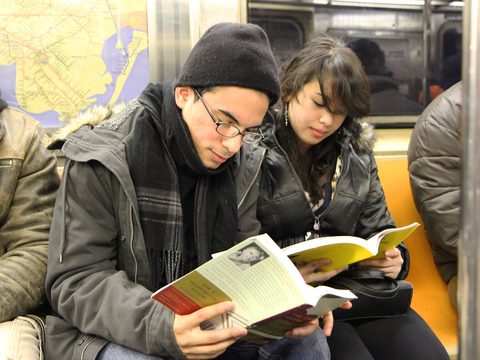
_____ by train, forty minutes each way, so I read a lot before I even get to the office.
 The seller
_____ that the watch was solid gold, but he had no certificate to prove it.
 Two students
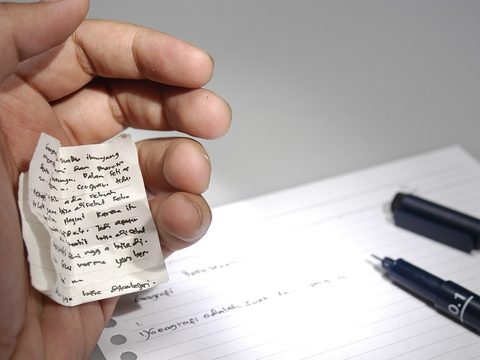
_____ on the final exam: they had the answers on tiny pieces of paper hidden in their hands.
 When nobody answered his emails, he
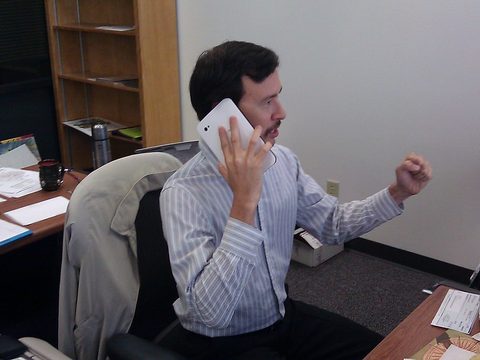
_____ to calling the office every hour.
 In court, the witness
_____ himself: under oath, he said he had never met the man, and then a photo showed them together.
 Let me
_____: you want me to work on Sunday, and you're not going to pay me extra?
 The new manager turned out to be an
_____: the diplomas on his wall were fake, and nobody had ever checked them.
Attack the storyteller, not the story
Watch the scene first: two and a half minutes of Suits. It has no captions, so listen for the names, the places and the numbers. Then read the story. The eight expressions from Exercise 02 are in bold. Tap a dotted word to see what it means.
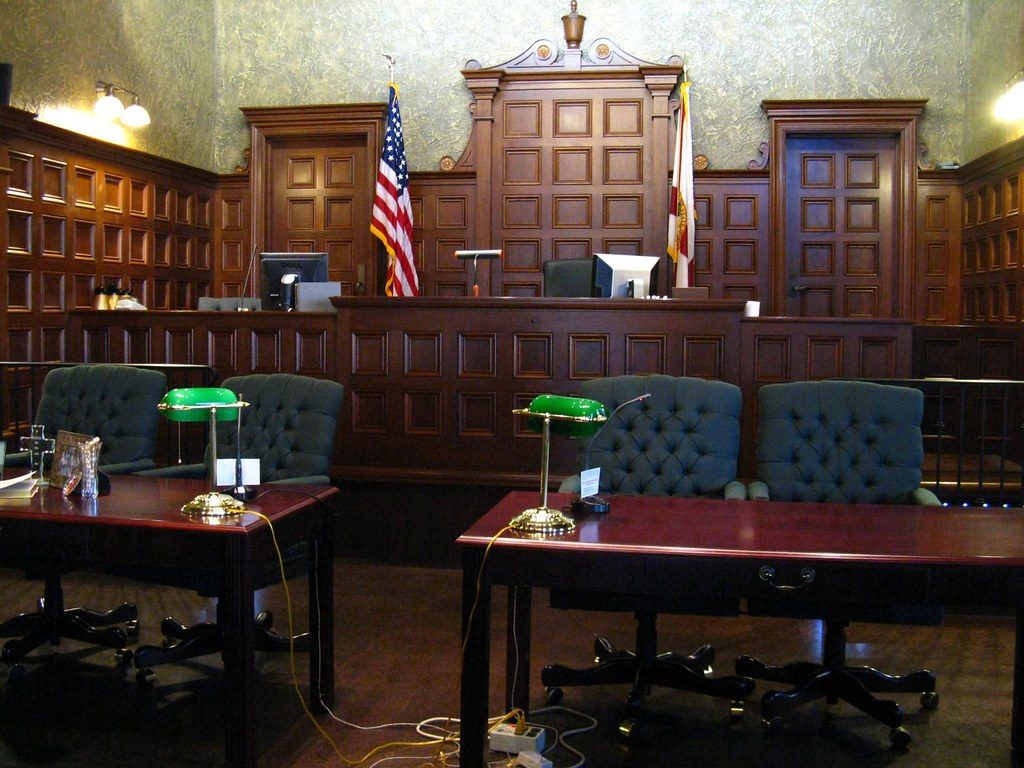
A courtroom in New York. Mike Ross, a lawyer at Pearson Specter, is on trial: the prosecution says he never went to Harvard Law. On the stand sits Trevor Evans, his former roommate.
The prosecutor wants to get one thing straight: Trevor and Mike shared an apartment in Brooklyn during the years when Mike claims he was attending Harvard. If so, Trevor knows what Mike did.
Next question: how did Mike pay his rent? Trevor's answer is simple. Mike delivered packages as a bike messenger, and on the side, other people paid him to take the LSAT for them.
That answer opens a door. Why would a college graduate resort to that? Because, Trevor says, Mike was never a graduate: his college kicked him out for cheating on a test.
Could Mike have gone back and finished his degree? Trevor doesn't see how. When Mike had spare time, he says, the two of them usually just sat around the apartment, smoking weed.
The prosecutor sums up: before the law firm, Mike was a bike messenger and an LSAT impostor. Could he have attended Harvard Law? Trevor jokes: only if Harvard had a campus in their apartment.

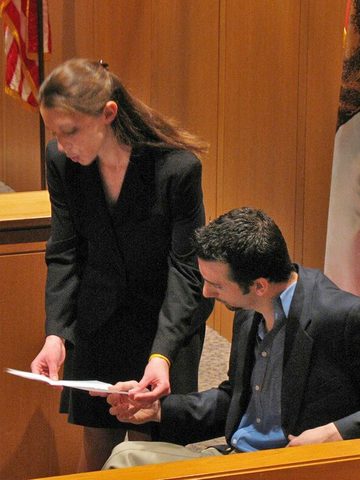
The prosecution is done, and Harvey Specter stands up. He attacks the storyteller, not the story. If Trevor smoked that much, could Mike have commuted to Harvard one day a week without him noticing?
Trevor says he'd remember. Harvey goes further: Trevor, a drug dealer, is only testifying because of a deal with the prosecutor, Ms. Gibbs, that gives him immunity. Wouldn't a man avoiding prison lie?
But Harvey's real weapon is jealousy. Didn't Trevor want to get back at someone he had envied his whole life? Trevor insists he was never jealous of Mike. Harvey answers: that is a lie.
He names Jenny Griffith, the woman who left Trevor for Mike, and asks who will perjure themselves: Jenny, or Trevor? Trevor gives in: yes, he was jealous. So why believe the rest?
Multiple choice
Twelve questions about the story. Click an answer and read why.

-
Why is Mike Ross on trial?
The whole trial is one question: is Mike a real Harvard lawyer or not? Every question to Trevor serves that. Mike took the LSAT for other people, which is dishonest, but that is not the charge, and the drug dealer in the story is Trevor.
-
Why does the prosecutor start with the apartment in Brooklyn?
If Trevor lived with Mike during the Harvard years, he knows if Mike went to Harvard or not. The address, 5307 Huntington Boulevard, comes back later, in Trevor's joke about the campus.
-
How did Mike pay his rent, according to Trevor?
Two sources of money: a bike messenger's pay, and what he made on the side taking the LSAT for other people. The second one is what makes the prosecutor stop and ask why.
-
Why does the LSAT job seem strange to the prosecutor?
The question is a trap: if Mike was a graduate, why would he do something like that? Trevor's answer is the point of the whole testimony: Mike was never a graduate.
-
What happened to Mike in college, according to Trevor?
Kicked out means expelled, and not for bad grades: for cheating. That detail matters later, because Harvey's whole strategy is about who is honest and who is not.
-
Why doesn't Trevor believe Mike went back and finished his degree?
Trevor doesn't see how: in their free time, he says, the two of them usually just sat around the apartment. It is the one detail Harvey will turn against Trevor: if you smoked that much, how good is your memory?
-
What does Trevor's joke about "a campus in the apartment" mean?
The prosecutor asks if it is at all possible that Mike attended Harvard Law. Trevor's answer: only if Harvard had a satellite campus at their address. In other words: no.
-
How does Harvey begin his cross-examination?
Harvey does not say Trevor is wrong; he says Trevor cannot be sure. If Trevor smoked that much, Mike could have commuted to Harvard one day a week without him noticing. Trevor says he'd remember.
-
What does Harvey say about Trevor's testimony?
Trevor is a drug dealer, and that is the crime Harvey accuses him of. Ms. Gibbs gave him immunity in exchange for testifying, so a man avoiding prison has a good reason to lie.
-
What feeling does Harvey say Trevor has about Mike?
Harvey's idea: Trevor is not testifying only to stay out of prison, but also to get back at a man he was jealous of. Trevor denies it at first, and that denial is the lie Harvey was waiting for.
-
What makes Trevor finally admit that he was jealous?
Jenny left Trevor for Mike, and she knows the truth. Harvey asks who is going to perjure themselves, Jenny or Trevor. Trevor gives in: yes, he was jealous.
-
Which sentence best summarizes the story?
Harvey never says Trevor's story is false. He attacks Trevor's memory, his motive (immunity) and his feelings (jealousy), and then catches him in a lie. If Trevor lied about that, why believe the rest?
Courtroom words in context
Ten words from the dialogue of the scene, in ten sentences that follow the story in order. Click a word in the bank, then click a gap. Read the story again if you need to.
- Trevor and Mike shared an apartment in Brooklyn at the time Mike says he _____ Harvard.
- Mike paid his _____ with a bike messenger's salary and with the money he made taking the LSAT for other people.
- The prosecutor is confused: why would a college _____ need to do that?
- The answer is simple: Mike never finished college. He got _____ of school after he cheated on a test.
- Trevor doesn't believe Mike went back to school: in his _____ time, he says, Mike usually just sat around the apartment with him.
- Harvey's first attack: Trevor's _____ against Mike only exists because the prosecution gave him something in return.
- That something is _____: Trevor will not go to prison for dealing drugs.
- Trevor says he was never jealous of Mike, and Harvey answers that he has just _____ him in a lie.
- Harvey names a new witness for later: he can call Jenny Griffith, the woman who left Trevor for Mike, to the _____.
- The prosecutor objects, so Harvey offers to _____ the question: is Jenny going to lie under oath, or is Trevor?
Leading questions: Isn't it true that…?

A leading question already contains the answer. The lawyers in the scene ask almost nothing else: Isn't it true that…? Isn't it possible that…? …, wouldn't you? The witness is not asked to explain; he is asked to agree. Learn the three forms, and you will hear them everywhere: in court, at work and at home.
- A negative question: Isn't it true that you knew about the deal? · Isn't it possible that you made a mistake? · Wouldn't you agree that the plan failed? The speaker expects "yes". A neutral question (Did you know about the deal?) really asks.
- A tag question: a statement + a short question at the end. Positive statement, negative tag: You signed the deal, didn't you? Negative statement, positive tag: She never called, did she? The tag repeats the auxiliary (is, was, have, will, would, can); if the statement has no auxiliary, use do / does / did.
- Intonation: the voice goes down on the tag when you are sure and want agreement (You were there, weren't you? ↘); it goes up when it is a real question (You're coming, aren't you? ↗).
- Would for the unreal: Why would a graduate do that? = it makes no sense. With a condition: If he were a real lawyer, he would know the rule. In careful English, were goes with every person after if; was is common in conversation.
- Taking control of the conversation: Let me get this straight: … (I want to check that I understood) · Let me rephrase. (I will say it in another way) · To the best of your knowledge, … (as far as you know).
-
Which question expects the answer "yes"?
A negative question (Isn't it…?) suggests the answer. The other two are neutral or open: they really ask, and the witness can say anything.
-
"You were living with him at the time, ___?"
Positive statement, negative tag, and the tag repeats the verb of the statement: were → weren't you. Didn't you would follow a statement with no auxiliary: You lived with him, didn't you?
-
"He never graduated from college, ___?"
Never makes the statement negative, so the tag is positive: did he. The verb is in the past (graduated), so the tag uses did, not does.
-
"She's going to testify tomorrow, ___?"
She's = she is, so the auxiliary is is and the tag is isn't she. Won't she would follow she will testify.
-
"You can't remember that night, ___?"
Negative statement (can't), positive tag: can you. The auxiliary stays the same: can, not do.
-
"Why ___ a rich man steal a loaf of bread?"
Would makes the situation hypothetical, and the question means "it makes no sense". Did asks about a real event that happened, and will about the future.
-
"If I ___ on the jury, I would ask for more evidence."
An unreal condition: if + past (were), would + verb. If I am would need I will ask, and would does not go inside the if part.
-
Which of these is NOT a leading question?
An open question with where, what, when or why lets the witness choose the answer. The other two already contain it: at the bar.
-
"Let me get this straight" is what you say when…
The phrase introduces a summary, often with a little surprise or disbelief: "Let me get this straight: you want me to work on Sunday?" The prosecutor uses it before summing up Mike's two jobs.
-
A: "Isn't it possible that you forgot?" Which answer refuses the suggestion?
The lawyer wants "yes, it's possible". "I'd remember" refuses the suggestion, like Trevor in the scene. "I suppose it is" and "Yes, maybe" both accept it.
Turn it into a leading question
You are the lawyer. For the tags, write only the two words that complete the question. For the phrases on the left, write the whole question. Watch the auxiliary, and watch for never.
-
tagYou lived with him for two years, ___?
-
tagHe never went back to school, ___?
-
tagThey have made a deal with you, ___?
-
tagYou would lie to stay out of prison, ___?
-
tagYou aren't a college graduate, ___?
-
tagShe left you for him, ___?
-
Isn't it trueYou were jealous of him. → ?
-
Isn't it possibleHe commuted to school one day a week. → ?
-
Wouldn't you agreeThe deal changed your story. → ?
-
Why wouldAn honest man / sign a deal like that → ?
Courtroom language
Eight expressions from the courtroom: most of them are in the scene, and you hear all of them in every court drama. Click an expression, then click its meaning. The audio button says it.

Talking points
Talk for about a minute about each card and ask your partner follow-up questions. Part A is about the scene, Part B about your life, Part C about opinions. Try at least one leading question on your partner.
Useful language
The next witness
80–120 words. Jenny Griffith takes the stand, or a witness you invent. Write the cross-examination as a dialogue: a lawyer and a witness, five or six exchanges. Use at least three leading questions (Isn't it true that…? …, didn't you?) and four words from Exercises 02 and 06. Example: Lawyer: You lived with Mr. Evans for two years, didn't you? Witness: Yes, I did.

My results
Check your score, then copy it and send it to your teacher on WhatsApp.

One job for this week. Every day, ask somebody one tag question out loud, in English: "You're coming tomorrow, aren't you?" And once, when somebody explains a plan, answer "Let me get this straight: …" and repeat the plan in your own words.