Their Injury, Not Her
A snowmobile, a tree, and an emergency room where one small word matters as much as the CT scan. On Grey's Anatomy, a patient corrects a doctor, the doctor tries, and English shows the gender-neutral pronoun it has had all along.
Warm-up
First, match the old job title on the left with the title that includes everybody: click a word, then click its partner. Correct pairs turn green. Then answer the cards with a partner, or with me. Tap a card when you have answered it.

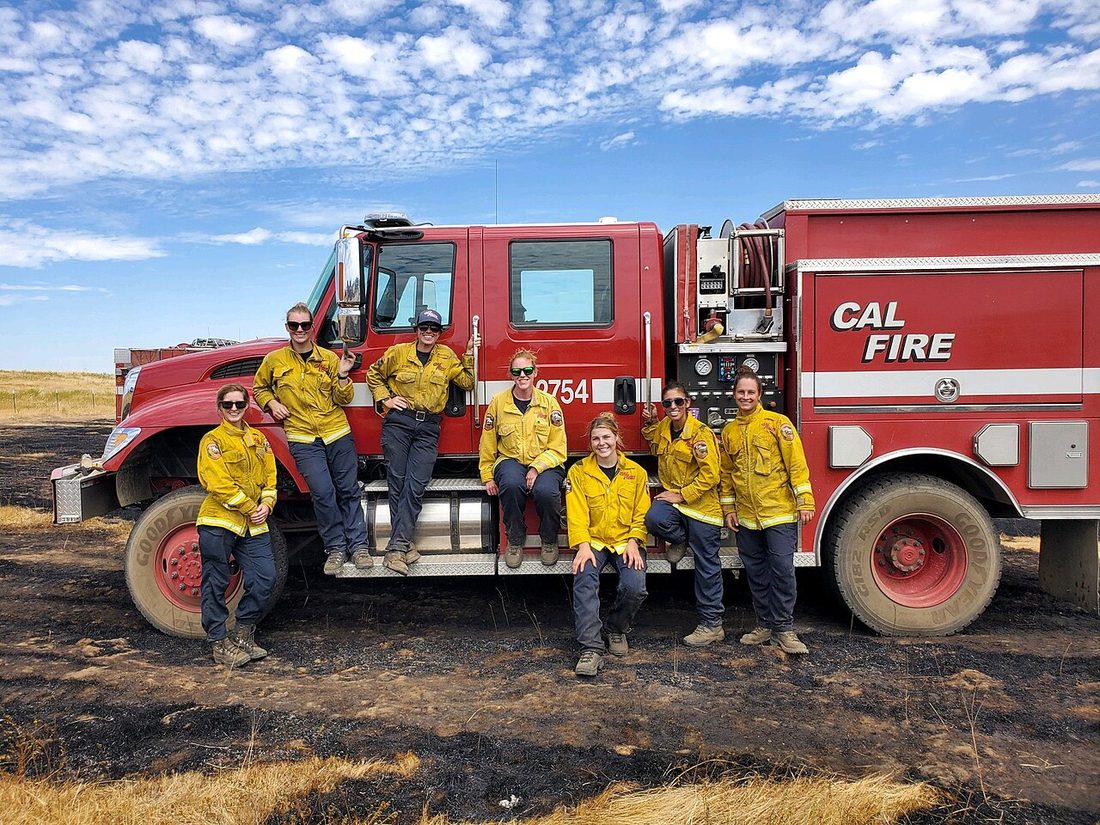
Policeman, fireman, stewardess. English used to name jobs as if every worker were a man, or as if it were important to say which ones were women. Today most of those titles have a version that fits everybody. Before we watch, find the seven new titles, and then tell me what your own language does.
Useful language
Words from the ER
All eight words are in the video. Click a word, then click its definition. Correct pairs turn green. The audio button says the word. Cisgender, in one of the definitions, describes a person whose gender is the one they were given at birth.
Complete the sentences
Click a word in the bank, then click a gap. Click a filled gap to clear it. Each sentence has its own clues: only one word fits.

 A cat ran in front of the bus, and the driver had to
_____ suddenly to avoid it, so all the passengers fell to one side.
 In the north of Canada, where the roads are covered in snow for months, many families use a
_____ instead of a car to get to town.
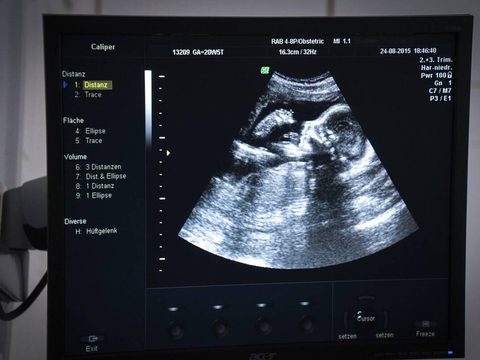 The doctor moved a small device over her belly, and on the screen we saw the baby for the first time: the
_____ showed a healthy heartbeat.
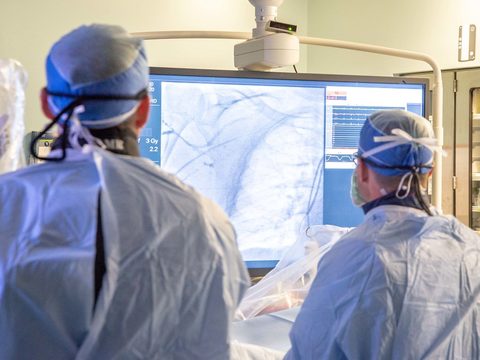 Before the heart operation, the surgeon needed a clear picture of every blood vessel around the heart, so the patient had a CT
_____ the day before.
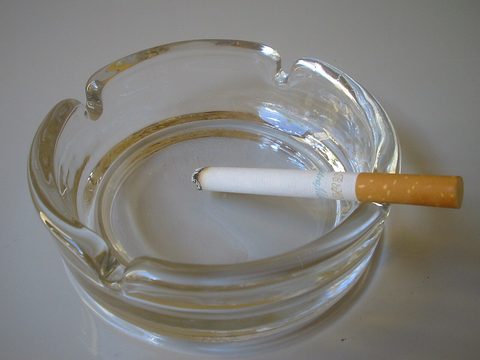 Smoking damages the veins and arteries, so smokers have a much higher risk of
_____ disease.
 In the sentence "Ana said she was tired", "she" takes the place of "Ana": words like she, he and they are called
_____.
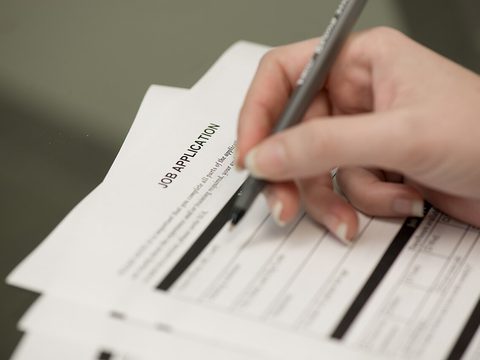 The gender question on the new job application has three boxes: male, female and
_____, for people who are neither a man nor a woman.
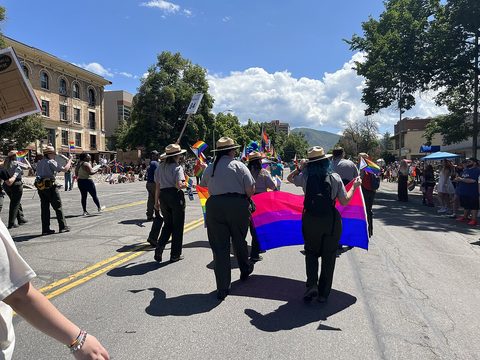 Lesbian, gay, bisexual and transgender people may all use the word
_____ for themselves: one umbrella term for many identities that are not straight or cisgender.
One small word
Watch the scene first: one minute of Grey's Anatomy, with captions. Then read the story. The pronouns of the lesson are in bold. Tap a dotted word to see what it means.
It is 2019, and Toby is lying on a bed in the emergency room of Grey's Anatomy, surrounded by doctors. The first question is not about Toby. It is about Mom: is she okay?
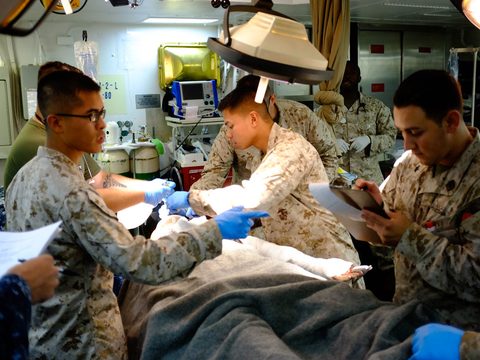

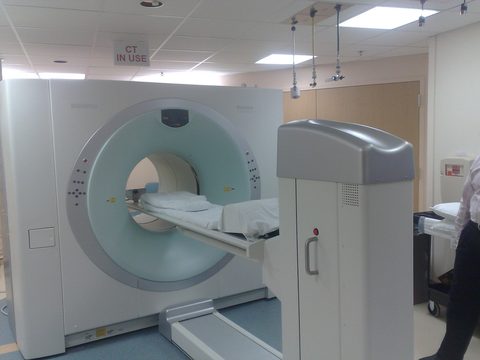
Dr. Richard Webber answers that she is stable and that the doctors will know more soon. First, though, he wants to check that Toby is not hurt anywhere else.
While the team works, Toby talks. Snowmobiling was Mom's idea. She keeps encouraging Toby to try things that feel scary, and once again she got it right: the ride was great fun.
Fun, that is, until Mom swerved to avoid a tree and the snowmobile flipped over five times. That is why mother and child are now in the hospital.
Richard turns to the team: they should get a CT angio to find the location of "her" vascular injuries. He means Toby. Toby corrects him with one word: "Their."
Richard does not understand: "Excuse me?" So Toby explains. "Their" injury, not "her". Toby is a "they": genderqueer, non-binary. Not a woman, not a man.
Dr. Helm, a young intern, gets it immediately and thanks Toby for letting the team know their pronouns. Jackson adds that they and them are the words to use.
Richard tries. He agrees, hesitates and starts a sentence with "let's get you… all?" But "you" already works for everybody, and Toby says so: "you" is fine.
The older doctor is not being unkind. He is simply learning something new in the middle of an emergency, and they are patient with him.
Then the ultrasound results come back fine, and Richard sends them up to CT. One small word changed nothing about the treatment, and everything about respect. Fans noticed, and the scene made the news.
Multiple choice
The stamp shows the moment in the video. Click an answer and read why.

-
Where is Toby at the start of the scene? 00:00
Toby is on a hospital bed, with Dr. Webber, Dr. Avery and Dr. Helm around it. The scene is from the episode "Add It Up", which aired on March 21, 2019; Toby is played by Arielle Hader.
-
What is Toby's first question? 00:00
"Is my mom okay?" comes before anything about Toby's own injuries. Mother and child were on the same snowmobile.
-
What does Richard say about Toby's mother? 00:02
Stable means that her condition is not getting worse. Richard promises more news soon and moves on to Toby: let's make sure there are no other injuries.
-
Whose idea was the snowmobile trip? 00:07
"Snowmobiling was her idea." Toby's mother likes to push Toby to face a fear, and Toby admits that she was right: it was fun.
-
Why does Mom push Toby to do things like snowmobiling? 00:10
"She's always pushing me to face my fears." And then: "God, why is she always right?" Toby is annoyed and grateful at the same time.
-
How did the accident happen? 00:20
She turned suddenly to avoid a tree, and the snowmobile flipped five times. To swerve is to change direction abruptly; to flip is to turn over.
-
What exam does Richard want, to find the location of the vascular injuries? 00:25
A CT angio shows the inside of the blood vessels. Richard is talking about Toby's injuries, and that is when he says "her".
-
Toby says "Their." What is Toby correcting? 00:29
Richard said "her vascular injuries". Toby replaces one word: "their" injury, not "her". Toby is genderqueer and non-binary, so the right pronouns are they and them. Everything else in Richard's sentence was right.
-
How does Dr. Helm react? 00:38
"Got it. Thank you for letting us know your pronouns." Short, respectful, and back to work. Jackson then repeats the pronouns for the team: they and them.
-
What does Richard get wrong after that? 00:47
Richard is trying so hard that he changes a word that did not need changing. "You" is the same for one person or many, for everybody. Toby: "'You' is fine."
-
What is the result of the ultrasound, and what comes next? 00:53
"Your ultrasound is fine. Let's get you up to CT." The treatment goes on exactly as planned: the pronoun changed the conversation, not the medicine.
-
Which sentence best summarizes the story?
Nobody refuses anything, and nobody argues: Toby corrects one word, Helm and Jackson get it at once, Richard tries and learns. The story is a correction and a lesson, not a fight.
What did they say?
Six lines from the scene, each with one word missing. Choose the word you think is right first, then watch the moment on the stamp and check.
-
Richard: "Oh, she's ___… we'll know more soon, okay?" 00:02
A stable patient is not getting worse. Richard chooses a careful word: not "fine", not "awake", just "stable", and more news later.
-
Toby: "___ was her idea." 00:07
The activity as a noun: snowmobiling, from snowmobile, like skiing from ski. The tree and the five flips only make sense on a snowmobile.
-
Toby: "…fun till she swerved to miss a tree and ___ us five times." 00:20
To flip is to turn over, and a snowmobile can do it several times on a slope. Dropped us would need a height, and pushed us would need a direction.
-
Richard: "…to determine the location of her vascular ___." 00:25
The exam finds the location of something in the body, and that something is the damage: the injuries. Exams and results do not have a location in the veins.
-
Helm: "Got it. Thank you for ___ us know your pronouns." 00:38
Let somebody know = inform somebody: thank you for letting us know. Telling us would not take know after it, and making us know is not English.
-
Jackson: "Their preferred ___ are 'they' and 'them'." 00:41
They and them are pronouns, not names. Jackson says it for the whole team, so that nobody has to ask Toby again.
Singular they and words for everybody

One small word. English already has a gender-neutral pronoun, and you have used it for years: "Somebody called, but they didn't leave a name." Today the same they does one more job: it is the pronoun of a person, like Toby. The forms do not change, and the verb stays plural. Then we look at the nouns: server, firefighter, police officer.
- he · him · his · himself — He is here. I saw him. That is his phone. He did it himself.
- she · her · her / hers · herself — She is here. I saw her. That is her phone, it's hers. She did it herself.
- they · them · their / theirs · themselves (or themself) — They are here. I saw them. That is their phone, it's theirs. They did it themselves.
- Singular they, job 1 — a person you don't know: Somebody left their umbrella. · If a customer calls, ask them to wait. · Every student brings their own laptop.
- Singular they, job 2 — a person who uses they/them, like Toby: Toby is stable. They are going up to CT, and their mom is in the next room.
- The verb stays plural: they are, they were, they have, they do, even for one person. It works like you: one person or many, the verb does not change. Never they is.
- Never it for a person. And you is already the same for everybody: no "you all" needed, as Toby told Richard.
- Nouns for everybody: police officer, firefighter, businessperson, member of Congress (or congressperson), salesperson, flight attendant, server; also spokesperson, chairperson, mail carrier, humankind. For a group: everyone, folks or people instead of guys.
- Asking and sharing: What pronouns do you use? · I'm Alex, I use he/him. · My pronouns are they/them. Many people write them on a badge or in an email signature.
- Careful with spelling: their (possessive), there (a place), they're (= they are).
-
"A stranger found my wallet at the gym and left it at the front desk, but ___ walked away before anyone asked for a name."
Nobody knows who the stranger was, so you don't know if it was a he or a she. Singular they does the job, and it has done it for centuries. It is only for things and animals.
-
Toby uses they/them. Which sentence is correct?
Singular they takes the same verb form as plural they: they are, they were, they have. It is like you: one person or many, the verb does not change. Them is the object form, never the subject.
-
Which sentence uses the possessive correctly?
Their = possessive (their pronouns, their injury). There = a place. They're = they are: "they are pronouns are" makes no sense.
-
"Every passenger must show ___ boarding pass at the gate."
"Every passenger" is one person at a time, of any gender, so their is the natural choice today. His assumes that all passengers are men; its is for things.
-
Which is the gender-neutral version of "The policemen closed the street"?
Police officer works for everybody. Policewomen only changes the gender, and "police persons" is not a real title: person works in businessperson and spokesperson, not here.
-
You want another glass of water at a restaurant. Who do you ask, in neutral English?
Server is the neutral word for waiter and waitress. A servant is a domestic worker in a rich house, a very different job.
-
"My cousin Sam uses they/them pronouns. ___ work as a firefighter and love it."
Subject position, so they. Notice the verb: they work, not they works, even for one person. And firefighter, not fireman.
-
"The nurse is taking the patient to CT." With a pronoun: "The nurse is taking ___ to CT."
After a verb, the object form: them. Compare him and her: taking him, taking her, taking them.
-
Which sentence is WRONG?
They is does not exist. Singular they keeps the plural verb: they are, they were, they have, they do.
-
What is the polite way to find out somebody's pronouns?
Ask the way you would like to be asked. "What are you?" sounds like an interrogation, and "a he or a she" leaves out people like Toby. Many people simply share theirs first: "I'm Alex, I use he/him."
Words for everybody
Items 1–5: the word on the left is the old title; write the title that includes everybody. Items 6–10: the cue tells you what is missing; write only the missing words.
-
policemanA ___ stopped us on the highway for speeding.
-
stewardessThe ___ showed us the emergency exits before takeoff.
-
waiterOur ___ was very friendly and brought the food fast.
-
firemenThree ___ entered the burning building.
-
congressmanThe ___ gave a speech about health care.
-
pronounSomeone knocked on my door at midnight, but when I opened it, ___ had already gone.
-
pronounEach guest has to write ___ name on the list at the door.
-
pronounThe singer got flowers from an anonymous fan and would love to thank ___ in person.
-
pronoun + beToby is not a woman or a man: ___ non-binary.
-
reflexiveEverybody should introduce ___ with their name and their pronouns.
Connected speech
Read the note, listen to the three sentences from the scene with the audio button, and say them fast, joining the words. Then answer the six questions.

- a lot of fun → "a lo-tof fun" · flipped us → "flip-tus" · miss a tree → "mi-sa-tree" · it was a → "it wa-za"
- Sounds, not letters. You begins with the consonant sound /j/, so thank you does not link this way. Hour begins with a vowel sound (the h is silent), so an hour links: "a-nour".
- Consonant + consonant does not link: swerved to, she's stable, of fun.
- In American English, a final r links too: her idea → "he-ridea", other injuries → "othe-rinjuries".
-
"It was a lot of fun." Which two words link with a consonant sound and a vowel sound?
Lot ends in /t/ and of begins with a vowel: "lo-tof". A lot is vowel + consonant, and of fun is /v/ + /f/, two consonants. (Was a links too: "wa-za".)
-
"…and flipped us five times." Said fast, "flipped us" sounds like…
Flipped ends in the sound /t/ (the -ed after /p/ is /t/), and us starts with a vowel. The /t/ moves to the next word: "flip-tus".
-
Why is there no link in "swerved to"?
Linking needs a consonant sound followed by a vowel sound. /d/ + /t/ is two consonants, so the words stay separate. Short words like us and of link all the time.
-
Which sentence has NO consonant-to-vowel link?
She's stable is /z/ + /s/: consonant + consonant. Letting us links ("lettin-gus"), and in American English other injuries links through the r: "othe-rinjuries".
-
"An hour ago." Which words link?
The h in hour is silent, so an hour is /n/ + vowel: "a-nour". And in American English the r at the end of hour links to ago: "a-nou-rago". Sounds, not letters.
-
"Miss a tree." Which is the fast version?
/s/ + vowel: the s of miss starts the next syllable, "mi-sa-tree". Dropping a would change the sentence, and pauses are exactly what connected speech avoids.
Talking points
Talk for about a minute about each card and ask your partner follow-up questions. Part A is about the scene, Part B about your life, Part C about opinions. Use they and the new job titles whenever you can. The subject deserves respect: we talk about language and society, not about anybody's private life.
Useful language
Welcome to the team
80–120 words. A new colleague who uses they/them pronouns is joining your team next week. Write the short message that introduces them to everybody: their name, what they will do, when they start, and one thing the team can help them with. Use they, them and their at least once each, and at least one job title that includes everybody. Example: Sam starts on Monday; they will be our new salesperson.

My results
Check your score, then copy it and send it to your teacher on WhatsApp.

One job for this week. Three times, use they for one person: "Somebody called, but they didn't leave a name." And once, replace an old job title with the new one: server, firefighter, police officer. Out loud, in English.