How to Find Your Personal Color Palette
Color is the first thing people notice, says one YouTuber. Three questions about your skin, hair and eyes, eight words to describe color, and the grammar of good advice: if you…, you'll…
Warm-up
Talk with a partner, or with me. Tap a card when you have answered it.

What colors are you wearing today? Before the video, tell me how you choose them. Today you learn how stylists find a personal palette, and the grammar we use to give advice: if you wear…, you'll look…
Useful language
Words from the video
Eight words from the video; seven of them are in the reading, too. Try to explain each one first. Then click a word and its definition. Correct pairs turn green. The audio button says the word.
Complete the sentences
Click a word in the bank, then click a gap. Click a filled gap to clear it. Read the whole sentence: the clues are all there.

 Her warm smile and firm handshake left a great
_____ on everyone at the meeting.
 The old poster hung in a sunny window for fifty years, and now its colors are so
_____ that you can hardly tell the red from the pink.
 At a party full of people in black suits, her bright yellow dress made her
_____ from everyone else.
 The perfume was so strong and
_____ that everyone in the elevator started coughing.
 Don't worry about food for the party: Grandma cooked
_____ rice and beans, enough for fifty people.
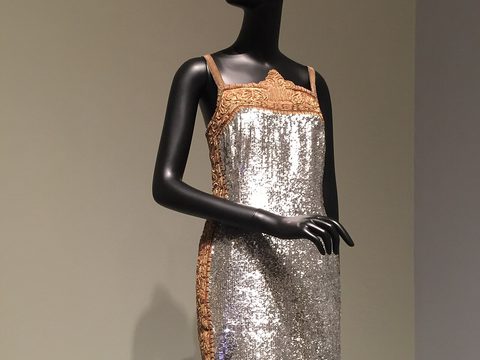 Under the disco lights, her
_____ silver dress shone like a thousand tiny stars.
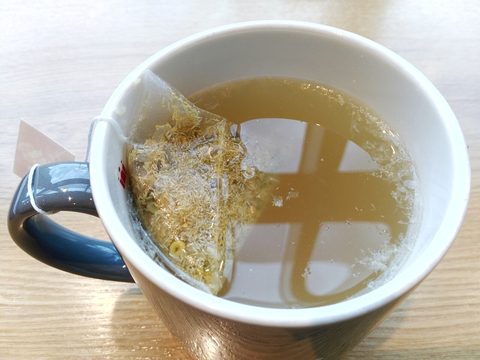 This chamomile tea is really
_____: one cup at night, and I feel calm and ready for bed.
 When I turned the
_____ of the photo all the way down, the red roses lost their color and looked almost gray.
Three questions about you
Watch the video first: about five minutes, by the YouTuber Elizabeth Kemerov, with captions. The captions make a few mistakes: where they say "situation", she says saturation. Then read the story. The first conditional is in bold. Tap a dotted word to see what it means.
In April 2020, the YouTuber Elizabeth Kemerov posted a video with a bold idea. Color, she said, is the most important element of your appearance: the first thing anyone notices.
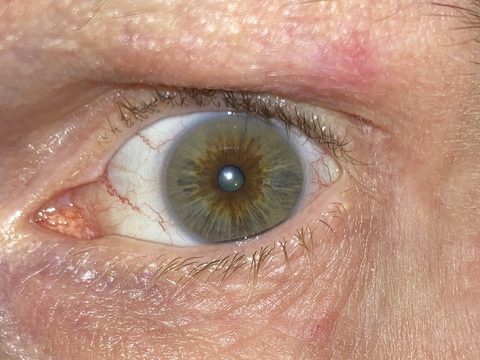
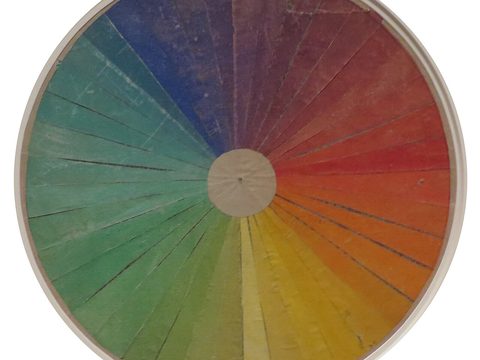
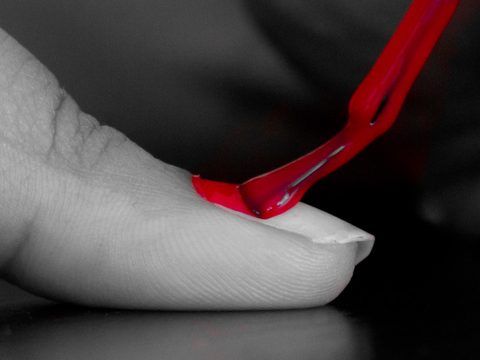
Because people notice color first, it has real power. If you wear the right colors, you'll stand out. If you choose the wrong ones, she warned, they'll ruin the impression you make.
So how do you find the right ones? She promised a ton of information and examples, starting with your color type: the mix of your skin color, natural hair color and eye color.
Those three colors make a huge number of combinations. To make things easier, people created seasonal color analysis, a theory inspired by the Swiss painter Johannes Itten.
Today, many stylists make it even simpler. They look at the main colors of your skin, eyes and hair and check only three parameters: temperature, saturation and brightness.
Temperature comes first. If your skin shows pink and blue tones in natural light, you have a cool undertone: stay on the cool side of the color wheel. Golden, yellowish tones mean warm.
Next comes saturation, how rich and intense a color is. Clear, sparkly features with high contrast call for clear, strong colors. Soft features call for a muted palette, with nothing bright or overpowering.
Last comes brightness: how close a color is to white or black. Light features need brighter colors. If your hair and eyes are dark, your best colors will be deeper, mixed with black.
The three parameters help with more than clothes: hair color, makeup, nails and accessories, too. The point is to match your face, so things that don't touch your face can be different.
Still, Kemerov ended with a warning. There are many exceptions, so your color type should guide you, not rule you. If you know the theory and listen to yourself, you'll make better choices.
Multiple choice
The stamp shows the moment in the video. Click an answer and read why.

-
Why is color so important for Kemerov? 00:03
She goes further than "one of the most important elements of appearance": for her, color is the most important one, the first thing anyone pays attention to.
-
According to Kemerov, what can the wrong colors do? 00:09
Color works both ways: the right colors make you stand out and look great, and the wrong ones can completely ruin the impression.
-
What does knowing your color type give you? 00:45
Knowing your type tells you which colors work best; knowing how to apply it, she adds, gives you the freedom to be creative and master your own style. That is also why she likes it more than following trends (00:31).
-
What is your color type a mix of? 00:59
Three natural colors, not the clothes you own. And natural hair color: the one you were born with, not the one from the salon.
-
Why did people create seasonal color analysis? 01:06
Skin, hair and eye colors together make an extremely large number of possible combinations. The theory was a way to make that easier.
-
Who inspired seasonal color analysis? 01:20
Johannes Itten, a Swiss expressionist painter. While he was painting, he noticed that people with different kinds of appearance looked better against the landscapes of certain seasons. That is why the theory has seasons in its name.
-
Which three parameters do many stylists check today? 01:30
Skin, eyes and hair are where they look; temperature, saturation and brightness are what they measure there.
-
When is a color warm? 01:45
Yellow or yellow-red makes a color warm, and enough blue makes it cool. Black, white and gray shades are neutral, neither warm nor cool.
-
What are your colors like if you have low saturation? 03:04
Low saturation means soft, muted, dusty colors, with nothing bright or overpowering. Clear, sparkly features with high contrast are the opposite: high saturation.
-
Whose best colors are deeper, mixed with black? 03:45
Being on the darker side is about deep, rich, dark hair and eyes; the skin, she says, may or may not be dark. Light hair and eyes go the other way: brighter colors, mixed with white.
-
What was Kemerov's warning at the end? 04:35
In practice there are a lot of exceptions. Just before, at 04:05, she lists where the three parameters help: clothes, hair color, makeup, nails and accessories. Knowing the theory helps, but in the end you listen to yourself.
-
Which sentence best summarizes the story?
The story goes from why color matters, to the three parameters, to where you use them, and ends with the warning. Itten only inspired the theory, and nobody says warm colors are best for everyone.
Temperature, saturation or brightness?
Watch the part of the video from 01:30 to 04:05 again and take notes on the three parameters. Compare your notes with a partner. Then decide which parameter each sentence is about.
-
Your skin shows pink and blue tones in natural light. 02:09
That is a cool undertone. A yellowish, orange or golden look under natural light means a warm one.
-
You have blonde hair and light green or blue eyes. 03:37
Light hair and eyes put you on the lighter side, so your best colors are brighter, mixed with white.
-
It describes how rich and intense a color is. 02:46
Saturation is about intensity: a highly saturated color is rich and strong, and a color with low saturation is closer to gray.
-
Your perfect match is a muted palette, with the colors mixed with gray. 03:16
That is the advice for low saturation. High saturation takes clear, saturated colors.
-
Black, white and gray shades are neutral. 01:53
Warm colors have enough yellow or yellow-red, cool colors have enough blue, and black, white and gray sit in the middle.
-
It describes how close a color is to pure white or pure black. 03:29
Brightness is the third and last parameter: light or dark.
-
Your natural features have deep, rich, dark coloring. 03:45
That puts you on the darker side. Dark hair and eyes decide it; the skin may or may not be dark.
-
Your undertone is somewhere in between, so you have a lot of variety. 02:40
A neutral undertone: not clearly cool and not clearly warm, so you can choose from a wider range of colors.
-
Your features are clear and sparkly, with high contrast between your eyes, skin and hair. 02:56
That is high saturation, so clear, saturated colors work best.
The first conditional
Six questions about how the first conditional works, then eight sentence halves to match.

A real condition, a likely result. Present simple after if, will in the result: that is the first conditional, the grammar of advice, warnings and predictions. Will never goes right after if.
- Use: a real possibility, now or in the future, and its likely result. If it gets cold tonight, I'll take a jacket.
- Order: the if-clause can come first (with a comma) or second (no comma). I'll call you if the store has your size.
- Unless = if … not. Unless you hurry, we'll miss the start of the movie.
- Compare the zero conditional: if + present, present, for things that are always true. The video explains the three parameters this way: if you have a low saturation, your colors are soft.
- Compare the second conditional: if + past simple, would + base form, for imaginary situations. If I lived by the ocean, I'd swim every day.
- Short forms: I'll = I will · you'll = you will · won't = will not.
Part 1 · How it works
-
"If you are dark-colored, your perfect colors will be deeper, mixed with black." What does this sentence express? 04:01
Some viewers really are dark-colored. The condition is real, and the result is what will happen for them.
-
Which structure does the same sentence use?
Are is the present simple, and will be is will + base form: a first conditional. If + past simple, would is the second conditional.
-
In the reading: "If your skin shows pink and blue tones in natural light, you have a cool undertone." Why is there no will?
When the result is always true, both halves take the present simple: the zero conditional. Will comes in when there is advice or a prediction.
-
Which sentence is correct?
No will and no would right after if: the if-clause takes the present simple, and will goes in the result.
-
"Unless you try the color near your face, you won't know if it suits you." Here, unless means…
Unless you try = if you don't try. After unless, the verb stays positive: never unless you don't try.
-
"If I had a million dollars, I'd hire a personal stylist." This is…
Past simple after if (had) and would in the result: the speaker doesn't have a million dollars. A real plan would be: If I get a bonus, I'll hire a stylist.
Part 2 · Match the halves
Complete the advice
Write the words on the left in the right form. After if and unless, use the present simple; in the result, use will or won't. Short forms are fine: 'll ruin, don't fit.
-
takeIf you ___ your new white sneakers to the music festival, they'll be brown with mud by the evening.
-
ruinCareful with that red sock! If it goes into the washing machine with your white shirts, it ___ them.
-
not / fitDon't buy those jeans online. If they ___, you'll have to pay to send them back.
-
keepUnless you ___ the receipt, the store won't take the jacket back.
-
lookYour interview is tomorrow morning. If you wear the navy suit, you ___ serious and professional.
-
it / rainWhat will you do if ___ during the outdoor photo shoot on Saturday?
-
not / showTake the photo of your outfit outside tomorrow. If you take it tonight under the yellow lamp, the picture ___ the real colors.
-
you / chooseIf you can buy only one new shirt this month, which color ___?
Questions to ask and answer
Complete each question with a word or expression from Exercise 02. The cue on the left is a clue to its meaning. Then ask and answer the questions with a partner.

-
be noticeableIn what situations do you want to ___?
-
shiningWhat kind of colors make your eyes look ___?
-
opinionHow important is a good first ___ in social situations?
-
a large amountHave you ever had to learn ___ information for an exam or a project?
-
intensityDo you like photos with high color ___, or do you prefer soft, natural colors?
-
softWhich do you wear more often: bright colors or ___ colors like beige and dusty pink?
-
calmingWhat ___ sounds or places help you relax after a long day?
-
too strongHave you ever smelled a perfume so strong that it was ___?
Talking point
Part A is about the video and the text, Part B is about you, and Part C is for your opinions. Give advice with a first conditional whenever you can: If you…, you'll…
Useful language
Advice for five palettes
60–100 words. Write one piece of fashion advice for each palette below, always with a first conditional. Example: Kermit, if your undertone is warm, you will look great in green! Then read your advice to the class and let them guess the palette.

- 1 · Kermit the Frog, sipping a cup of tea: olive, grass green, forest green, dark green, mustard, pale yellow, orange, rust, brick red and dark plum.
- 2 · A man with a clever smile, tapping the side of his head: periwinkle blue, cool gray, charcoal, reddish brown, almost black, soft purple, pale pink, dusty rose, deep plum and golden yellow.
- 3 · A woman trying to solve math problems in her head: slate gray, gray-green, dark teal, dark brown, caramel, terracotta, peach, mauve, soft beige-pink and almost black.
- 4 · Willy Wonka, smiling in his purple coat and brown top hat: black, dark purple, royal purple, orchid pink, coral, tomato red, lemon yellow, gray, steel blue and cornflower blue.
- 5 · The same young man in two photos: once with silver-gray hair and a black jacket ("Cool tone?"), once with bright orange hair ("Warm tone?").
My results
Check your score, then copy it and send it to your teacher on WhatsApp.

One job for this week. Every morning, look at what you are wearing and give yourself one piece of advice out loud: If I wear this…, I'll… Seven days, seven first conditionals.