In This Class You Eat Ice Cream
The biggest ice cream brands send their people to one university. Two minutes with the professor who studies ice cream from cow to cone, and the tense for things that started long ago and are still going on.
Warm-up
Ask and answer with a partner, or with me. Tap a card when you have answered it.

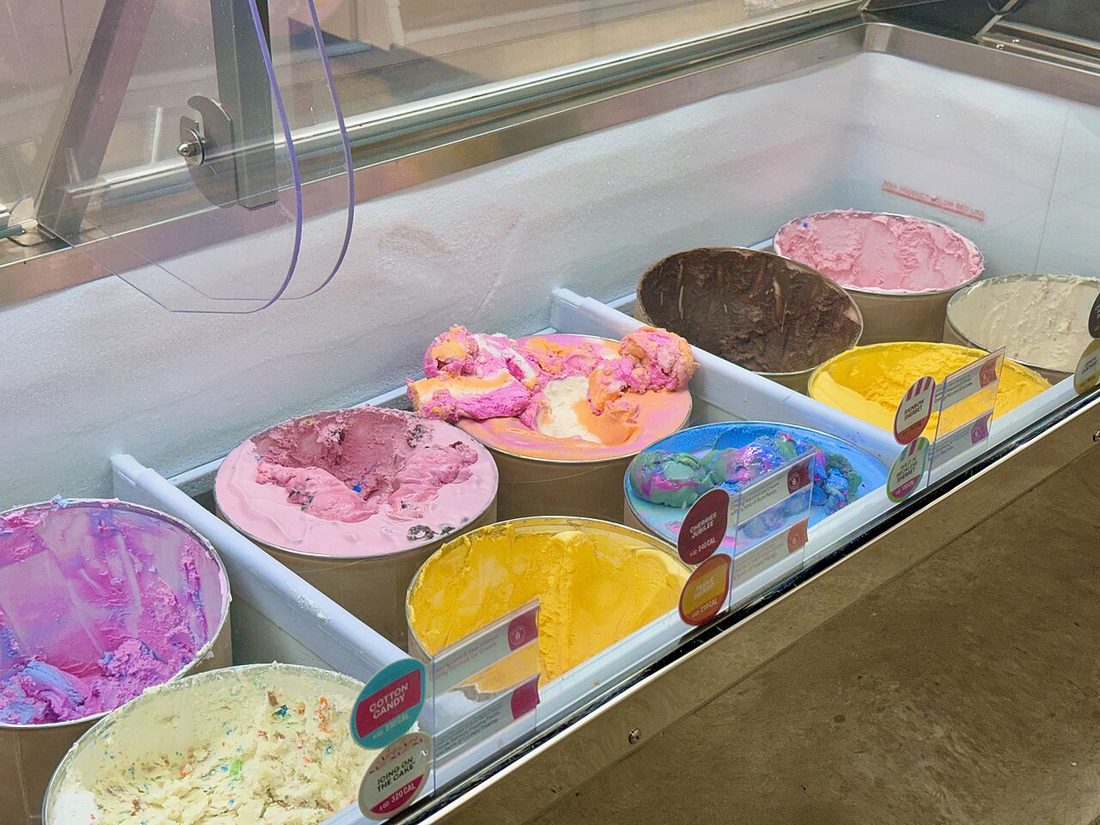
Four famous brands, one surprising link. Say their names, then guess what they have in common. The video gives you the answer, and it also gives you a tense for something that started long ago and is still going on.
Useful language
Words from the creamery
All eight words are in the video. Click a word, then click its definition. Correct pairs turn green. The audio button says the word.
Complete the sentences
Click a word in the bank, then click a gap. Click a filled gap to clear it. Each sentence has its own clues: only one word fits.

 This coffee has a very bitter
_____, so I always add a little sugar and milk.
 In the U.S., milk isn't sold by the liter: you buy it by the gallon or by the
_____.
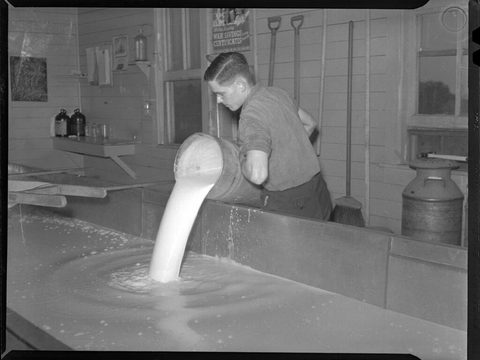 The small
_____ on the hill makes its own butter and cheese with milk from the farms nearby.
 With its new electric cars, the company has moved to the
_____ of the industry, and every other brand now copies its ideas.
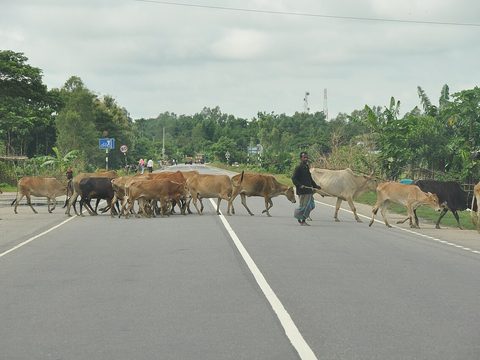 A whole
_____ of cows was slowly crossing the road, so all the cars had to stop and wait.
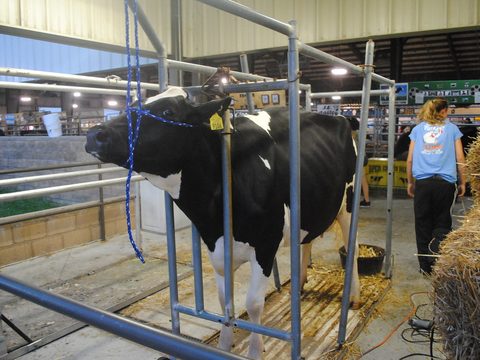 Our neighbor's best cow is a black-and-white
_____ that gives more milk than any other animal on his farm.
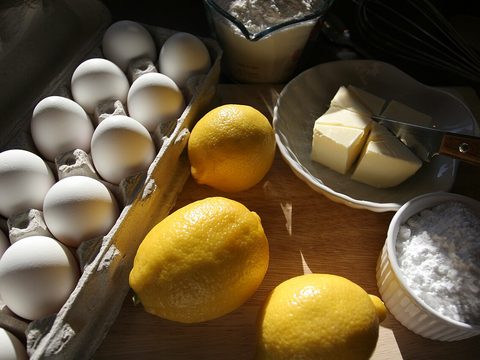 Before you start baking, check that you have all the
_____: flour, eggs, sugar and butter.
 The kids didn't want their ice cream in a cup; they wanted it in a crunchy
_____ that they could eat too.
From cow to cone
Watch the two-minute video twice. First with the sound off: which steps of making ice cream can you see? Tell a partner, or draw a quick mind map together. Then watch again with the sound and the captions on, and read the story. The present perfect continuous is in bold. Tap a dotted word to see what it means.
Even the people at Ben & Jerry's once needed someone to teach them how to make ice cream. Americans love it: the average American eats about 24 quarts a year, simply for the taste.


They learned it, it turns out, at Penn State University. That is where Dr. Bob Roberts teaches two ice cream courses: the Ice Cream Short Course and Ice Cream 101.
Bob's classes are part of a long tradition. People in the U.S. have been teaching ice cream for 125 years, and Bob believes that is part of the reason American ice cream is so good.
Bob himself has been teaching at Penn State for 25 of those years, and some of his students come from famous companies. Unilever, Nestlé, Breyers and Ben & Jerry's have all sent people there.
The companies choose Penn State because its creamery is at the forefront of ice cream technology. And ice cream needs technology, because it is a formulated food.
Because people, not nature, make ice cream, Bob and his department can keep improving it. Their daily work is figuring out new ways to mix and process the ingredients for an even better result.
To make it better, they study ice cream "from cow to cone." They look at what happens on the farm and to the milk, long before any ice cream reaches a cone.
Studying the cow means having cows, and Penn State really does. A herd of about 250 milking Holsteins lives right there on campus, which surprises even the narrator.
All this makes Bob the authority on ice cream. Still, he doesn't call himself an ice cream purist. In fact, he isn't even sure what a purist is.
But one thing is clear: given the choice, he wouldn't pick frozen yogurt over ice cream. And his favorite flavor? After a moment's thought, he answers: dulce de leche.
Multiple choice
The stamp shows the moment in the video. Click an answer and read why.

-
Why do Americans eat so much ice cream, according to the narrator? 00:08
"One big reason": the taste. And it adds up: 24 quarts a year is almost 23 liters of ice cream per person.
-
What does the narrator say about Ben & Jerry's? 00:12
Even a famous brand started as a student. And the teacher, it turns out, works at Penn State: that is how the video introduces Dr. Bob Roberts.
-
What does Dr. Roberts teach at Penn State? 00:32
The Ice Cream Short Course and Ice Cream 101. In American universities, 101 is the number of the first, basic course in a subject: Biology 101, Economics 101.
-
According to Dr. Roberts, what is part of the reason ice cream is so good in the U.S.? 00:44
He calls it "part of the reason", not the only one. The 125 years are the whole country's history of teaching ice cream; Bob's own part is 25 of them.
-
Who are some of Bob's "famous students"? 00:55
Unilever, Nestlé, Breyers, Ben & Jerry's: "you name the company," Bob says, and it has sent people to Penn State. The students are famous because of the companies they work for.
-
Why do these companies send people to Penn State? 01:05
The narrator says "on the forefront"; you will hear both on and at the forefront, and at is more common. It means the most advanced position, where the newest work happens.
-
Dr. Roberts calls ice cream "a formulated food." What does he mean? 01:10
"There is no naturally occurring ice cream." Milk comes out of a cow ready to drink; ice cream only exists because people put the ingredients together and process them.
-
Bob says they study ice cream "from cow to the cone." What does he mean? 01:24
What happens on the farm, what happens with the milk, and all the way to the ice cream in your hand. That is why the next surprise in the video is a farm.
-
What surprises the narrator? 01:30
"Wait, there's a farm?" Yes: a herd of about 250 milking Holsteins, the big black-and-white dairy cows, right on campus.
-
Frozen yogurt or ice cream: what does Bob say? 01:44
He isn't sure what an ice cream purist is, but he wouldn't eat frozen yogurt if he had the opportunity to eat ice cream. Coming from the authority on ice cream, the narrator says, that makes sense.
-
What is Bob's favorite flavor? 01:57
Dulce de leche is a sweet, caramel-like cream made by cooking milk with sugar for a long time, very popular in Latin America. A good choice for a man who studies ice cream from the cow up.
-
Which sentence best summarizes the story?
Every paragraph adds one step to the same thread: where the big brands learn, how long Bob has been teaching there, why the companies come and how deep his work goes. The farm sells nothing in the video, and Bob never says frozen yogurt is healthier.
Fact file: Dr. Bob Roberts
Watch again and take notes about Dr. Bob Roberts. Then complete his fact file with what you hear: numbers, a name or a flavor. The stamp shows where to listen. You can write the numbers in figures.
-
100:04
Each American eats about ___ quarts of ice cream per year. -
200:32
Bob teaches ___ ice cream courses at Penn State. -
300:34
Their names: the Ice Cream Short Course and Ice Cream ___. -
400:47
In the U.S., people have been teaching ice cream for ___ years. -
500:51
Bob has been teaching at Penn State for ___ years. -
601:32
The university has a herd of about ___ milking Holsteins. -
701:57
His favorite flavor is ___.
Phrasal verbs from the video
Four phrasal verbs, four moments in the video. First say what each one means, then use them in new sentences.

- figure out: to understand something, or find the answer to a problem, after thinking about it. I finally figured out the password.
- turn out: to happen in a particular way, or to have a result you did not expect. The test turned out to be easy. · It turns out that… introduces a surprising fact.
- hold on: to wait for a short time. Hold on, I'll get my coat. Very common on the phone.
- put together: to join or combine parts to make one thing. We put the table together in ten minutes. The object can go in the middle.
-
"Turns out, that guy, he works at Penn State." What does "turns out" show? 00:16
Somebody taught Ben & Jerry's, and that somebody is a university professor, not a chef. Turns out (short for it turns out) is how Americans introduce the surprise.
-
"Hold on. Okay, this is Dr. Bob Roberts." What does the narrator mean by "hold on"? 00:24
He starts the introduction, stops, and starts again. Hold on can also mean "hold something tightly", but not here: here it asks you to wait.
-
"You have to put the ingredients together and process it to make ice cream." What does "put together" mean here? 01:13
Milk, cream, sugar and flavor go into one mix. That is the point of "a formulated food": somebody has to combine the parts.
-
"They spend their time figuring out how to make ice cream even better." What does "figuring out" tell you about their work? 01:20
Figure out is thinking work: they test and study until they understand how to make ice cream better. Spend time + -ing: they spend their time figuring out.
Now write the right phrasal verb in the right form. The cue gives the meaning.
-
understandThe instructions were in Japanese, so it took us an hour to ___ how the new coffee machine works.
-
was, in the endWe expected rain all day, but the weather ___ to be perfect for the picnic.
-
wait___ a second! Don't close the door. I'm coming with you.
-
assembleIt took my father all afternoon to ___ the new bike: there were more than fifty pieces.
-
surprising factI thought my neighbor was British, but it ___ he was born in Canada.
-
solveNobody could ___ why the milk tasted strange until someone checked the date on the carton.
-
wait, on the phoneCan you ___ for a minute? I have another call.
Words that go together
Five pairs of words that normally go together, as Dr. Roberts and the narrator use them in the video. Click a word on the left, then its partner on the right.
Now use them in new situations. Write the missing word or words.
-
aHoney is a ___ occurring food: bees make it, and people only collect it.
-
bA protein bar is a carefully ___ food, with exact amounts of protein, sugar and fat in every bar.
-
cIt looks like ice cream and it's served cold, but it's made with yogurt: it's ___ yogurt.
-
dThe little shop has its own cows and sells its ice cream at the front door. It does everything, from cow ___.
-
eMy grandmother taught me to ___ ice cream at home with just cream, sugar and strawberries.
The present perfect continuous

Started in the past, still going on. Bob started teaching at Penn State 25 years ago, and he is still teaching there today. English puts both ideas into one tense: he has been teaching there for 25 years. Ask with how long, and answer with for or since.
- Affirmative: I / you / we / they have been ('ve been) working · he / she / it has been ('s been) working. In speech, almost everybody uses the contractions.
- Negative: I haven't been feeling well. · The printer hasn't been working since Friday.
- Question: Have they been training hard? · How long has he been living in Denver?
- An action that started in the past and continues now: We have been teaching ice cream for 125 years. The teaching started 125 years ago, and people are still teaching it today.
- for + a period of time: for ten minutes, for a week, for 25 years · since + the starting point: since Tuesday, since 1990, since I was a child.
- A recent activity with a result you can see now: You're out of breath. Have you been running?
- Not with state verbs like know, like, love, believe, own: use the present perfect simple. I have known her since school, not "I have been knowing her".
-
"We've been teaching ice cream for 125 years." What does this tell us? 00:47
Past start, present continuation: that is the whole idea of this tense. If it had stopped, the speaker would use the past simple: "They taught…".
-
"He's been teaching at Penn State for 25 of those." Here, he's means… 00:51
When 's comes before been, it is always has. "He is been" is not English.
-
Complete the structure: subject + ___ + been + verb + ___
Have or has (it depends on the subject), then been, then the verb with -ing: She has been cooking.
-
I ___ for the bus for twenty minutes, and it still hasn't come.
The waiting started twenty minutes ago and is still happening. In Portuguese we use the present here, but in English "I am waiting for twenty minutes" is wrong.
-
They've been living in Chicago ___ 2015.
2015 is the starting point, so since. For needs a period (for ten years), and ago goes after a period, with the past simple (ten years ago).
-
She's been studying English ___ three years.
Three years is a period of time, so for. With since, you need a starting point: since 2023, since she started her new job.
-
Your hands are all sticky! ___ ice cream?
A recent activity with a result you can see: sticky hands. The question is Have + subject + been + -ing.
-
Which sentence is WRONG?
Own is a state verb, so it takes the present perfect simple. Live is an action, and it works in both tenses.
-
How long ___ at Penn State?
In the question, has goes before the subject, and the main verb keeps its -ing.
Write the present perfect continuous
Use the subject and the verb on the left. Write the subject too, and use contractions when you can (I've, she's, haven't).
-
they / teachHow long ___ how to make ice cream?
-
they / play___ tennis for an hour.
-
I / help___ him to do the task for an hour.
-
he / travel___ around the world for a month.
-
she / study___ in the library for three hours.
-
I / watch___ TV since 7 p.m.
-
I / not sleep___ well lately: my neighbor's dog barks all night.
-
you / waitSorry I'm late! ___ long?
One sentence instead of two
Each pair of sentences says that something started in the past and is still going on. Write one sentence in the present perfect continuous with the word on the left.

-
SINCEMaria started working at the bakery in 2019. She still works there.
-
FORIt started raining two hours ago. It's still raining.
-
SINCEWe started painting the kitchen on Monday. We're still painting it.
-
FORThey started building the new bridge six months ago. The work continues.
-
SINCEMy brother started learning the guitar when he was ten. He's still learning.
-
HOW LONGAsk Bob a question about his job: "When did you start teaching at Penn State?" (He still teaches there.)
Talking points
Talk for about a minute about each card and ask your partner follow-up questions. Part A is about the video and the story, Part B about your life (answer the questions with have been + -ing where you can), Part C about your opinions.
Useful language
My uncommon job
100–140 words. Imagine it is ten years from now, and you have the uncommon job you would love, like Bob's job with ice cream. Write a short post for your company's website: what you do, how long you have been doing it and what you have been working on lately. Use the present perfect continuous at least three times, with for or since.

My results
Check your score, then copy it and send it to your teacher on WhatsApp.

One job for this week. Every evening, answer one question out loud: "What have you been doing today?" Two or three sentences, with for or since. "I've been working on a report since nine. I haven't been sleeping well." Thirty seconds, in English.