The Night Agent
A young FBI agent, a phone in the White House basement that almost never rings, and the night it finally does. Words from the world of federal agents, and the five-part shape that almost every thriller follows.
Warm-up
Ask and answer with a partner, or with me. Click a card when you have answered it.

Tonight, a phone rings in the White House. Before we pick it up, tell me what you already know about the FBI and its agents, in real life and on screen. Today you are also a screenwriter: you will plan your own thriller before you watch one.

Useful language
Words from the trailer
Click a word, then click its definition. Correct pairs turn green. The audio button says the word.
Complete the sentences
Click a word in the bank, then click a gap. Click a filled gap to clear it. Read the whole sentence first: only one word makes sense in each one.

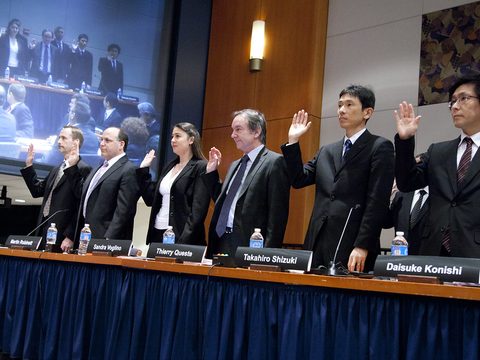 Before answering any questions, each witness raises a hand and takes an
_____ to tell the truth.
 At three in the morning the alarm went off, and the camera showed an
_____ climbing through the kitchen window with a flashlight.
 A good judge must
_____ the law, even when she personally disagrees with it.
 Don't swim here: the water looks calm, but the currents are strong and very
_____.
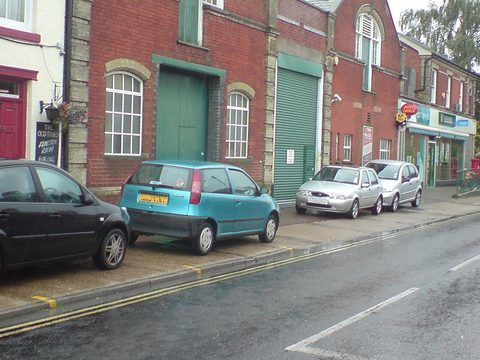 The town has a rule against parking on the sidewalk, but there is no
_____: nobody ever gets a ticket, so everybody parks there.
 The local police stopped working on the case when a
_____ from the national agency showed her badge and took over.
 The
_____ spent two years on the script, but the director changed half of the dialogue during filming.
 The villain gets the funniest lines, but the
_____ is the character we follow from the first scene to the last and hope will win.
You are the screenwriter
Imagine you are a screenwriter, and this is the setting of your next movie. First, two minutes to plan: what will your story be about? Make bullet points, and use the cards to help you. Then ten minutes to write as much as you can, on paper or in a notebook. Don't worry about spelling or grammar at this point: just let your imagination flow. Keep your text: you compare it with the trailer in Exercise 05 and rewrite it in Exercise 11.
- Ideas for characters and plot twists: federal agents · a terrorist attack · an assassination attempt
The phone that almost never rings
First, look at the three moments from the trailer below. Which parts of your story from Exercise 04 are similar? Then watch the trailer with the captions on (two minutes and twenty seconds) and compare. Finally, read the story the trailer tells. Hover or tap a dotted word to see what it means.

- 1. A young man in a dark suit stands in a crowded subway car and shouts, "Hey, FBI! I need everybody to exit the train right now."
- 2. A person in a black mask stands in a dark room.
- 3. An open file shows the photo of a woman, and a voice says, "We just lost two federal agents."
One day, Peter Sutherland, a young FBI agent, senses danger on a crowded train in Washington, D.C. There is no time to wait. He shouts "FBI!" and orders everybody off the train right away.
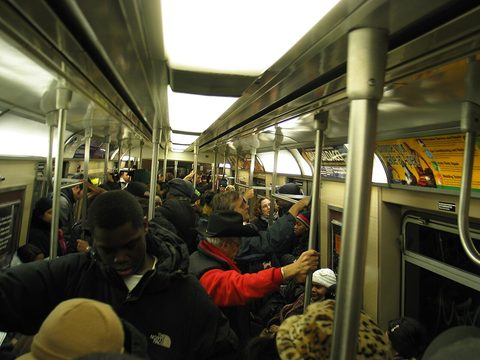

His quick reaction saves many lives, because there is a bomb on the train. That day changes his career: a year later, Peter starts a new job at the White House.
At the White House, his new boss asks him a strange question: has he ever heard of Night Action? It is a top-secret investigation program inside the FBI, and almost nobody knows it exists.
Peter asks if he will be a night agent himself, but his boss says no. His only job is to answer their phone, down in the basement, and that phone almost never rings.
Then, one night, the phone in the basement finally rings. On the line is a terrified young woman, Rose Larkin. She is in danger, she says, because there are intruders in the house.
Peter promises her that everything will be all right and rushes to help. Soon, terrible news arrives: two federal agents are dead. They were Rose's aunt and uncle, and they worked for Night Action.
Rose heard and saw too much that night, so now the killers are after her. Worse, someone inside the White House may be involved, and Peter's orders are to protect her at any cost.
To stay alive, they have to find out the truth. But every answer brings a bigger problem: the more they learn, the more dangerous their situation becomes.
Their search leads to a shocking discovery: the danger is not a terrorist attack, as it first seemed, but an assassination attempt. Somebody wants an important person dead.
Now nobody knows who is on which side, and one wrong guess could finish them. The trailer stops right there, before the climax: to see who wins, you have to watch the series.
Multiple choice
The stamp shows the moment in the trailer. Click an answer and read why.
-
Where is Peter when he senses danger? 00:22
"Hey, FBI! I need everybody to exit the train right now." In the series, the train belongs to the Washington Metro, the subway of the capital. The basement comes a year later. Gabriel Basso plays Peter.
-
What happens because Peter reacts so fast?
The trailer only shows him ordering everybody off. The first episode shows the rest: there is a bomb on the train, and his quick reaction saves many lives.
-
What happens to Peter a year after the train? 00:34
"Welcome to the White House, Peter." Just before it, at 00:30, you hear "Now please stand as I administer your oath": to administer an oath is the formal way to say that an official asks somebody to make one.
-
What is Night Action? 00:39
"A top-secret investigative program within the FBI." Its agents are the night agents of the title, and almost nobody knows they exist.
-
Does Peter become a night agent? 00:43
"You want me to be a night agent?" "God, no." His job is to answer the phone for them, and at 00:48 we learn that it rarely rings. Netflix describes him as a low-level agent who works in the White House basement.
-
Why does Rose Larkin call? 00:58
"I'm in danger. There's intruders. What do I do?" In fast, informal speech, many Americans say there's even before a plural; in writing, use there are. In the series, Rose is a young cybersecurity entrepreneur.
-
What does Peter do after the call? 01:01
"It's gonna be all right. I'm on my way." Gonna is going to in fast spoken English; it is fine in conversation, but not in formal writing.
-
Who were the two federal agents who died? 01:04
"We just lost two federal agents." Here, lost means they were killed. In the series, they are Emma and Henry Campbell, Rose's aunt and uncle, both members of Night Action.
-
What do the investigators suspect? 01:06
"They suspect someone in the White House of being involved." Notice the pattern: suspect someone of doing something. That is the real danger: the enemy may be inside the building where Peter works.
-
Why are the killers after Rose now? 01:10
"They're after me now, aren't they?" To be after someone is to chase them and try to catch them. In the series, Rose saw the face of one of the killers.
-
What do they finally discover about the danger? 01:26
"This isn't a terrorist attack. This is an assassination attempt." A terrorist attack wants to frighten a whole country; an assassination attempt aims at one important person. Netflix says the plot leads all the way to the Oval Office, the president's office.
-
Which sentence best summarizes the story?
The train only explains how Peter got the job, and the call is only the start. The whole chain goes from a phone that never rings to a plot inside the White House. The trailer is for the first season of the Netflix series (ten episodes, March 2023), based on the novel by Matthew Quirk.
Watching for detail
Watch the trailer again (Exercise 05) and complete the lines as you hear them. The stamp shows the moment. Click a word in the bank, then click a gap.

- "The FBI is the United States' premier law _____ agency." 00:05
- "We have a zero-fail mission to _____, which means that we expect nothing short of perfection." 00:10
- "Now please stand as I administer your _____." 00:30
- "I want you to answer the phone for them. It _____ rings." 00:48
- "I'm in danger. There's _____. What do I do?" 00:58
- "They suspect someone in the White House of being _____." 01:06
- "The more you know, the more _____ this becomes." 01:16
- "This isn't a terrorist attack. This is an assassination _____." 01:28
The shape of a story: Freytag's Pyramid
Read the note, then match each part of the plot with its description. The audio button says the name.

Almost every thriller has the same shape. A quiet start, one event that breaks the quiet, a long climb, a peak, and the way down. Gustav Freytag, a German writer of the 1800s, drew it as a pyramid, and it is still the easiest map for planning a story, or for telling one.
- Exposition: the line is flat. Who? Where? When? What is normal life like?
- Inciting incident: the star on the graph, where the flat line breaks.
- Rising action: the line climbs. Each new problem is bigger than the last one.
- Climax: the top of the pyramid. After this moment, the story can only go down.
- Falling action: the line comes down, and the loose ends get tied up.
- Resolution: flat again, but nothing is quite the same as before.
- It all starts when … · Everything changes the day … · Things get worse when … · At the worst possible moment, … · After that, … · In the end, …
Where are we in the story?
Questions 1 to 4 are about the trailer. Questions 5 to 10 tell a short story of their own, in order: read each moment and decide which part of the pyramid it is.
-
Peter starts his new job at the White House and learns what Night Action is. Which part of the plot is this?
We meet the hero, the place and his situation, and nothing has gone wrong yet. The line of tension is still flat.
-
The phone that almost never rings finally rings, and a woman says there are intruders in her house.
One event breaks the quiet and pulls Peter into the story. Without this call, there is no series.
-
Two federal agents are dead, someone in the White House may be involved, and the killers are after Rose.
Each problem is bigger than the one before, and the suspense keeps growing. The line is climbing.
-
The trailer shows the exposition and the rising action, but not the climax. Why?
A trailer is an invitation. It builds suspense and stops near the top of the climb, so you have to watch to see who wins.
-
Greta keeps a lighthouse on a tiny island. Every evening, she lights the lamp, feeds her cat and writes in her diary.
The setting, the protagonist and her normal routine. Every evening is the clue: nothing unusual has happened yet.
-
One stormy night, she sees a small boat with no lights heading straight for the rocks.
One stormy night breaks the routine of every evening. This is the event that starts the conflict.
-
She rows out into the storm. The waves get higher, her boat starts to fill with water, and the lamp goes out behind her.
Three complications, one after the other, and each one makes the situation worse. We still don't know who will win.
-
At the edge of the rocks, she grabs the hand of the boy in the boat just as it breaks into pieces.
Life or death, in one second. This is the highest point of tension, and it decides the conflict: the boy is saved.
-
She rows them both back through calmer water and wraps the boy in a blanket by the fire.
The danger is over, and the tension goes down: calmer water, a blanket, a fire. The story deals with what happens right after the climax.
-
A year later, the boy lives on the island as her assistant, and the lamp has never gone out again.
The final outcome. Life is calm again, but it has changed: now there are two people on the island. A year later is a typical way to open a resolution.
Talking points
Part A is about the trailer and the story, Part B about your life, Part C about what you think. Talk for about a minute about each card, say why, and ask your partner a follow-up question.

A · The trailer and the story
B · Your life
C · What do you think?
Useful language
Your White House thriller, in five stages
150–200 words. Take the story you wrote in Exercise 04 and rewrite it with the plot structure: first plan each stage with the questions below, then write one short paragraph per stage. Use at least four words from Exercise 02, and share your story with the class.
- Exposition: How will you hook your reader's attention? How will you set the mood? Establish the setting, introduce the characters and give hints of the conflict.
- Rising action: How will you build suspense or tension? What complications or obstacles will your protagonist have to face?
- Climax: What is the highest point of tension in your story? Who or what wins the conflict?
- Falling action: What happens right after the climax? Is there one last surprise?
- Resolution: What is the final outcome? How do you want your reader to feel at the end?
My results
Check your score, then copy it and send it to your teacher on WhatsApp.

One job for this week. Choose a movie or an episode you watch this week and tell somebody its plot out loud, in English, in five sentences: one for each part of the pyramid. If they haven't seen it, stop before the climax!