Can Flying Ever Be Sustainable?
Billions of people fly every year, and almost every plane still burns fossil fuels. Better wings, new fuels, batteries: a BBC Ideas video tests every idea, and two future forms help us talk about what comes next.
Warm-up
Ask and answer with a partner, or with me. Tap a card when you have answered it.

Flying is part of our lives: vacations, work, family far away. Today's video asks a hard question: can it ever be green? To answer it, we need to talk about the future, and English has more than one way to do that.
Useful language
Words about flying and energy
All eight words appear in the video or in the reading. Click a word, then click its definition. Correct pairs turn green. The audio button says the word.
Complete the sentences
Click a word in the bank, then click a gap. Click a filled gap to clear it. Each sentence has its own clues: only one word fits.

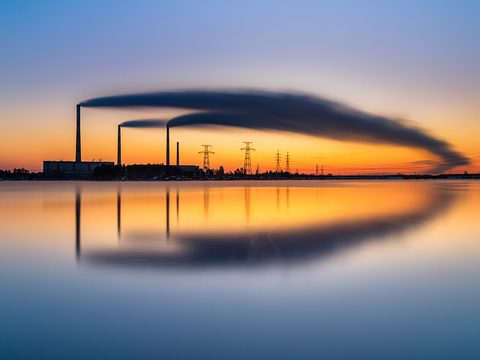 The old factory sends black smoke into the sky all day, and its
_____ make the air in the whole town dirty.
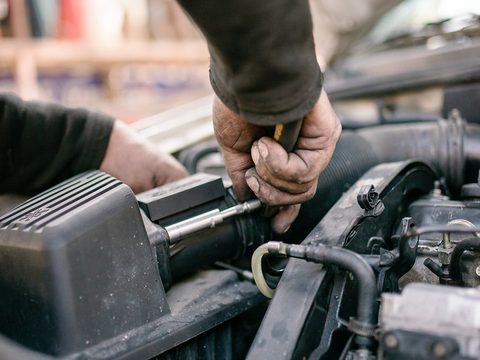 When my car wouldn't start, the mechanic opened the hood and checked the
_____: one of its parts was broken.
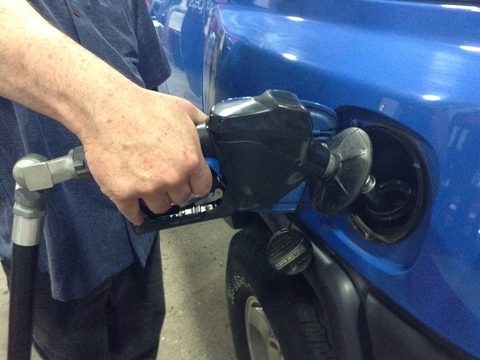 My new car uses much less
_____ than my old one: it goes about 40 miles on a gallon of gas.
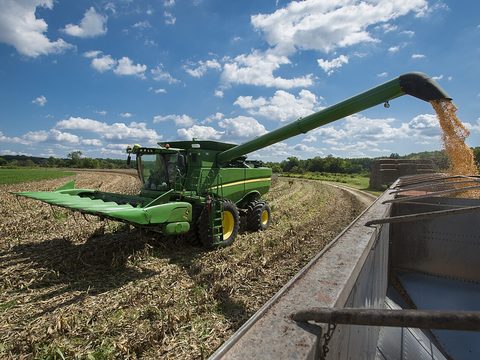 Not all of the farmer's corn becomes food: some of it goes to a factory and becomes one of the
_____ that trucks can run on.
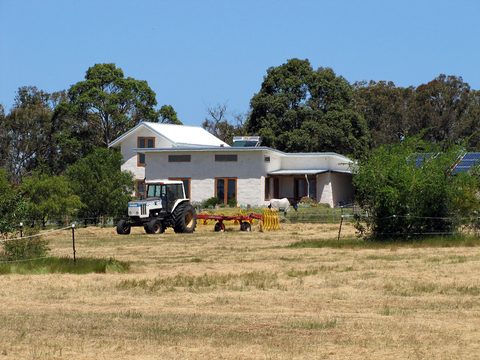 The family sold their house in the city and bought a piece of
_____ in the country to grow their own vegetables.
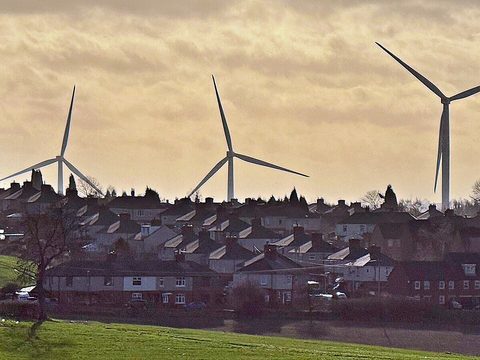 Our village gets all of its electricity from the wind, a
_____ that will never run out.
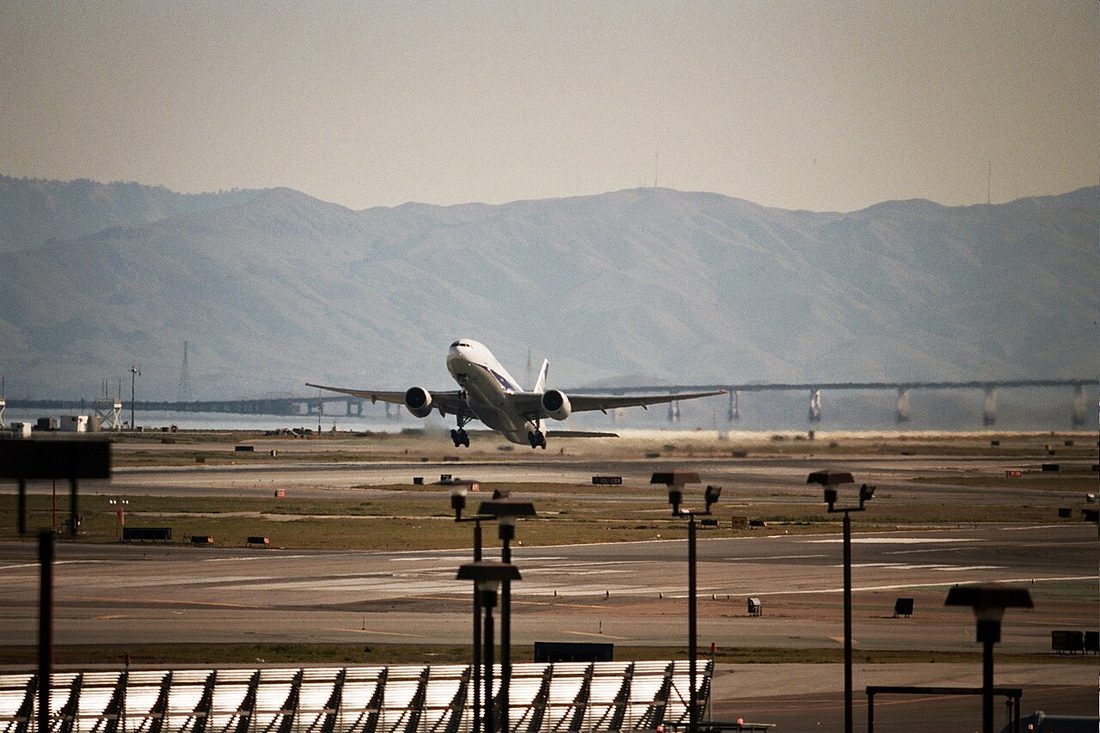
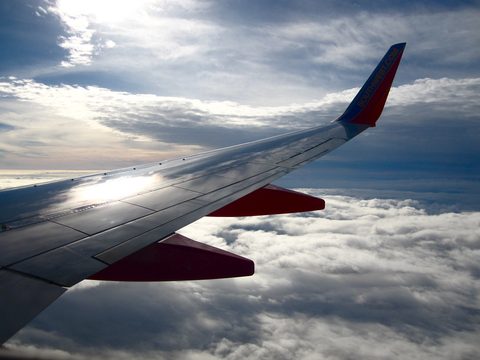 From my window seat, I could see one of the plane's two
_____, the bent-up end of the wing, painted in the airline's colors.
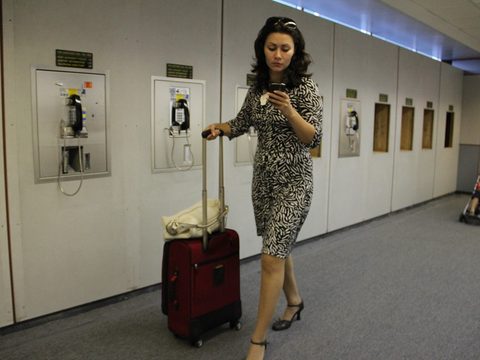 My aunt is a real
_____: she takes about fifty flights a year for work.
No silver bullet
Watch the video first: about six minutes, from BBC Ideas, with captions. Then read the story. The future forms are in bold. Tap a dotted word to see what it means.
"Do you fly?" Cait Hewitt smiles at the question. Her last flight was before her daughter was born, and that daughter turns thirteen this summer.
She works at the Aviation Environment Federation, on a huge problem: more and more people are flying. By 2050, we could see 10 billion passengers a year.
All those flights come at a cost. In 2019, planes produced about one gigaton of CO2, and half of all aviation emissions come from just 1% of the world's people, many of them frequent flyers.
So emissions from flying need to fall to nearly zero, and there is very little time left. But planes still depend almost totally on fossil fuels, and green technologies for aviation aren't ready yet.
The first idea is to improve the planes themselves. Winglets, the small tips that turn up at the end of each wing, were inspired by birds, and they make the wings more efficient.
But better design won't be enough. Planes become only about 2% more efficient each year, and that can't go on forever. So the fuel will have to change, too.
One option is biofuel, made from plant-based materials such as vegetable oil. But replacing all of the UK's jet fuel this way would need about 68% of the land that now grows the country's food.
Other fuels bring other problems. E-fuels, made from CO2 taken out of the air, are very expensive and use a lot of energy. Hydrogen is explosive, and hydrogen planes will take decades to develop.
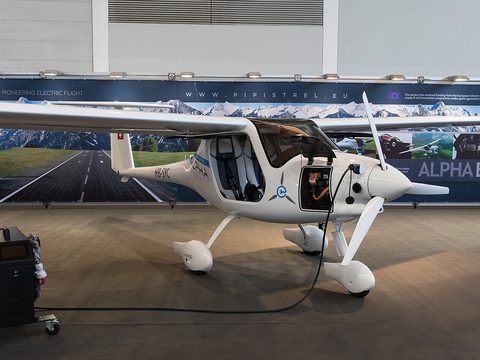
What about electric planes? They are still very rare. Batteries that work well in an electric car make a plane much too heavy to fly.
So there is no silver bullet. We will have to try everything, and probably fly less: the planes built today will still be flying in 2050, when emissions should be at net zero.
Multiple choice
The stamp shows the moment in the video. Click an answer and read why.

-
When did Cait Hewitt take her last flight? 06:02
Her daughter is going to be a teenager this summer, so Cait hasn't been on a plane for about thirteen years. The question comes at the very end of the video; the text starts with it.
-
How many passengers a year are expected by 2050? 01:03
4.5 billion is the number for 2019. The narrator says "we're really expecting that to grow", and right after, the screen shows 10 billion a year by 2050.
-
How much CO2 did aviation produce in 2019? 00:50
The gigaton is on the screen at 00:47, and the comparison comes next: two big economies together. "Half" is a different fact, in the next question.
-
Who produces half of all the emissions from aviation? 01:14
A tiny group, and many of them fly very often. The 40% on the screen at 01:25 is a different fact: in high-income countries, 40% of people take at least one flight a year, but in low-income countries only 1% do.
-
The video gives two reasons why aviation is a special challenge for the climate. What are they? 00:26
Reason one comes at 00:32, reason two at 00:35. Put them together and you get the problem: more and more flights, and almost all of them still burn fossil fuels.
-
Is there one definite solution that can make aviation green? 01:31
There is "no silver bullet": no single, simple answer. Every option in the rest of the video comes with a "but".
-
Where did the idea for winglets come from? 01:52
Winglets were inspired by birds, and engineers are now studying even more features of bird wings and bird flight. Winglets make the wings more efficient.
-
Why won't better design be enough? 02:13
Two percent a year is "very little", says the professor. So the fuel has to change too, and that is the next part of the video.
-
What is the problem with biofuels? 02:58
Growing the plants for all of the UK's jet fuel would take about 68% of the land where the country grows its food today. Vegetable oil can be turned into a biofuel; the problem is where to grow all the plants.
-
What is the big disadvantage of e-fuels? 03:26
Taking CO2 out of the air is how e-fuels are made, and that part is good: the carbon goes around in a circle. The problem is the price, and all the energy the process uses.
-
What is the problem with electric planes? 04:33
Batteries that work well in an electric car make a plane much too heavy. Someone in the video is one of the very few people in the world who have flown an electric plane, and they are still very rare.
-
Which sentence best summarizes the story?
Every idea has a "but": design improves too slowly, biofuels need land, e-fuels and hydrogen cost a lot, batteries are too heavy. So the answer is all of them together, plus flying less. Nobody in the video says that flights will stop.
Listening for detail
Watch the video again. In Part 1, complete each sentence from the introduction with words from the box; two sentences take the same answer. In Part 2, decide which part of the video each sentence comes from, and read why it is there.
Part 1 · The introduction (00:00–00:46)
-
1___ is a huge challenge. 00:02
-
2___ is a big part of our lives, and it contributes hugely to global warming. 00:04
-
3___ from this sector need to come down to nearly zero, and there isn't much time. 00:12
-
4___ still depends almost totally on fossil fuels. 00:35
-
5There are no green technologies available yet for ___. 00:42
Part 2 · Four parts of the video (01:40–06:20)
-
A · "They are made from plant-based materials." Which part of the video is this from?
It's about biofuels, at 02:40. Vegetable oil is one example, but replacing all the UK's jet fuel with biofuels would need about 68% of its food land.
-
B · "They increase the efficiency of the wings." Which part of the video is this from?
It's about winglets, at 01:48: small vertical tips at the end of the wings. A tweak is a small change that makes something work better.
-
C · "They are very rare." Which part of the video is this from?
Electric airplanes, at 04:20. The person who says it is one of the very few people in the world who have flown one.
-
D · "It's going to cost a lot and take a lot of energy." Which part of the video is this from?
At 04:46, about the whole job of making aviation sustainable: it will need a lot of resources, especially energy, and a lot of money.
-
E · "If you put car batteries on a plane, it is too heavy to fly." Which part of the video is this from?
At 04:33. The same batteries that work well in an electric car make a plane much too heavy.
-
F · "They were inspired by birds." Which part of the video is this from?
Winglets again, at 01:52. Engineers are now studying even more features of bird wings and bird flight for their planes.
-
G · "A big disadvantage is that they are very expensive." Which part of the video is this from?
It's about e-fuels, at 03:26, made from CO2 taken out of the air. They are expensive in money and in the energy they use.
-
H · "It will happen only by working together." Which part of the video is this from?
At 04:51: a huge effort from business and government working together, with the cooperation and support of the public.
Future simple and future continuous
Read the rules. Then read four predictions about aviation found online, and decide what each verb in bold talks about.

Two futures, two pictures. The future simple is a dot on the calendar: something will happen. The future continuous is a line that crosses a moment: at that time, the action will be in progress. The reading ends with one: the planes built today will still be flying in 2050.
- Predictions and future events: The aviation sector will continue to grow.
- Decisions and promises made now: You look tired. I'll drive. · I'll call you from the hotel.
- The result of an if sentence: If it snows, the school will close.
- An action in progress at a time in the future: A lot more people will be flying in twenty years. · At 11 p.m. tonight, I'll be sleeping.
- An action already happening when something else happens: When you get home, we'll be having dinner.
- Negative and question: won't (= will not) + verb or won't be + verb-ing · Will you need help? · Will she be working on Sunday?
- State verbs (know, own, believe, understand) stay in the future simple: We'll know the answer next week, not We'll be knowing.
-
A · "Recent estimates suggest that demand for air transport will increase by an average of 4.3% per year over the next 20 years." What does the verb talk about?
Will + increase: a prediction about the future, seen as a whole. Nothing in the sentence puts us in the middle of an action.
-
B · "Self-flying planes will be carrying passengers by the end of this decade." What does the verb talk about?
Will be carrying: at the end of the decade, carrying passengers will be a normal activity, already in progress.
-
C · "In 50 years, we will still be flying, and it will be sustainable." What does the verb talk about?
In 50 years, flying will be in progress, part of everyday life. Notice the place of still: between will and be.
-
D · "Experts believe hybrid and fully battery-powered planes will begin to dominate the sector by 2030." What does the verb talk about?
Will begin is one future event: a start. Compare it with the video: today, batteries still make a plane too heavy to fly.
-
Which sentence is WRONG?
Own is a state verb, so it stays in the future simple. Live is an action, so it can be in progress.
-
"At noon on Saturday, I'll be flying to Recife." What does it mean?
The plane takes off before noon and lands after it. At twelve o'clock, the speaker is in the air.
Choose the correct form
Some wrong options are not English at all; others are English but have the wrong meaning. Look for the clue in each sentence: a time, an if, a decision.
-
a · If this rainy season continues, forecasters say we ___ a flood.
A flood is one event that will happen, the result of the if clause. It is not an action in progress at a certain moment.
-
b · At 3 p.m. tomorrow, we ___ a meeting.
At 3 p.m. the meeting will be in progress. Will having doesn't exist: after will comes a base form, here be.
-
c · I've decided that in the future I ___ the train to work.
A decision about the future: will + verb. There is no particular moment when the action will be in progress.
-
d · Please don't come between one and two, because we ___.
Between one and two, the cleaning will be in progress. That is exactly why the visitor shouldn't come then.
-
e · Sam ___ in college in five years.
Five years from now, his studies will be in progress. Will studying is missing be.
-
f · We ___ a house in the country if we sell our apartment.
Buying the house is one event, the result of selling the apartment. If + present, then will + verb.
-
g · This time tomorrow, the students ___ home.
This time tomorrow points to one moment, and at that moment they will be in the air.
-
h · If they have time tomorrow, they ___ to plan the project.
Starting is one event, and it depends on the if: first the free time, then the start.
-
i · She has decided that she ___ until next year to start a new course.
Another decision: will + verb. Until next year tells us how long, not a moment when the waiting will be in progress.
-
j · The flight attendant says our flight ___ delayed.
A future passive is will be + past participle: will be delayed. Will be being is not used.
-
k · If the game starts at 7 p.m., we ___ at 8:45 p.m.
The game starts at seven, so at 8:45 it will be in the middle. Here the if is not the clue; the time is.
-
l · If you call me tomorrow morning, I ___ the children to school.
The drive to school will already be in progress when the phone rings. After will be comes the -ing form.
-
m · ___ to the mall later?
A question in the future simple: will + subject + base form. Will you going is not English.
Which future?
Write the verb in the future simple (will + verb) or the future continuous (will be + verb-ing). Read the whole sentence first: the clues tell you which one.

-
driveDon't call me at eight tonight: I ___ to the airport.
-
sendI promise I ___ you a postcard from Lisbon.
-
lieThis time next Saturday, we ___ on a beach in Bahia.
-
takeThe ticket costs $900? Okay, then I ___ the bus.
-
flyAt midnight, our plane ___ over the Atlantic Ocean.
-
giveIf the flight is canceled, the airline ___ you a hotel room.
-
waitWhen your plane lands, your parents ___ at the gate. They always get to the airport an hour early.
-
understandAfter this class, you ___ the two futures much better.
Talking points
Talk for about a minute about each card and ask your partner follow-up questions. Part A is about the video and the story, Part B about your life, Part C about your opinions. When you talk about the future, try both forms: will + verb and will be + verb-ing.
Useful language
Predictions for the future
Write eight predictions, two for each area: technology, education, the environment and health. In each area, use the future simple in one sentence and the future continuous in the other. Then compare your predictions with a partner: which ones do you both agree with?

My results
Check your score, then copy it and send it to your teacher on WhatsApp.

One job for this week. Every night, say two sentences about tomorrow out loud: one thing you will do, and what you will be doing at a certain time. "Tomorrow I'll call my sister. At eight, I'll be driving to work." In English, every night.