Household Chores May Be Secret to Living Longer
One of the world's largest studies on physical activity followed 130,000 people, and its news is good for anyone who hates the gym. The chores you do at home, and three small words for your to-do list: just, already and yet.
Warm-up
Ask and answer with a partner, or with me. Tap a card when you have answered it.

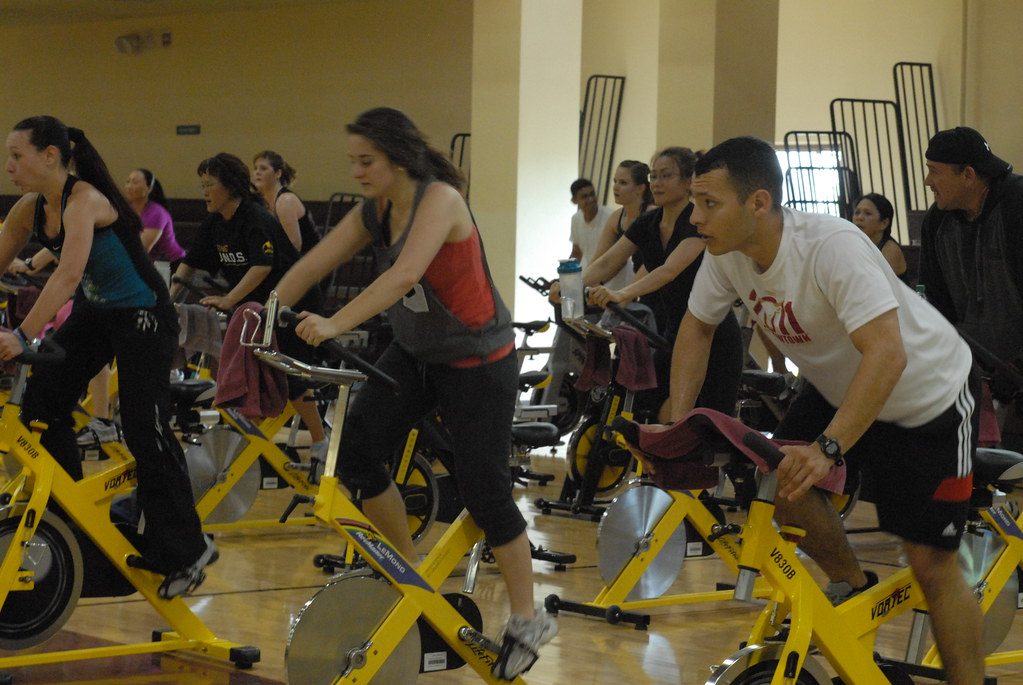
Does the gym make you tired just thinking about it? Then today's article is good news for you. You also learn the words for the chores you do at home, and three small words that tell people how your to-do list is going: just, already and yet.
Useful language
Household chores
Three of these chores are in the article. Click a chore, then click what you do. Correct pairs turn green. The audio button says the words.
Complete the sentences
Click a chore in the bank, then click a gap. Click a filled gap to clear it. Read each sentence to the end: it has its own clues, and only one chore fits.

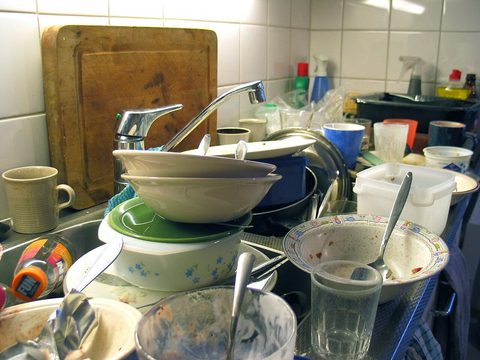 Our dishwasher broke last week, so after every meal someone has to
_____ by hand.
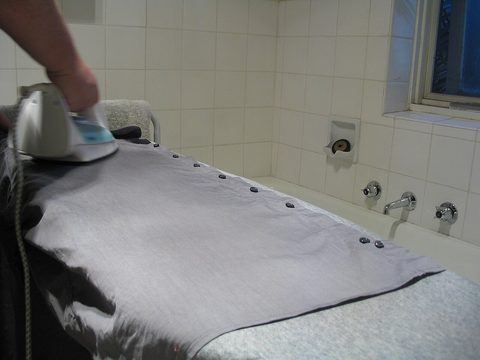 All my shirts are clean but full of wrinkles, so tonight I have to
_____ before my job interview.
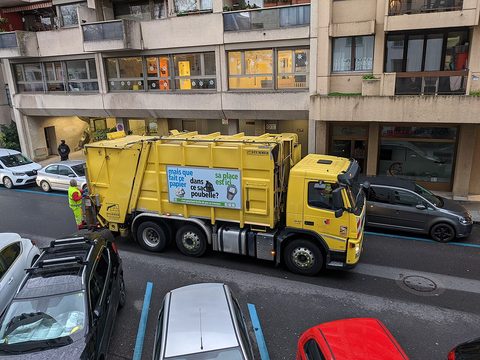 The bag under the kitchen sink is full and starting to smell. Can you
_____ before the garbage truck comes?
 There's dog hair all over the living room rug. I'll get the machine out of the closet and
_____ it.
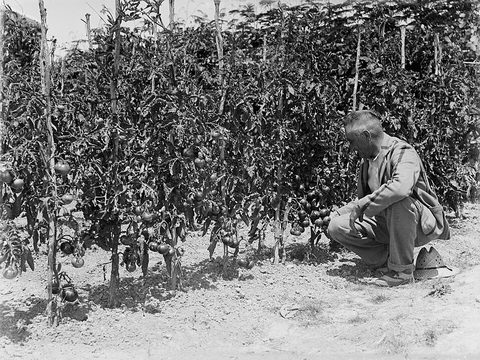 My grandfather loves
_____: every Saturday he plants tomatoes, pulls weeds and waters his roses.
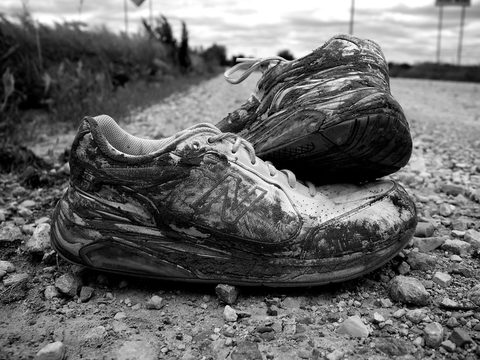 The mud on the kitchen floor has dried hard. A broom won't be enough: you'll need a brush and hot, soapy water to
_____.
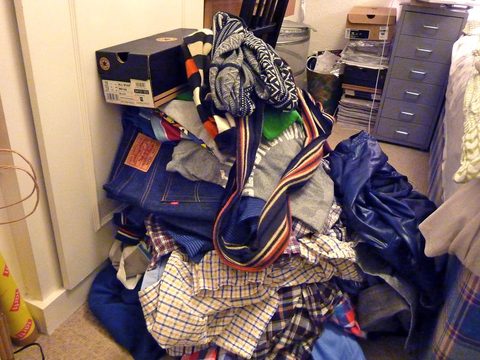 I have no clean socks or T-shirts left, so I really need to
_____ this weekend.
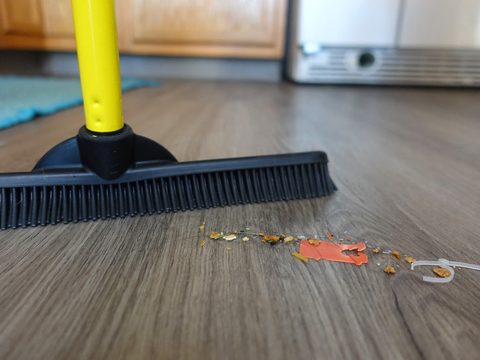 There are crumbs and sand everywhere after the party. Please grab the broom and
_____ before anyone walks in.
Chores count too
An article by Shelley Emling (September 25, 2017), retold for this lesson. First read only the title and answer the question. Then read the story. The present perfect with just and already is in bold. Dotted words have a definition: hover or tap them. The audio button reads each paragraph aloud.
Before you read
-
The title is "Household Chores May Be Secret to Living Longer." What do you think the article says?
The title puts chores and a longer life together, and the original article's subtitle says chores work as well as going to the gym. May be is careful: it is possible, not certain. Now read and check.
The story
From 2003 to 2010, a team of researchers followed 130,000 people in 17 countries. It was one of the world's largest studies on physical activity, and the lead researcher was Scott Lear, from Canada.
The countries had very different income levels, from rich to poor, and that mattered. It let the team measure everyday activities, too: active commuting, having an active job and even doing housework.
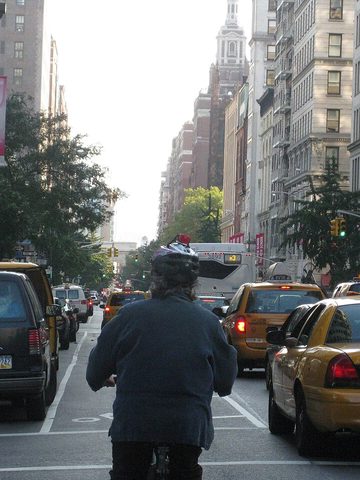
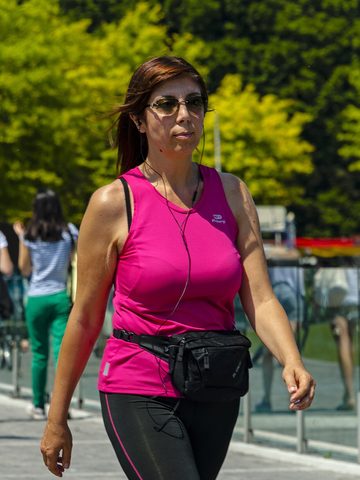

In 2017, the team published its findings in The Lancet, a medical journal: the type of activity did not matter. Vacuuming, scrubbing floors or gardening protected the heart as well as running or working out.
What mattered was the amount: thirty minutes of activity, five days a week, could slash the risk of dying from any cause by 28 percent, and the risk of heart disease by 20 percent.
And more was even better. People who walked briskly for over 750 minutes a week cut their risk of dying early by 36 percent, and the study found no ceiling on the benefits.
Even very high levels of activity, over 41 hours a week, brought no risks. Still, Lear said that even 30 minutes of walking on most days has a substantial benefit.
Lear's point about short walks matters, because many people move too little: he noted that one in four people in the world do not exercise for 30 minutes a day, five days a week.
Sitting too much is harmful, too. In an earlier study of 1,500 older women, the ones who sat most and exercised least had cells eight biological years older than those of more active women.
Too much sitting may even hurt the brain. According to researchers, the brain becomes more alert when the body moves more, so an active day is good for the mind as well as the heart.
So there is good news for anyone who hates the gym: if you have just scrubbed the kitchen floor or vacuumed the whole apartment, you have already done some exercise today.
Multiple choice
Click an answer and read why.

-
How long did the researchers follow the people in the study?
From 2003 to 2010: about seven years. The results came out later, in 2017, in The Lancet.
-
Why did it matter that the 17 countries had very different income levels?
Lear explained it himself: with low- and middle-income countries in the study, the team could measure the benefit of getting to work on foot, active jobs and even housework, not only gym workouts.
-
What did the study find about vacuuming, scrubbing floors and gardening?
The positive effects were the same for people who worked out, walked or did chores. The original article calls chores "just as effective" as running, for the heart and for a longer life.
-
If the type of activity didn't matter, what did?
How much people moved was what counted. The gym, the walk to work and the kitchen floor all worked the same way.
-
How much could 30 minutes of activity, five days a week, cut the risk of heart problems?
Thirty minutes a day, five days a week, is 150 minutes a week in total. The risk of dying from any cause fell even more: find that number in Exercise 06.
-
What happened to people who walked briskly for over 750 minutes a week?
750 minutes a week is more than 100 minutes a day. More movement, lower risk: 36 percent is the biggest drop in the whole story.
-
What did the study find about more and more activity?
The text says there was no top limit: the more people moved, the more they gained. Nothing in the study showed a point where extra activity stopped helping.
-
What did the study find about people who were active for over 41 hours a week?
The study called more than 2,500 minutes a week, or more than 41 hours, an "extremely high" level, and found no risks linked to it. That's almost six hours of activity every day.
-
Why does Lear's message about 30 minutes of walking matter?
Lear noted that one in four people in the world do not get 30 minutes of exercise a day, five days a week. For them, even a daily walk would be a big change.
-
What happened to the older women who sat most and exercised least?
In that study of 1,500 older women, the ones who exercised less than 40 minutes a day and spent more than 10 hours a day sitting had cells eight biological years older than those of more active women.
-
According to researchers, what happens to the brain when the body moves more?
Researchers link a body that moves with a brain that is more awake and quicker. So too much sitting may hurt the mind, not only the body.
-
Which sentence best summarizes the story?
The type of activity doesn't matter, the amount does, so the kitchen floor counts too. The gym is one way to live longer, not the only one.
Find it in the text
Read the story again. In Part 1, find the information and write it. In Part 2, find the word or phrase in the story that means the same as the words on the left.
Part 1 · Find the information
-
aBy how much can 30 minutes of activity, five days a week, cut the risk of dying from any cause?
-
bAccording to Lear, how much walking on most days is enough for a real benefit?
-
cBesides walking to work and having an active job, what other everyday activity could the study measure?
-
dThe study found no risks even for people who were active for more than ___ hours a week.
-
eWhat may hurt the brain?
Part 2 · Words from the story
-
alarge or important
-
bno limits
-
cillness
-
ddamaging
-
etraveling to work and back home
-
freduce a lot
-
geconomic situations
The present perfect with just, already and yet
Read his message about the housework, then the rules. Questions 01 to 04 are about the message; the rest practice the rules.

Three small words, one tense. The present perfect connects a finished action to now. Just says it happened a moment ago. Already says it's done before now, maybe sooner than someone expected. Yet says it isn't done, or asks if it is.
- (1) I've just done the dishes.
- (2) I haven't swept the floor yet.
- (3) I've taken out the trash.
- (4) I've already done the ironing.
- Form: I / you / we / they + have · he / she / it + has, then the past participle. Short forms: I've, she's, haven't, hasn't.
- Use: a recent past action and its connection to now. I've just cleaned the floor. (It's clean now, and still wet!)
- just (+): a very short time ago. It goes between have / has and the participle. I've just made coffee.
- already (+): before now, often sooner than someone expected. It says nothing about how long ago. It goes between have / has and the participle, or at the end. She's already made her bed. · She's made her bed already. In a question, it shows surprise: Have you already finished?
- yet (– and ?): something is not done, or you ask if it is. It goes at the end. I haven't done my homework yet. · Have you taken out the trash yet?
- Irregular participles in this lesson: do → done, sweep → swept, hang → hung, take → taken, make → made, buy → bought, send → sent, have → had, win → won.
- In American conversation, people often use the past simple with these words: I just ate. · Did you call him yet? The present perfect is correct everywhere, so it's the one we practice today.
-
Which chore did he finish a moment ago?
Just = a very short time ago. The trash and the ironing are done too, but he doesn't say when.
-
Which chore is still waiting for him?
Haven't … yet: it isn't done, but he expects to do it later.
-
Someone at home says, "Don't forget the ironing!" Which line of the message answers that?
Already: it's done before now, sooner than the other person expected, so the reminder comes too late. It doesn't say how long ago.
-
Which chore is ready, but he gives no clue about when he did it?
No just, no already: only the present perfect. The trash is out, and that is what matters now. The dishes have just, a clue about when, and the floor isn't done.
-
Sorry, you can't talk to Dr. Lee. She ___ left the office. You missed her by two minutes.
Two minutes ago is a moment ago: has just left. Yet is for something that hasn't happened, but she is already gone.
-
Which question is correct?
Have + person + participle, and yet at the very end. Did never goes with a past participle.
-
"Is the movie over?" "No, it ___."
The answer starts with No, so the movie is still on: a negative with yet. The other two say it's over.
-
Don't cook tonight. I ___ a pizza for us.
No need to cook, because the pizza is on its way: it's done before now. Yet doesn't go in a positive sentence.
-
Which sentence is WRONG?
Already goes before the participle or at the very end, never between the verb and its object.
-
She has ___ the kitchen floor with the broom, so you can walk in now.
Sweep is irregular: sweep – swept – swept. After has you always need the past participle.
Write sentences in the present perfect
Write the whole sentence. A question mark at the start means a question, and not means a negative. Short forms like she's and haven't are fine.
-
ashe / clean / the kitchen
-
bthey / buy / cleaning products
-
c? / you / do / the laundry
-
dwe / not / finish / our homework
-
eI / wash / the car
-
fhe / not / make / lunch today
-
g? / she / send / her mom a message
-
hI / not / do / the grocery shopping today
Already, yet and just
Part 1: use already in positive sentences and yet in negatives and questions. Part 2: read what each picture shows and write a sentence with just. Write the whole sentence every time.

Part 1 · Already or yet?
-
aI / not / hang out / the laundry
-
b? / she / do / the ironing
-
cthey / finish / their exercises
-
dhe / have / breakfast
-
eshe / not / sweep / the garage
-
f? / the children / clean up / the room
-
gwe / buy / the ingredients for the pasta
Part 2 · What has just happened?
-
wash · her hairA woman in a bathrobe is brushing her wet hair.
-
clean · the houseA woman and two kids with a mop, rubber gloves and a spray bottle are smiling in a spotless living room.
-
win · the raceA runner throws her arms in the air as she crosses the finish line, ahead of everyone else.
-
make · dinnerA man with glasses is smiling in his kitchen, holding a big bowl of fresh salad.
Talking points
Part A is about the article, Part B is about you, and Part C is for your opinions. When you talk about your chores, use just, already and yet.
Useful language
Are you up to date with your chores?
60–90 words. Write a message to the person you live with, like the one in Exercise 07: two things you have just done, two things you have already done and two things you haven't done yet. End with one sentence about how much you have moved today.

My results
Check your score, then copy it and send it to your teacher on WhatsApp.

One job for this week. Every evening, say three sentences about your day out loud: something you have just done, something you have already done, and something you haven't done yet. Thirty seconds, in English.