"Shallow" Wins Best Original Song
A melody in a studio, a movie, an Oscar and one minute at the microphone. We follow the song to the stage, put Lady Gaga's words back in order, and learn how to say what really matters: it's not about winning, it's about not giving up.
Warm-up
Read the four quotes and choose one: why is it inspiring? Then answer the last two cards before we watch. Tap a card when you have talked about it.

Tonight is Oscar night. One singer wins, walks to the stage and has about a minute to say thank you. Before we watch, four famous lines about success: choose the one you like best and tell me why it works for you.

Useful language
Match the words
Click a word, then click its definition. Correct pairs turn green. The audio button says the word.
Complete the sentences
Click a word in the bank, then click a gap. Click a filled gap to clear it. None of these sentences is about the song: the words around each gap tell you the answer.

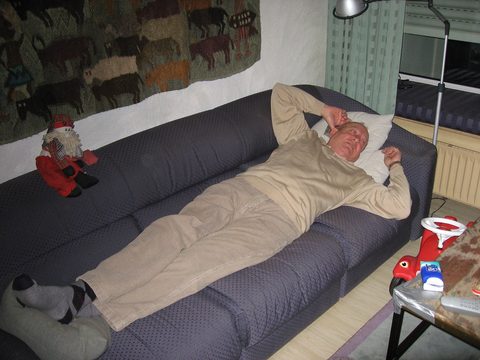 After a long day at work, all he wants is to lie on the
_____ in the living room and take a nap.
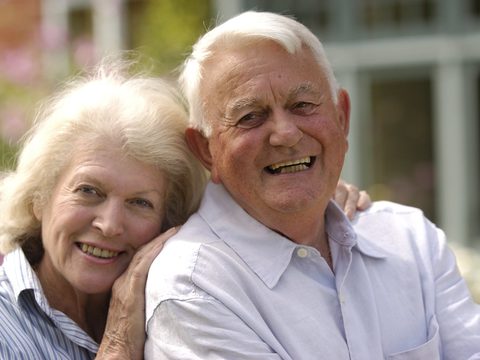 They met at eighteen, and fifty years later they still finish each other's sentences. He says she is his
_____.
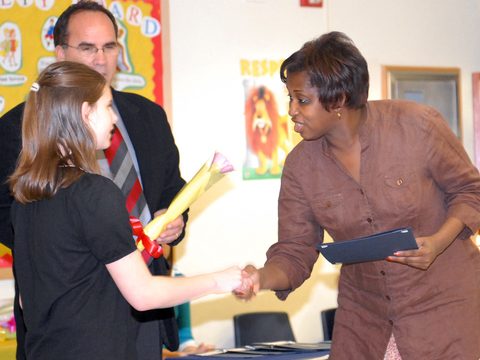 Every year, the school gives an
_____ to the student who helps the others most, and this year it went to Marta.
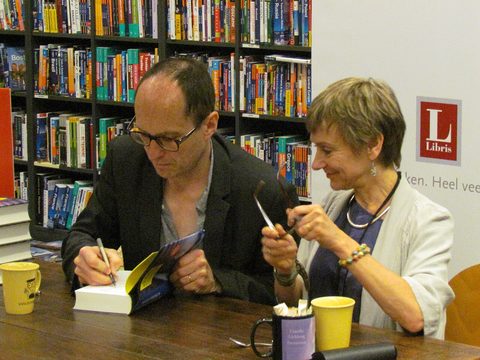 There are three names on the cover of the book, because the author wrote it with two
_____.
 She sent her first novel to twelve publishers, and all twelve
_____ it before the thirteenth finally said yes.
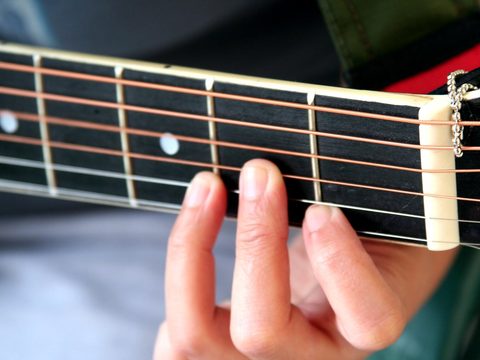 Learning the guitar hurts your fingers at the start, so many people
_____ in the first month. The ones who keep practicing get good.
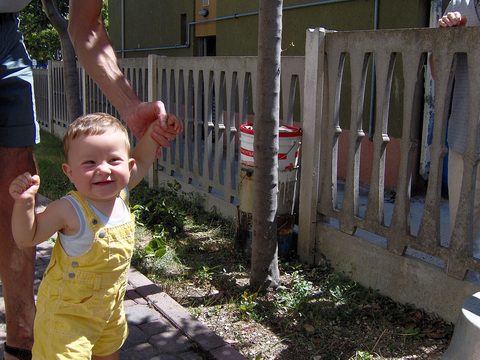 Small children often
_____ when they are learning to walk, so many parents put a soft rug on the floor.
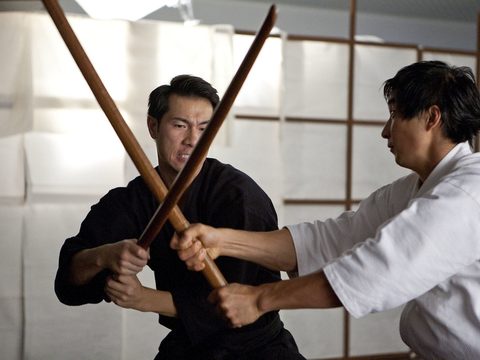 In the action movie, the hero is
_____ by three men in the first fight, and he ends up with a broken nose.
From a studio to the stage
Watch the video first: three and a half minutes, the award and the speech. It has no captions, so just watch and listen; the note below tells you what to look for. Then read the story. Dotted words have a definition: hover or tap them. The audio button reads each paragraph aloud.
- First, with the sound off: Where are they? What is happening? Who are the people on the stage?
- Then, with the sound on: How does she react to the honor from the Academy? What role does her sister play in her life? For Gaga, what is the key to reaching a dream?
One day, in a recording studio in Malibu, California, Lady Gaga played a melody for three other musicians: Mark Ronson, Anthony Rossomando and Andrew Wyatt.
The four of them turned that melody into "Shallow", a song for A Star Is Born. In that 2018 movie, Bradley Cooper plays a famous singer, and Gaga plays the unknown singer he discovers.
The movie made the song a hit around the world. By February 2019, "Shallow" had reached number one in the United Kingdom and had won a Golden Globe and two Grammys.
So on February 24, 2019, it came to the Oscars as the favorite for Best Original Song. During the ceremony, Gaga and Cooper sang it together at a piano, and the audience stood up.
Later that night, the presenters opened the envelope and read the name of the winner: "Shallow". Gaga, tearful and trembling, walked back to the stage, this time with her three co-writers.
At the microphone, she thanked the Academy for the honor and thanked her co-writers. Then she told her mom and dad that she loved them, and she called her sister her soulmate.
Next, she spoke to Cooper. Nobody else in the world, she said, could have sung the song with her, and she thanked him for believing in them.
But the most famous part came at the end, when she spoke to people watching at home on their couches: this is hard work, she said, and she had worked hard for a long time.


Winning, she said, is not what really matters; what matters is not giving up. If you have a dream, fight for it, because passion needs discipline.
Everybody gets rejected, falls down or gets beaten up by life, she explained, so the real test is getting up again. One week later, "Shallow" reached number one in the United States.
Multiple choice
All the answers are in the story. Click an answer and read why.

-
Where did "Shallow" begin?
The three musicians, Mark Ronson, Anthony Rossomando and Andrew Wyatt, became her co-writers: the song has four names on it. Later, the singer and guitarist Lukas Nelson added the short guitar opening.
-
Who does Bradley Cooper play in A Star Is Born?
It is the other way around: he is the star, and she is the unknown singer he discovers. Cooper also directed the movie, and "Shallow" is heard in it three times.
-
What had "Shallow" won before the Oscars?
The Golden Globe for Best Original Song came in January 2019, and the two Grammys on February 10, just two weeks before the Oscars. By then the song had also been number one in the United Kingdom, in the fall of 2018.
-
Why did the song come to the Oscars as the favorite?
A favorite is the one most people expect to win. The song had four rivals, all from movies too, among them "All the Stars" from Black Panther and "The Place Where Lost Things Go" from Mary Poppins Returns.
-
What happened when Gaga and Cooper sang at the ceremony?
They walked from their seats to the stage with no introduction. Gaga sat at the piano, and Cooper joined her there for the end of the song. That year the Oscars had no host, for the first time since 1989.
-
How was Gaga when she heard the name of the winner?
Trembling means shaking a little because of a strong emotion. It was her first Oscar, the biggest prize of the movie industry.
-
Who walked to the stage with her to get the award?
The Oscar for Best Original Song goes to the people who wrote the song, so all four writers got a statuette. Cooper sang it with her, but he is not one of the writers.
-
What did she call her sister?
Her younger sister is Natali. A soulmate is a person who understands you completely: often a partner, but it can also be a sister or a friend.
-
Why did she thank Bradley Cooper?
He was not one of the writers, so the Oscar was not his. But he directed the movie, chose her for the role and sang the song with her. To believe in someone is to trust that they can do it.
-
Who was the last part of her speech for?
She stopped talking to the people in the room and spoke to everyone with a dream. Many news websites used her advice as the headline: "If you have a dream, fight for it."
-
What happened one week after the Oscars?
Before the Oscars, its best position in the United States was number five. After the performance and the win, it jumped to the top.
-
Which sentence best summarizes the story?
Each step leads to the next: the melody, the movie, the hit, the awards, the night at the piano, the win and the speech. With this Oscar, Gaga also became the first woman to win an Oscar, a Grammy, a BAFTA and a Golden Globe in the same year.
Her words, in order
These are six lines from Gaga's speech, with the words mixed up. Write each one in the right order; the words around the gap help you. Then play the video again and listen for them.
-
1There is not a single person ___
have / with / this / the / that / song / on / you / me / planet / but / could / sung -
2thank / you / for / us / in / believing
-
3… all I have to say is that this is hard work. I've worked hard for a long time, and it's not about, you know, ___
giving / winning / it's / up / not / it's / about / about / is / but / not / what -
4it / dream / fight / a / have / if / for / you
-
5There's a discipline for passion, ___ or you fall down, or you're beaten up.
not / how / many / you / it's / rejected / times / and / about / get -
6times / how / going / it's / stand / you / up / and / and / many / brave / on / about / keep / are / you
It's not about …, it's about …
Read the note, then choose the answer that fits each sentence.

Three of her six lines use the same frame. It's not about puts one idea aside; it's about shows the one that really matters. After about comes a noun, an -ing verb, or a question word with a whole sentence. It is a small frame, and it makes any opinion sound stronger.
- + noun: For him, cooking is not about the recipe; it's about the people at the table.
- + -ing verb: Learning English isn't about sounding perfect, it's about being understood. After about in this frame, never to + verb and never the bare verb.
- + question word + sentence: It's not about how old you are, it's about what you do with your time. After how or what, a normal sentence: subject + verb.
- Negative -ing: put not before the -ing verb: not waiting, not losing, not giving up.
- To make it stronger: What it's about is + noun or -ing: What it's about is having a plan.
- Joining the two halves: a comma, a semicolon or but: It's not about the money, but about the music.
-
For our team, it's not about ___; it's about taking part.
About is a preposition, and after a preposition the verb takes -ing. Look at the other half: taking part.
-
Success isn't about how much money you ___; it's about how happy you are.
After how much money comes a full sentence with a subject and a verb: you make, like you are in the second half. The -ing rule is only for a verb right after about.
-
What it's about ___ having the courage to try.
The whole phrase What it's about is the subject of the sentence, and it is singular: What it's about is …
-
It's about ___ up every time you fall.
Right after about, so -ing: standing up. The phrasal verb keeps its particle: stand up becomes standing up.
-
Which sentence says that winning the game doesn't matter?
In this frame, only the -ing form can follow about. To win and win are common mistakes, because in Portuguese the verb stays in the infinitive. Careful: be about to + verb is a different structure, for something that will happen very soon: The game is about to start.
-
The secret isn't talent. It's about ___ giving up when things get hard.
The negative of an -ing verb is not + -ing: not giving up. Don't only goes with a subject and a normal verb: you don't give up.
-
Which sentence means "Winning doesn't matter; not giving up matters"?
The idea that doesn't matter goes after It's not about; the idea that matters goes after it's about. The same order as Gaga's line in Exercise 06.
-
Good teaching isn't about how many facts you know. It's about ___ you explain them.
How you explain them: the way you do it. What you explain them has no place for what, because them is already the object.
Say what really matters
Rewrite each idea with the frame in the cue. With ABOUT, write It's not about …, it's about … and put a comma between the two halves. With WHAT, write What it's about is …
-
ABOUTMoney doesn't matter in a job. The people you work with matter.
-
ABOUTWinning the game isn't important. Having fun is important.
-
ABOUTGetting rejected doesn't matter. Trying again matters.
-
ABOUTThe size of your house isn't important. The love inside it is.
-
ABOUTHow fast you run doesn't matter. Finishing the race matters.
-
ABOUTBeing the best doesn't matter. What matters is that you don't lose your passion.
-
WHATBeing brave is the important thing.
-
WHATThe important thing is that you don't lose hope.
Vocabulary Jeopardy
Five words from the speech, four kinds of question: define, synonym, antonym, sentence. The values go from $100 to $500. Play alone or against a partner, and keep track of your score.

-
Couch · Synonym · $100 Which word means the same as couch?
A couch and a sofa are the same thing. An armchair is a seat for one person, and a cushion is the soft thing you put on a couch.
-
Couch · Sentence · $100 Which sentence uses couch correctly?
You sit or lie on a couch. You wear a coat, and you turn on a lamp.
-
Soulmate · Define · $200 What is a soulmate?
A soulmate knows you deeply. Someone you work with is a coworker or a colleague, and you need time to become soulmates.
-
Soulmate · Sentence · $200 Which sentence uses soulmate correctly?
Forty years together fits the word. You can't have a soulmate you don't know well, and a soulmate is a person, not a thing in the kitchen.
-
Give up · Antonym · $300 What is the opposite of give up?
Quit and stop trying mean the same as give up. The opposite is to continue: keep going, or Gaga's keep on going.
-
Give up · Sentence · $300 Which sentence uses give up correctly?
You go up the stairs, and you speak up when people can't hear you. Give up is to stop trying.
-
Fall down · Antonym · $400 What is the opposite of fall down?
You trip on a step or slip on ice, and then you fall down. The opposite is to get up or stand up again.
-
Fall down · Sentence · $400 Which sentence uses fall down correctly?
You fall in love, with no down, and the sun sets. Fall down is for a person or a thing that drops to the ground.
-
Beaten up · Define · $500 Gaga says that people get beaten up on the way to their dream. What does she mean?
The literal meaning is to be hit and hurt badly. She uses it as an image: the problems, the no's and the bad days that hit you hard.
-
Beaten up · Synonym · $500 "The boxer was beaten up in the last round." Which words mean the same as beaten up?
He was hit again and again, so he was badly hurt. Notice the form: beat up in the active, be beaten up in the passive.
Famous words about success
Five famous lines, each with its end mixed up. Write the end in the right order. The first part of the line tells you what the second part must say.
-
aAttributed to Amelia Earhart: "The most difficult thing is ___"
act / to / decision / the / rest / the / is / tenacity / merely -
bAttributed to Theodore Roosevelt: "Keep your eyes ___"
ground / stars / feet / the / the / on / on / your / and -
cOften attributed to Aristotle, but written by Will Durant to sum up his ideas: "We are what we repeatedly do. Excellence, then, ___"
habit / an / is / a / but / not / act -
dAttributed to Mahatma Gandhi: "Learn as if you will live forever, ___"
die / live / tomorrow / will / you / like -
eAttributed to Winston Churchill: "The pessimist sees difficulty in every opportunity. The optimist ___"
every / difficulty / in / opportunity / sees
Speaking with notes
Before you give your own speech: a public-speaking coach explains how to use notes, in two and a half minutes, with captions. The stamp shows where to listen.

-
Should you use notes when you give a speech? 00:08
"Yes, you absolutely should," he says, and right after, at 00:10: the audience doesn't reward you for memorizing things.
-
How much paper does he recommend? 00:15
He takes a regular sheet of paper, 8.5 by 11 inches, the normal size in the US, and cuts it down to the size he shows the camera.
-
What is the problem with many note cards? 00:29
Many cards mean your message is not short and clear yet. At 01:12 he adds two more problems: cards get out of order, and they fall down.
-
What should your notes have on them? 00:43
A handful of key points, then a few words for each story, maybe a key fact or number, and something to remind you of the slide if you use PowerPoint.
-
Why should the letters on your notes be large? 01:29
Big print lets you just glance down. Picking up the card, or looking for your glasses, is exactly what he wants you to avoid.
-
Where should your note card be? 01:41
A lectern is the stand a speaker puts notes on. With your hands free you can move, gesture and talk to people, and they see you as confident and comfortable (01:58).
-
How often does he give speeches? 02:07
He says he always uses notes, and he speaks at least a hundred times a year.
-
Why does his audience never know he is using notes? 02:19
One page means no pages to turn, and big letters mean he never picks it up. The result, in his words at 02:27: people think he knows it all by heart.
Talking point
Part A is about the speech. Part B is about you. Part C is for opinions. Try to use it's not about …, it's about … at least twice.
Useful language
My thank-you speech
100–150 words. Imagine you become very successful in something you have worked for over a long time. It is time to receive your award and give your thank-you speech! Plan it in four boxes first, in this order, then write the whole speech. Use it's not about …, it's about … once. Last step: copy only the key words onto one note card, as the coach says in Exercise 11, and say your speech out loud, looking at your audience, not at the paper.

- 1 · Thank you + the award: say thank you for the award or honor you are receiving. "Thank you so much to the Academy for this wonderful honor."
- 2 · The people who helped: name them, the most important first; for some, say what they did. "Thank you to Mark Ronson, to Anthony Rossomando, to Andrew Wyatt, my co-writers."
- 3 · Why they mattered: choose one or two people from box 2 and say why their help was so important. "There is not a single person on the planet that could have sung this song with me but you."
- 4 · Be inspirational: say something that will help others on their way to success. "If you have a dream, fight for it."
My results
Check your score, then copy it and send it to your teacher on WhatsApp.

One job for this week. Give your thank-you speech out loud twice, from your one note card, without reading it. Then say one sentence about your own life with It's not about …, it's about … Record it and send it to me.