10 Tips to Beat Procrastination
A planner, a study buddy, a rewards jar and a phone in another room: ten tips from a YouTuber who shares study advice, for the day you keep putting your work off. And three small words you use all the time: another, other and others.
Warm-up
Read the definition first. Then ask and answer with a partner, or with me. Tap a card when you have answered it.

We all do it. The work has to be done, but first a quick look at your phone… and two hours are gone. Today you get ten tips to stop, and three small words that you use every day: another, other and others.
- Weeks of procrastination left her with the whole essay to write in one night.

Useful language
Words to beat procrastination
All eight expressions are in the video. Click an expression, then click its meaning. Correct pairs turn green. The audio button says the expression.
Complete the sentences
Click an expression in the bank, then click a gap. Click a filled gap to clear it. Each sentence has its own clues: only one expression fits.

 The report was 500 pages long, so our manager helped us
_____ the work into small parts, one for each person on the team.
 I keep
_____ my dentist appointment because I'm scared of the drill. It's been three years now!
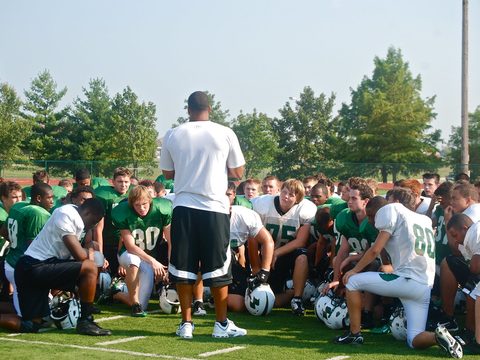 Our coach asks every player to
_____ for the season, like running faster or never missing a practice.
 My
_____ and I meet every Tuesday night to quiz each other before our history exams.
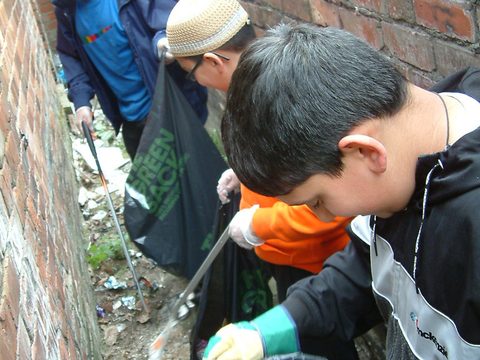 Everybody complained about the trash in the park, but nobody did anything. Finally, a group of teenagers decided to
_____ and cleaned it up themselves.
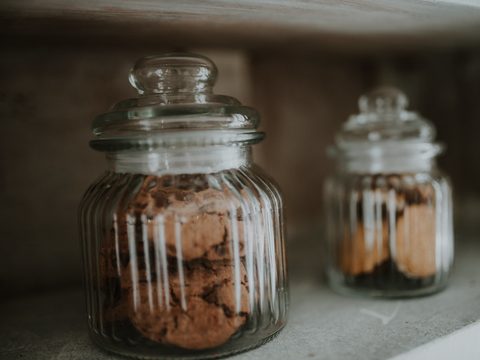 I used to eat cookies every night. Now I keep them on the top shelf, behind the cereal, and I hardly think about them. It's true what they say:
_____.
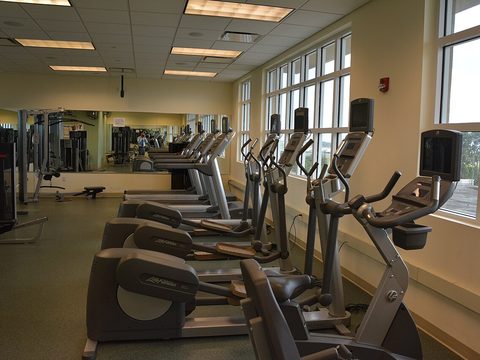 Before you
_____ a one-year contract with a gym, try a few classes and make sure you like the place.
 We've finished half of the tasks and it's only Wednesday, so we're
_____ to finish the project by Friday.
Ten tips, one study session
Watch the video first: about five minutes, with captions. Then read the text. Another and other are in bold. Tap a dotted word to see what it means.
Jess shares study tips on YouTube. In one video, she explains ten tips that helped her beat procrastination. The first one is simple: write your exam and assignment dates in a planner.
Seeing the date on paper creates a sense of urgency. The deadline suddenly feels real, so you are more likely to commit to the work and take action instead of waiting.
But one big assignment can still feel overwhelming. So Jess says to set goals for each session and break the project down into shorter tasks. Then you are less likely to put it off.
Even with goals, starting is hard. That is where a study buddy helps: working with another student helps Jess get into "study mode", and a little healthy competition keeps you motivated.
A buddy is not the only person who can help. When you tell other people that you are studying, you feel obligated to start working, and you feel responsible for what you do.
Nobody can study all day, so her next tip is to schedule fun time, too. When study time has a clear end and Netflix is waiting, you are less likely to procrastinate.
During the session, a to-do list keeps you on track. Jess always has a little one on her desk: you check off each task as you go, and then you pick a small reward.
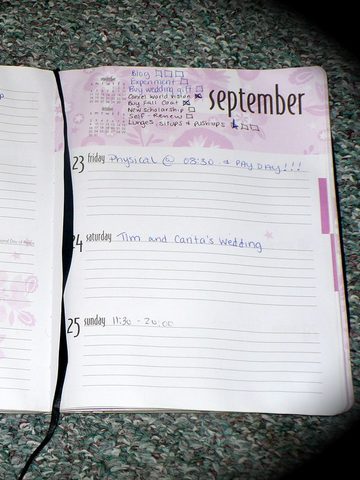


For the rewards, one of her favorite tips is a rewards jar. Write rewards on small pieces of paper, keep them in a jar and pick one at random after each task.
Still, a phone full of fun apps can pull you away from any task. So Jess recommends airplane mode, or putting the phone in another room: if you can't see it, you forget about it.
For the same reason, Jess preferred to study in a library. Her last tip is "really important": study at a desk, not on your bed, where you might fall asleep!
Multiple choice
The stamp shows the moment in the video. Click an answer and read why.

-
Why does Jess tell you to write your exam dates in a planner? 00:42
A date you can see makes the deadline feel real. Jess says that makes you more likely to commit to the work and take action (00:47): the first two expressions of Exercise 02.
-
According to Jess, what do written goals for each study session do? 01:04
Writing goals down also makes you more likely to commit to them, she says. The great thing about goals for each session is that they keep you on track, boost your motivation and help you beat procrastination.
-
Why does she suggest breaking big assignments into shorter tasks? 01:10
With short-term goals, a major project seems "a lot more manageable" and "a lot less overwhelming" (01:19). A small task is easier to start than a big one.
-
What does a study buddy give you, according to Jess? 01:27
Jess is not someone who always compares herself to other students, she says, but working with another student, especially at the start, helps her get into "study mode" (01:37). You motivate each other and set high goals.
-
Why does it help to tell people that you're studying? 01:49
When other people know about your plan, you feel that you have to do it. Jess adds that research shows this helps people break bad habits, because you feel responsible for what you do (01:54).
-
Why should you schedule fun time as well as work time? 02:07
Your study time has a clear end, and there will be time later for your hobbies and "all of those Netflix episodes" (02:19). So you don't need to steal time from your studies for them.
-
How does a to-do list boost your motivation? 02:34
Jess always keeps a little to-do list on her desk (02:27). She says "tick them off", the British and Australian way; in American English you check tasks off. Like goals, the list gives you something to work toward.
-
What is a rewards jar? 02:52
It's one of her favorite tips (02:48). You write different rewards, keep them all in a little jar on your desk and pick one whenever you finish a task from your to-do list, or a major assignment.
-
What does she suggest doing with your phone? 03:15
She says "flight mode", which is "airplane mode" in American English. If you can't see the phone, you forget about it: out of sight, out of mind (03:20). She also suggests a sign on your door, so that people don't come in and disturb you (03:23).
-
Why does the library tip connect with the tip before it? 03:32
Tip nine "links onto" tip eight, avoiding distractions. Jess preferred to study in a library at school and when she was finishing her university degree (03:43), but a quiet place at home works too, she says.
-
Why does she recommend studying away from your bed? 04:05
You associate your bed with sleep and naps, so you might fall asleep halfway through a study session, cozy under your "doona", the Australian word for a comforter (04:14). Study at a desk or in a library instead.
-
Which sentence best summarizes the video?
Every tip is small: a date in a planner, a list on the desk, a phone in another room. Together they change how and where you study. A study buddy and a library are only two of the ten tips.
Ten tips, ten pictures
Watch the video again. Each picture below shows one of her ten tips. Write the number of the tip it shows, from 1 to 10.
-
aA teenager leans on a pile of books and daydreams about a soccer ball, a movie theater and a girl.
-
bTwo young men look at a laptop together and smile.
-
cA tablet screen shows a calendar full of colored blocks.
-
dA smiling woman stands next to a big, empty speech bubble.
-
eA dart hits the center of a target.
-
fA puppy sleeps on a soft, fluffy blanket.
-
gA little girl laughs on a ride at a playground.
-
hA shiny gold trophy, the kind you win as a prize.
-
iA hand checks off the boxes on a list, one by one.
-
jThree students read at a table in front of tall bookshelves.
Other, another and others

Three words, one family. Another is an + other, and an means one: so it goes with one thing. Other goes with plurals, and others stands alone. Jess uses two of them in a single tip.
- One more, an extra, with a singular noun: Would you like another slice of pizza?
- A different one: This pen doesn't work. Can you give me another?
- With a plural noun: My sister has other plans tonight. And with an uncountable noun: We need other information before we decide.
- With a singular noun, other needs a word before it: the other side of the street, my other sister, any other day. Not I need other pen.
- It replaces other + a plural noun: Some kids walk to school; others take the bus. (= other kids)
- The others = the rest of a group: One of my shoes is here. Where are the others?
- Never others + a noun, and never anothers: not others people.
-
"When you tell ___ person that you're studying, you feel obligated to actually get working." 01:49
One person: a singular noun, so another. Other person would need a word before it, like the other person.
-
"Research shows that when you tell ___ people that you're planning to do something in particular, you're more likely to commit to it." 02:00
People is plural, so other. The captions on the video skip this word, but listen: Jess says it clearly.
-
Look at your answers to questions 1 and 2. What rule do they show?
Another person, other people. The an inside another means one, so it can't go with a plural.
-
"We have ___ book for you." (= one more book)
One more, an extra, an additional book: another + a singular noun.
-
"We have ___ books for you." (= more books, or different ones)
Other + a plural noun. Others never has a noun after it.
-
"These shoes are too small. Do you have any ___?"
No noun comes after the gap, so we need the pronoun. Any another is never correct.
-
In question 6, what does others mean?
Others replaces other + a plural noun, so you don't have to say shoes again.
-
Which sentence is WRONG?
Another means one more, so it can't go with a plural like books.
Other, another or others?
Write one word in each gap. Look at what comes after the gap: one thing, many things, or nothing at all?
-
aStudying with ___ students can help: a study buddy keeps you on track and gives you new ideas.
-
bSome people like to study in their rooms, while ___ prefer the library.
-
cThe library has all the books you need. ___ reason to study there is the silence.
-
dIf you're stuck, try working on ___ task for a while and come back later.
-
eKnow why you delay your work. Find the reasons and try ___ ways to fix them.
-
fYou can break a big task into smaller ones: do one part now and ___ part later.
-
gOnly one of my classmates studies with music on. The ___ need total silence.
-
hI've just finished this chapter. Can I start ___ one?
-
iSome of her tips worked for me, but ___ didn't help at all.
-
jMy phone is the only thing I can't study without. What ___ things do you need?
Say it again with the word given
Write the whole sentence again with the word on the left. Keep the meaning, and change only what you need to.

-
ANOTHERCould I have one more cup of coffee, please?
-
OTHERSSome of the players went home, but other players stayed to practice.
-
OTHERTom is here, but the rest of the students are at the library.
-
ANOTHERThis room is too noisy, so let's find a different one.
-
OTHERDo you have any more questions?
-
OTHERSTwo of my friends loved the movie, but the rest of my friends hated it.
Talking points
Talk for about a minute about each card and ask your partner follow-up questions. Part A is about the video, Part B about your life, Part C about your opinions. Use the expressions from Exercise 02, and another, other and others.
Useful language
My plan to beat procrastination
80–120 words. Think of a task that you tend to put off. Why do you put it off? Choose two or three of Jess's tips and explain how you will use them. Use at least three expressions from Exercise 02, and another, other or others at least twice.

My results
Check your score, then copy it and send it to your teacher on WhatsApp.

One job for this week. Choose one of Jess's tips and use it every day for a week. Next class, tell me what happened, with another, other or others in your story.