SPEAKING CLUB · TOPIC 1

Abbreviations and Acronyms

LOL, ASAP, GPS, VIP: short forms are everywhere, from text messages to hospitals. Three levels of questions about the letters we use every day, and one question to ask about all of them: what does it stand for?

A1-C2 60 min Focus: speaking · 3 levels Home
EXERCISE 01Speaking

Warm-up

Ask and answer with a partner, or with me. Tap a card when you have answered it.

Teacher Alvaro

LOL, ASAP, FYI. Short forms are everywhere: in messages, at work, at the airport, in the hospital. Today you talk about them at your level, and you use the most useful question of the day: What does it stand for?

Three young friends on a city street, smiling as they read a message together on one cell phone
Useful language
I send about … messages a day.My messages are short / long. In my language, we write … for …What does … mean? What does … stand for?It stands for … I use emoji more than words.
0 / 0
EXERCISE 02Vocabulary

Key words

Eight words from today's questions and answer prompts. Click a word, then click its meaning. Correct pairs turn green. The audio button says the word.

Word
Meaning
EXERCISE 03Vocabulary in context

Complete the sentences

Click a word in the bank, then click a gap. Click a filled gap to clear it.

Teacher Alvaro
  • I can't talk now because I'm in a meeting. I'll _____ you when it's over.
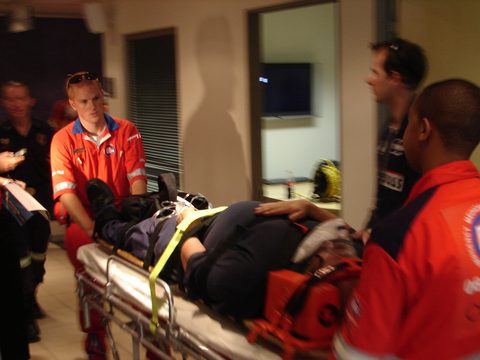
  • My neighbor fell down the stairs and couldn't move, so I called an ambulance. It was an _____.

  • Excuse me, I'm lost. Can you give me _____ to the train station?

  • Everybody in the restaurant wanted a photo with her. She's a famous actress, a real _____.

  • We left home at eight in the evening and the trip took five hours, so our _____ at the hotel was at one in the morning.

  • The taxi driver only takes cash, so I need to _____ some money from my account first.

  • The new manager took the microphone and gave a short _____. Everybody listened and clapped at the end.
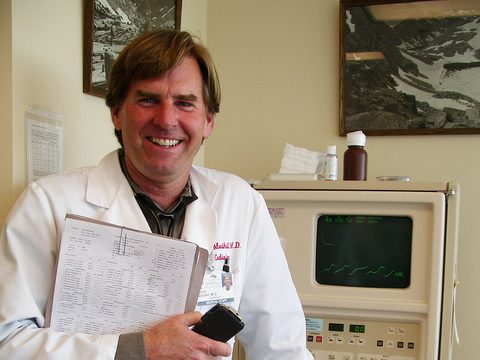
  • Before you see the doctor, please fill out this _____ with your name, address and phone number.
EXERCISE 04Speaking · A1-A2

Beginner (A1-A2)

Ask and answer with a partner, or with me. Tap a card when you have answered it. Not sure what to say? Open the answer prompts and change the words in brackets. Question 13 has a matching game below the prompts.

Answer prompts
1 · An abbreviation is [a short form, a shorter way] of a word or phrase, like [Mr. for Mister, Dr. for Doctor]. 2 · An acronym is [letters from the first words] in a phrase, like [NASA for National Aeronautics and Space Administration]. 3 · Yes, I know [Mr., Dr., etc.]. / No, but I want to learn more. 4 · Yes, I know [FBI, NASA, USA]. / No, I can't think of one right now. 5 · Yes, I use [LOL, OMG, BRB] when I text. / No, I prefer to [write full words]. 6 · Yes, because [they are fun, they are useful]. / No, because [they can be confusing]. 7 · I use [Wi-Fi, TV, ATM] almost every day. / I don't use them often, but I know [SMS and PIN]. 8 · Yes, it means [United States of America]. / No, but now I know! 9 · I remember [UK for United Kingdom, UAE for United Arab Emirates, and EU for European Union]. / I'm not sure, but I think [USA or UK]. 10 · It means [Laugh Out Loud]. I use it when [something is funny, I'm joking]. 11 · It means [Global Positioning System]. People use it for [finding directions, maps, traveling]. 12 · It's [a signal that means “Help!”]. Many people say it means [Save Our Souls], but the three letters don't really stand for words: they are just very easy to send. People use it to [ask for help in danger, send signals]. 13 · OMG shows surprise or excitement. I use it when [I get shocking news], like “OMG! I can't believe we won!” 13 · The FBI is a U.S. government agency that investigates crimes. I talk about the FBI when [I watch crime movies or TV shows about investigations]. 13 · A VIP is an important person who gets special treatment. I use it when [I talk about celebrities or special events], like “We got VIP tickets to the concert!” 13 · DIY is making or fixing things yourself, not paying someone to do it. I use it when [I talk about home projects], like “I made a DIY table for my room.” 13 · The CEO is the top boss of a company. I talk about a CEO when [I discuss business], like “The CEO of my company gave a speech today.” 13 · An SMS is a text message on a phone. I use it for [texting], like “I sent an SMS to my friend to confirm the meeting.” 13 · ASAP means quickly, right away. I use it [at work or in messages], like “Please send me the report ASAP.” 13 · AM / PM tell the time: AM is [before noon] and PM is [after noon], like “I wake up at 7 AM” and “I watch TV at 8 PM.” 13 · An ID is a card or document that shows who you are. I use it [when I travel], like “I need my ID to get on the plane.” 13 · A PIN is a secret number for your bank card or online accounts. I use my PIN [at the ATM to withdraw money].
0 / 0

Question 13. Click a short form, then click what it stands for. The audio button says it the way people say it: letter by letter, or as one word.

Short form
It stands for
EXERCISE 05Speaking · B1-B2

Intermediate (B1-B2)

Ask and answer with a partner, or with me. Give a reason and an example in every answer. Tap a card when you have answered it. The answer prompts help you start.

Teacher Alvaro
Answer prompts
1 · An abbreviation is [a short form of a word, like Dr. for Doctor], while an acronym is [a word made from the first letters of a phrase, like NASA for National Aeronautics and Space Administration]. 2 · People use them to [save time, write faster, or make texting easier]. They are especially useful when [sending quick messages or posting online]. 3 · Some examples are [ASAP (as soon as possible), FYI (for your information), and ETA (estimated time of arrival)]. I often use [RSVP when asking for a response, or P.S. when adding extra information]. 4 · They make writing faster because [they shorten long phrases]. Instead of writing [for your information], I can just write [FYI]. 5 · They use abbreviations to [save time in emergencies and share information quickly]. For example, “ICU” means [Intensive Care Unit] and “ER” means [Emergency Room]. 6 · I often use [Wi-Fi, GPS, ATM, PIN] because [they are related to technology and daily activities]. 7 · Some examples are [CEO for Chief Executive Officer, HR for Human Resources, and KPI for Key Performance Indicators]. They are used to [discuss roles, goals, and performance in companies]. 8 · “P.S.” stands for [postscript], and I usually see it [at the end of letters or emails to add extra information]. 9 · “IMO” means [in my opinion], and it is used [when sharing opinions online or in chats]. 10 · “FAQ” stands for [frequently asked questions], and I often find it [on websites to get information about products or services]. 11 · “HR” means [Human Resources], and they [help with hiring, training, and employee problems]. 12 · A CV is [longer and includes detailed information about education and work experience], while a resumé is [shorter and focuses on skills and achievements]. I use a CV [when applying for academic or international jobs]. 13 · “IQ” means [intelligence quotient], and it's important because [it measures problem-solving skills and logical thinking]. 14 · “PIN” stands for [personal identification number], and it's used [to protect bank accounts, credit cards, and phones]. 15 · They are used to [make messages shorter and more casual]. For example, “LOL” means [Laugh Out Loud], and “TBH” means [to be honest]. 16 · “ETA” means [estimated time of arrival], and people use it to [say when they will arrive at a place]. 17 · “Etc.” means [and so on], and it is used to [show more examples without listing everything]. 18 · “VPN” means [Virtual Private Network], and people use it to [browse the internet safely and access blocked websites]. 19 · “DOB” means [date of birth], and it's important for [filling out forms, applying for jobs, and verifying identity]. 20 · “DIY” means [do it yourself], and I like DIY projects because [they are creative, fun, and save money]. 21 · “DNA” means [deoxyribonucleic acid], and it's important for [studying genetics]. “NASA” means [National Aeronautics and Space Administration], and it's related to [space exploration]. 22 · It can be confusing when [people don't know the meanings], especially if [the same acronym has different meanings]. 23 · Social media made acronyms like [LOL, OMG, and BRB] more popular because [they save time and make conversations faster]. 24 · I think they make communication easier because [they are faster and simpler]. On the other hand, they can be harder when [people don't understand them].
0 / 0
EXERCISE 06Speaking · C1-C2

Advanced (C1-C2)

Discuss with a partner, or with me. Take a position, support it with real examples, and answer the other side. Tap a card when you have discussed it. The answer prompts are a starting point, not the answer.

Answer prompts
1 · They simplify communication by [saving time, reducing repetition, and making information clearer]. For example, terms like [CEO for Chief Executive Officer and KPI for Key Performance Indicator] are [widely understood and efficient]. 2 · Overusing abbreviations can lead to [confusion, misunderstandings, or a lack of professionalism]. Additionally, readers may feel [excluded or frustrated] if they [don't recognize the terms]. 3 · Abbreviations evolve as [technology, trends, and social media influence communication]. For instance, acronyms like [LOL (Laugh Out Loud)] became [common in texting before entering spoken language]. 4 · Texting culture has popularized abbreviations like [BRB (be right back) and OMG (oh my God)]. These shortcuts help people [communicate quickly and casually], especially in [online chats and social media]. 5 · Acronyms make communication [efficient and professional] by summarizing complex terms, such as [ROI for Return on Investment]. However, they should be [used carefully to avoid alienating readers unfamiliar with them]. 6 · Yes, misunderstandings can occur when [an acronym has multiple meanings]. For instance, “ETA” can mean [estimated time of arrival] in a message about a trip, but [electronic travel authorization] in a country's entry rules for visitors. 7 · Acronyms in science, such as [DNA for deoxyribonucleic acid or MRI for magnetic resonance imaging], make explanations [concise and precise]. However, they often require [definitions at first mention] to ensure clarity. 8 · Acronyms create [memorable brand names] like [NASA, IKEA, and BMW]. They also suggest [professionalism, innovation, or trustworthiness], depending on the industry. 9 · Acronyms may [change pronunciation or meaning] in different languages, leading to [misinterpretations]. For example, [ATM] in English means [Automated Teller Machine], but in some languages, it might [refer to something completely different]. 10 · It stands for [Lesbian, Gay, Bisexual, Transgender, Queer, and other identities]. Understanding it promotes [inclusion, respect, and equality] for [gender and sexual minorities]. 11 · “AI” means [Artificial Intelligence], and it's used in [robotics, virtual assistants, and self-driving cars]. It improves [efficiency and decision-making] in many fields. 12 · “UNESCO” (United Nations Educational, Scientific and Cultural Organization) promotes [education and culture]. “UNICEF” (first the United Nations International Children's Emergency Fund, today the United Nations Children's Fund) helps [protect children's rights]. 13 · They represent [alliances or organizations] that influence [international relations and economic policies]. For example, NATO focuses on [defense and security], while OPEC coordinates [oil production among its member countries, which affects prices]. 14 · “IPO” means [Initial Public Offering], and it's important because [it allows a company to raise funds by selling shares]. 15 · “GDP” stands for [Gross Domestic Product], which measures [a country's total economic output]. It is calculated by [adding consumer spending, government spending, investments, and exports minus imports]. 16 · “VPN” means [Virtual Private Network], and people use it to [protect data and access blocked websites securely]. 17 · They have made conversations [faster, more informal, and expressive]. However, they also [blur the line between formal and informal communication]. 18 · “FOMO” means [Fear of Missing Out], and it describes [anxiety about being excluded from social events or trends]. 19 · They ensure [quick and clear instructions] during [emergencies or missions]. For instance, SOS is used for [distress signals], and HQ means [Headquarters]. 20 · They make [communication faster and more accurate] in [emergencies]. For example, ICU means [Intensive Care Unit], and ER means [Emergency Room]. 21 · They save space and time in [formal writing]. For example, “vs.” means [versus] and “et al.” means [and others]. 22 · They show [organizational roles], like CEO (Chief Executive Officer) for [top leadership] and CFO (Chief Financial Officer) for [financial management]. 23 · Acronyms like ETA can mean [estimated time of arrival] or [electronic travel authorization], causing [confusion if the context is unclear]. 24 · They make language [more efficient and casual] but may also [reduce formality and create barriers for older generations].
0 / 0
EXERCISE 07Writing

Your answer in writing

80–120 words. Choose one question from your level (Exercise 04, 05 or 06) and answer it in writing. Write the number of the question first. Use at least two abbreviations or acronyms, and say what they stand for.

Teacher Alvaro
0 words
ENDEnd of lesson

My results

Check your score, then copy it and send it to your teacher on WhatsApp.

Teacher Alvaro

One job for this week. Every time you see a short form, on a sign, in an email or on your phone, ask: What does it stand for? Find three new ones and bring them to the next club.