SPEAKING CLUB · TOPIC 8

Business Phrasal Verbs

Call off, put off, show up, back up: small verbs that do big jobs at work. Eight to learn together, then forty-two questions in three levels. Pick yours and start talking.

A1-C2 60 min Focus: speaking · 3 levels Home
EXERCISE 01Speaking

Warm-up

Ask and answer with a partner, or with me. Tap a card when you have answered it.

Teacher Alvaro

Small words, big meaning. At work, people often say call off instead of cancel, and put off instead of postpone. Today you learn eight of these verbs, and then you talk about work at your own level.

Coworkers sitting around a wooden table with a laptop, notebooks and iced drinks during a team meeting
Useful language
I work as a … / I'm a student.I work in … / I study … I have about … meetings a week.I write about … emails a day. I'm usually early / on time / late.I know wake up, get up and …
0 / 0
EXERCISE 02Vocabulary

Phrasal verbs at work

Click a phrasal verb, then click its meaning. Correct pairs turn green. The audio button says the verb.

Phrasal verb
Meaning
EXERCISE 03Vocabulary in context

Complete the sentences

Click a phrasal verb in the bank, then click a gap. Click a filled gap to clear it. Read the whole sentence first: the end tells you which verb.


Teacher Alvaro
  • Only two people can come on Friday, so we have to _____ the party. There won't be a new date.

  • I'm very busy today. Can we _____ our meeting until next Tuesday?

  • The interview starts at 9:00. Please _____ at the front desk ten minutes before that.

  • My coworker woke up with the flu this morning. She can't go to the office, so she's going to _____ and stay in bed.

  • My laptop is very old and slow. Before it stops working, I want to _____ all my photos on a flash drive.

  • Before the trip, let's _____ the plan one more time, step by step, so everybody understands it.
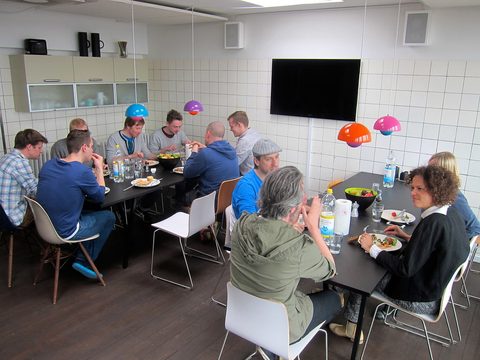
  • My new coworkers are really friendly. We _____ very well, and we often have lunch together.
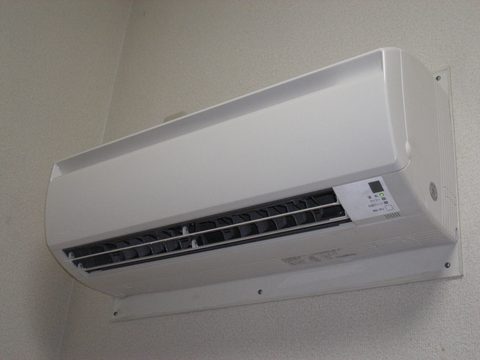
  • Our electricity bill is huge! We need to _____ air conditioning and turn off the lights when we leave.
EXERCISE 04Speaking · A1-A2

Beginner (A1-A2)

Ask and answer with a partner, or with me. The dotted words are the phrasal verbs: point at one to see what it means. Tap a card when you have answered it. Need help? Open the answer prompts and change the words in [brackets].

Answer prompts
1 · Yes, I have. I had to call off a meeting because [someone was sick / I had an emergency]. Or: No, I haven't, because [I usually make sure everything is ready before the meeting]. 2 · Yes, I do. I usually work out problems by [talking with them and finding a solution together]. Sometimes, I ask [my boss / another colleague] for help if we can't solve it ourselves. 3 · Yes, I had to carry out an important task when I had to [organize a team project / plan a big presentation]. 4 · Yes, I do. I go over my emails to [make sure I didn't forget anything and that everything is clear]. Or: No, I don't always go over them, but [I try to check for mistakes before sending]. 5 · I usually check out new business ideas when [I have free time / I hear about something interesting]. 6 · No, I don't give up. I usually [ask for help / try a different approach]. Sometimes, I take a break and [come back to the task later] when I feel better. 7 · Yes, I try to show up on time because [it's important to be punctual and respect others' time]. Sometimes, I'm late, but [I try to let people know in advance]. 8 · Yes, I have turned down a job offer because [the salary wasn't what I expected / I found a better opportunity]. Or: No, I haven't, but [I would if the job didn't fit my career goals]. 9 · Yes, I do sometimes. I run into problems when [there's a misunderstanding with my coworkers / technology doesn't work properly]. Or: No, I don't run into problems often because [I plan my tasks well and ask questions if I don't understand something]. 10 · Yes, I took on a responsibility when [I was asked to lead a team project suddenly]. It was difficult, but [I learned a lot from the experience]. 11 · Yes, I do. I usually bring up ideas when [I think they can improve the project / I have something important to share]. Or: No, I don't often bring up ideas because [I prefer to listen first and understand others' opinions]. 12 · Yes, I have. I back up my files regularly because [I don't want to lose important information]. Or: No, I haven't, but [I plan to start backing up my files soon]. 13 · I usually call in sick when [I'm feeling too sick to work / I have a fever or a headache]. Or: I don't usually call in sick because [I prefer to work from home if I'm not feeling well].
Phrasal verbs and meanings
call off · to cancel something work out · to solve or resolve something carry out · to complete or perform a task go over · to review something carefully check out · to look at or examine something give up · to stop trying because it's too hard show up · to arrive at a place or event turn down · to refuse something run into · to experience problems unexpectedly take on · to accept a task or responsibility bring up · to start talking about a topic back up · to make a copy of important data call in sick · to tell someone (usually your boss) that you cannot work because you are sick
0 / 0
EXERCISE 05Speaking · B1-B2

Intermediate (B1-B2)

Answer in two or three sentences: what happened, why, and how it ended. Point at a dotted phrasal verb to see what it means, and tap a card when you have answered it. The answer prompts show one way to start.

Teacher Alvaro
Answer prompts
1 · Yes, I had to catch up with my team after [my vacation / a week of working from home]. We talked about [the progress of ongoing projects and any important updates], and it helped me get back on track. 2 · Yes, I do. I usually bring up difficult topics when [there's an issue that needs to be addressed for the team to move forward]. But I try to [approach these topics carefully] to make sure everyone feels comfortable. 3 · Yes, I had to step down when [I was overwhelmed with responsibilities and felt I couldn't give my best to the team]. It was a difficult decision, but [it was necessary for the team's well-being and my own]. 4 · Yes, I took over a project when [my colleague had to leave the company suddenly]. It was challenging, but [I had clear instructions, so I managed to complete the project successfully]. 5 · Yes, I've had to put up with a difficult boss in the past because [they were always micromanaging my work]. It wasn't easy, but [I tried to stay professional and focus on my tasks]. 6 · I feel [a little stressed, but I understand the importance of teamwork]. I try to [stay organized and manage my time well] so I don't get overwhelmed. 7 · Yes, I do. I usually follow up by [sending a recap email or asking if they have any further questions]. I think it's important because [it shows I'm proactive and committed to building a good relationship]. 8 · Yes, I had to pass up a job opportunity when [the offer didn't align with my long-term career goals]. It was a tough choice, but [I felt it was the right decision for my future]. 9 · I prefer to follow through on a project myself when [I believe it's something that requires my direct involvement]. However, I know that [delegating tasks can help the team and improve efficiency], so I try to balance both. 10 · I take on a leadership role by [organizing tasks, setting clear expectations, and motivating the team]. I also try to [lead by example] and be available for support when needed. 11 · Sometimes, I work around problems when [there's no immediate solution, and I need to keep the project moving forward]. But I always make sure [to address the root cause later to avoid the problem getting worse]. 12 · Yes, I had to give in once, when [the decision was made by higher management, and I had no choice]. Even though I didn't agree, I made sure to [express my concerns politely] and move forward with the task. 13 · I get along well with my colleagues because [I try to be respectful and help whenever I can]. I believe that [good communication and teamwork are key to building strong relationships]. 14 · Yes, I had to put off a meeting once because [there was an urgent issue I had to deal with first]. I made sure to [inform everyone in advance and reschedule the meeting as soon as possible].
Phrasal verbs and meanings
catch up with · to talk with someone and share the latest news bring up · to raise or introduce a subject step down · to resign or leave a job or position take over · to take control or responsibility for something put up with · to tolerate something unpleasant pick up the slack · to take on extra work or responsibility follow up · to contact someone to check on something or to continue communication pass up · to reject or decline something follow through · to complete or finish a task take on · to accept responsibility for something work around · to avoid or bypass a problem instead of solving it give in · to accept or agree to something after resistance get along · to have a friendly relationship with someone put off · to postpone or delay something
0 / 0
EXERCISE 06Speaking · C1-C2

Advanced (C1-C2)

Give a real example, then a reason, then what you would do differently. Your partner asks one follow-up question before you tap the card. The dotted phrasal verbs show their meaning, and the answer prompts are there if you need a start.

Answer prompts
1 · Yes, I have. I had to jump into a project when [a colleague suddenly left, and I had to take over their work]. It turned out [better than expected, but I had to quickly learn a lot and adapt to the situation]. 2 · The last time I called on someone was when [I needed help with a technical issue during a project]. I reached out to [my colleague from the IT department, and they were able to assist me quickly]. 3 · Yes, I always run through my presentations before delivering them. I prepare by [practicing in front of a mirror or with a colleague to ensure everything flows smoothly]. It helps me [feel more confident and make sure I haven't missed any important details]. 4 · Yes, I think it's crucial because [addressing uncomfortable issues can lead to solutions and improvements in the workplace]. If you avoid them, [they can worsen over time, affecting team morale or productivity]. 5 · Yes, I had to back out once when [I realized I couldn't manage the workload alongside my other responsibilities]. I explained the situation to my manager and [offered to help find someone else to take over] so the project wouldn't suffer. 6 · I focus on [being clear and concise, and I always support my ideas with data or examples to make them more convincing]. I also make sure to [engage the audience by asking questions or encouraging feedback] so they feel involved. 7 · I focus on [prioritizing essential expenses and cutting back on non-essential items]. I also [look for more affordable alternatives or negotiate better deals with suppliers] to stay within budget. 8 · Yes, I occasionally feel the need to pick up the pace when [there are tight deadlines]. I manage my time by [breaking tasks into smaller chunks and focusing on one task at a time] to stay organized and efficient. 9 · Yes, I had to look into a financial matter when [we were dealing with a budget discrepancy]. I researched the issue thoroughly, [consulted with our finance team, and reviewed the contract terms to find a solution]. 10 · Yes, I had to take off once because [I had a personal emergency]. I made sure to [delegate my tasks to a trusted colleague] and [inform my team about the situation] so everything was covered. 11 · Yes, I had to fill in for a colleague who was on vacation. I learned that [it's important to stay organized and communicate well with the team to avoid confusion]. I also realized [how crucial it is to keep good records so others can step in easily when needed]. 12 · Yes, it's important because [standing out helps you get noticed and opens up more opportunities for growth]. I try to [offer innovative ideas, take on extra responsibilities, and consistently deliver high-quality work] to make an impact. 13 · When I make a mistake, I first [acknowledge it and take responsibility]. I then [work quickly to correct it, communicate the solution to the team, and make sure it doesn't happen again]. 14 · I prefer to check in regularly because [it keeps everyone on the same page and helps address issues early]. It also [promotes better collaboration and ensures that tasks are progressing as expected]. 15 · I take feedback seriously by [listening carefully and asking for clarification if necessary]. I use the feedback to [improve my work and make adjustments where needed], as it helps me grow professionally.
Phrasal verbs and meanings
jump into · to begin something quickly, often without prior preparation call on · to ask someone to assist or contribute to something run through · to practice or go over something quickly to review details bring up · to introduce or mention a topic for discussion back out of · to withdraw from an agreement or commitment put across · to communicate or present something clearly cut down on · to reduce or decrease something pick up the pace · to work faster or more efficiently look into · to investigate or research something take off · to leave work suddenly, usually for personal reasons fill in for · to temporarily take someone else's position stand out · to be noticeable or different from others make up for · to compensate for a wrong action, or correct it check in with · to update or communicate with someone to ensure progress take in · to absorb or accept information or advice
0 / 0
EXERCISE 07Writing

One question, in writing

80–120 words. Choose one question from your level (Exercise 04, 05 or 06) and answer it in writing. Write the number of the question first. Use its phrasal verb and at least two more from the lesson, and give a real example: when, where and what happened.

Teacher Alvaro
0 words
ENDEnd of lesson

My results

Check your score, then copy it and send it to your teacher on WhatsApp.

Teacher Alvaro

One job for this week. Choose three phrasal verbs from your level and use each one in a true sentence about your week: at work, at school or at home. Say them out loud, then write them in your notebook.