SPEAKING CLUB · TOPIC 49

News

The weather on TV, a story on your phone, a newspaper that may not exist in twenty years. Where does your news come from, and do you believe it? Sixty-four questions in three levels, and eight words that every level needs.

A1-C2 60 min Focus: speaking · 3 levels Home
EXERCISE 01Speaking

Warm-up

Ask and answer with a partner, or with me. Tap a card when you have answered it.

Teacher Alvaro

One small word first: news. It ends in -s, but it is singular: the news is good, never the news are. One story is a piece of news or a news story. Today there are three levels of questions about the news. Answer the ones at your level, and listen to the other levels too: you can take good words from them.
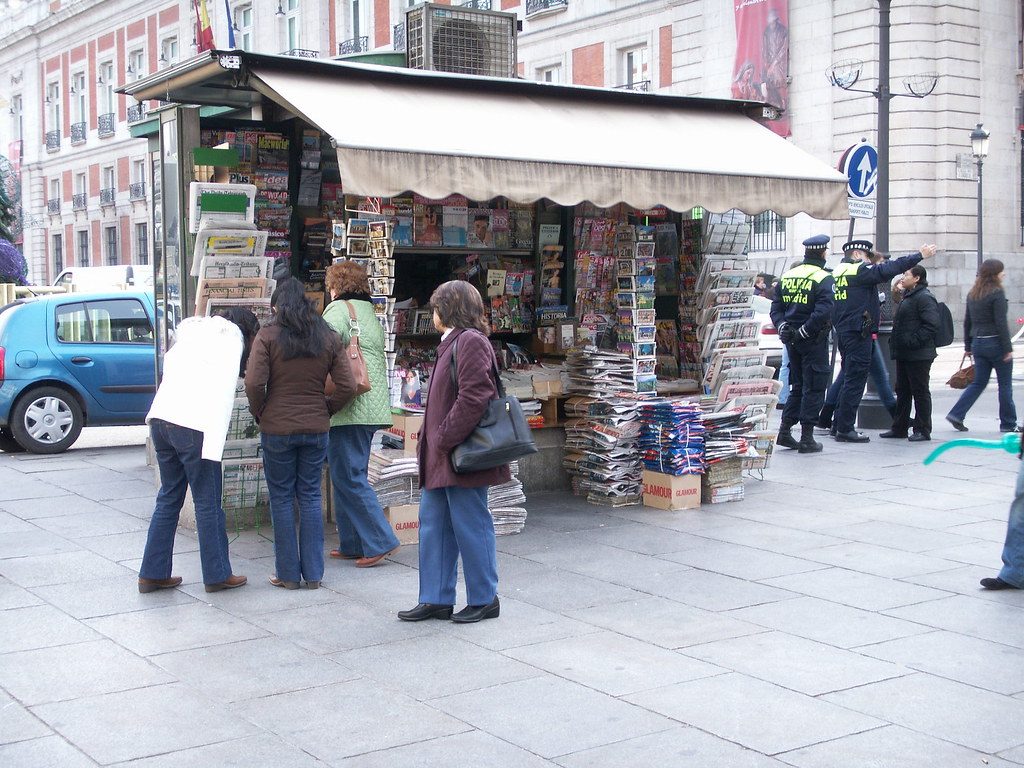
People stop to look at the newspapers and magazines at a newsstand on a busy city street
Useful language
My good news is that I …Bad news first, please. My … always knows the news first.The headline says … That's good news! / That's bad news. I'm on the news because I …
0 / 0
EXERCISE 02Vocabulary

Words about the news

Click a word, then click its meaning. Correct pairs turn green. The audio button says the word.

Word
Meaning
EXERCISE 03Vocabulary in context

Complete the sentences

Click a word in the bank, then click a gap. Click a filled gap to clear it. Read the whole sentence first: the small words around the gap help too.

Teacher Alvaro
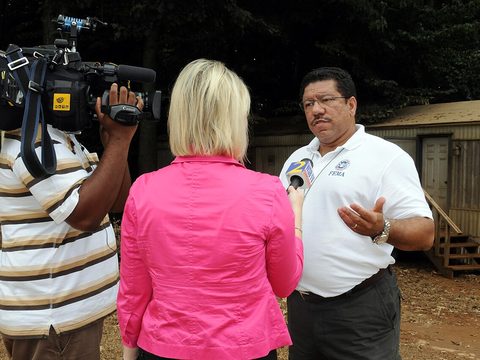
  • Our town was on TV last night: a _____ stood in front of the flooded school with a microphone and asked people questions for the evening news.
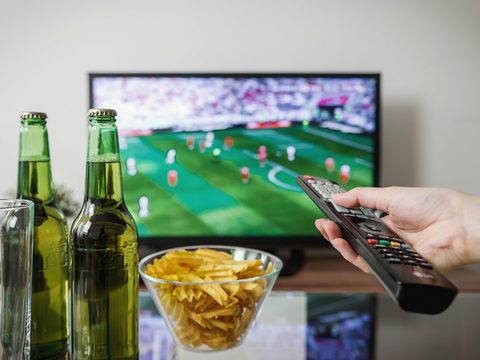
  • This show is so boring! Give me the remote control: I want to change the _____ and watch the soccer game.
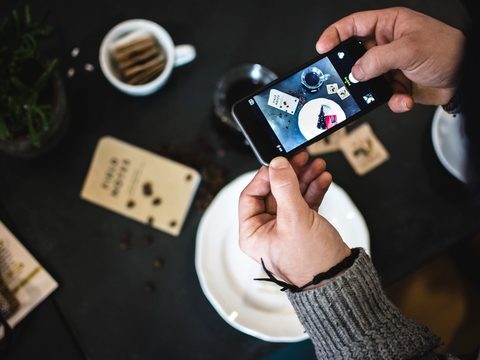
  • My cousin posts a photo of every meal on _____, and his friends write comments under each one.
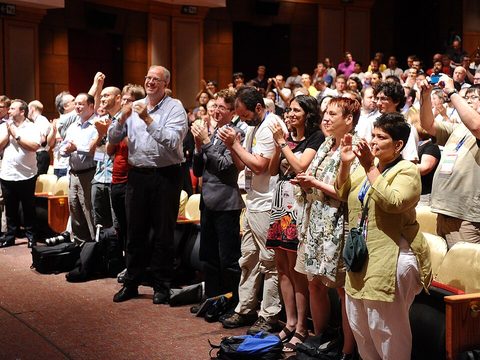
  • At the end of the concert, the whole _____ stood up and clapped for five minutes.
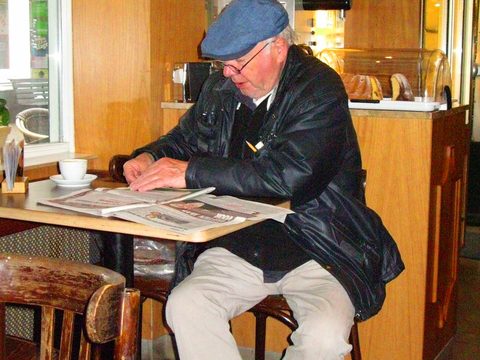
  • My grandfather reads the _____ every morning with his coffee, and then he does the crossword on the back page.
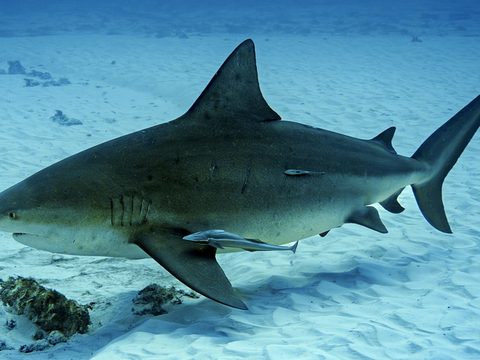
  • Thousands of people shared a video of a shark swimming down a city street after the storm, but somebody made it on a computer. The story was _____.
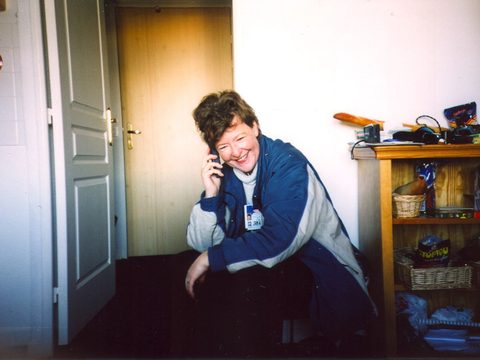
  • My aunt calls me every Sunday with the latest family _____: who has a new boyfriend, who had a big fight and who is moving to another city.
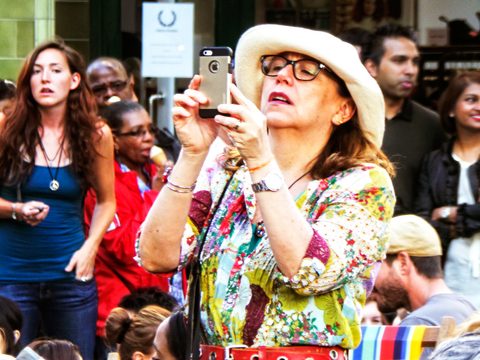
  • A famous singer walked into the little café, and everybody took out their phones for a photo. It's not every day that a real _____ has lunch in our small town!
EXERCISE 04Speaking · A1-A2

Beginner (A1-A2)

Answer in full sentences, with a partner or with me. Tap a card when you have answered it. Stuck? Open the answer prompts below the cards: same number, same question. Change the words in brackets for your own.

Answer prompts
1 · I read or watch the news [every day / a few times a week / rarely] because [reason, e.g., I like staying updated / it's part of my routine]. 2 · I mostly get my news from [source, e.g., the internet / TV / newspapers] because [reason, e.g., it's convenient / it's always accessible]. 3 · I [do / don't] enjoy reading sports news because [reason, e.g., I like keeping up with teams / I prefer other topics]. 4 · A recent story that caught my attention was about [topic, e.g., a new scientific discovery / a local event] because [reason, e.g., it was surprising / it affects my community]. 5 · I prefer [watching / reading] the news because [reason, e.g., it's quicker / I like seeing visuals]. 6 · I check the weather on the news [often / rarely / only before trips] because [reason, e.g., it helps me plan my day / I find it unnecessary]. 7 · Yes, I have read news about my country in [language], and I found it [interesting / different / difficult to understand]. Or: No, I haven't, but I'd like to try it in [language]. 8 · I think reading the news is [important / not too important] because [reason, e.g., it keeps me informed / it's stressful for me]. 9 · I know about [name a few, e.g., CNN / BBC / Al Jazeera], and I think they are [reliable / interesting / widely known]. 10 · I think celebrity news is [entertaining / overhyped / interesting sometimes] because [reason, e.g., it's fun / it distracts from serious news]. 11 · I [do / don't] often share news stories because [reason, e.g., it's a good conversation starter / they don't find it interesting]. 12 · I [do / don't] like reading about new technology because [reason, e.g., I find it fascinating / it's not my interest]. 13 · I find [topic, e.g., economic news / political news] boring because [reason, e.g., it's too complex / it doesn't relate to my life]. 14 · I [do / don't] follow the news on social media because [reason, e.g., it's convenient / I don't trust it]. 15 · I [do / don't] think there should be more good news stories because [reason, e.g., they're uplifting / they balance out sad stories]. 16 · I [do / don't] enjoy animal news because [reason, e.g., it's heartwarming / it's not relevant to me]. 17 · I [do / don't] talk about the news [in class / at work] because [reason, e.g., it's interesting to discuss / others aren't interested]. 18 · I prefer checking the news in the [morning / afternoon / evening] because [reason, e.g., it prepares me for the day / I have free time]. 19 · Yes, I have been to a place where [describe the event], and it was [describe the experience, e.g., exciting / memorable]. Or: No, I haven't, but I'd like to visit [place]. 20 · I [do / don't] think news stories are always true because [reason, e.g., some have bias / mistakes can happen]. 21 · I [do / don't] think newspapers will still exist in the future because [reason, e.g., digital media is growing / some people still prefer paper]. 22 · Yes, I have met a reporter, and it was [describe the experience, e.g., interesting / surprising to hear about their job]. Or: No, I haven't met a reporter, but I'd like to.
0 / 0
EXERCISE 05Speaking · B1-B2

Intermediate (B1-B2)

Give a reason and an example in every answer. Tap a card when you have answered it. The answer prompts below the cards have the same numbers.

Teacher Alvaro
Answer prompts
1 · I'm most interested in news about [topic, e.g., technology / the environment / world events] because [reason, e.g., it impacts my daily life / I find it inspiring]. 2 · Social media has changed how I get news because [reason, e.g., I get updates instantly / I can see multiple perspectives quickly]. 3 · I spend about [amount of time, e.g., 30 minutes / an hour] each day on news because [reason, e.g., it helps me stay informed / I enjoy knowing what's happening]. 4 · Yes, I think news stories can affect people's behavior by [explain, e.g., influencing their decisions / making them more cautious]. 5 · Yes, I have been surprised by a news story, particularly when I read about [topic / event], which was [reason, e.g., unexpected / very unusual]. 6 · I [do / don't] follow [news website / channel, e.g., BBC / CNN / Al Jazeera] regularly because [reason, e.g., I trust it / it covers topics I like]. 7 · I think it's [very / somewhat / not] important to stay informed about world events because [reason, e.g., it helps me understand global issues / I can discuss them with others]. 8 · Staying updated on the news helps me [benefit, e.g., make informed decisions / understand different perspectives]. 9 · I [do / don't] think all news sources are trustworthy because [reason, e.g., some have biases / not all verify their information thoroughly]. 10 · I feel [concerned / hopeful / worried] about climate change news because [reason, e.g., it affects everyone / it shows we need action]. 11 · When I come across fake news, I [reaction, e.g., feel frustrated / try to verify it] because [reason, e.g., it misleads people / it can create confusion]. 12 · I think news about celebrities' personal lives is [interesting / unnecessary] because [reason, e.g., it's entertaining / it doesn't affect me]. 13 · I prefer [short articles / long reports] because [reason, e.g., they're easier to read / they give more details]. 14 · When I see sad news, I feel [emotion, e.g., empathetic / sad / overwhelmed] because [reason, e.g., it's hard to see people suffer / it feels close to home]. 15 · Yes, I read news about [topic, e.g., a health issue / an environmental concern] that changed my opinion by [reason, e.g., presenting new information / showing different perspectives]. 16 · Journalists play a [crucial / important] role by [action, e.g., providing information / exposing the truth], which helps [effect, e.g., keep people informed / hold power accountable]. 17 · I'd like to see more [type of news, e.g., positive stories / unbiased reporting] because [reason, e.g., it would balance negative news / it would make news more trustworthy]. 18 · Yes, I saw news about [place] that I had visited, and it was [reaction, e.g., interesting / surreal] to see it being covered. 19 · I usually avoid [topic, e.g., celebrity gossip / politics] because [reason, e.g., it doesn't interest me / it feels repetitive]. 20 · I think investigative journalism is [important / essential / valuable] because [reason, e.g., it reveals hidden issues / it promotes accountability]. 21 · I [do / don't] think news coverage is fair in my country because [reason, e.g., some topics are underreported / certain biases are visible].
0 / 0
EXERCISE 06Speaking · C1-C2

Advanced (C1-C2)

Take a position, support it with an example, and answer the other side before you finish. Tap a card when you have discussed it. The answer prompts below the cards have the same numbers and show one way in.

Answer prompts
1 · I think the news shapes public opinion by [explanation, e.g., highlighting certain issues / influencing what people talk about], which can impact decision-making by [effect, e.g., guiding voters / affecting public support for policies]. 2 · Journalists face challenges like [example, e.g., balancing truth with sensitivity / avoiding bias], which can be difficult because of [reason, e.g., the pressure to publish quickly / audience expectations]. 3 · 24-hour news coverage has changed society by [explanation, e.g., keeping people constantly informed / raising stress levels], so people now feel [effect, e.g., pressure to stay updated / overwhelmed by information]. 4 · I think news channels [should / shouldn't] be responsible for educating people because [reason, e.g., they reach a broad audience / they have their own biases]. 5 · I believe censorship in the news is [view, e.g., necessary for security / harmful to freedom] because [reason, e.g., it protects people / it limits access to information]. 6 · Media bias affects perception by [explanation, e.g., framing stories in a particular way / focusing on certain details], which can lead people to [effect, e.g., misunderstand issues / form one-sided opinions]. 7 · The benefits of online news include [example, e.g., fast updates / easy access], but the risks are [example, e.g., spreading misinformation / a lack of credibility]. 8 · News reporting has changed with technology by [explanation, e.g., speeding up the reporting process / allowing live updates], which means [effect, e.g., people know news instantly / accuracy can sometimes be sacrificed]. 9 · I think focusing on sensational stories [does / doesn't] affect news quality because [reason, e.g., it draws attention away from important issues / it engages more readers]. 10 · Privacy is [very / somewhat / less] important when reporting on public figures because [reason, e.g., they deserve respect / the public has a right to know certain things]. 11 · Some challenges include [example, e.g., safety risks / limited access to information] because journalists in conflict zones face [difficulty, e.g., danger from violence / communication issues]. 12 · Economic factors influence content by [explanation, e.g., affecting which stories are prioritized / leading to more sponsored content], as news organizations need to [reason, e.g., attract advertisers / make profits]. 13 · Investigative journalism holds governments accountable by [action, e.g., exposing corruption / revealing misconduct], which is important because [reason, e.g., it promotes transparency / it protects the public interest]. 14 · Misinformation impacts society by [explanation, e.g., creating confusion / spreading fear], which can lead to [result, e.g., distrust in the media / poor decision-making]. 15 · Journalists should handle these topics by [method, e.g., showing empathy / being respectful with language] because it's important to [reason, e.g., respect those involved / avoid causing more distress]. 16 · I think the future of print news will be [prediction, e.g., a niche market / mostly digital] because [reason, e.g., more people prefer online sources / it's harder to sustain print financially]. 17 · Social media has changed global news coverage by [explanation, e.g., making information accessible worldwide / allowing faster news sharing], which means [effect, e.g., people can follow stories live / there's less time for fact-checking]. 18 · The news can better represent marginalized voices by [method, e.g., hiring more diverse journalists / covering underreported issues] because [reason, e.g., it promotes equality / it shows a fuller picture of society]. 19 · I [do / don't] think there should be legal repercussions for spreading fake news because [reason, e.g., it would reduce misinformation / it could limit free speech]. 20 · Positive journalism, like stories about [examples, e.g., community projects / inspiring individuals], benefits society by [effect, e.g., boosting morale / encouraging similar actions]. 21 · The constant flow of news impacts mental health by [explanation, e.g., increasing anxiety / making people feel overwhelmed], which can lead to [result, e.g., stress / a need to take breaks from the news].
0 / 0
EXERCISE 07Writing

One question, in writing

80–120 words. Choose one question from your level (Exercise 04, 05 or 06) and copy it at the top. Start with its answer prompt, then add a reason, an example and one more detail of your own.

Teacher Alvaro
0 words
ENDEnd of lesson

My results

Check your score, then copy it and send it to your teacher on WhatsApp.

Teacher Alvaro

One job for this week. Every day, read or watch one news story in English, on a website, an app or a TV channel. Then tell somebody about it in two sentences: "I read that …" and "I think …". Seven stories by our next class.