SPEAKING CLUB · TOPIC 50

Oktoberfest

A party for a royal wedding in 1810 that grew into the biggest folk festival in the world. Sixty-eight questions in three levels, from pretzels and parades to crowds and critiques, and eight words that every level needs.

A1-C2 60 min Focus: speaking · 3 levels Home
EXERCISE 01Speaking

Warm-up

Ask and answer with a partner, or with me. Tap a card when you have answered it.

Teacher Alvaro

Blue and white, music and pretzels. Oktoberfest began as a party for a royal wedding in Munich and grew into the biggest folk festival in the world. You don't need to like beer to talk about it: there is food, music, clothes, rides and a lot of history. Answer the questions at your level, and listen to the other levels too: you can take good words from them.
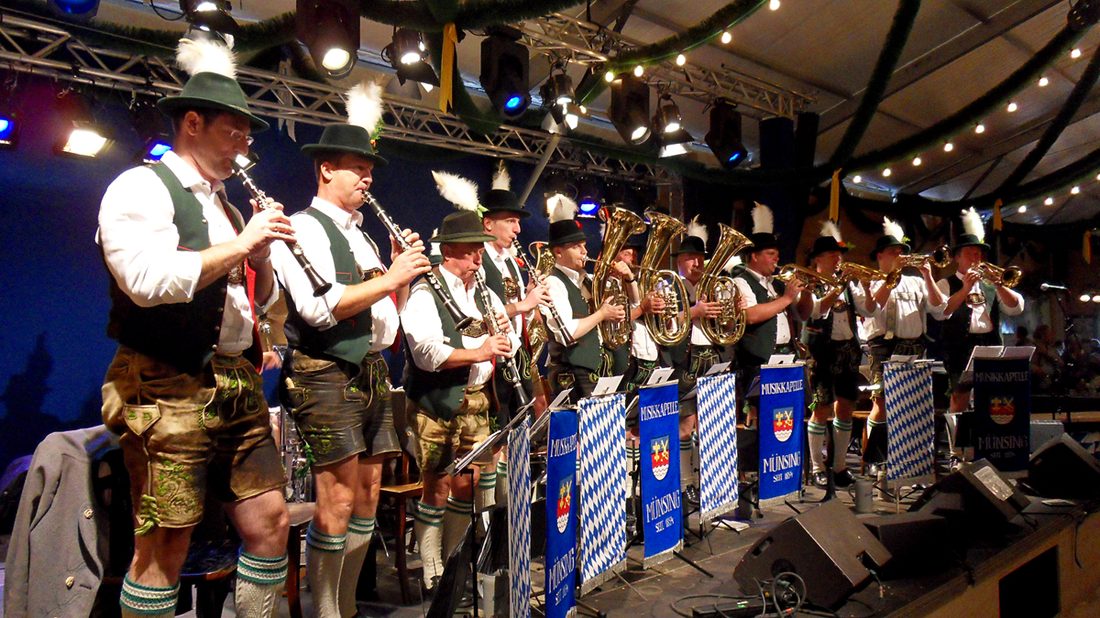
A Bavarian brass band in green hats, white shirts and leather shorts plays clarinets, trumpets and tubas on a stage with blue and white music stands
Useful language
The biggest festival in my city is … It's in (month). I have more fun in … because … At a fair, I always eat …It's salty / It's sweet. In my country, people wear … for … I'd love to go to … because …I'd never travel just for a festival.
0 / 0
EXERCISE 02Vocabulary

Festival words

Click a word, then click its meaning. Correct pairs turn green. The audio button says the word.

Word
Meaning
EXERCISE 03Vocabulary in context

Complete the sentences

Click a word in the bank, then click a gap. Click a filled gap to clear it. Read the whole sentence first: the clues around the gap tell you the word.

Teacher Alvaro
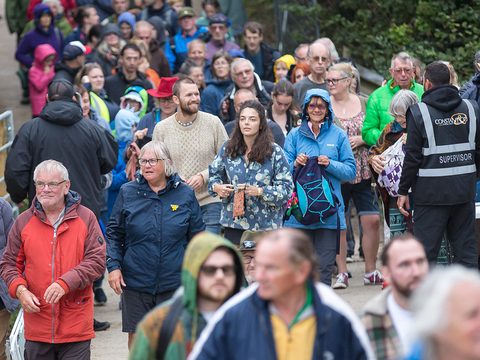
  • There was a huge _____ at the gate, so the guards opened two more entrances to let everybody in faster.
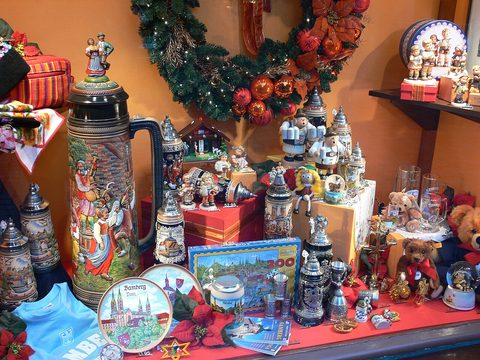
  • On the last day of our trip, we bought a _____ for Grandma: a little plate with a picture of the old town on it.
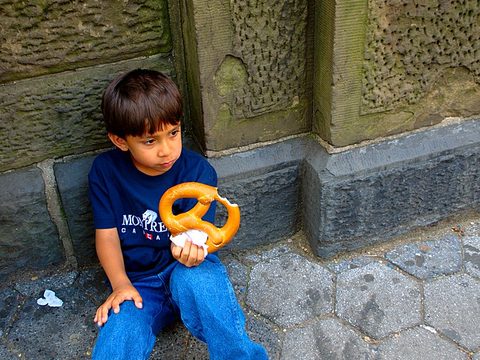
  • My kids love the salty _____ from the bakery on the corner. They eat the thin, twisted ends first and save the soft, fat middle for last.
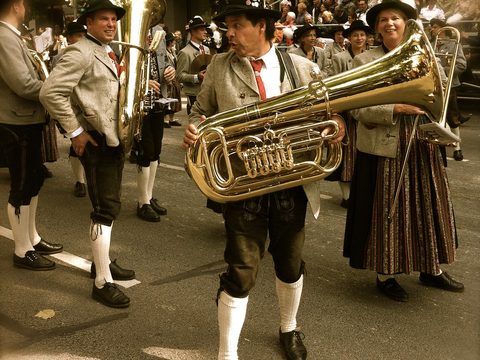
  • Hundreds of people stood along the street to watch the _____ go by: one marching band, one horse and one decorated wagon after another, for over an hour.
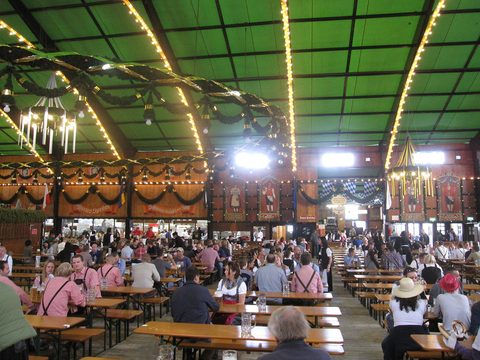
  • It started to rain, so everybody ran into the _____, found a seat at the long wooden tables and ordered something to drink.
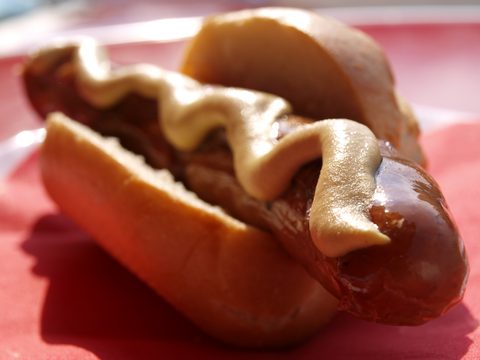
  • For lunch, Dad grilled a long _____ and put it in a bun with mustard and onions, just like a hot dog.
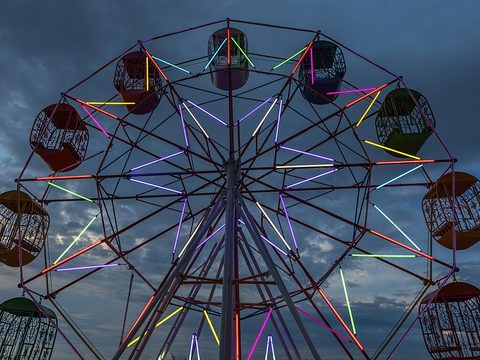
  • My little sister was too short for the roller coaster, so she went on a slower _____: the Ferris wheel, with a view of the whole fair.
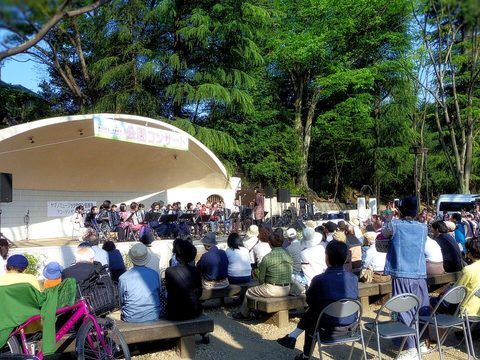
  • Our town has a music _____ every summer: three days of concerts in the park, with food stands and thousands of visitors.
EXERCISE 04Watching

How it all began

The school suggests this video before the class: three minutes about the history of Oktoberfest, with the captions on. Watch it, then talk about the cards with a partner, or with me. There are no right or wrong answers here: say what you understood. Beginners, listen for years and numbers; Intermediate and Advanced, say why. Tap a card when you have discussed it.

The captions are automatic, so a few words are wrong. At 00:21, “tax a cake” is taps a keg: the mayor opens the first barrel of beer. At 01:24, “bulk fest” is Volksfest, German for a folk festival. At 01:59, “a hundred and twenty liters” for the 1910 festival should be about 120,000 liters.

0 / 0
EXERCISE 05Speaking · A1-A2

Beginner (A1-A2)

Answer in full sentences, with a partner or with me. Tap a card when you have answered it. Stuck? Open the answer prompts below the cards: same number, same question. The words in parentheses are the school's ideas: use them, or say your own.

Teacher Alvaro
Answer prompts
1 · Oktoberfest is a ___ (famous festival) in ___ (Munich, Germany), celebrated with ___ (food, drinks, and activities). 2 · Oktoberfest is celebrated in ___ (Munich), and other cities around the world have their own ___ (celebrations). 3 · People eat ___ (traditional German food) like ___ (pretzels), ___ (sausages), and ___ (roast chicken). 4 · A popular drink is ___ (beer), especially ___ (lager or wheat beer). 5 · It lasts for about ___ (16 to 18 days), starting in ___ (late September). 6 · The colors are ___ (blue) and ___ (white). 7 · I like beer because of ___. / I don't like beer because of ___. 8 · I've seen ___ (food), ___ (drinks), and ___ (costumes). 9 · Men wear ___ (lederhosen), and women wear ___ (dirndls). 10 · It is / It isn't a fun event because ___ (explain what makes it fun or not fun). 11 · Activities include ___ (dancing), ___ (games), and ___ (rides). 12 · I think I would enjoy it because ___. / I don't think I would enjoy it because ___. 13 · People listen to ___ (traditional Bavarian music) and ___ (popular German songs). 14 · People travel by ___ (train), ___ (car), or ___ (public transportation). 15 · Yes, there are games like ___ (ring toss) and ___ (shooting games). 16 · A beer tent is a ___ (large outdoor structure) where people drink ___ (beer) and enjoy ___ (food). 17 · Around ___ (6 million) people attend Oktoberfest each year. 18 · A traditional dish is ___ (bratwurst) or ___ (sauerkraut). 19 · The best part of Oktoberfest is ___ (share your thoughts on the best part). 20 · Yes, there are ___ (children's activities) and ___ (family-friendly events). 21 · People celebrate by ___ (having parties) and ___ (making traditional food). 22 · I have tried ___ (share your experience with Oktoberfest food). / I haven't tried any yet, but I want to try ___.
0 / 0
EXERCISE 06Speaking · B1-B2

Intermediate (B1-B2)

Give a reason and an example in every answer. Tap a card when you have answered it. The answer prompts below the cards have the same numbers.

Answer prompts
1 · Oktoberfest started in ___ (1810) to celebrate the marriage of ___ (Crown Prince Ludwig and Princess Therese). 2 · It is famous for ___ (beer culture), ___ (traditional food), and ___ (its festive atmosphere). 3 · In other countries, people celebrate by ___ (hosting beer festivals) and ___ (serving traditional dishes). 4 · Traditional games include ___ (crossbow shooting) and ___ (ring toss). 5 · The atmosphere is ___ (festive), with ___ (music, laughter, and celebration). 6 · Music is important because it ___ (enhances the festive spirit) and ___ (encourages dancing). 7 · Locals participate by ___ (serving food), ___ (performing music), and ___ (helping with organization). 8 · Common souvenirs include ___ (beer steins), ___ (clothing items), and ___ (decorative mugs). 9 · Choices vary based on ___ (regional specialties) and ___ (personal preferences). 10 · Main attractions include ___ (beer tents), ___ (traditional music), and ___ (amusement rides). 11 · Oktoberfest impacts the economy by ___ (boosting tourism) and ___ (increasing sales for local businesses). 12 · Popular traditions include ___ (the opening parade) and ___ (traditional dances). 13 · The main beer is ___ (Oktoberfest beer, a lager from Munich's own breweries), and some tents also serve ___ (Weissbier, a wheat beer). 14 · Decorations often include ___ (banners), ___ (flowers), and ___ (traditional Bavarian colors). 15 · Yes, competitions like ___ (stein-holding contests) and ___ (eating contests) take place. 16 · Visitors typically ___ (enjoy themselves), ___ (celebrate together), and ___ (follow festival rules). 17 · Famous songs include ___ (Ein Prosit) and ___ (traditional Bavarian folk songs). 18 · People find accommodation by ___ (booking hotels early) or ___ (staying with locals). 19 · Yes, landmarks like ___ (the Bavaria statue, which looks over the festival grounds) and ___ (Munich City Hall) are nearby. 20 · The most important aspect is ___ (community spirit) and ___ (celebration of tradition). 21 · People of different ages enjoy it by ___ (participating in family activities) or ___ (enjoying beer gardens). 22 · In rural areas, celebrations may be ___ (more traditional), while in urban areas they may be ___ (larger and more commercial).
0 / 0
EXERCISE 07Speaking · C1-C2

Advanced (C1-C2)

Take a position, support it with an example, and answer the other side before you finish. Tap a card when you have discussed it. The answer prompts below the cards have the same numbers and show one way in.

Teacher Alvaro
Answer prompts
1 · Oktoberfest has evolved by ___ (introducing new foods), ___ (changing entertainment options), and ___ (adapting to modern tastes). 2 · Oktoberfest influences cultural exchange by ___ (promoting German traditions) and ___ (encouraging international participation). 3 · Environmental impacts include ___ (waste generation), ___ (energy consumption), and ___ (traffic congestion). 4 · Oktoberfest is significant in German identity because it ___ (celebrates Bavarian culture) and ___ (promotes national pride). 5 · Social dynamics are evident in ___ (group interactions), ___ (family participation), and ___ (cultural exchanges). 6 · Challenges include ___ (safety concerns), ___ (overcrowding), and ___ (changing societal values). 7 · Regional variations differ in ___ (types of beer served), ___ (local foods), and ___ (celebration styles). 8 · Oktoberfest has adapted by ___ (including craft beers at Oktoberfests abroad), ___ (offering vegetarian options), and ___ (diversifying entertainment). 9 · Technology plays a role in ___ (online table reservations), ___ (promotions through social media), and ___ (event management). 10 · Oktoberfest reflects societal trends like ___ (consumer culture), ___ (globalization), and ___ (community bonding). 11 · Implications include ___ (social bonding), ___ (economic benefits), and ___ (cultural identity). 12 · Oktoberfest contributes by ___ (showcasing beer varieties) and ___ (influencing brewing trends). 13 · Historical events include ___ (the first celebration in 1810) and ___ (significant wars affecting attendance). 14 · Safety measures influence the experience by ___ (ensuring crowd control) and ___ (providing emergency services). 15 · Oktoberfest promotes tourism by ___ (attracting international visitors) and ___ (boosting local businesses). 16 · The values reflect culture through ___ (emphasis on tradition), ___ (community involvement), and ___ (celebration of heritage). 17 · Oktoberfest impacts local businesses by ___ (increasing sales) and ___ (providing job opportunities). 18 · Sustainability issues are addressed by ___ (implementing recycling programs) and ___ (promoting local products). 19 · Oktoberfest manages crowds by ___ (using designated entry points) and ___ (providing sufficient facilities). 20 · Critiques include ___ (over-commercialization), ___ (safety concerns), and ___ (cultural appropriation). 21 · It fosters community spirit through ___ (shared experiences), ___ (traditional music), and ___ (group activities). 22 · Social media has changed experiences by ___ (facilitating connections), ___ (promoting events), and ___ (sharing experiences). 23 · Preparation includes ___ (planning travel), ___ (choosing outfits), and ___ (researching events). 24 · Predictions include ___ (increased international participation) and ___ (greater focus on sustainability).
0 / 0
EXERCISE 08Writing

One question, one paragraph

80–120 words. Choose one question from your level (Exercise 05, 06 or 07), copy it at the top and answer it in one paragraph. Start with its answer prompt, then add a reason, an example and one more detail of your own. Beginners: short, clear sentences with because. Intermediate and Advanced: add the other side with but, although or whereas.

0 words
ENDEnd of lesson

My results

Check your score, then copy it and send it to your teacher on WhatsApp.

Teacher Alvaro

One job for this week. Think of a festival in your city and describe it in English, out loud, in one minute: when it is, what people eat and wear, and the best part for you. Record it on your phone and listen to it once.