Prepositions In, On and At
In the morning, on Monday, at home. Three small words that English uses all day long, for places and for time. Forty-nine questions in three levels.
Warm-up
Ask and answer with a partner, or with me. Tap a card when you have answered it.

Three small words, all day long. You wake up in the morning, you work on Monday, and you meet your friends at six. Today every answer has one of them, for a time or for a place.
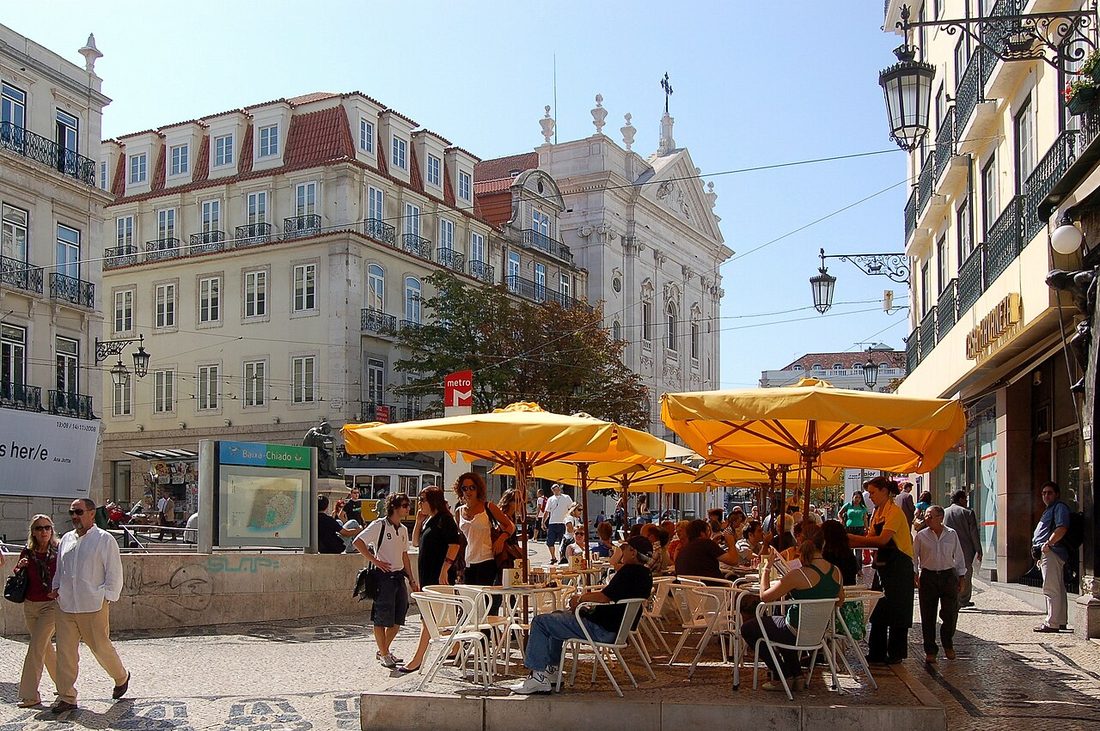
Useful language
Words for your day
Click a word, then click its meaning. Correct pairs turn green. The audio button says the word.
Complete the sentences
Click a word in the bank, then click a gap. Click a filled gap to clear it.

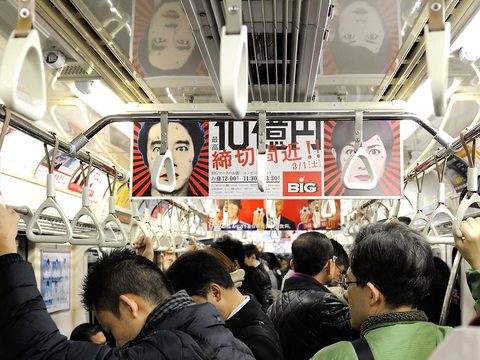 The train is always
_____ at 8 a.m. There are no free seats, and people stand very close to each other.
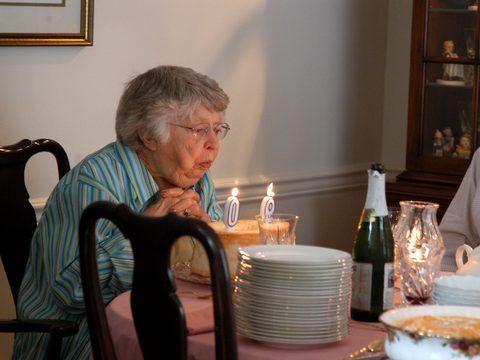 It's my grandmother's ninetieth birthday on Sunday, so the whole family is going to
_____ with a big lunch at her house.
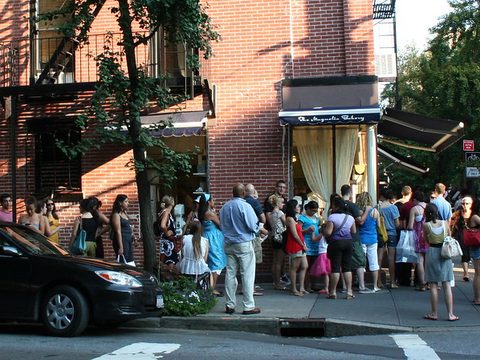 There were thirty people in
_____ at the bakery, so I waited twenty minutes for my bread.
 I never go to the bank anymore. I downloaded the bank's
_____, and now I pay all my bills on my phone.
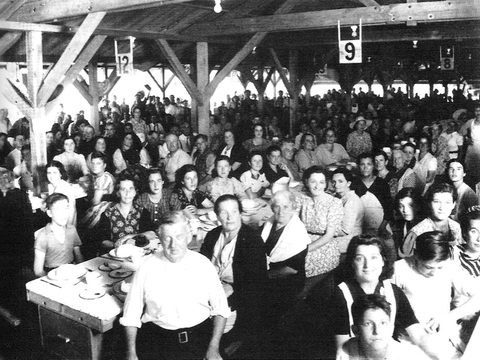 The cafeteria at my office is always full at
_____, between twelve and one o'clock.
 Our
_____ has six people. We work together on every project, and we have a meeting on Monday mornings.
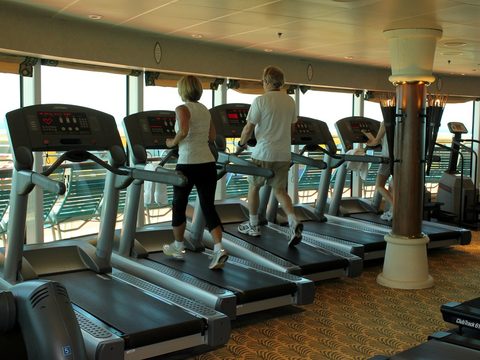 I go to the
_____ on Mondays, Wednesdays and Fridays. I exercise on the machines for an hour, and then I take a shower there.
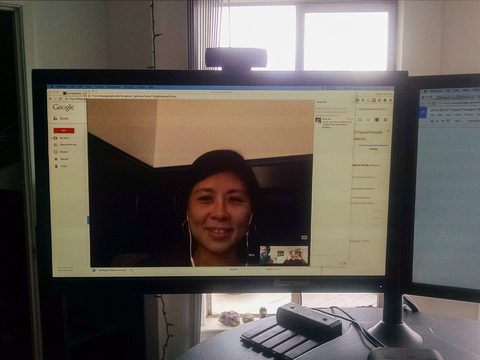 My sister lives in Canada, so we talk on a
_____ every Sunday. I can see her face and her new apartment on my laptop screen.
In, on or at?
Read the rule. Then write the right preposition and the words on the left. Read the whole sentence first: it tells you if the words are a place or a time.

Think of a funnel: big at the top, small at the bottom. At the top is in, for big places and long periods. In the middle is on, for surfaces, streets and days. At the bottom is at, for one exact point: an address, a stop, a time on the clock. From general to specific.
- in + a big or closed space: in Brazil · in New York · in my neighborhood · in the kitchen · in a box
- in + a long period: in 2026 · in October · in the spring · in the 21st century · and the parts of the day: in the morning, in the afternoon, in the evening
- on + a surface, a street or a floor: on the table · on the wall · on Main Street · on the third floor
- on + public transportation: on the train · on the plane — but in a car, in a taxi
- on + a day or a date: on Monday · on May 5th · on Christmas Day
- on + a screen or a platform: on TV · on my phone · on social media
- at + an exact point: an address, a stop, a corner: at 25 Main Street · at the bus stop · at the corner
- at + an exact time: at 8 a.m. · at noon · at sunset · at lunchtime
- Learn these as they are: at home · at work · at school · at night (but in the morning) · at the end of the day · in your free time · in a team
- The weekend: American English says on the weekend and on weekends. British English says at the weekend. Both are correct; this lesson uses the American form.
-
TokyoMy cousin lives ___, in a tiny apartment near the train station.
-
the busI always read a book ___ on my way to work. The ride takes forty minutes.
-
midnightThe supermarket closes ___, so you can still shop after a late dinner.
-
JulyOur summer vacation is ___ this year, from the 1st to the 20th.
-
the doorSomeone is ___. Can you open it, please?
-
my birthdayMy grandmother calls me ___ every year. She never forgets the date!
-
the radioI heard the news ___ in the car this morning.
-
the 1990sMy parents met ___, long before smartphones and social media.
-
the entranceI'll wait for you ___ of the museum, next to the big glass doors.
-
the roofOur cat loves the sun, so she sleeps ___ of our house all afternoon.
Beginner (A1-A2)
Ask and answer with a partner, or with me. Questions 1–6 practice at (places, time), 7–12 on (days, surfaces) and 13–17 in (months, parts of the day, places): use the same word in your answer. Tap a card when you have answered it. Stuck? Open the answer prompts.
Answer prompts
Intermediate (B1-B2)
Questions 1–5 use at (points, places, events), 6–11 on (days, devices, occasions) and 12–17 in (periods, places, situations). Answer, say why, and give an example from your own life. Tap a card when you have answered it. The answer prompts help you start.

Answer prompts
Advanced (C1-C2)
Questions 1–5 use at (moments, settings, stages), 6–10 on (days, platforms, issues, dependence) and 11–15 in (contexts, systems, environments, periods). Go deeper: look at both sides and end with your own view. Tap a card when you have answered it. The answer prompts are there if you need a way in.
Answer prompts
One question, in writing
80–120 words. Choose one question from your level (Beginner, Intermediate or Advanced) and answer it in writing. Start with the level and the number, for example Beginner 13. Use in, on and at at least twice each, for places and for times.

My results
Check your score, then copy it and send it to your teacher on WhatsApp.

One job for this week. Every evening, tell your day out loud in three sentences, in English: one with in, one with on and one with at. A time, a place, a screen: In the morning I …, on the bus I …, at lunchtime I …