Rainbow flags, parades and one simple idea: everyone deserves respect.
Sixty questions in three levels about Pride, inclusion and the small words that help
people feel seen.
Ask and answer with a partner, or with me. Tap a card when you have
answered it.
In many countries, June is Pride Month. People celebrate with
parades, music and rainbow flags, and they talk about respect for LGBTQ+ people. Today
you talk about it at your level: Beginner, Intermediate or Advanced. One rule for
everybody: we talk about ideas, never about anyone's private life.
Useful language
Red, orange, yellow, green, blue, purple.I love parades. / I don't like crowds.In my city, there is a … in (month).A place feels welcoming when people …In my country, people celebrate …I can say hello and invite them to lunch.
0 / 0
EXERCISE 02Vocabulary
Celebration and respect
Click a word, then click its meaning. Correct pairs turn green. The audio
button says the word.
Word
Meaning
EXERCISE 03Vocabulary in context
Complete the sentences
Click a word in the bank, then click a gap. Click a filled gap to clear
it.
Before the birthday party, we put up all the
_____: balloons on the door, colorful paper on the walls and little lights around the windows.
Hundreds of workers stood outside the hospital with signs that said "Fair pay now!" It was a peaceful
_____ against the new, lower salaries.
When the rain stopped and the sun came out, a huge
_____ appeared in the sky, with all its colors from red to purple.
When my brother lost his job, the whole family tried to
_____ him: my parents helped with his rent, and I helped him with his resumé.
Every morning, a student raises the
_____ to the top of the tall pole in front of the school, and it moves in the wind all day.
Our English class has a lot of
_____: students from nine countries, from 18 to 70 years old, with very different jobs, ideas and life stories.
When the new neighbors arrived, we took them a cake to
_____ them to the building and show them where everything is.
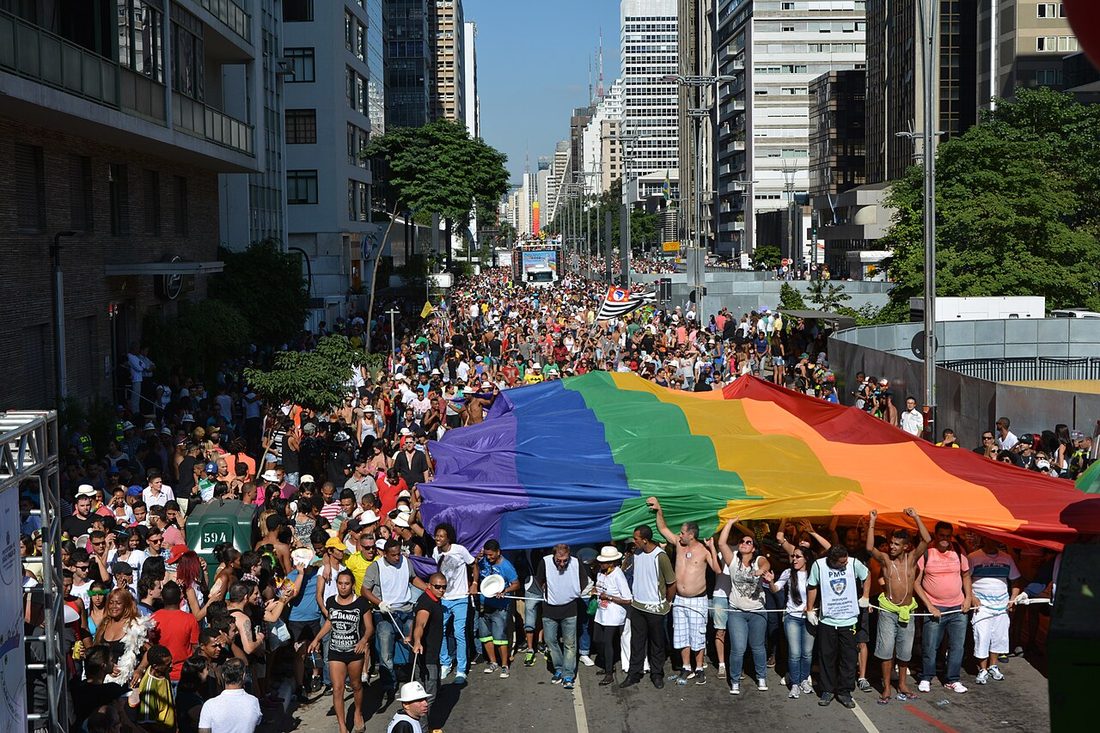
To celebrate the town's 100th birthday, there was a
_____ down Main Street, with marching bands, dancers and decorated trucks, and families watched from the sidewalk.
EXERCISE 04Speaking · A1-A2
Beginner (A1-A2)
Answer with the answer prompt, then add one more sentence of your own.
Need help? Open the answer prompts and choose the idea you like best. LGBTQ+ means
lesbian, gay, bisexual, transgender and queer people; the + includes other
identities. You never have to talk about your private life, or anyone else's: you can
say I'd rather not say and choose another card. Tap a card when you have answered
it.
Answer prompts
1 · I have [never been to one / been to one once / seen one in my city].2 · I usually see [rainbow colors / red and blue / many bright colors].3 · Because people can [feel accepted / celebrate who they are / support each other].4 · Yes, I do. I know [a singer / an actor / an athlete]: ___. No, I don't.5 · It means [being honest / feeling comfortable / expressing your personality].6 · Yes, because everyone deserves [respect / kindness / a safe place].7 · People can [be kind / listen carefully / include everyone].8 · Yes, I have seen them [online / on TV / in my city]. No, I haven't.9 · A community is inclusive when people [respect differences / help each other / welcome everyone].10 · Yes, I like [music festivals / parades / school celebrations]. No, I don't.11 · Respect means [being polite / listening to others / treating people well].12 · Because everyone is [different / special / important].13 · Yes, because people can [feel included / see different stories / learn about others].14 · People can learn [new traditions / different ideas / new ways to think].15 · Friends can [listen / help each other / be kind].16 · Yes, I learned about it [at school / online / with friends]. No, I haven't.17 · I feel accepted when people are [kind / friendly / respectful].18 · Yes, because diversity makes the world [more interesting / more colorful / better for everyone].19 · I would say [you are important / you are not alone / be yourself].20 · I would like a world with [peace / respect / equality].
0 / 0
EXERCISE 05Speaking · B1-B2
Intermediate (B1-B2)
Answer, then give a reason and an example: from your city, a movie or the
news. Your partner asks one follow-up question. An ally is someone who supports a
group they are not part of. The answer prompts are there if you need a start. Talk about
ideas, not about anyone's private life. Tap a card when you have discussed it.
Answer prompts
1 · To me, Pride Month is about [acceptance / visibility / celebrating diversity].2 · Yes, because of [social media / younger generations / more representation in the media].3 · People usually celebrate with [parades / concerts / community events].4 · Yes, I have talked about it with [friends / classmates / family members]. No, I haven't.5 · Because it helps people [feel included / understand different experiences / see themselves represented].6 · Yes, because students can learn [respect / empathy / acceptance].7 · Some challenges are [discrimination / prejudice / lack of equal rights].8 · Because everyone deserves [freedom / respect / emotional safety].9 · Yes, they help people [connect with others / share information / find support].10 · Yes, many young people are [more accepting / more informed / more supportive].11 · Allies can [support LGBTQ+ friends / speak against discrimination / attend Pride events].12 · Yes, I learned about [historical protests / important activists / the origins of Pride Month].13 · An inclusive environment has [respectful people / equal opportunities / clear anti-discrimination rules].14 · I think they are about [both celebration and activism / visibility and support / community and equality].15 · People can [listen carefully / educate themselves / show respect].16 · Yes, I thought it was [inspiring / realistic / important]. No, I haven't.17 · Sometimes because of [culture / lack of information / personal beliefs].18 · Equality means [having the same opportunities / being treated fairly / respecting everyone equally].19 · Communities can encourage it through [education / open conversations / inclusive events].20 · Yes, traditions can influence [beliefs / family expectations / social values].
0 / 0
EXERCISE 06Speaking · C1-C2
Advanced (C1-C2)
Give your opinion, then the other side: Some people would argue
that…, That said, …. Add an example from your country and finish with a
question for your partner. The answer prompts are there if you need a start. Tap a card
when you have discussed it.
Answer prompts
1 · I think it has become more focused on [visibility and inclusion / political activism / global awareness].2 · I believe it is mainly about [celebration / activism / a combination of both].3 · They can influence people through [family values / social expectations / religious beliefs].4 · Media can [increase empathy / reinforce stereotypes / normalize diversity].5 · Some companies seem [genuinely supportive / mainly focused on marketing / somewhere in between].6 · Visibility is important because it can [promote acceptance / encourage representation / reduce prejudice].7 · Schools should [encourage respectful discussions / provide education / create safe environments].8 · Yes, people have become [more open-minded / more informed / more accepting].9 · It may be related to [lack of education / cultural background / fear of change].10 · Some ongoing challenges include [discrimination / social pressure / unequal opportunities].11 · They can [implement inclusive policies / promote equal rights / invest in education].12 · I think it has [raised awareness / increased polarization / given people a stronger voice].13 · Tolerance means [allowing differences / avoiding conflict / respecting boundaries], acceptance means [valuing differences / showing respect / being open-minded], while inclusion involves [active support / equal participation / genuine belonging].14 · Yes, because it can [raise awareness / encourage dialogue / inspire activism].15 · They can [speak up calmly / educate others / support affected people].16 · Yes, younger generations tend to be [more open about identity / more supportive of diversity / less influenced by traditional expectations].17 · They can help people feel [acknowledged / respected / included].18 · Yes, because they can [influence public opinion / raise awareness / encourage social change].19 · They can [listen to employees / create supportive environments / promote equal opportunities].20 · An inclusive society is one with [equal opportunities / mutual respect / freedom of expression].
0 / 0
EXERCISE 07Watching
Why pronouns matter
The video from the club's material, best for Intermediate and Advanced
students: two and a half minutes from 2015, with the captions on. Trans people, and
people who feel they are not only a man or only a woman, say which pronouns they use and
why it matters to them. Watch, then talk about the cards with a partner, or with me. Tap
a card when you have discussed it.
Pronouns in English
she · her · hers · herself
he · him · his · himself
they · them · theirs · themselves — also for one person: Sam is late. They're on the bus.
ze (or zie, xe) · zir or hir · zirs or hirs · zirself or hirself — newer pronouns that some people use
No pronoun: some people prefer to be called only by their name.
Not sure? Ask politely: What are your pronouns? · Share yours:I'm Ana, and I use she/her. · A mistake? Say sorry, use the right pronoun and move on.
0 / 0
EXERCISE 08Writing
One question, one paragraph
80–120 words. Choose one question from your level (Exercise 04, 05 or 06)
and answer it in one paragraph. Start with its answer prompt, then add your own words: a
reason and an example from your city, a movie or the news. Write about ideas and
society, not about anyone's private life. Beginners: short, clear sentences
(Respect means…, People can…). Intermediate and Advanced: a reason, a real
example and the other side.
0 words
ENDEnd of lesson
My results
Check your score, then copy it and send it to your teacher on WhatsApp.
One job for this week. Notice one place where people feel
welcome — a class, a team, a store, a website — and one where they don't. At the next
club, tell us in thirty seconds what makes the difference, with two words from today:
welcome, support, respect or diversity.


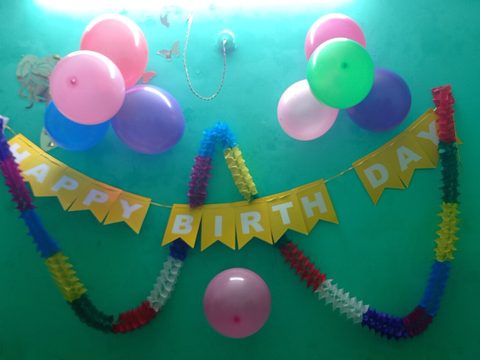 Before the birthday party, we put up all the
_____: balloons on the door, colorful paper on the walls and little lights around the windows.
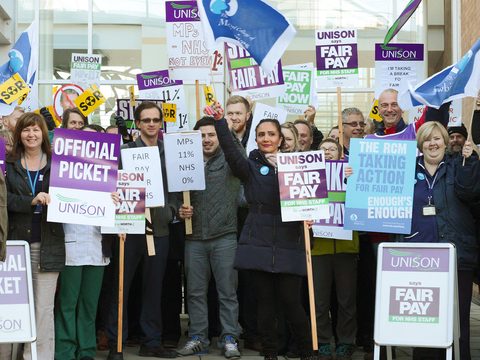 Hundreds of workers stood outside the hospital with signs that said "Fair pay now!" It was a peaceful
_____ against the new, lower salaries.
 When the rain stopped and the sun came out, a huge
_____ appeared in the sky, with all its colors from red to purple.
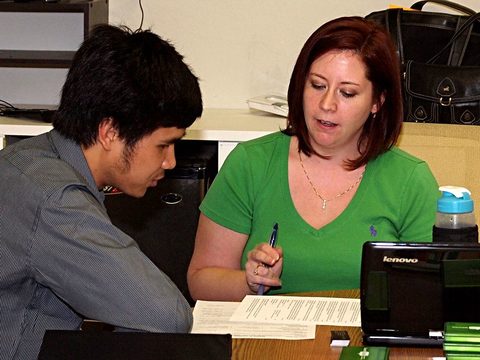 When my brother lost his job, the whole family tried to
_____ him: my parents helped with his rent, and I helped him with his resumé.
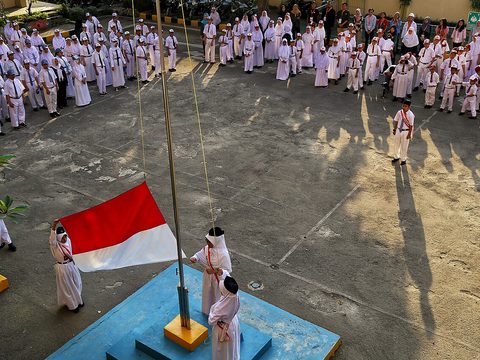 Every morning, a student raises the
_____ to the top of the tall pole in front of the school, and it moves in the wind all day.
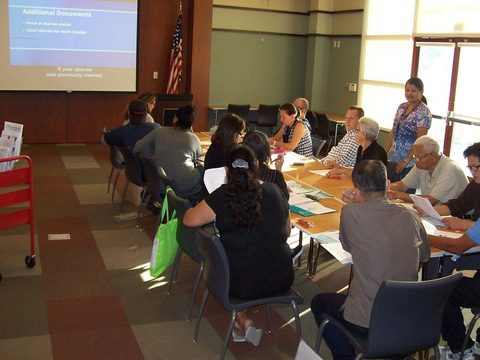 Our English class has a lot of
_____: students from nine countries, from 18 to 70 years old, with very different jobs, ideas and life stories.
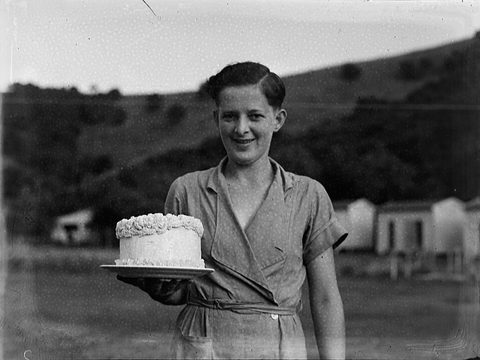 When the new neighbors arrived, we took them a cake to
_____ them to the building and show them where everything is.
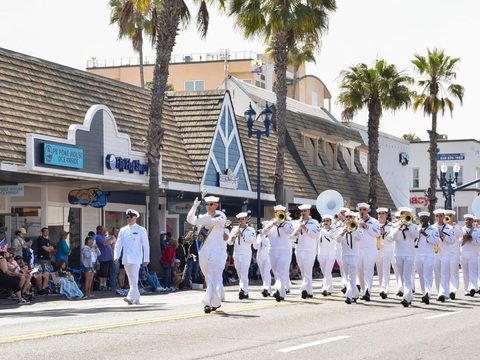 To celebrate the town's 100th birthday, there was a
_____ down Main Street, with marching bands, dancers and decorated trucks, and families watched from the sidewalk.


