SPEAKING CLUB · TOPIC 90

Teens and Parents: Teen Version

School, friends, phones, freedom and the hard parts of growing up, seen from the teenager's side. Forty-seven questions in three levels, from your favorite subject to social media and bullying.

A1-C2 60 min Focus: speaking · 3 levels Home
EXERCISE 01Speaking

Warm-up

Ask and answer with a partner, or with me. Click a card when you have answered it.

Teacher Alvaro

Everybody was a teenager once. Today you talk about teen life: school, friends, phones, and the hard parts too. There are three sets of questions: Beginner, Intermediate and Advanced. Answer the ones at your level, then try one from the next level. Not a teenager now? Answer about your teen years, or about teens you know. And you can always say “pass”.
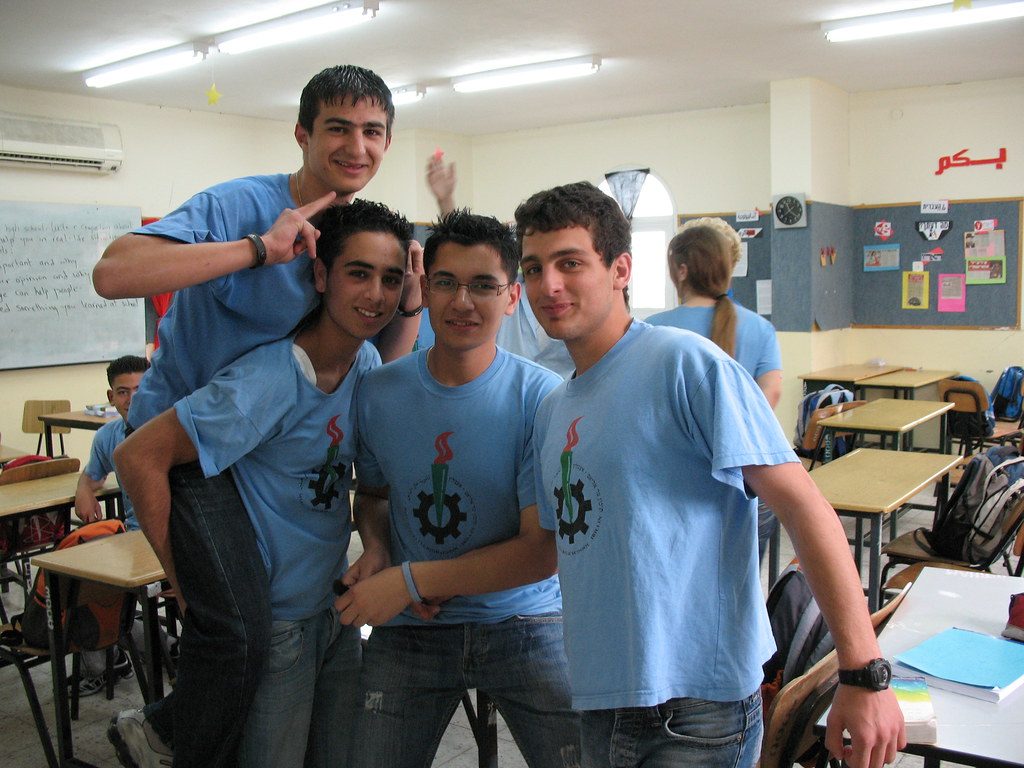
Four teenage boys in matching light blue T-shirts pose together in a classroom, with desks, a whiteboard and a bulletin board behind them
Useful language
Teenagers love …… is a famous teenager from … He / She is funny, brave, shy …My three words are …, … and … For a teenager, number one is …They often argue about … When I was a teenager, I …Can I pass this one?
0 / 0
EXERCISE 02Vocabulary

Words for teen life

Eight words from today's questions. Click a word, then click its meaning. Correct pairs turn green. The audio button says the word.

Word
Meaning
EXERCISE 03Vocabulary in context

Complete the sentences

Click a word in the bank, then click a gap. Click a filled gap to clear it.

Teacher Alvaro
  • My neighbors pay me twenty dollars to _____ their two little kids on Saturday night, while they go out to dinner.

  • It's cold outside, so I'm wearing my gray _____, with the hood up over my head.
  • If you feel sad or have a problem with other students, you can talk to the _____. Her office is next to the library.

  • I can't go out tonight. I have three pages of math _____ to finish before class tomorrow.
  • Please don't _____ that photo online! I look terrible in it, and everybody will see it.

  • My brother is fifteen, so he is a _____ now, but my sister is only two.
  • Some older kids at the park _____ my little brother: every day they push him, take his ball and call him names.

  • My phone made a sound, and a _____ on the screen said, “You have three new messages.”
EXERCISE 04Speaking · A1-A2

Beginner (A1-A2)

Ask and answer with a partner, or with me. Answer with a short sentence — Yes, I am, I usually…, I like… — and add one more detail. Not a teenager? Answer about your teen years: When I was a teenager, I… Questions 11 to 15 are about bullying: you can talk about people in general, and say “pass” if you prefer. Need help? Open the answer prompts and choose the words that are true for you. Click a card when you have answered it.

Answer prompts
1 · Yes, I am a teenager. / No, I am not a teenager. I am [___] years old. 2 · I am [13 / 14 / 15 …] years old. 3 · Yes, I do. I have many friends. / Not really. I have a few friends. We [go to school / play / talk] together. 4 · Yes, I do. I like going to [the mall / the park / the movies] with them. / No, I don't. I prefer [staying home / playing games]. 5 · After school, I [do homework / play games / watch TV / go out]. 6 · I like [math / English / science / art] because [it is fun / I understand it / I like the teacher]. 7 · Teenagers like to wear [jeans / T-shirts / sneakers / hoodies] because they are [cool / comfortable]. 8 · Yes, it is fun because I have [friends / more freedom]. / No, it is not fun because I have [too much homework / stress / problems]. 9 · I use [TikTok / Instagram / YouTube / WhatsApp] because [it is fun / I talk to friends / I watch videos]. 10 · I post [pictures / videos / songs] because [I like to share / it is fun]. / I don't post anything. 11 · Bullying is when someone [says bad things to / hits / laughs at] another person. 12 · Yes, I do. My [friend / classmate] was bullied. / No, I don't. 13 · I would [tell a teacher / help the person / say “Stop!”]. 14 · Yes, they do. They [listen / talk / help]. / Not always. Some teachers don't help much. 15 · I can talk to my [teacher / friend / school counselor / parents].
0 / 0
EXERCISE 05Speaking · B1-B2

Intermediate (B1-B2)

Answer with a reason and a real example: because…, for example…, when I was younger…. Then your partner asks you one more question. Not a teenager now? Answer about your teen years, or compare them with teens today. Questions 13 to 16 are about bullying: no names are needed, you can talk about students in general, and you can say “pass”. The answer prompts are there if you need a start. Click a card when you have answered it.

Teacher Alvaro
Answer prompts
1 · I enjoy being a teen because I can [spend time with friends / explore new hobbies / make my own choices]. 2 · The hardest part of being a teenager is [school pressure / family expectations / feeling misunderstood], especially when [people don't listen / I'm tired]. 3 · My life now is different because I [have more responsibilities / understand more things], but I still [need help sometimes / enjoy playing]. 4 · Teens have to [study hard / help at home / be responsible for their actions], which can be [tiring / helpful for the future]. 5 · Yes, some teens in my country [work in stores / help their family / babysit], but many don't because of [school / age limits]. 6 · I want to [stay young / grow up fast] because [life is fun now / I want freedom and independence]. 7 · I spend my free time [watching videos / going out / listening to music], especially when I feel [bored / relaxed]. 8 · The best thing about being a teenager is [having fun with friends / learning new things / growing up]. 9 · Friends make teenage life better because we [laugh together / help each other / share secrets]. 10 · I use [Instagram / TikTok / WhatsApp] the most because it's [fun / easy / popular]. 11 · I check my phone [a few times a day / almost every hour / only at night], especially when I'm [bored / waiting for messages]. 12 · I think social media is [good / bad / both] because it [connects people / wastes time / can hurt self-esteem]. 13 · Yes, I have seen bullying in school, and it made me feel [angry / sad / uncomfortable]. / No, I haven't. 14 · Schools should [teach kindness / have strict rules / talk about bullying more] to stop it. 15 · Bullying affects students by making them feel [scared / alone / stressed], and it can [hurt their grades / make them avoid school]. 16 · We can help someone who is bullied by [listening to them / telling a teacher / staying close to them].
0 / 0
EXERCISE 06Speaking · C1-C2

Advanced (C1-C2)

You can answer about teenagers in general, not only about yourself. Take a position, support it with an example, and bring in the other side with However…, whereas… or although…. Then ask your partner if they agree, and push back once. Questions 14 to 16 are about bullying: discuss what schools and families can do, and say “pass” if you prefer. Point at a dotted word to see what it means. The answer prompts are there if you need a start. Click a card when you have discussed it.

Answer prompts
1 · Teenage years shape our personality by [helping us discover who we are / pushing us to face new challenges], which is important because [it builds resilience / it teaches independence]. 2 · Some of the biggest challenges include [academic pressure, social media influence, mental health issues], especially because [expectations are too high / everything feels competitive nowadays]. 3 · Teens often feel pressure to [get high grades / choose a career early / behave perfectly], and this pressure can lead to [stress, anxiety, or burnout], particularly when [there's little time to relax]. 4 · Peer approval is [extremely important / somewhat important] during adolescence because [teens want to fit in / social status can affect confidence and choices]. 5 · Parents can support their teens by [listening without judging / setting clear but fair rules / being emotionally available], which helps build [trust / a stronger relationship]. 6 · Some of the most valuable experiences might include [trying something new, traveling with friends, learning from failure], because [they help teens grow emotionally / they teach life lessons]. 7 · Friendships tend to become [deeper / more complicated / more emotional], since teenagers start to [share secrets, seek support, deal with drama] more than before. 8 · One unforgettable memory is [my first concert / a school trip / a meaningful conversation with a friend], which stays with me because [it was exciting / I learned something important / I felt truly alive]. 9 · Many teens learn that [not everyone is a true friend / actions have consequences / time management is crucial], and unfortunately, these lessons are often learned [through mistakes / after being hurt]. 10 · Social media can [boost / harm] teen self-esteem depending on [what they see / how they use it], because [constant comparison can make people feel insecure / positive feedback can feel rewarding]. 11 · Yes, there should be age restrictions because [younger teens are not emotionally ready / online content isn't always safe]. However, [with guidance and limits], social media can still be [educational / fun]. 12 · Yes, it can be addictive because [likes and notifications trigger dopamine / people fear missing out], especially when teens [check their phones constantly / lose track of time online]. 13 · Definitely — online trends often lead teens to [change how they dress / try challenges / speak differently], which shows that [internet culture has a strong influence on identity and behavior]. 14 · Schools can create this culture by [training staff, promoting kindness, having clear rules], and by making sure that [students feel safe reporting problems]. 15 · Cyberbullying is different because [it happens 24/7 / it can be anonymous / it spreads quickly], which makes it [harder to escape / more damaging emotionally]. 16 · Bullying can lead to [low self-esteem, depression, fear of social situations], and these effects can last [into adulthood / for many years], especially if [the victim doesn't get support].
0 / 0
EXERCISE 07Writing

One question, one paragraph

80–120 words. Choose one question from your level (Exercise 04, 05 or 06) and answer it in one paragraph. Beginner: write about a normal day as a teenager, now or in your teen years — school, friends, after school and your phone. Intermediate: give your answer, two reasons and one real example. Advanced: take a position, give the strongest argument on the other side, and answer it. You don't need to write about yourself: teenagers in general are fine. Start with the number of the question. Example: Question 5: After school, I …

Teacher Alvaro
0 words
ENDEnd of lesson

My results

Check your score, then copy it and send it to your teacher on WhatsApp.

Teacher Alvaro

One job for this week. Ask a teenager you know — or ask your own teenage self — two questions: What is the best thing about being a teen? and What is the hardest thing? Write the two answers in English and bring them to the next club.