You give a gift to someone, but you buy it for them. Two small words
that Portuguese often says with one, para, in forty-seven questions about gifts,
messages and the things we do for other people.
Ask and answer with a partner, or with me. Tap a card when you have
answered it.
Two small words, everywhere. You give a gift to a
friend, you buy it for a friend, and you say thank you to someone
for something. Today every question has one of them, and some have both.
Useful language
My last message was to …I said … to …I usually buy gifts for …He / She likes …This week, … did something nice for me.On the weekend, I go to …I go there for …I'm learning English for my job / for fun.I'm learning English to travel / to talk to …
0 / 0
EXERCISE 02Vocabulary
Words for giving and helping
Click a word, then click its meaning. Correct pairs turn green. The audio
button says the word.
Word
Meaning
EXERCISE 03Vocabulary in context
Complete the sentences
Click a word in the bank, then click a gap. Click a filled gap to clear
it.
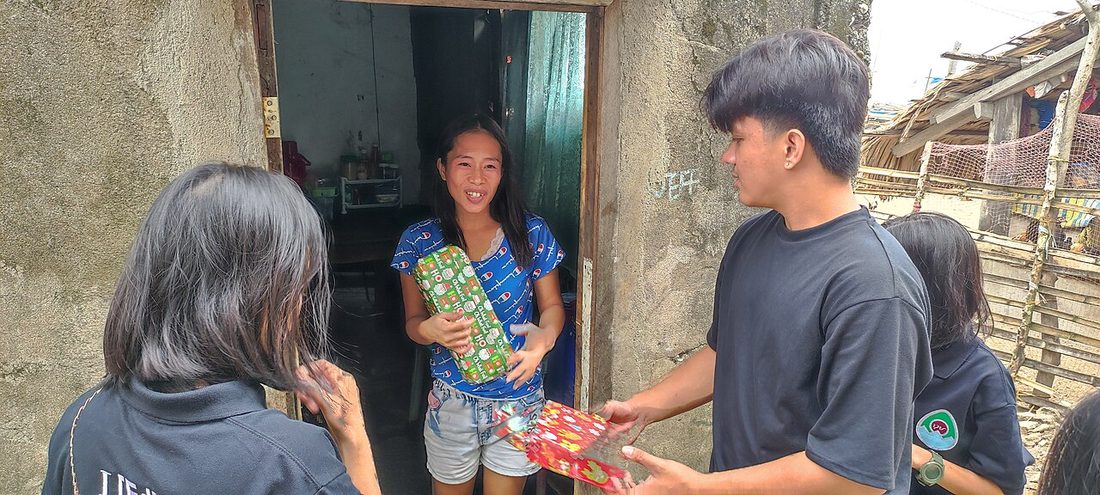
I wrapped my mom's birthday
_____ in red paper with a big bow. It's a cookbook, because she loves cooking.
Our
_____ always waits for the old woman with a cane. He stops the bus, opens the doors and doesn't leave until she sits down.
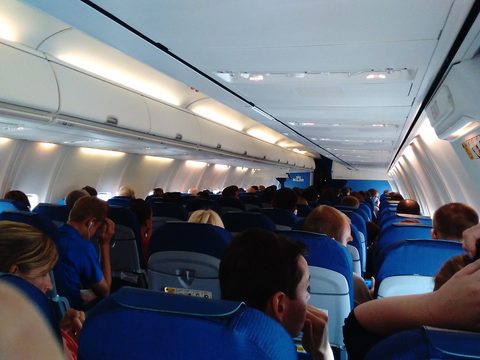
On the plane, I sat next to a complete
_____. I didn't even know her name, but after ten hours we were like old friends.
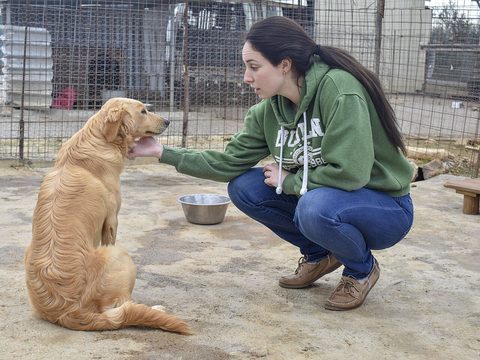
Every Saturday, my dad and I
_____ at the animal shelter. Nobody pays us; we just want to help the dogs.
My grandfather doesn't use email. Once a month, I write him a long
_____ on paper, put it in an envelope and mail it.
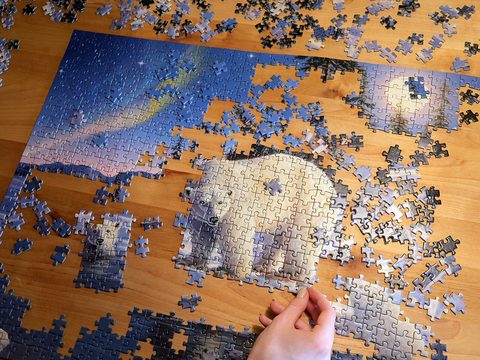
My roommate and I are doing a 1,000-piece
_____ of a polar bear on the kitchen table. The bear is easy, but all the snow looks the same!
She wants to look perfect at her cousin's wedding, so she bought a whole new
_____: a blue dress, silver shoes and a small bag to match.
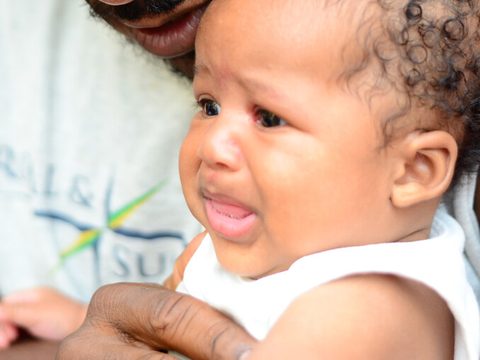
When my little brother wakes up crying after a bad dream, I hold him and try to
_____ him: "It's okay. It was just a dream."
EXERCISE 04Language point
To or for?
Read the rule. Then write to or for and the words on the
left. Read the whole sentence first, and change the form of a verb if you need to.
Portuguese often says both with one word: para. English
splits it. A person who gets something, or a place you go to: to. A person who
gets the benefit, or how long something lasts: for. And the reason why?
To + a verb, for + a noun: I came to see you, I came for the
party.
To is for direction and the person who receives. For is for purpose and
the person who benefits. These are the four ideas behind this club's questions.
to + a place (direction):go to work · walk to the gym · travel to Germany
to + the person who receives:give a present to my parents · send a message to a friend · say thank you to the bus driver · talk to, speak to, explain something to someone
to + where a period ends:from Monday to Friday · from 9 to 5
for + the person who benefits:cook for my family · buy a present for a friend · do something nice for someone
for + a period of time (how long):for two hours · for four years
The reason why: to + verb, for + noun.I'm saving money to buy a car · I'm saving money for a car. Never for + verb: not for buy.
for + -ing, for what a thing does:an app for learning English · shoes for running
Both in one sentence:I apologized to my friend for my mistake · say thank you to someone for something · I traveled to Chicago for work
Both are correct, with a different meaning:I sent a card to my boss (he gets it) · I sent a card for my boss (in his name, because he couldn't) · She brought lunch to me (to where I was) · She brought lunch for me (she was thinking of me)
Learn these as they are:wait for · ask for · pay for · prepare for · listen to · belong to. And no to before the person after ask, tell and call: ask someone a question · tell me · call your mom.
buy some breadI went to the bakery ___, but they only had cakes and cookies.
my grandmotherEvery Sunday, I bake a chocolate cake ___. She can't cook anymore, so I take it to her house in the afternoon.
the waiterMy soup arrived cold, so I complained ___, and he took it back to the kitchen.
three hoursOur flight was late, so we sat at the gate ___. We read, ate and played cards.
my neighborI'm going away on vacation, so I gave my keys ___. She's going to water my plants.
a walkIt was a beautiful evening, so after dinner we went out ___ along the river.
get a better jobShe's taking evening classes ___. Her company only promotes people with a college degree.
cutMy sister has a special pair of scissors just ___ her hair. Nobody can use them on paper!
your helpThank you so much ___! I could never move that sofa alone.
everybodyI can't go to the party tonight. Please say goodbye ___ for me.
EXERCISE 05Speaking · A1-A2
Beginner (A1-A2)
Ask and answer with a partner, or with me. Questions 1–5 practice
to (a direction, or a person who receives), 6–10 for (a purpose, or a
person who benefits) and 11–14 both: use the same words in your answer. Tap a card when
you have answered it. Stuck? Open the answer prompts.
Answer prompts
1 · I give ___ (a cake / a card / a present) to my parents because ___ (they like it / it's special / I love them).2 · Yes, I sent a letter to ___ (my cousin / my friend / my teacher) because ___ (I wanted to say hello / it was their birthday / we live far away).3 · I talk to ___ (my mom / my best friend / my sister) when I feel sad because ___ (she / he) ___ (listens / helps me / cares about me).4 · ___ (Yes / No), I ___ (do / don't) like talking to strangers because ___ (it's fun / I feel shy / I want to be careful).5 · I would say, "I love your ___ (music / movie / book)" to ___ (Taylor Swift / Messi / J.K. Rowling) because ___ (she's great / he's great / I'm a big fan).6 · Yes, I can cook ___ (pasta / rice / eggs) for my family because ___ (they like it / it's easy / I want to help).7 · I do homework for my English class ___ (every day / sometimes / on weekends) because ___ (it's important / I want to learn / my teacher asks me to).8 · I sing songs for ___ (fun / practice / both) because ___ (I enjoy music / it helps my English / it's relaxing).9 · I bought ___ (a T-shirt / a book / a snack) for myself because ___ (I liked it / I needed it / it was cheap).10 · A good present for a friend is ___ (chocolate / a photo / a book) because ___ (it's sweet / it's personal / it's useful).11 · I gave ___ (a toy / a necklace / a cake) to ___ (my brother / my friend) for ___ (his / her) birthday because ___ (he wanted it / she wanted it / it was special / it was a surprise).12 · I like ___ (watching movies / playing games / going to the park) for fun, and I talk to friends about it because ___ (it's exciting / we share ideas / it's funny).13 · A nice message is: "Thank you, Mom! I love you so much!" because ___ (she helps me / she is kind / she is the best).14 · Yes, I say "thank you" to ___ (my teacher / my friend / the bus driver) when they do something for me because ___ (it's polite / I feel happy / I want to be kind).
0 / 0
EXERCISE 06Speaking · B1-B2
Intermediate (B1-B2)
Questions 1–7 use to, 8–14 for, and 15–18 both in one
question. Question 4 is the one with no to before the person: you ask
someone a question. Answer, say why, and give an example from your own life. Tap a
card when you have answered it. The answer prompts help you start.
Answer prompts
1 · I once told ___ (my best friend / my mom / a classmate), "You're ___ (very talented / a great listener / inspiring)," because I wanted to ___ (make them smile / encourage them / show my appreciation).2 · I think it's ___ (pretty easy / a little hard / stressful) because ___ (I'm friendly / I get nervous / I don't know what to say sometimes).3 · Yes, I once sent a message to ___ (a friend / my sibling / a colleague) when I was ___ (tired / upset / frustrated), and I regretted it because ___ (it made things worse / they misunderstood me / it hurt their feelings).4 · A good question is: "What do you like to do in your free time?" because it helps you ___ (find common interests / start a fun conversation / get to know them better).5 · I prefer speaking ___ (in person / online / on video calls) because ___ (it feels more natural / I'm shy / I like seeing body language).6 · I would say something like, "I'm really sorry to hear that. I know it's hard, but maybe this is a new beginning," because ___ (they need support / it's important to stay positive / I want to show I care).7 · Yes, I once told ___ (a friend / a family member / a co-worker) that their ___ (idea / cooking / outfit) was ___ (good / nice / okay), even though I didn't think so, because I didn't want to ___ (hurt their feelings / make them feel bad).8 · I usually cook for ___ (myself / my family / my partner) because ___ (it's faster / I enjoy it / it saves money).9 · I once bought ___ (a phone / a concert ticket / a designer bag) for ___ (my brother / my best friend / my parents) because it was ___ (their birthday / a special occasion / something they really needed).10 · For me, ___ (taking a hot shower / watching a movie / going for a walk) is perfect because ___ (it helps me relax / I can forget my problems / it clears my mind).11 · I think a good gift for a teacher is ___ (a nice pen / a thank-you card / something personal), because it shows ___ (respect / appreciation / gratitude).12 · Yes, I volunteered for ___ (a charity / a school event / my community) because I wanted to ___ (help others / get experience / do something meaningful).13 · I would ___ (listen to them / help them financially / give them advice) because ___ (they're important to me / I'd want someone to do the same for me).14 · I enjoy ___ (organizing my room / doing puzzles / reading long articles), even though some people might find it ___ (boring / weird / too quiet).15 · I once said "I'm proud of you" to ___ (my friend / a classmate), but I was really thinking about saying it to ___ (my brother / my cousin), because they also ___ (did something great / needed support).16 · I think a good way is to ___ (use simple language / give examples / speak slowly), especially for someone who ___ (is nervous / doesn't know the topic / is learning English).17 · I bought ___ (a book / a T-shirt / a bracelet) for myself, but I gave it to ___ (a friend / my sister) because ___ (they really liked it / it suited them better / I wanted to surprise them).18 · I would recommend ___ (Duolingo / BBC Learning English / Quizlet) to someone who wants to learn English because it's ___ (fun / easy to use / great for vocabulary and practice).
0 / 0
EXERCISE 07Speaking · C1-C2
Advanced (C1-C2)
Questions 1–6 use to (who receives, where it goes, how people
react), 7–12 for (purpose, benefit, motivation), and 13–15 weigh the two: words
said to someone, or actions done for them. Go deeper: look at both sides and end with
your own view. Some questions are personal (1, 4, 7 and 12): you can always answer
about people in general, or pass. Tap a card when you have answered it. The answer
prompts are there if you need a way in.
Answer prompts
1 · Yes, I once told ___ (a close friend / my boss / my partner) that ___ (I didn't trust them / I was thinking of quitting / I didn't believe in the project), and I immediately regretted it because ___ (it hurt their feelings / it wasn't entirely true / the timing was wrong).2 · Someone once told me to ___ (focus on what I can control / never settle for less / trust my instincts), and that advice changed the way I ___ (make decisions / handle pressure / approach relationships).3 · Yes, I wrote a letter to my future self when I was ___ (graduating / starting a new job / going through a tough time), and I included things like ___ (my hopes, goals and fears) and a reminder to ___ (stay grounded / be kind to myself / keep growing).4 · I once shared ___ (a fear / a dream / a past mistake) with ___ (a stranger on a plane / a classmate / someone I met at a retreat), and it felt ___ (liberating / risky / strangely comforting) because ___ (I didn't feel judged / they truly listened / it brought us closer).5 · I usually say things like "I'm here for you" or "You don't have to go through this alone," because I believe ___ (empathy / being present / listening) is more powerful than ___ (offering quick solutions / pretending everything is fine).6 · I'd like to say thank you to ___ (my high school teacher / my first manager / my best friend) for ___ (believing in me / giving me a chance / helping me through a crisis), because their support made a real difference in my life.7 · Yes, I decided to ___ (move cities / stay in a job / delay a trip) for ___ (my family / my partner / my best friend), even though it was ___ (a difficult / a selfless / an uncertain) choice at the time.8 · I think lying for a good cause is ___ (a moral gray area / sometimes necessary / never justifiable), especially when the goal is to ___ (protect someone's feelings / avoid unnecessary pain / bring about a better outcome).9 · In my opinion, the ideal age is ___ (the late 20s / the early 30s / when you're emotionally and financially ready), because starting a family requires ___ (stability, maturity and a strong support system).10 · Honestly, I would ___ (avoid it / consider it short-term / only do it if I were desperate), because working for a company that contradicts my beliefs would make me feel ___ (unfulfilled / conflicted / ethically compromised).11 · I would never ___ (betray someone / compromise my integrity / harm the environment) for money, no matter how much, because ___ (some things just aren't worth the price).12 · Lately, I've started ___ (journaling / therapy / taking regular walks) for my mental health, and it's helped me ___ (clear my mind / reduce anxiety / regain focus and peace).13 · I think it's better to speak to someone directly when the issue involves ___ (emotions / misunderstandings / setting boundaries), because silent actions can be ___ (misread / unnoticed / insufficient).14 · Yes, when ___ (a mentor / a friend / a teacher) told me I had real potential, it did more for my confidence than any reward or gift ever had, because their words ___ (stayed with me / felt deeply sincere / came at the right time).15 · It depends. Writing a heartfelt message to someone can be powerful when ___ (words are needed / distance is a factor), but doing something meaningful for them shows ___ (commitment / support / love) in action.
0 / 0
EXERCISE 08Watching
Two study videos
The club's study tips: two short video lessons about to and
for. Watch one, then talk about its cards with a partner, or with me. The stamp
shows the moment in the video. Tap a card when you have discussed it.
A · In Portuguese, for Portuguese speakers
About five minutes, from the tips for Beginner students. The
teacher explains in Portuguese, and every example is in English.
B · In English, when both are possible
From the tips for Intermediate students: fast English, with the
captions on. The video starts at 06:16, after an ad; its first part teaches the same uses
as the rule in Exercise 04.
0 / 0
EXERCISE 09Writing
One question, in writing
80–120 words. Choose one question from your level (Beginner, Intermediate or
Advanced) and answer it in writing. Start with the level and the number, for example
Intermediate 9. Use to and for at least three times each.
0 words
ENDEnd of lesson
My results
Check your score, then copy it and send it to your teacher on WhatsApp.
One job for this week. Every day, say thank you to one
person for one thing, out loud and in English: Thank you for the coffee.Thanks to my team for their help. Two small words, one sentence, every day.


 I wrapped my mom's birthday
_____ in red paper with a big bow. It's a cookbook, because she loves cooking.
 Our
_____ always waits for the old woman with a cane. He stops the bus, opens the doors and doesn't leave until she sits down.
 On the plane, I sat next to a complete
_____. I didn't even know her name, but after ten hours we were like old friends.
 Every Saturday, my dad and I
_____ at the animal shelter. Nobody pays us; we just want to help the dogs.
 My grandfather doesn't use email. Once a month, I write him a long
_____ on paper, put it in an envelope and mail it.
 My roommate and I are doing a 1,000-piece
_____ of a polar bear on the kitchen table. The bear is easy, but all the snow looks the same!
 She wants to look perfect at her cousin's wedding, so she bought a whole new
_____: a blue dress, silver shoes and a small bag to match.
 When my little brother wakes up crying after a bad dream, I hold him and try to
_____ him: "It's okay. It was just a dream."


