Guess the Country!
Brazil → Brazilian. Spain → Spanish. Switzerland → Swiss. Today you turn twelve countries into twelve nationalities, and you learn to say the most useful sentence of all: No, it isn't.
Warm-up
Guess freely — nobody knows all of these. Tap a card when you have answered it.

Today is a guessing game. You will be wrong a few times, and that is the point: every time you are wrong, you get to say the sentence we are learning — No, it isn't. It's from…
Useful language
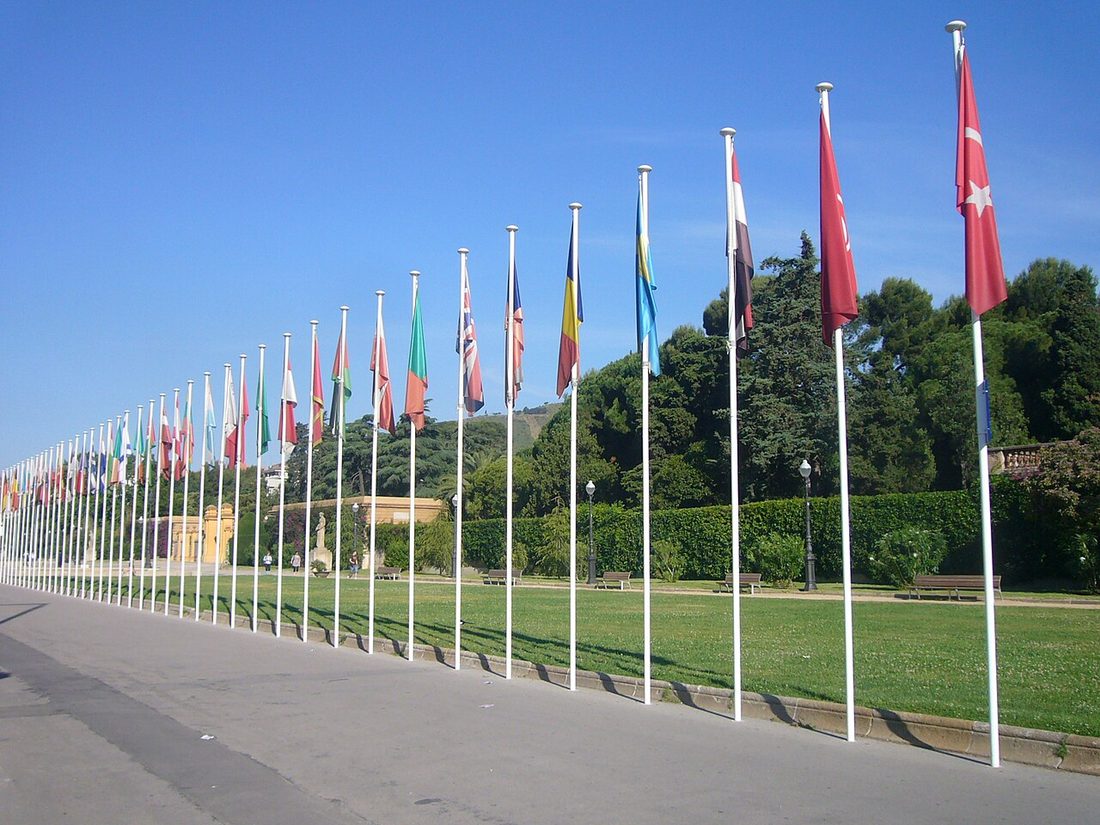
Country → nationality
Click a country, then click its nationality. Correct pairs turn green. The audio button says the word — listen to the strong syllable.
Complete the sentences
Click a word in the bank, then click a gap. Click a filled gap to clear it.

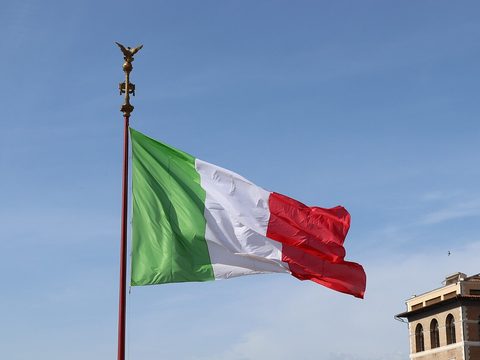 Marco isn't from Spain. He's from Italy, so he's
_____.
Marco isn't from Spain. He's from Italy, so he's
_____. Kenji isn't from Korea. He's from Japan, so he's
_____.
Kenji isn't from Korea. He's from Japan, so he's
_____. My parents aren't from Portugal. They're from Brazil, so they're
_____.
My parents aren't from Portugal. They're from Brazil, so they're
_____. Jake isn't from Canada. He's from the USA, so he's
_____.
Jake isn't from Canada. He's from the USA, so he's
_____. Carmen isn't from Mexico. She's from Spain, so she's
_____.
Carmen isn't from Mexico. She's from Spain, so she's
_____. Luca is from Switzerland, so he's
_____.
Luca is from Switzerland, so he's
_____. Claire isn't from Canada. She's from France, so she's
_____.
Claire isn't from Canada. She's from France, so she's
_____. Lin isn't from Japan. She's from China, so she's
_____.
Lin isn't from Japan. She's from China, so she's
_____.
Three friends, and twelve dances
Part one is a conversation. Part two is a quiz you can lose. The audio button reads each part aloud.
Anna, Leo and Ming are in the same class. Anna is from Madrid, so she's Spanish. Leo isn't from China — he's from São Paulo, so he's Brazilian.
And Ming isn't Brazilian. She's from Beijing, so she's Chinese. Three people, three countries, and two of the first guesses were wrong.
Now the dances. Flamenco is Spanish and tango is Argentinian. Samba isn't from Honduras — it's Brazilian, and it's the dance of Rio.
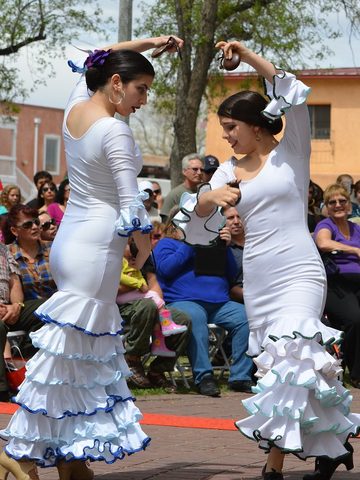

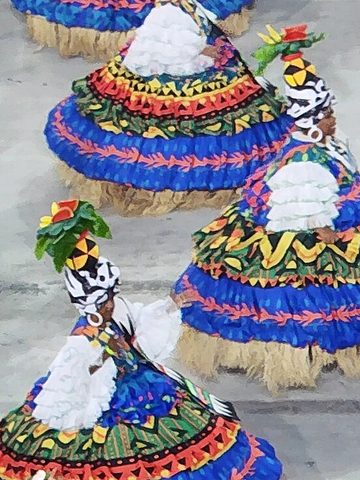
Kabuki is Japanese — old theater with music and dance. Barong is from Indonesia, from the island of Bali, and it tells a story with big masks.
Hopak is from Ukraine and it is very fast, with big jumps. Tarantella is Italian, from the south, and it is also fast.
Haka isn't from Australia. It's from New Zealand, from the Maori people, and the rugby team does it before every game.
Hula is from Hawaii and apsara is from Cambodia. Eskista is from Ethiopia and it moves the shoulders. Adumu, the jumping dance, is from the Maasai people of Kenya and Tanzania.
True or false?
Click an answer and you get the result right away, with the reason.

-
Leo is from China.
He isn't Chinese. He's from São Paulo, so he's Brazilian.
-
Anna is Spanish.
She's from Madrid, the capital of Spain.
-
Ming is Brazilian.
She isn't Brazilian. She's from Beijing, so she's Chinese.
-
Barong is from Indonesia.
From the island of Bali, with big masks and a story.
-
Kabuki is not Japanese.
Careful with the word not in the question. Kabuki is Japanese, so the sentence is false.
-
Hopak is from Ukraine.
Very fast, with big jumps.
-
Flamenco is not Spanish.
Another not question. Flamenco is Spanish, from Andalusia.
-
Eskista is from Ethiopia.
The dance of the shoulders — the feet almost do not move.
-
Samba is not from Honduras.
Correct — it is Brazilian, so the sentence with not is true.
-
Haka is not from New Zealand.
It is from New Zealand, from the Maori people.
-
Hula is from Fiji.
It isn't from Fiji. It's from Hawaii.
-
Apsara is from Cambodia.
Classical Cambodian dance, with very slow hands.
The negative: isn't, aren't, 'm not

Easiest rule in English. Take the verb and add not. That is
all. The only surprise is the first person: I'm not — there is no
I amn't.
- I am not → I'm not · I'm not American. (the only one with no second short form)
- He is not → He isn't · She is not → She isn't · It is not → It isn't
- You are not → You aren't · We are not → We aren't · They are not → They aren't
- The correction pattern: Salsa isn't from Spain. It's from Cuba. Negative first, then the true answer.
- Never two verbs: He isn't Brazilian, never
He doesn't is Brazilian. The verb to be does not need do.
-
He ___ Brazilian. He's from Portugal.
He takes is, so the negative is isn't.
-
I ___ 20 years old.
The word amn't does not exist in English. With I it is always I'm not.
-
They ___ Japanese. They're Chinese.
More than one person, so are → aren't.
-
It ___ from Brazil. It's from Cuba.
A thing is it, and it works exactly like he and she.
-
Which sentence is WRONG?
The verb to be never uses do or does. It makes its own negative.
-
We ___ Indian. We're Spanish.
We takes are, so the short negative is aren't.
-
Correct the sentence: "Sushi is Chinese."
Two full sentences: first the negative, then the true one with a subject. The second sentence needs it.
-
Which sentence is correct?
One shape only, and you will use it every day: I'm not…
When do you need from?

- Country → you need from: He's from Brazil. · She's from Japan.
- Nationality → no from: He's Brazilian. · She's Japanese.
- Never together:
He's from Brazilian.·She's Japan. - Cities work like countries: I'm from Rio. · I'm from Madrid.
- Nationalities take a capital letter in English: Brazilian, Spanish, Japanese — never
brazilian.
-
She's ___ Italy.
Italy is a country, so you need from.
-
She's ___ Italian.
Italian is a nationality, so from disappears. Compare it with the question above.
-
Which sentence is WRONG?
The classic mistake. Choose one: the country with from, or the nationality alone.
-
I'm ___ São Paulo.
A city works like a country here. In would say where you are right now, not where you come from.
-
Which sentence is correct?
Food takes the nationality: Japanese, Italian, Brazilian.
-
Tango is ___ Argentina.
Argentina is the country, so from comes back.
-
Which one is written correctly?
In English every nationality takes a capital letter, even in the middle of a sentence.
-
Luca is from Switzerland. So he's ___ .
Not every nationality is made with -ian or -ish. This one you simply learn.
Change the sentence
Use a pronoun and the nationality. Example: Bruno is from Brazil. → He's Brazilian.

Two changes in every line. The name becomes a pronoun, and the country becomes a nationality — so the little word from disappears.
-
aAditi is from India.
-
bEmma is from England.
-
cLuca is from Switzerland.
-
dSophie is from France.
-
eLiam and Paul are from Canada.
-
fHans and I are from Germany.
-
gEmily and Mary are from the USA.
-
hMei is from China.
-
iMaria and Carlos are from Spain.
-
jI am from Italy.
Correct the sentence
Two parts: the negative, then the true answer. Example: Fernanda Montenegro is Mexican. (Brazilian) → isn't Mexican. She's Brazilian.

-
ChineseI'm Japanese. → I
-
AmericanBill Gates is English. → Bill Gates
-
BrazilianSamba is Spanish. → Samba
-
ItalianMario and Carlos are American. → They
-
AmericanBeyoncé is Spanish. → She
-
JapaneseSushi is Chinese. → Sushi
-
SpanishWe are Indian. → We
-
SteveYou are John. → You
True or false? Say why
Say if each one is true or false, and correct the false ones out loud: No, … isn't … . He's / She's / It's …
Useful language
Six sentences, one lie
40–70 words. Write six sentences about famous people, food or dances. Five must be true and one must be false. Use isn't or aren't at least twice. Your teacher has to find the lie.

My results
Check your score, then copy it and send it to your teacher on WhatsApp.

One job for this week. Every time you eat something, say one sentence: This isn't Brazilian. It's Japanese. Food is everywhere, so you will practice the negative five times a day without trying.