Is It Cheap or Expensive?
Thirteen or thirty? One tomato or two tomatoes? How much is or how much are? Three small decisions, and every one of them happens at a supermarket checkout.
Warm-up
Guess the prices — nobody knows them. Tap a card when you have answered it.

Numbers are the last thing to become automatic. You can talk about your life in English and still freeze at a price. Today we fix the two hard parts: thirteen against thirty, and one thing against two things.
Useful language
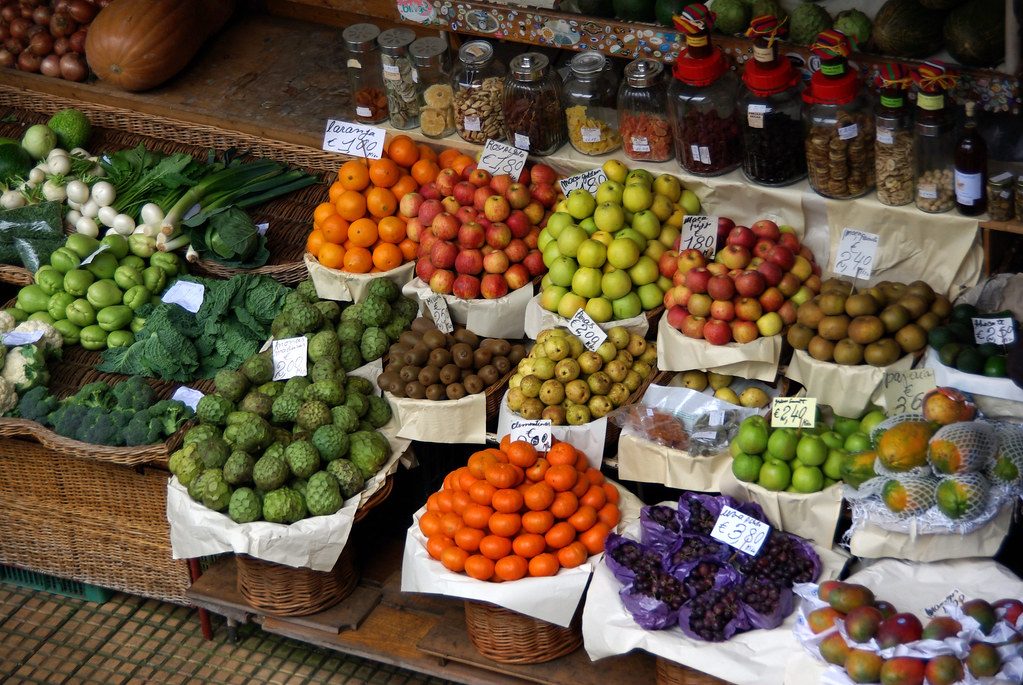
In a grocery store
Click a word, then click its meaning. Correct pairs turn green. The audio button says the word.
Complete the sentences
Click a word in the bank, then click a gap. Click a filled gap to clear it.

 Only one pound for ten eggs? That's very
_____.
Only one pound for ten eggs? That's very
_____. Twelve pounds for one small fish? It's too
_____ — I don't have the money.
Twelve pounds for one small fish? It's too
_____ — I don't have the money. What's the
_____ of this cheese? Three pounds or four?
What's the
_____ of this cheese? Three pounds or four?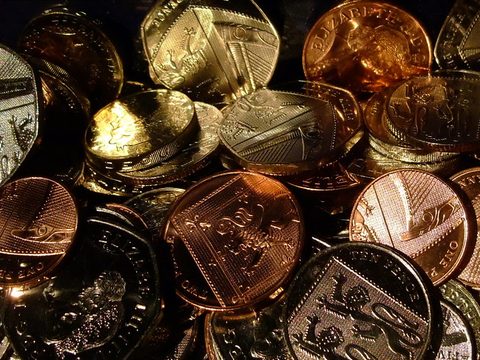 The apple is not one pound. It's only sixty
_____.
The apple is not one pound. It's only sixty
_____.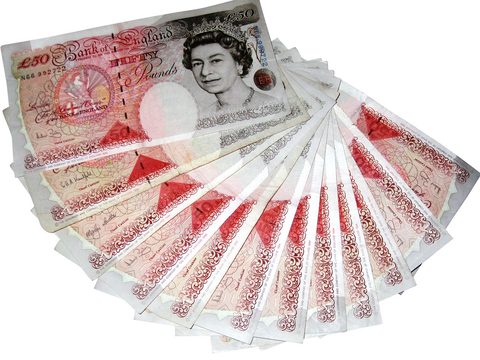 The pizza is twenty
_____. That's a lot of money!
The pizza is twenty
_____. That's a lot of money!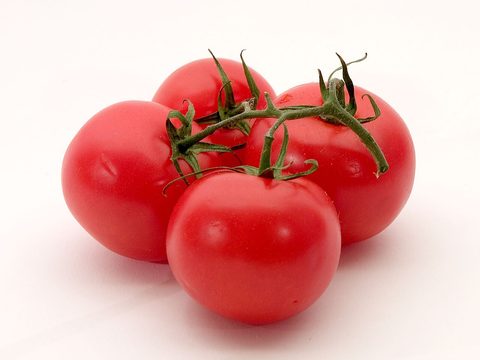 For the salad, I need three big red
_____.
For the salad, I need three big red
_____. We have no
_____ — I put it in my coffee this morning.
We have no
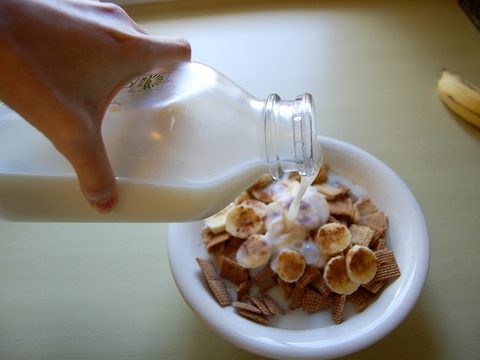
_____ — I put it in my coffee this morning.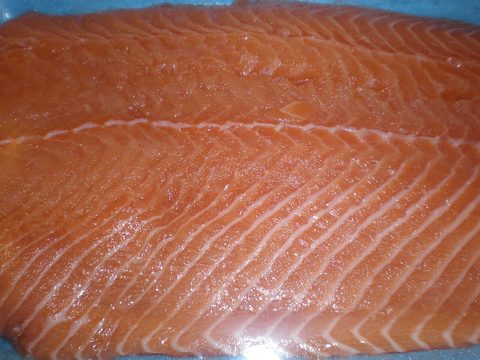 My favorite fish is
_____. It's pink, and I eat it in sushi.
My favorite fish is
_____. It's pink, and I eat it in sushi.
How to say a price
Short paragraphs with a lot of numbers. Read each one out loud — the numbers are the point.
In England people pay in pounds and pence. One pound has a hundred pence. The symbol for the pound is £, and pence is often written as a small p.
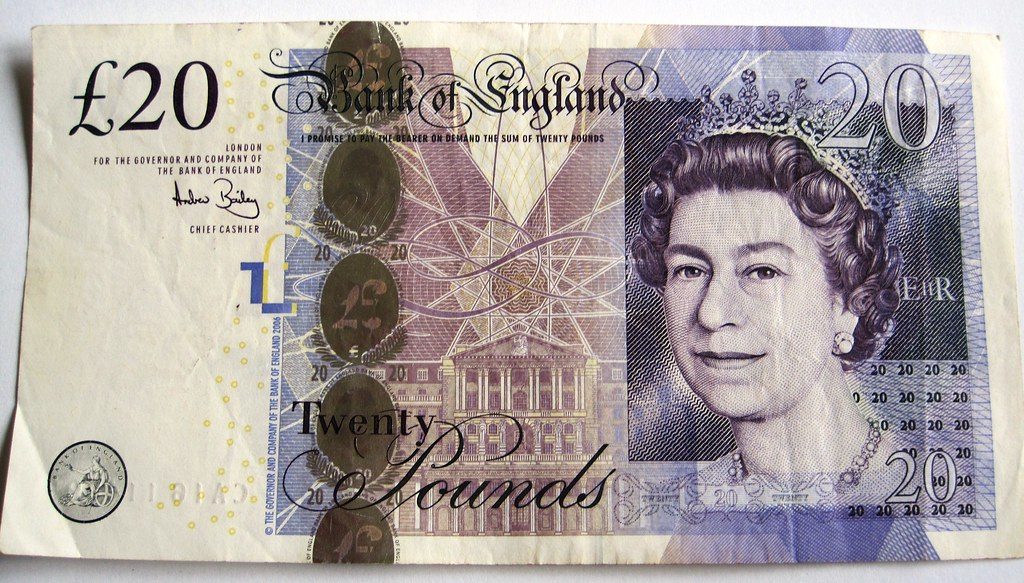
A price like £2.45 has two parts. The formal way is: two pounds and forty-five pence. Nobody says all of that in a store.
The normal way is short: two pounds forty-five. The words and and pence disappear. In dollars it is the same: $45.78 is forty-five seventy-eight.
A price under one pound has no pounds in it. 89p is eighty-nine pence, or just eighty-nine p. Everybody in England says the letter.
Now the hard part: 13 and 30. The difference is where the voice goes up. ThirTEEN is strong at the end. THIRty is strong at the beginning.
This happens with all of them: fourteen and forty, fifteen and fifty, sixteen and sixty. If you do not hear the price, ask again — even English speakers do.
And one more question, in two shapes. One thing: How much is the chocolate? It's two pounds forty-five. Two or more: How much are the peaches? They're eighty-nine pence.
Multiple choice
Click an answer and you get the result right away, with the reason.

-
How many pence are there in one pound?
The same as cents in a dollar or a euro.
-
What is the symbol for the pound?
The other two are the dollar and the euro.
-
What is the formal way to say £2.45?
Correct, but long. You will hear it in a bank, not in a store.
-
And the normal, short way?
The words and and pence drop out. That is what you hear at a checkout.
-
How do you say $45.78 the short way?
Two numbers, no words in the middle. Dollars work exactly like pounds here.
-
How do people say 89p?
Or eighty-nine pence. Both are normal; the letter is faster.
-
Where is the strong part of the word "thirteen"?
Thir-TEEN. The voice goes up on the second half.
-
And in "thirty"?
THIR-ty. Strong first, then quiet. That one difference carries the whole meaning.
-
Which two numbers have the same problem?
And 14 with 40, 16 with 60, 17 with 70, and so on to 19 and 90.
-
How much ___ the chocolate?
One thing, so is. The answer starts with It's.
-
How much ___ the peaches?
More than one, so are, and the answer starts with They're.
-
You do not hear the price. What do you say?
The text says it: even English speakers ask again with these numbers.
One tomato, two tomatoes

Three rules, and the third one is the only difficult one. Look at the last letter of the word — that letter decides everything.
- Normal: + s — a pineapple → two pineapples · a phone → two phones
- After s, sh, ch, x or z: + es — a bus → two buses · a dish → two dishes · a pouch → two pouches · a glass → two glasses
- Consonant + y: remove the y, add ies — a cherry → two cherries · a city → two cities · a baby → two babies
- Careful: vowel + y is normal — a boy → two boys · a spray → two sprays. Look at the letter before the y.
- The verb changes too: the tomato is … but the tomatoes are …
-
one phone → two ___
The normal rule, and it covers most words in English.
-
one bus → two ___
After an s sound you need the extra e, or you cannot say the word.
-
one dish → two ___
Same reason as buses: sh, ch, x and z all take es.
-
one city → two ___
The letter before the y is t, a consonant, so the y becomes ies.
-
one boy → two ___
Here the letter before the y is o, a vowel — so nothing special happens.
-
one glass → two ___
It already ends in ss, so it takes es.
-
Which one is WRONG?
Consonant + y, so country becomes countries.
-
The tomatoes ___ very red today.
Plural noun, plural verb. The -s on the noun changes the verb too.
How much is…? and How much are…?

- One thing: How much is the milk? — It's one pound.
- Two or more: How much are the snacks? — They're three dollars.
- Things you cannot count take is: How much is the bread / the cheese / the water? There is no
two breads. - The whole answer is short: It's £1. · They're 89p. You do not repeat the word price.
- To say what you think: I think it's about two pounds. Very useful when you are guessing.
-
How much ___ the wallet?
One wallet, so is.
-
How much ___ the eggs?
Six of them in the box, so plural.
-
How much is the bread? — ___ one pound.
The answer copies the question: is in, it's out.
-
How much are the snacks? — ___ three dollars.
Plural question, plural answer.
-
How much ___ the cheese?
You cannot count cheese, so it works like one thing.
-
Which question is WRONG?
Milk is not countable — there is no
two milks— so it never takes are. -
You are not sure of the price. You say:
Two small words — I think and about — and the sentence stops promising anything.
-
How much are the tomatoes? — They're ___ .
More than one pound, so the word pound takes an -s too.
Write the plural
Look at the last letter first. Write only the plural word.

Two of these are traps. Spray and boy end in y, but the letter before the y is a vowel — so they take a normal s.
-
aavocado
-
bsteak
-
cbaby
-
dbus
-
eplane
-
fspray
-
gcountry
-
hdish
-
iglass
-
jcity
-
kpouch
-
lboy
Ask the price
Write the whole question with is or are. Example: the milk → How much is the milk?

-
athe eggs
-
bthe salmon
-
cthe tomatoes
-
dthe bread
-
ethe apples
-
fthe cheese
-
gthe peaches
-
hthe pineapple
Guess the price
Ask, guess, then say if it is cheap or expensive. Full questions, please — not only the number.
Useful language
My shopping list
40–70 words. Write eight things you buy every week and the price of each one, in words. Use at least four plurals. Then write one sentence about the most expensive thing on the list.

My results
Check your score, then copy it and send it to your teacher on WhatsApp.

One job for this week. Every time you pay for something, say the price in English in your head. Twice a day, five seconds. Numbers only become automatic with repetition — there is no other way.