Morning People
One of them gets up at half past four. Another one gets up at eight and puts on the same T-shirt every day. Sixteen routine verbs, the little -s that only he and she get, and how to say what time it is.
Warm-up
Choose the answer that is true for you. Tap a card when you have answered it.

Everybody has a routine, so everybody can talk today. The only new thing is one letter: the -s that appears when you talk about somebody else.
Useful language
Daily routine
Click a phrase, then click its meaning. Correct pairs turn green. The audio button says the phrase.
Complete the sentences
Click a word in the bank, then click a gap. Click a filled gap to clear it.

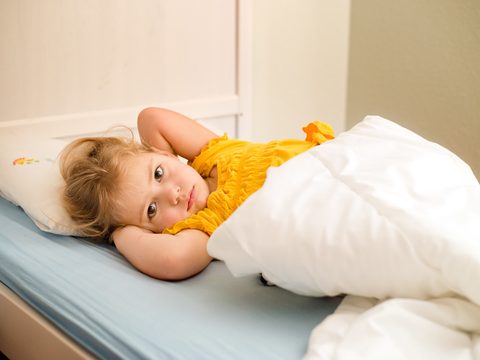 My alarm rings at six, but I don't
_____ — I stay in bed until seven.
My alarm rings at six, but I don't
_____ — I stay in bed until seven. First I
_____ my face with cold water.
First I
_____ my face with cold water. Then I get
_____ and have breakfast.
Then I get
_____ and have breakfast. I
_____ work at half past eight.
I
_____ work at half past eight. At ten o'clock we take a
_____ for coffee.
At ten o'clock we take a
_____ for coffee.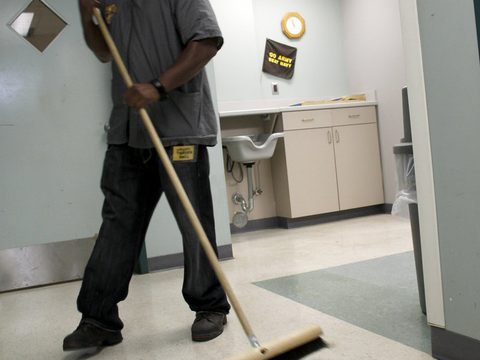 On the weekend I do the
_____: I clean the kitchen and the bathroom.
On the weekend I do the
_____: I clean the kitchen and the bathroom.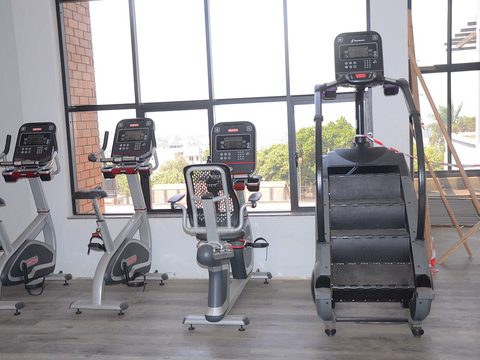 Three times a week I go to the
_____ after work to lift weights.
Three times a week I go to the
_____ after work to lift weights.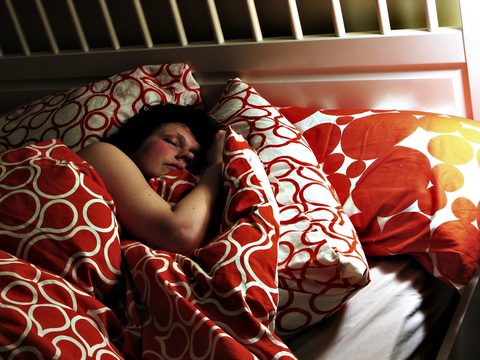 I go to
_____ at about eleven at night.
I go to
_____ at about eleven at night.
The morning routine of the rich and famous
Three routines from magazine interviews. Watch the verbs: they all end in -s.
Magazines love this question: what do famous people do before nine in the morning? Here are three answers, from three interviews.
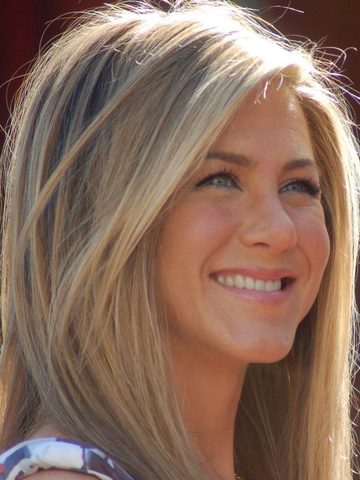


Jennifer Aniston is an actress. She gets up at 4:30 in the morning. She washes her face and she meditates, before her coffee.
Then she exercises with a trainer: a spin class for half an hour, and after that yoga for forty minutes. That is more than an hour of exercise before breakfast.
Mark Zuckerberg is one of the founders of Facebook. He gets up at 8 a.m. He gets dressed, and he puts on the same T-shirt as yesterday.
Why? Because he does not want to think about it. One small decision less in the morning, he says, and more time for the big ones.
Oprah Winfrey is a TV host. She starts her morning with twenty minutes of meditation. After that she exercises.
Then she goes for a walk, listens to music or makes a nice meal. Three very different people — and two of the three start the day in silence.
Multiple choice
Click an answer and you get the result right away, with the reason.

-
What time does Jennifer Aniston get up?
Half past four — before most people's alarm clocks.
-
What does she do first?
And she says she does it before the coffee, or she will not sit down again.
-
How long is her spin class?
Thirty minutes of spin, and then the yoga starts.
-
And how long is the yoga?
Half an hour plus forty minutes — over an hour in total.
-
What time does Mark Zuckerberg get up?
Three and a half hours after Jennifer Aniston.
-
What does he put on every day?
The same clothes, every single morning.
-
Why does he do that?
One less small decision in the morning.
-
What is Oprah Winfrey's job?
Jennifer Aniston is the actress in this text.
-
How does Oprah start her morning?
Twenty minutes, before anything else.
-
What does she do after her exercise?
Three quiet things, and she chooses one of them.
-
What do two of the three people do first?
Jennifer Aniston and Oprah Winfrey both start the day in silence.
-
Look at the verbs after she and he in the three routines. What do they all have?
gets, washes, meditates, puts, goes, listens, makes — because in these sentences the subject is always he or she. Other subjects do not take the -s.
The -s for he, she and it

Six people out of seven change nothing. Only he, she and it add something to the verb — and that one letter is the most forgotten thing in all of A1.
- Most verbs: + s — make → makes · get → gets · help → helps · play → plays
- After s, sh, ch, o or x: + es — wash → washes · finish → finishes · relax → relaxes · go → goes · do → does
- Consonant + y: + ies — study → studies · fly → flies · copy → copies
- One special verb: have → has.
- Compare: I get up at 7:00 · She gets up at 4:30. Same verb, one letter of difference.
-
She ___ up at 4:30.
A normal verb, so a normal -s.
-
He ___ his face every morning.
It ends in sh, so it needs the extra e to be sayable.
-
She ___ to the gym in the afternoon.
Verbs ending in o take es: goes, does.
-
He ___ in the morning.
Consonant before the y, so the y becomes ies.
-
She ___ breakfast at seven.
The one verb that does not follow any of the three rules.
-
We ___ dinner every day at eight.
We is not he or she, so nothing is added.
-
Which sentence is WRONG?
The -s only belongs to one person. They never takes it.
-
My phone ___ me with my homework.
A phone is it, and it works exactly like he and she.
What time is it?

- On the hour: 8:00 → It's eight o'clock.
- 30 minutes = half: 8:30 → It's half past eight.
- 15 minutes = a quarter: 2:15 → It's a quarter past two. · 6:45 → It's a quarter to seven.
- Before 30 use past, after 30 use to: 1:20 → twenty past one · 12:55 → five to one. With to, the hour goes up by one.
- Not exact? Use about: I get up at about seven o'clock.
-
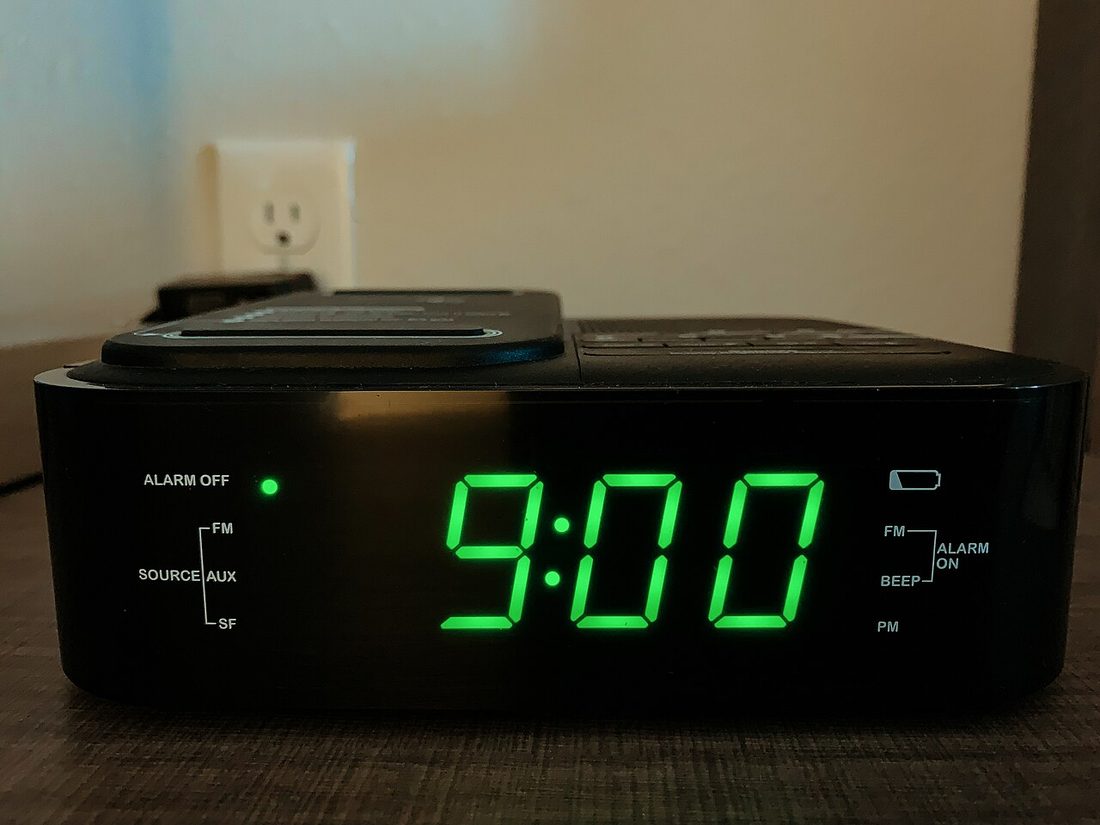
9:00
Only on the exact hour do you say o'clock.
-
5:30
Half past the hour that just finished — five, not six.
-
7:15
Fifteen minutes after seven, so past.
-
2:45
Fifteen minutes before three. With to, the hour goes up.
-
1:20
Twenty is less than thirty, so past.
-
3:50
Ten minutes before four. After thirty you count backwards.
-
12:55
Five minutes before one o'clock.
-
You get up at seven, more or less. You say:
The time takes at, and about makes it approximate.
Write the right form of the verb
Only one word in each gap. Check the person first, then the spelling rule.

Four of these need es or ies, not just s. Look at the last letter of the verb before you type — that is where the whole exercise is.
-
goAnnie ___ to school in the morning.
-
goJosh and Paul ___ to the same gym.
-
haveWe ___ lunch in a restaurant.
-
haveMy children ___ breakfast at school.
-
startSarah ___ work in the morning.
-
getMy parents ___ up at 6:00.
-
makeSophia ___ pasta for dinner.
-
washShe ___ her face before breakfast.
-
doJohn and Sally ___ their homework in the evening.
-
startMy school ___ at 7:30 a.m.
-
getMark ___ dressed in a minute.
-
doWe ___ housework on the weekend.
Write the time in numbers
Use the shape 7:30. Example: It's half past eleven. → 11:30

-
aI get up at a quarter past nine.
-
bHe goes to work at half past seven.
-
cI go to the gym at a quarter past four.
-
dI take a break at a quarter to three.
-
eShe meditates at ten to four.
-
fThe class starts at twenty past one.
My day, hour by hour
Answer with a time in every sentence: I get up at half past six. Then I ask about somebody else and you add the -s.
Useful language
My routine and my mother's
50–80 words. Write your own routine with times, then the routine of one person in your family. Careful in the second half: every verb needs the -s.

My results
Check your score, then copy it and send it to your teacher on WhatsApp.

One job for this week. Every time you look at a clock, say the time in English out loud — with past or to, not with the numbers. Twenty times a day, one second each.