Breakfast, Lunch and Dinner
In English you do not eat breakfast — you have it. One verb for every meal, one small change for he and she, and the seven days of the week to put it all in.
Warm-up
Short answers. Tap a card when you have answered it.

Food is the safest subject in any language. You can talk about it with anybody, and today you get the verb that carries all three meals — plus a video of a teacher opening her lunchbox.
Useful language
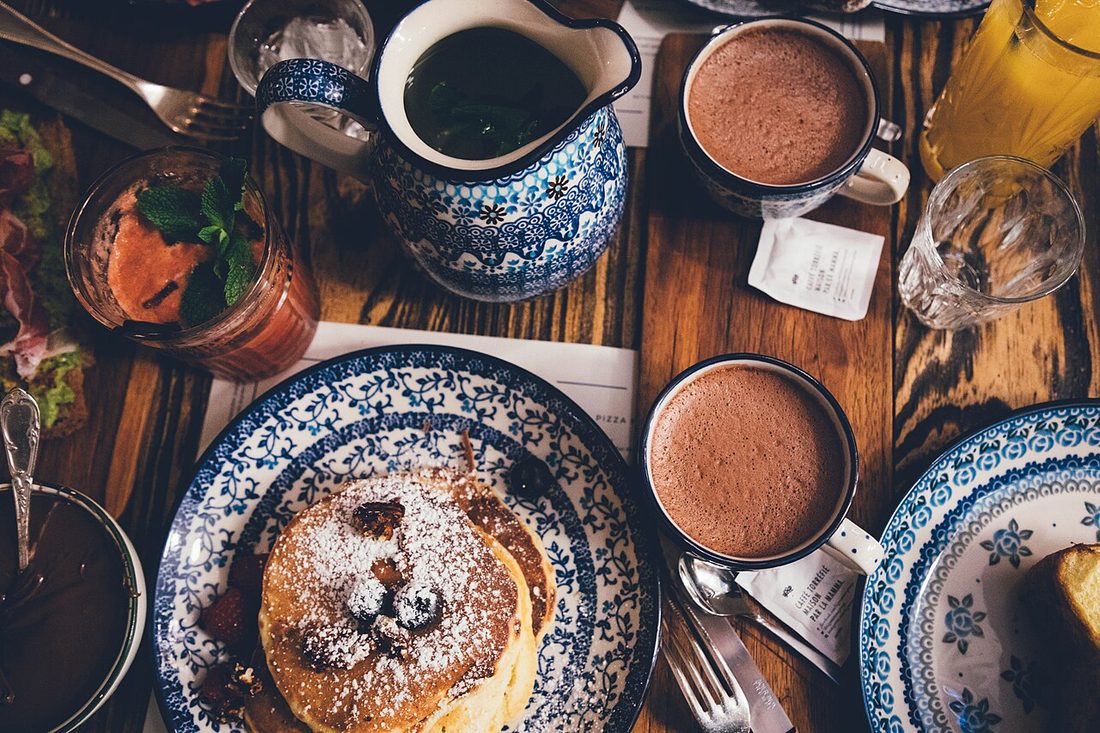
Food and drinks
Click a word, then click its meaning. Correct pairs turn green. The audio button says the word.
Complete the sentences
Click a word in the bank, then click a gap. Click a filled gap to clear it.

 I have coffee and bread for
_____ at seven in the morning.
I have coffee and bread for
_____ at seven in the morning.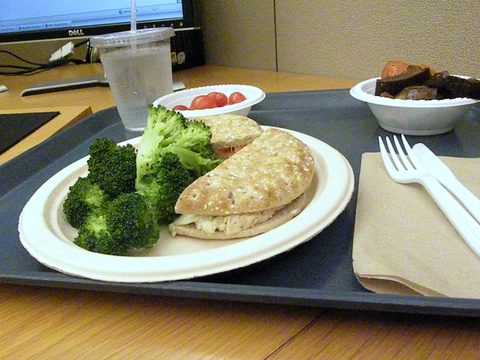 It's noon. The office closes for one hour, and we all go out for
_____.
It's noon. The office closes for one hour, and we all go out for
_____. The last meal of the day is
_____. My family eats it together at eight.
The last meal of the day is
_____. My family eats it together at eight.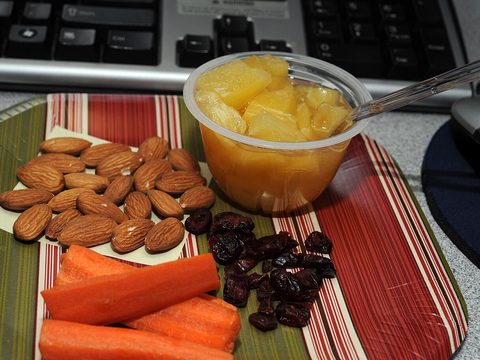 At four o'clock I'm hungry, so I have a
_____.
At four o'clock I'm hungry, so I have a
_____. I cook two
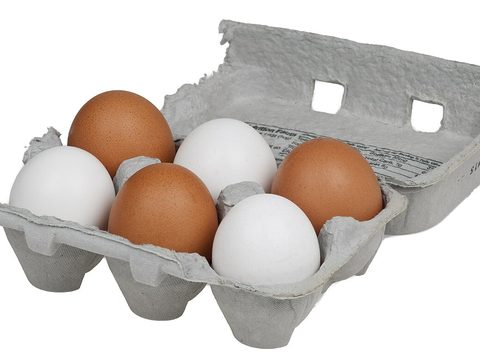
_____ in a pan and eat them with bread.
I cook two
_____ in a pan and eat them with bread.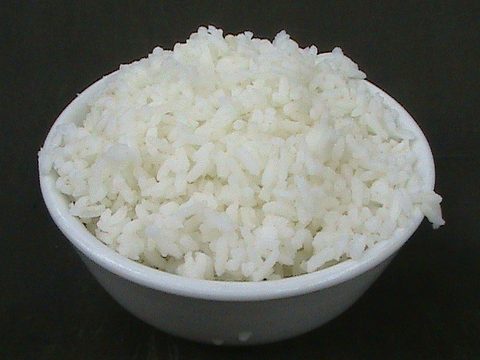 In Brazil people eat
_____ and beans for lunch.
In Brazil people eat
_____ and beans for lunch. He drinks orange
_____ with his breakfast.
He drinks orange
_____ with his breakfast.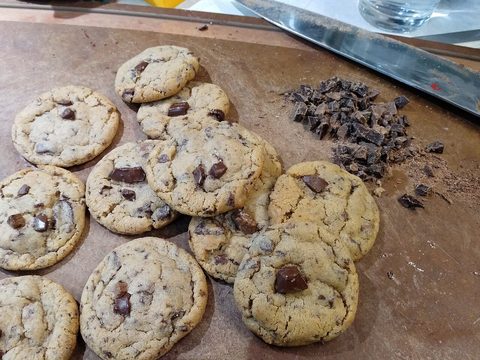 Grandma makes small, sweet
_____ in the oven, and the kids eat them with milk.
Grandma makes small, sweet
_____ in the oven, and the kids eat them with milk.
What's in my lunchbox?
Watch from the start to about three minutes. She speaks fast — look for the food, not for every word.
Morgan is a teacher. She packs her lunch every day, because she doesn't want to eat the school food. Everything for the whole day is in one box.
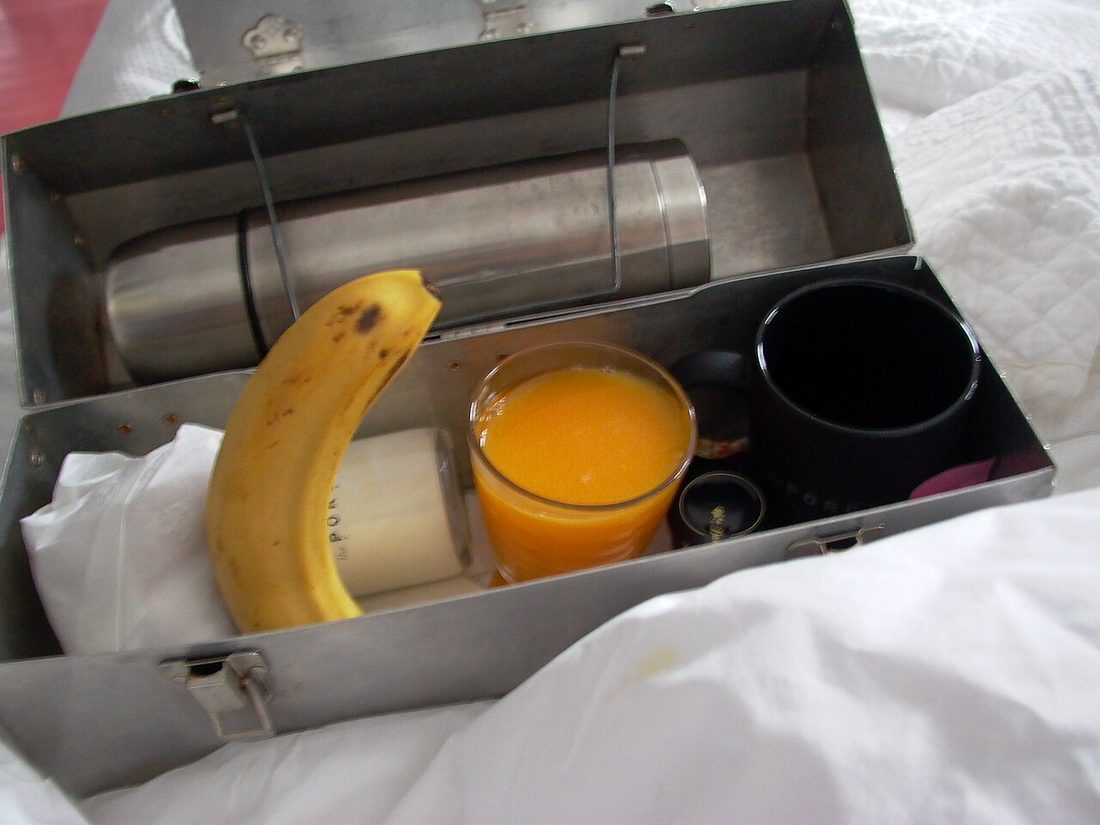
Today is Wednesday. On Wednesdays the teachers have staff meetings, so Morgan is at school for a long time and she packs a heavier lunch.
For breakfast she has three boiled eggs — only the white part, not the yellow — and some fruit. Usually it's watermelon. She eats watermelon every single day.
Lunch is very early at her school: 10:18 in the morning. Today she has chicken pasta, and she finishes the other half of the watermelon.
At about one or two o'clock she has more fruit — an orange. At two, the children go to the buses, and after that she is hungry again.
Her afternoon snack is a piece of chicken or a yogurt. She has one or the other, never both. Then she goes to work out after work.
Multiple choice
The stamp shows the minute of the video where the answer is.

-
What is Morgan's job? 00:26
She talks about the school food, the kids and the staff meetings.
-
Why does she pack her lunch every day? 00:26
Her own words: she doesn't want to eat the school food.
-
What day is it in the video? 00:36
And on Wednesdays there are staff meetings.
-
Why is her lunch heavier on that day? 00:39
The staff meeting keeps her there, and she says she will be hungry.
-
What does she have for breakfast? 01:05
Boiled eggs, and she says she eats the white part only.
-
Which fruit does she eat every single day? 01:29
She says she loves it and packs a lot of it.
-
What time is lunch at her school? 01:43
Very early — before eleven in the morning.
-
What does she have for lunch? 01:51
She keeps the pasta for Wednesdays, the long days.
-
What does she eat at about one or two o'clock? 02:16
More fruit — she has a lot of it in the box.
-
What happens at two o'clock at her school? 02:37
And after the buses is when she has her afternoon snack.
-
What is her afternoon snack? 02:27
She says it clearly: she picks one or the other.
-
What does she do after work? 03:14
That is why she needs the extra snack before she leaves.
Have or has?

English does not "eat" a meal. It "has" one. Breakfast, lunch, dinner, a snack, a coffee — all of them go with the same verb, and it changes shape only for he, she and it.
- I / you / we / they → have: I have bread and coffee for breakfast. · They have sandwiches for lunch.
- He / she / it → has: He has pasta for lunch. · She has a snack in the afternoon.
- The meal takes for: eggs for breakfast, pasta for lunch. Not
in the breakfast. - The time of day takes in: in the morning, in the afternoon, in the evening — but at night.
- No a before a meal: I have breakfast, never
I have a breakfast. But: I have a snack.
-
I ___ salad for dinner.
I always takes have.
-
Maria ___ coffee and a sandwich for breakfast.
One person, so has. The word haves does not exist.
-
The children ___ cookies at school.
More than one child, so back to have.
-
She has three eggs ___ breakfast.
The meal always takes for.
-
He has a snack ___ the afternoon.
The time of day takes in — except at night.
-
Which sentence is WRONG?
The three meals take no article. Snack is a normal noun and does.
-
Morgan and the teachers ___ lunch at school.
Two names joined by and make a plural, so have.
-
Which sentence is correct?
This verb is irregular: it does not add an -s, it changes to has.
The days of the week

- Monday · Tuesday · Wednesday · Thursday · Friday · Saturday · Sunday. Short: MON, TUE, WED, THU, FRI, SAT, SUN.
- Always a capital letter in English: Monday, never
monday. - The day takes on: on Monday · on Friday evening.
- Every week? Add an -s: On Wednesdays we have meetings. That means every Wednesday.
- Saturday + Sunday = the weekend: on the weekend (or at the weekend in British English).
-
Which day comes after Tuesday?
And it is the hardest one to spell: W-E-D-N-E-S-D-A-Y.
-
Which day comes before Friday?
THU is the short form you see in a calendar.
-
I have a meeting ___ Monday.
Days always take on.
-
What does "On Wednesdays we have meetings" mean?
The -s on the day turns one day into a habit.
-
Which one is written correctly?
In English every day of the week takes a capital letter, always.
-
Saturday and Sunday together are…
The other five are the weekdays.
-
SAT is short for…
SUN is Sunday. The first three letters of each day.
-
Which sentence is correct?
One preposition for days, and it never changes.
Write have or has
One word in each gap. Look at the person before the gap.

Only one question matters here: is it he, she or it? If yes, has. If not, have. Nothing else changes.
-
aI ___ salad for dinner.
-
bMaria ___ coffee and a sandwich for breakfast.
-
cThey ___ ice cream after lunch.
-
dJorge ___ meat and pasta for lunch.
-
eThe children ___ cookies at school.
-
fMy family and I ___ breakfast in the morning.
-
gSara ___ lunch at work.
-
hMorgan and the teachers ___ lunch at school.
-
iStephen ___ granola and yogurt for breakfast.
Write the whole sentence
Use have or has, and do not forget for. Example: She / eggs / breakfast → She has eggs for breakfast.

-
aHe / soup / dinner
-
bWe / pizza / dinner
-
cThey / sandwiches / lunch
-
dShe / cereal / breakfast
-
eI / rice and beans / lunch
-
fMorgan / chicken pasta / lunch
-
gMy parents / fish / dinner
-
hThe teacher / a yogurt / a snack
My week of meals
Full sentences with have, has and for. Say the day first: On Monday I have…
Useful language
Two days of my menu
50–80 words. Choose two days — one weekday and one weekend day. Write your breakfast, lunch and dinner for each. Start every sentence with the day: On Monday I have… Then add two sentences about somebody in your family, with has.

My results
Check your score, then copy it and send it to your teacher on WhatsApp.

One job for this week. Before every meal, say one sentence out loud: I have rice and beans for lunch. Three meals a day, seven days — that is twenty-one sentences a week with no extra time at all.