How Often Do You Use Your Phone?
Five people, five countries, one phone each. Read what they do, watch five more people guess how much they use theirs — and learn where the little words always, usually and never go in a sentence.
Warm-up
Short answers. One sentence is enough. Tap a card when you have answered it.

Everybody lies about this one. First you guess how much you use your phone. At the end of the video, five people see the real number — and their faces are the best part of the lesson.

Useful language
Match the words
Click a word, then click its meaning. Correct pairs turn green. The audio button says the word.
Complete the sentences
Click a word in the bank, then click a gap. Click a filled gap to clear it.

 My grandma usually watches the
_____ on TV to know what happens in the world.
My grandma usually watches the
_____ on TV to know what happens in the world. Paula's phone has no free space, so she never
_____ new games.
Paula's phone has no free space, so she never
_____ new games.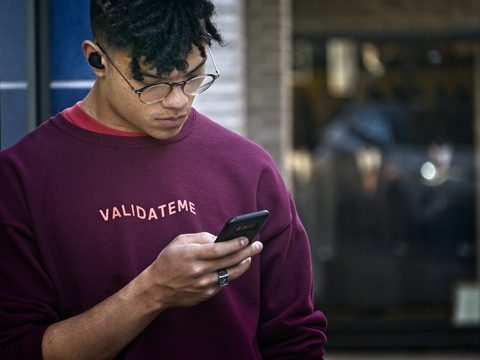 Tom doesn't have a watch, so he usually
_____ the time on his phone.
Tom doesn't have a watch, so he usually
_____ the time on his phone.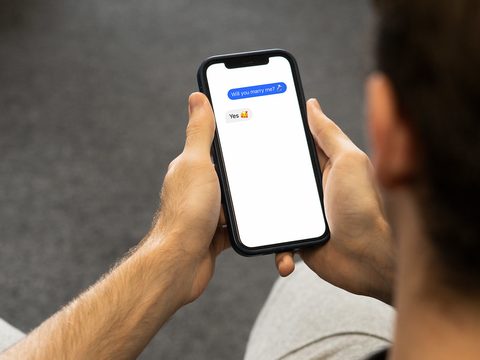 When I'm late, I often
_____ my mom a quick message.
When I'm late, I often
_____ my mom a quick message.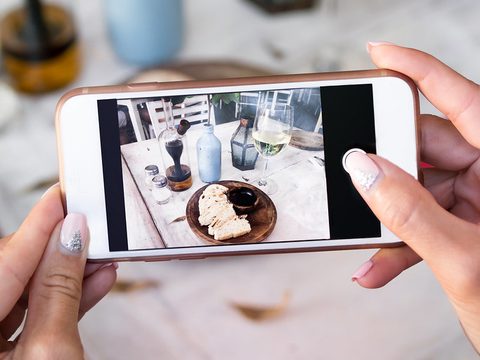 How often do you
_____ photos on Instagram for your followers to see?
How often do you
_____ photos on Instagram for your followers to see?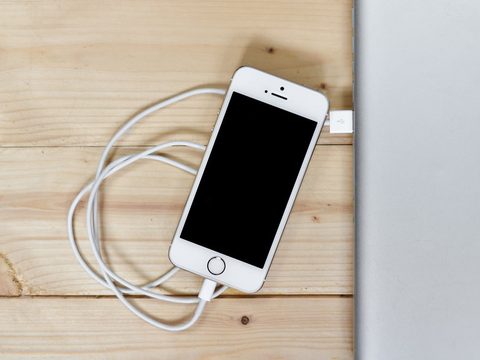 I always
_____ my phone at night.
I always
_____ my phone at night. It is faster to send a
_____ than to write.
It is faster to send a
_____ than to write. I use a taxi
_____ on my phone: I click a button and a car comes.
I use a taxi
_____ on my phone: I click a button and a car comes.
My phone & routine
Read the five people first. Then watch the video. The audio button reads each part aloud.
Five people talk about their phone. They live in five different countries. Look at the words in bold: they say how often each person does something.
Helena is 17 and she is from Colombia. She says: "I sometimes take photos with my friends."
Juan is 20 and he is from Mexico. He says: "I never download games. I prefer movies and series."
Mark is 53 and he is from the USA. He says: "I often check the temperature, because on Wednesdays I play tennis with a friend."
Leticia is 29 and she is from Brazil. She says: "I usually check my emails. I check them from Monday to Friday."
Fernando is 61 and he is from Portugal. He says: "I always listen to the news in the morning. I do this from Monday to Monday."


Multiple choice
Questions 1–5 are about the five people. Questions 6–12 are about the video, and the stamp shows the minute.

-
Where is Helena from?
Helena, 17, from Colombia. She sometimes takes photos with her friends.
-
What does Juan never do?
"I never download games. I prefer movies and series." Never means zero percent.
-
Why does Mark check the temperature?
On Wednesdays he plays tennis with a friend, so he often looks at the weather first.
-
When does Leticia check her emails?
She says "usually", and she explains it: from Monday to Friday, so not on the weekend.
-
How often does Fernando listen to the news?
"From Monday to Monday" is a fun way to say every single day. He says "always".
-
How much do the people in the video use their phone? 00:08
"I use my phone incessantly." "It's like I never put it down, ever."
-
What is the first guess you hear? 00:29
"If I had to guess I would say maybe around 45 minutes a day."
-
And the second guess? 00:35
"If you condense it all together, an hour and a half?"
-
One person guesses a very big number. Which one? 00:41
"Maybe like 13 hours, like a day." More than half of the day.
-
One person counts times, not hours. How many? 00:50
"I would guess I check my phone 30 times a day." Remember that number for the end of the video.
-
One person is at a dinner with friends. What does this person do? 01:38
"I'm at a dinner with friends and the first thing I did was go on my phone and check my email."
-
And in the shower, what does one person check? 01:49
"So I'm checking my Instagram in the shower." Yes, in the shower.
Adverbs of frequency

Five little words, one rule. The hard part is not the meaning — it is knowing where the word goes in the sentence. English puts it in two different places, and which one depends on the verb.
- With the verb be → after it: I am always on my phone. · David is never on Instagram.
- With every other verb → before it: I usually play games after school. · She often checks her emails.
- never is already negative: I never download games. Never say
I don't never download. - The word is between the subject and the verb, never at the start:
Always I am on my phone. - To ask, use how often: How often do you check your phone?
-
100% = ___
Every time, with no exception. Fernando uses it for the news.
-
0% = ___
Zero times. Juan uses it for games.
-
50% = ___
Half of the time. Helena uses it for photos with friends.
-
Which sentence is correct?
The verb is am, so the word goes after it.
-
She ___ games after school.
Play is not be, so the word goes before it — and she still needs the -s.
-
David ___ on Instagram.
Again the verb be, so the word comes after. And one negative word is enough.
-
Which sentence is WRONG?
In Portuguese two negatives are normal. In English they are not: choose never or don't, never both.
-
___ do you check your phone?
This is the question of the whole lesson, and the title of the video.
Questions with do and does

- Do with I, you, we, they: Do you use Instagram? — Yes, I do. / No, I don't.
- Does with he, she, it: Does she have an iPhone? — Yes, she does. / No, she doesn't.
- After does, the verb loses the -s: Does he take photos? — never
Does he takes photos?The -s is already in does. - Question words come first: Where does she live? · What do you play on your phone? · How often do you check messages?
- Short answers repeat do or does, not the main verb: — Do they check emails? — Yes, they do.
-
___ she play games on her phone?
She takes does. And notice that play has no -s after it.
-
Does he ___ photos every day?
The -s is inside does already, so the second verb goes back to its simple form.
-
— Do you use Instagram? — Yes, I ___ .
The short answer copies the little word from the question, not the big one.
-
— Does she have an iPhone? — No, she ___ .
She again, so doesn't. Say it out loud: it is one sound, /dʌznt/.
-
___ they check their emails at night?
They is more than one person, so do.
-
Where ___ she live?
The question word comes first, and then everything works exactly as before.
-
Which sentence is WRONG?
One -s per sentence. If does has it, play cannot.
-
How often ___ you go to the gym?
You always takes do — in every question, every time.
Put the word in the right place
Rewrite each sentence with the word in brackets. The first word is given — finish the sentence.

Two examples first. David is on Instagram. (never) → David is never on Instagram. · The children download games. (usually) → The children usually download games.
-
neverI watch TV series in the afternoon. → I
-
alwaysLucio is late for class. → Lucio
-
oftenAna goes to work by car. → Ana
-
sometimesMy parents go out for dinner. → My parents
-
neverI am hungry in the morning. → I
-
sometimesMy teachers are tired. → My teachers
-
usuallyMy sister starts work at 8 o'clock. → My sister
-
oftenSam sends messages in the evening. → Sam
Put the words in order
Write the full question. Example: she - games - play - does - on her phone? → Does she play games on her phone?

-
1do — answer — my questions — when — you?
-
2a new — have — they — do — phone?
-
3your mother — how often — does — watch TV?
-
4does — work — he — where?
-
5car — kind — John — what — of — does — have?
-
6go to the gym — how often — you — do?
-
7she — in the morning — does — take — a shower?
-
8they — to work — drive — do?
-
9time — they — what — do — go to bed?
Talking point
Answer with a full sentence, and put a frequency word in as many answers as you can. Tap a card when you have answered it.
Useful language
My phone and me
60–100 words. Write your answers as one paragraph and give it a title. Use at least four frequency words: always, usually, often, sometimes, never.

My results
Check your score, then copy it and send it to your teacher on WhatsApp.

One small job for this week. Open your phone settings and find your real screen time. Then write one sentence in English: I usually use my phone … hours a day. One sentence, once a day — that is all.