A Day in the Life
Sixteen jobs, two very different days, and the tense that describes both of them. This is the class where the present simple finally gets its three forms: yes, no and the question.
Warm-up
Guess before you watch. Tap a card when you have answered it.

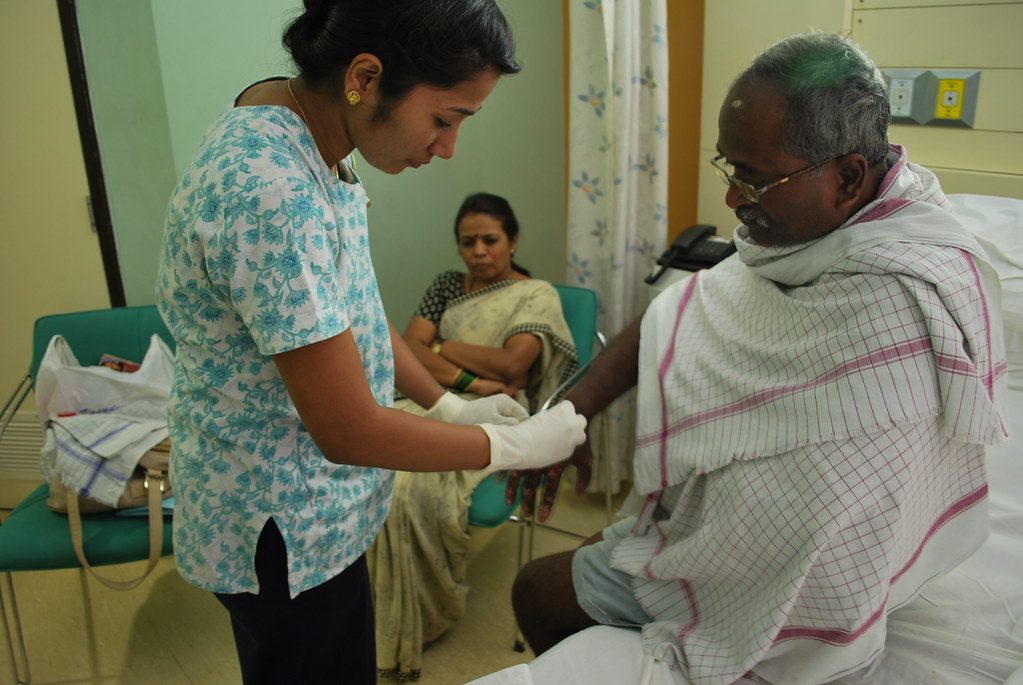
Before the video, guess. Look at the nurse and say three things you think she does in a normal day. You will be wrong about one of them, and that is the part you will remember.
Useful language
Jobs
Click a job, then click what that person does. Correct pairs turn green. The audio button says the word.
Complete the sentences
Click a word in the bank, then click a gap. Click a filled gap to clear it.

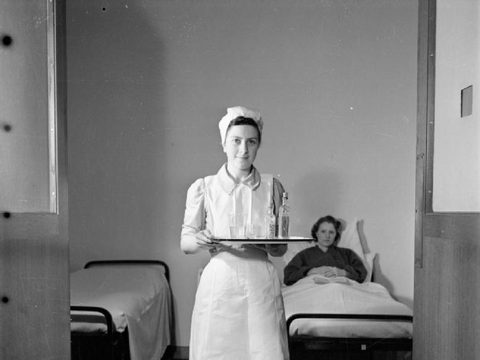 Nurses and cleaners usually wear a
_____ at work.
Nurses and cleaners usually wear a
_____ at work.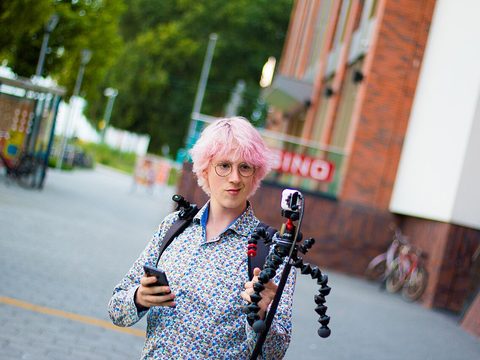 An
_____ makes videos for Instagram and TikTok every day.
An
_____ makes videos for Instagram and TikTok every day. A
_____ answers the phone and organizes the boss's meetings.
A
_____ answers the phone and organizes the boss's meetings. An
_____ sits at a desk in an office all day, from Monday to Friday.
An
_____ sits at a desk in an office all day, from Monday to Friday.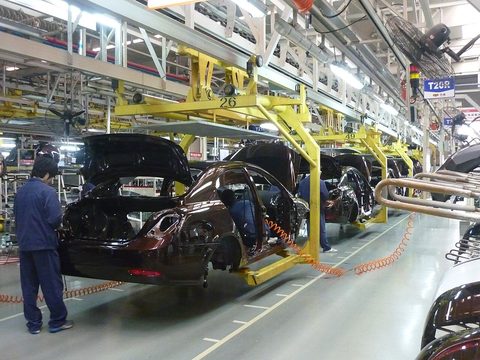 The machines in this
_____ make chocolate bars all day and all night.
The machines in this
_____ make chocolate bars all day and all night. A
_____ works at a school and gives the class a lot of homework.
A
_____ works at a school and gives the class a lot of homework.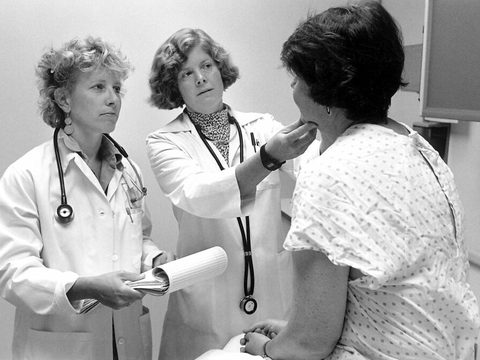 When I have a fever and a headache, I go to the
_____.
When I have a fever and a headache, I go to the
_____. Lucas and Bia are
_____ at a big university. They have classes every morning.
Lucas and Bia are
_____ at a big university. They have classes every morning.
Two very different days
Tom and Anna. Same country, same hours, completely different day.
Tom is a farmer. He lives in the countryside with his wife and their two children. He gets up at five o'clock in the morning and has a big breakfast.
Then he goes outside and feeds the cows, the chickens and the sheep. After that he works in the field, where he grows potatoes, carrots and corn.
At twelve o'clock Tom has lunch and rests for a short time. In the afternoon he fixes fences, drives his tractor and checks the animals again.


Farming is hard work, but Tom loves his job. He finishes at six, has dinner with his family, and goes to bed early — because tomorrow starts at five again.
Anna is a factory worker and she lives in a big city. She gets up at half past six, eats breakfast and takes the bus to work. Her factory makes cars.
Anna's job is to put small parts together. She stands at her station for many hours. At half past twelve she has lunch in the cafeteria with her co-workers.
She finishes work at five. In the evening she goes home, has dinner and watches TV. She usually goes to bed at ten o'clock.
Multiple choice
Click an answer and you get the result right away, with the reason.

-
Where does Tom live?
With his wife and their two children.
-
What time does he get up?
Five o'clock — an hour and a half before Anna.
-
What animals does Tom have?
He feeds all three of them before he goes to the field.
-
What vegetables does he grow?
All three grow in the field where he works in the morning.
-
What does he do in the afternoon?
And he checks the animals a second time.
-
Why does Tom go to bed early?
The day starts before the sun does, so the night has to start early too.
-
How does Anna go to work?
She takes the bus after breakfast.
-
What does her factory make?
And her job is to put the small parts together.
-
Where does Anna have lunch?
At half past twelve, half an hour after Tom.
-
What time does Anna finish work?
An hour before Tom. Ten o'clock is when she goes to bed.
-
What does Anna do in the evening?
Home, dinner, TV, bed at ten.
-
What do the two days have in common?
Twelve for Tom, half past twelve for Anna. Almost everything else is different.
The present simple: yes and no

The negative is where the -s moves. In the positive it sits on the verb. In the negative it jumps onto does — and the verb goes back to being plain.
- Positive: I / you / we / they work · he / she / it works
- Negative: I / you / we / they don't work · he / she / it doesn't work
- The -s is only in one place at a time: He works · He doesn't work, never
He doesn't works. - The present simple is for routines: what a person does every day, every week, always.
- Frequency words go before the verb: A factory worker sometimes works at night.
-
Sara is a doctor. She ___ to the hospital very early.
She, and the verb ends in o, so it takes es.
-
My parents are farmers. They ___ work in the morning.
Plural, so no ending at all.
-
A secretary ___ in the street.
One person, so doesn't — and after it the verb loses its -s.
-
Lawyers ___ a uniform to work.
Plural, so don't.
-
Which sentence is WRONG?
One -s per sentence. If does has it, the verb cannot.
-
Nurses ___ a lot of free time.
This verb is not to be, so it needs don't to make the negative.
-
A factory worker ___ works at night.
The frequency word sits between the person and the verb.
-
Ana is a cleaner in a hotel. She ___ work at 7 p.m.
It ends in sh, so it needs the extra e.
Asking about a job

- Do with I, you, we, they: Do factory workers start early? — Yes, they do.
- Does with he, she, it: Does a doctor work on weekends? — Yes, she does. / No, she doesn't.
- After does, the verb is plain: Does he work…?, never
Does he works…? - Question words go first: Where does he work? · What time do you finish?
- Careful with the verb be: that one needs no help — Are they students?, never
Do they are students?
-
___ factory workers start early in the morning?
Plural, so do.
-
___ a student go to school in the afternoon?
One student, so does — and go stays plain.
-
Does a teacher ___ a long vacation?
The -s is already inside does, so have goes back to its simple form.
-
Do salesclerks wear a uniform? — Yes, they ___ .
The short answer copies the little word from the question.
-
Does a dentist work on Sunday? — No, she ___ .
Question with does, answer with doesn't.
-
___ does an engineer work?
The question word comes first, and then everything works as before.
-
Which question is WRONG?
The verb to be makes its own question. It never borrows do.
-
What time ___ she finish work?
She, so does, and finish stays plain.
Write the verb
Positive sentences only. Write one word: the correct form of the verb in brackets.

Find the person first. Everything else follows from that — and two of these verbs need es, not just s.
-
workA factory worker sometimes ___ at night.
-
goJim and Tony are students. They ___ to school in the morning.
-
goSara is a doctor. She ___ to the hospital very early.
-
startMy parents are farmers. They ___ work in the morning.
-
helpI am a salesclerk. I usually ___ people with clothes.
-
teachWe are teachers. We ___ languages.
-
finishAna is a cleaner in a hotel. She ___ work at 7 p.m.
-
travelCarlos and André are soccer players. They normally ___ to matches.
Complete with Do or Does
One word in each gap. Then answer all ten out loud with your teacher, using a short answer.

-
a___ factory workers start early in the morning?
-
b___ a student go to school in the afternoon?
-
c___ a doctor work on weekends?
-
d___ farmers drive at work?
-
e___ salesclerks wear a uniform?
-
f___ a teacher have a long vacation?
-
g___ soccer players travel for work?
-
h___ influencers make a lot of money?
-
i___ a secretary need a paper diary?
-
j___ an engineer work with a computer?
Talking point
Answer with a short answer first, then add one sentence. Yes, they do. They usually start at seven.
Useful language
A day in the life of somebody I know
60–100 words. Choose a person you know with one of the jobs from this class. Write their day like Tom's and Anna's: times, activities, and what they do not do. Use he / she, so every verb needs the -s — and at least one sentence with doesn't.

My results
Check your score, then copy it and send it to your teacher on WhatsApp.

One job for this week. Say one negative sentence a day about somebody else: My brother doesn't work on Fridays. The negative is where the mistake lives, so that is where the practice goes.