Breakfast Sandwich
A full English breakfast has seven things on the plate. Gordon Ramsay puts most of them between two slices of bread. Six steps, six verbs — and every one of them starts the sentence.
Warm-up
Short answers. Tap a card when you have answered it.

Today you learn to give instructions. It is the easiest form in English — no I, no you, no -s. Just the verb, first word, and the sentence is finished.

Useful language
On the breakfast plate
Click a word, then click its meaning. Correct pairs turn green. The audio button says the word.
Complete the sentences
Click a word in the bank, then click a gap. Click a filled gap to clear it.

 At the barbecue, cook the long
_____ for the hot dogs.
At the barbecue, cook the long
_____ for the hot dogs.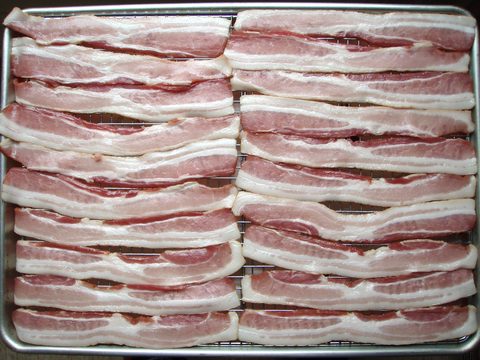 Fry thin slices of
_____. It is salty meat from a pig.
Fry thin slices of
_____. It is salty meat from a pig.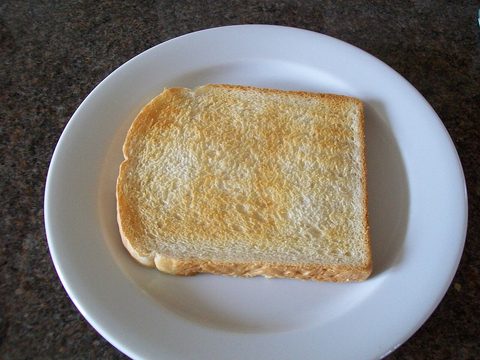 Put the bread in the machine and make
_____.
Put the bread in the machine and make
_____. Mix flour, milk and eggs, then make
_____ and eat them with syrup.
Mix flour, milk and eggs, then make
_____ and eat them with syrup.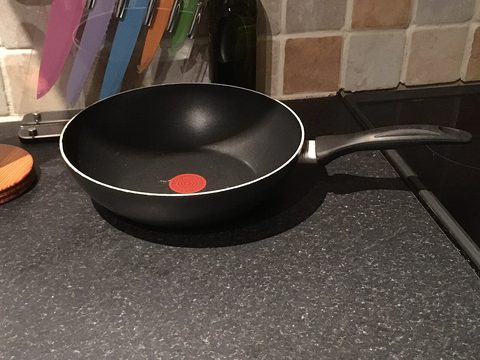 Put a little oil in a hot
_____ on the stove and cook an egg.
Put a little oil in a hot
_____ on the stove and cook an egg.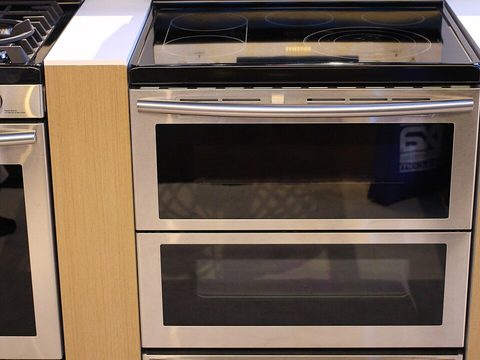 Turn on the
_____ and bake the pizza for fifteen minutes.
Turn on the
_____ and bake the pizza for fifteen minutes. Put a little
_____ on your hot bread. It is yellow and it melts.
Put a little
_____ on your hot bread. It is yellow and it melts. Put oil and
_____ on the salad. It tastes sour.
Put oil and
_____ on the salad. It tastes sour.
The perfect breakfast sandwich
Watch the chef first, then read the six steps. Every step starts with a verb.
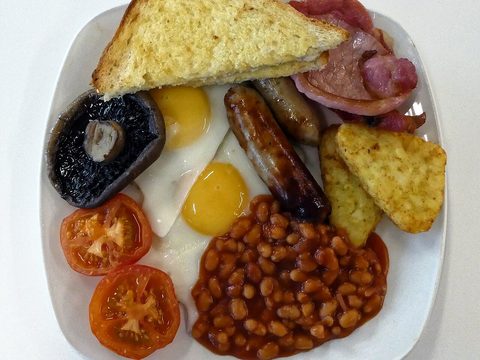
A full English breakfast has sausages, bacon, eggs, tomatoes, mushrooms, baked beans and toast. A typical American breakfast has pancakes, eggs, bacon and coffee.

Gordon Ramsay is a British chef. He was born in Scotland and grew up in England. He has restaurants in many countries, from Britain and France to Singapore, Dubai and the United States.
His idea is simple: take the English breakfast and put it inside a sandwich. You need sausages, bacon, tomatoes, eggs, bread, butter, salt, pepper and balsamic vinegar.
Step one. Cook the sausages and the bacon in a pan. Turn them over. Step two. Add the tomatoes and cook them too.
Step three. Put the pan in the oven for four minutes. Step four. In another pan, cook the eggs with butter, salt, pepper and vinegar.
Step five. Prepare the bread. Step six. Make the sandwich: add the sausages, the bacon, the tomatoes and the eggs, and close it.
Look at the six steps again. Every single one starts with a verb: cook, add, put, cook, prepare, make. That is how English gives instructions.
Multiple choice
Click an answer and you get the result right away, with the reason.

-
Which one is in the English breakfast but not the American one?
Bacon and eggs are in both. Beans, mushrooms and black pudding are the English side.
-
What is typical of an American breakfast?
With syrup, and usually coffee or orange juice next to them.
-
Where was Gordon Ramsay born?
He was born in Scotland and grew up in England. Both countries are inside Britain, so he is British.
-
In how many countries does he have restaurants?
Britain, France, Singapore and the United States.
-
What is his idea for the sandwich?
The same plate, but you can eat it with one hand.
-
What do you cook first?
And then you turn them over before anything else goes in.
-
When do the tomatoes go in?
Straight after the meat, in the same pan.
-
How long does the pan go in the oven?
Four, not forty. Listen to where the voice goes up.
-
Where do you cook the eggs?
The eggs get their own pan, with butter, salt, pepper and vinegar.
-
What goes in the eggs that is surprising?
A small amount. It is the part of the recipe nobody expects.
-
How many steps are there?
Cook, add, put, cook, prepare, make.
-
What do all six steps have in common?
That is the grammar of the whole class: instructions begin with the verb.
The shortest sentence in English

No person, no -s, no helper. Take the verb and put it first. It is the easiest thing you will learn all year, and it is everywhere: recipes, signs, apps, and every instruction I give you in class.
- The verb comes first: Cook the sausages. · Add the tomatoes. · Open your book.
- No subject: never
You cook the sausageswhen you mean an instruction. - Negative — don't + verb: Don't eat my sandwich. · Don't use vinegar.
- Add please to be polite: Close the door, please. · Please sit down.
- Include yourself with let's: Let's order a pizza. = you and me together.
-
___ the sausages in a pan.
Instruction, so the verb goes first and alone.
-
How do you make it negative?
One word in front of the verb, and it is always don't.
-
Which sentence is an instruction?
The other two describe what somebody does. Only the middle one tells somebody to do it.
-
___ the window. It's really cold.
Read the second sentence before you choose. It always tells you which verb.
-
How do you make it polite?
Please goes at the beginning or at the end. The person never comes back in.
-
You want to order a pizza together. You say:
Let's means "you and me". The first one is an order to somebody else.
-
Which sentence is WRONG?
There is no -s in an imperative, ever. There is no person for it to belong to.
-
Where do you see imperatives every day?
Push, Pull, Enter your password, Try again — all imperatives.
First, then, after that

- First — the beginning: First, cook the sausages.
- Then and next — the middle: Then add the tomatoes. · Next, prepare the bread.
- After that — also the middle, a little longer: After that, put the pan in the oven.
- Finally — the last step: Finally, make the sandwich.
- They all go at the start of the sentence, with a comma — except then, which often has none.
-
___ , cook the sausages and the bacon.
It is step one, so the word for the beginning.
-
___ , make the sandwich and eat it.
The last step of all six.
-
Which one is NOT for the middle of a recipe?
First only opens. The other two carry you through the middle.
-
Put the steps in order: make the sandwich / cook the eggs / cook the bacon.
Meat first, eggs second, and the sandwich is always last.
-
Which sentence is correct?
The time words go at the front, then the verb, then the thing, then the place.
-
"Turn them ___ ." (the sausages, after a few minutes)
Turn over means put the other side down. You will see it in every recipe.
-
How long? "Put it in the oven ___ four minutes."
A length of time always takes for.
-
Which order is right in a recipe?
You buy before you cook. Every recipe in the world is written that way.
Put the words in order
The verb always goes first — except when there is a don't.

Look for the word don't first. If it is in the list, it opens the sentence and the verb comes second.
-
ayour / sandwich / eat
-
bthe bacon / turn / over
-
ceggs / cook / the / with butter
-
deat / now / the sandwich / don't
-
ein the oven / put / the pizza
Positive or negative?
Use each verb once: cook, go, speak, open, close, put, use, make, add. Read the second sentence — it tells you if you need don't.

-
a___ English in class. You need to practice.
-
b___ the window. It's really cold.
-
c___ salt and pepper to the eggs.
-
d___ to school today. You are not okay.
-
e___ the door. We need silence.
-
f___ vinegar in the recipe. I prefer ketchup.
-
g___ the pan in the oven for 30 minutes.
-
h___ today. Let's order a pizza.
-
i___ a sandwich. You are hungry.
Tell me how to make it
Give the steps out loud, in order, with a verb at the start of each one.
Useful language
My recipe
60–100 words. Write a recipe for something you cook: first the ingredients, then the steps. Every step starts with a verb, and use first, then, after that and finally. Add one negative instruction with don't.

My results
Check your score, then copy it and send it to your teacher on WhatsApp.

One job for this week. Read every sign and every button on your phone in English: Push, Pull, Try again, Enter your password. They are all imperatives, and you meet a hundred of them a day.