My Last Vacation
One ending — -ed — turns almost any verb into the past. It is the single most useful thing in this course. The catch is that those two letters have three different sounds.
Warm-up
Short answers. Tap a card when you have answered it.

Two words for the same thing. Americans say vacation; British people say holidays. We use vacation in this course, but you will hear both everywhere.

Useful language
Vacation phrases
Click a phrase, then click its meaning. These are in the order a trip happens.
Anna and Paul's trip
Click a word in the bank, then click a gap. Click a filled gap to clear it.

 They decided to go to Paris on
_____ in July.
They decided to go to Paris on
_____ in July. Paris was the
_____ they chose that year.
Paris was the
_____ they chose that year.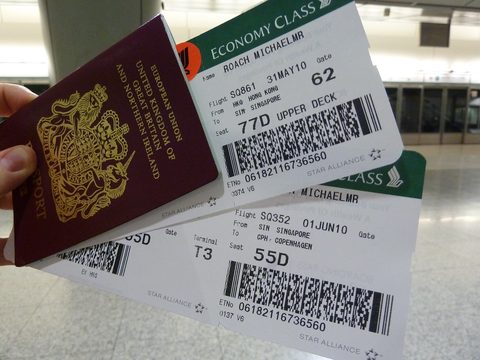 He bought two plane
_____ online, one for him and one for his wife.
He bought two plane
_____ online, one for him and one for his wife.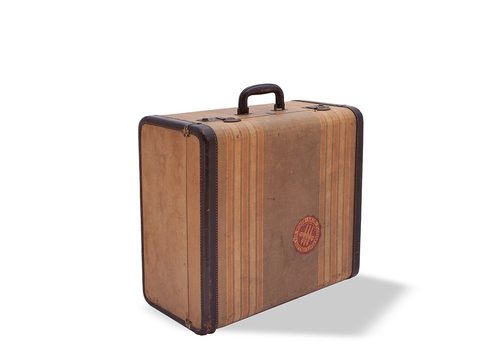 All her clothes were in one
_____.
All her clothes were in one
_____. They were hungry, so they had a big
_____ at the airport before the flight.
They were hungry, so they had a big
_____ at the airport before the flight. Then they waited at the
_____ and boarded the plane.
Then they waited at the
_____ and boarded the plane. The plane
_____ in Paris in the morning.
The plane
_____ in Paris in the morning. The
_____ from São Paulo to Paris took eleven hours by plane.
The
_____ from São Paulo to Paris took eleven hours by plane.
Why we hate listening to other people's vacations
Read it once and decide whether you agree. The audio button reads each part aloud.
Scientists say that vacation stories are sometimes boring, but we love telling them. That strange pair of facts is what this article is about.
Listening to another person's vacation story is not easy. We usually feel tired right after we ask the question: how was your trip?
We often dream about traveling, and we save money for it. Maybe that is why we feel sad when other people start: we have to sit and listen and imagine the trip.
So why don't we like listening to travel stories, and at the same time love telling them?
According to a study at Harvard, people like to talk about their vacations. It makes them feel happy, and it does not matter how many people are listening.

There is another reason. Stories help us connect with other people, so telling one is never only about the trip itself.
The article ends with three rules. Don't include too many details. Make sure your friend wants to talk about vacations. And answer the questions they ask you.
True or false
Some of these are close to the text but not the same. Read carefully.

-
Scientists love telling vacation stories.
Scientists say the stories are boring. It is we who love telling them.
-
We normally feel happy to hear other people talk about their vacation.
The text says we feel tired, and then sad.
-
Most people would love to travel and even save money for it.
"We often dream about traveling, and we save money for it."
-
The study was at Oxford University.
Harvard, not Oxford. Both are famous, and only one is in the text.
-
Talking about their vacation makes people feel good.
That is what the study found.
-
When we travel on vacation, we connect with other people.
Careful. It is the stories that connect us, not the traveling. One word changes the whole sentence.
-
Does it matter how many people are listening?
People enjoy telling the story either way.
-
Why do we feel sad when other people tell their stories?
We save money for a trip, and meanwhile we listen to somebody else's.
-
What should you NOT do when you tell your story?
Rule one of three.
-
What should you check before you start?
Rule two. Ask first.
-
And the third rule is:
If they ask, they want to know. That is your green light.
-
What is the strange pair of facts at the start?
The whole article exists to explain that contradiction.
Past simple: regular verbs

The big surprise: in the negative and the question, the verb goes back to normal. Did you travel? — not Did you traveled? The did already carries the past, so the verb doesn't have to.
- (+) I traveled by plane. — add -ed to the verb.
- (-) I didn't travel by plane. — add didn't, and the verb goes back to normal.
- (?) Did I travel by plane? — put did first, and the verb goes back to normal.
- Spelling: watch → watched · like → liked (after e, just add d) · study → studied (consonant + y) · stop → stopped (one vowel, one consonant)
- Same for everybody. I, you, he, she, it, we, they — one form, no -s anywhere.
-
What do we add to make the past simple affirmative?
And that is true for every person: I, you, he, she, we, they.
-
Which sentence is correct?
Didn't is already the past, so the verb goes back to normal.
-
Which question is correct?
Same rule as the negative. The -ed disappears.
-
study in the past is:
Consonant plus y: take away the y and add -ied.
-
stop in the past is:
One vowel, one consonant: the p doubles, just like in shopping.
-
arrive in the past is:
The verb already ends in e, so we only add the d.
-
"He worked yesterday." Make it negative.
Two changes: didn't comes in and the -ed goes out.
-
Which of these is NOT a past simple time expression?
That one belongs to the present continuous, from Class 24.
Three ways to say -ed

- /t/ — after the sounds p, k, s, f, sh, ch: worked, washed, packed, talked, walked.
- /d/ — after a vowel sound or most other consonants: played, called, traveled, loved, arrived.
- /ɪd/ — only after the sound t or d: wanted, decided, waited, landed. This is the only group with an extra syllable.
- The test: say the verb without -ed. Does it end in a t or d sound? Then and only then does the ending become an extra syllable.
- Why it matters: worked has one syllable, not two. Saying "work-ed" is the loudest accent mistake in this whole class.
-
How many syllables does worked have?
It sounds like workt. The e is silent.
-
And wanted?
Want ends in a t sound, so the ending becomes its own syllable.
-
packed ends with the sound:
After a k sound, the ending is always /t/.
-
played ends with the sound:
After a vowel sound, the ending is /d/.
-
decided ends with the sound:
Decide ends in a d sound, so we need a vowel between them.
-
Which one has an extra syllable?
Land ends in d. The other two do not end in t or d.
-
Which two sound the same at the end?
Both end in /t/, because k and sh are both in the first group.
-
What is the quick test for the /ɪd/ ending?
Sound, not spelling. Loved ends with the letter e and takes /d/.
Write the sentence in the past
Example: She works in a school. → She worked in a school. Watch the four spelling rules.

Only the verb changes. Everything else in the sentence stays in the same place, in the same order, with the same words.
aThey finish work at 7 p.m.
bWe arrive at the airport in the morning.
cI live in England.
dThe children watch TV.
eThe bus stops in the center.
fAnthony plays soccer.
gWe dance at the party.
hThey relax in a spa.
iSarah wants a coffee.
jJames and Simon board the plane at 9.
kI need an umbrella.
Questions and answers
First four: put the words in order. Last eight: write only the verb part, in the form the sentence needs.

orderlast vacation / did / Where / travel to / you / on your ?
orderbook / Did / you / a hotel / in Paris ?
orderRachel / you / did / When / talk to ?
orderpack / yesterday / your bags / Did / you ?
finish______ the children ______ their homework?
finishNo, they ______ it. They were tired.
studyWhat ______ you ______ in college?
studyI ______ computer science.
watch______ you ______ the match last night?
watchYes, we ______ it in the office.
cry______ the baby ______ last night?
cryNo, she ______ a lot.
Tell me about a vacation
Follow the article's own rules: no endless details, and answer the questions I ask. Then you ask me.
Useful language
My last vacation, in nine steps
70–110 words. Tell the story of a real trip in the same order as Anna and Paul: the decision, the booking, the bags, the airport, the flight, the arrival, the place, the return. Use at least eight regular verbs in the past.

My results
Check your score, then copy it and send it to your teacher on WhatsApp.

The one thing to practice out loud this week: worked, talked, walked, packed — all one syllable. Then wanted, waited, decided, landed — all two. Ten times each.