Let's Celebrate
Last class every verb followed one rule. This class you meet the ones that don't. There is no clever trick for them — only a list, and the good news is that the list is short and you already use most of it.
Warm-up
Short answers. Tap a card when you have answered it.

A budget party is a cheap party. Budget is the money you have for something — and when it comes before a noun, it means "the cheap version": a budget hotel, a budget flight, a budget party.
Useful language
Eight verbs that break the rule
Click a verb, then click its past. The audio button says the past form — listen to how different it sounds.
Birthday words
Click a word in the bank, then click a gap. Click a filled gap to clear it.

 Dad blew air into ten red and blue
_____ for the party.
Dad blew air into ten red and blue
_____ for the party.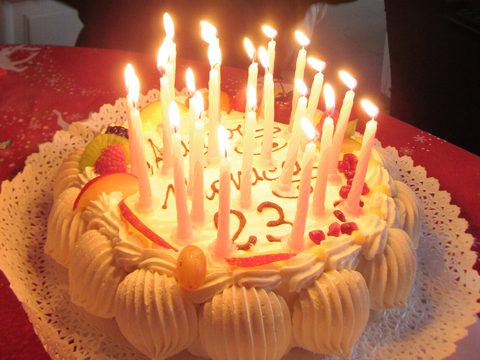 She put three
_____ on the cake, one for each year.
She put three
_____ on the cake, one for each year.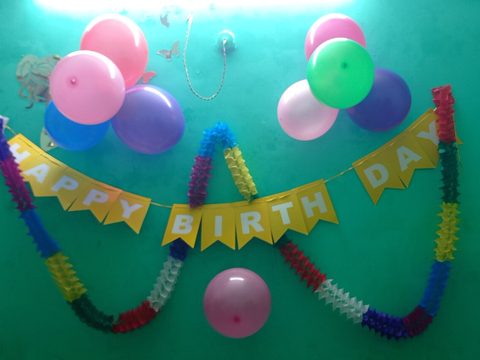 We put
_____ all over the house: lights, paper stars and a big Happy Birthday sign.
We put
_____ all over the house: lights, paper stars and a big Happy Birthday sign. There were twelve kids, so I bought twelve
_____: one small cake for each kid.
There were twelve kids, so I bought twelve
_____: one small cake for each kid.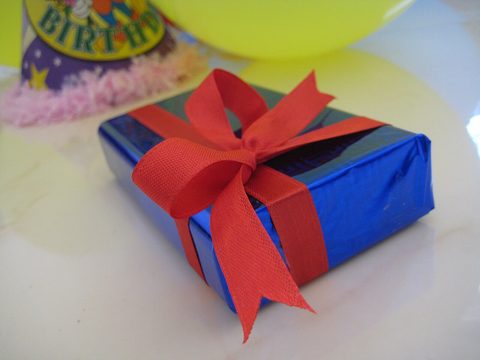 He gave his mother a
_____ for her birthday.
He gave his mother a
_____ for her birthday.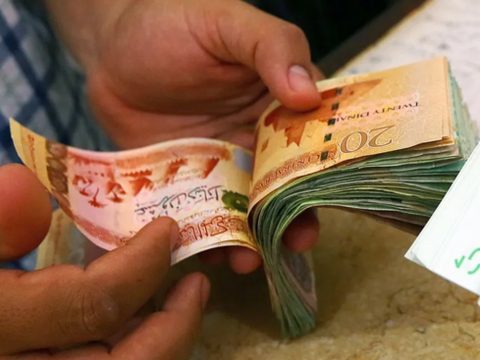 A
_____ party is a cheap one — you decide the money first.
A
_____ party is a cheap one — you decide the money first. In the garden there are small white flowers with a yellow center. They are
_____.
In the garden there are small white flowers with a yellow center. They are
_____. Some people celebrate at home; others go to a
_____.
Some people celebrate at home; others go to a
_____.
A whole party for $150
Read first, then watch. The sentences in quotation marks are hers, word for word.
A woman filmed herself getting a house ready for her baby daughter's birthday. The whole party had to be cheap, and at the end she tells you exactly what it cost.
"I started first with the fun part — decorating." That is where the money usually disappears, and it is where she decided to be careful.
"I really wanted some fresh flowers for the main table." Flowers were the one thing she was not going to give up.
"I also found these cute little daisies at Walmart." Not a flower shop, then: a supermarket, and small flowers instead of big ones.
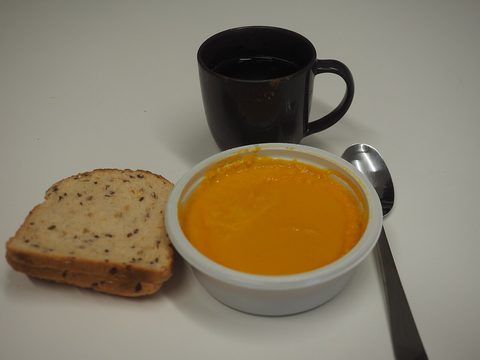
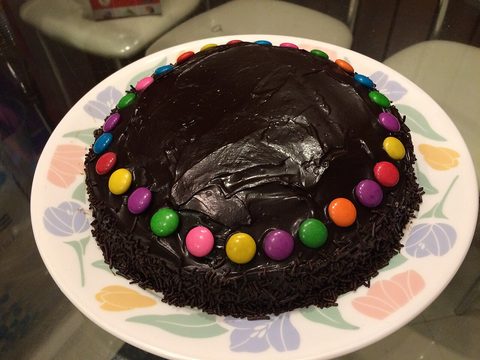
Then the food, and one line that settles it: "You can't have soup without bread." The sweet part was ready the day before — "I made the cake and cupcakes yesterday."
At the end comes the number. "We spent a total of $150: $60 on decorations and $90 on food." And then: happy birthday to you.
Now look at her verbs. Started and wanted take -ed, like last class. But found, made and spent do not. Those three are irregular, and there is no rule for them.
Multiple choice
Click an answer and you get the result right away, with the reason.

-
The woman is organizing a party for her:
Which explains the small cake and the small numbers.
-
What did she start with?
"I started first with the fun part — decorating."
-
What did she really want for the main table?
The one thing she was not going to give up.
-
Where did she find the daisies?
A supermarket, which is how the flowers stayed cheap.
-
"You can't have soup without ______."
Her rule, and hard to argue with.
-
When did she make the cake and the cupcakes?
"I made the cake and cupcakes yesterday."
-
How much did they spend in total?
The other two numbers are the two halves of it.
-
How much on decorations?
The smaller half.
-
And how much on food?
Sixty and ninety make a hundred and fifty.
-
Which of her verbs is regular?
You can see the -ed on the end of it.
-
Which one is irregular?
Make becomes made, and nobody can explain why.
-
Was this a budget party?
She tells you the total on purpose, to show it can be done.
Verbs that change

Here is the mercy in this rule. The strange form only appears in the affirmative. In the negative and the question, did takes over and the verb goes straight back to normal: I didn't go, Did you eat?
- (+) I found my keys yesterday. · I ate pizza last night. · I made coffee this morning.
- (-) I didn't find it. — not didn't found.
- (?) Did you make it? — not Did you made.
- Time words are the same as last class: yesterday · last night · this morning · last Saturday.
- No rule, only the list. Learn them in pairs, out loud: go–went, eat–ate, give–gave.
-
The past of find is:
The vowel changes and nothing is added.
-
The past of spend is:
A t at the end, not -ed.
-
Which sentence is correct?
Didn't carries the past, so the verb goes back to normal.
-
Which question is correct?
Same rule as the negative, every single time.
-
"They ______ champagne last night."
The third form exists, but it does not belong in this tense.
-
"He ______ his mother a present yesterday."
Say it in pairs: give–gave, like eat–ate.
-
"We ______ to the park yesterday."
Went looks nothing like go, and that is normal.
-
Make it negative: "James had breakfast with us."
Had goes back to have the moment didn't arrives.
Could: the past of can

- It never takes did. I couldn't go to your party. — not I didn't could go.
- Questions move it to the front: Could you give Jane a present?
- Same two jobs as can: ability — She could swim very well — and permission — We could play in the park every day.
- And the same politeness: Could you help me, please? is not about the past at all. It is Class 22 again.
- The verb after it is always plain: could go, couldn't eat. No -ed, no to.
-
The past of can is:
One word, and it works for every person.
-
Which sentence is correct?
No did anywhere near it, and the verb stays plain.
-
"When she was a child, she ______ swim very well."
Very well tells you it is a yes.
-
"He could play the guitar, but he ______ play the drums."
But is the word that flips it.
-
"______ you help me, please?" This is about:
Same could as in Class 22. The form is past; the meaning is not.
-
Which one is WRONG?
Could makes its own question and its own negative.
-
How do you say couldn't?
The l is silent in could, would and should.
-
"When we were kids, we ______ in the park every day."
The verb after could never changes shape.
Put it in the past, then make it negative
First seven: rewrite with the time expression. Last four: make the same sentence negative — and watch the verb go back to normal.

Example: We go to the park. (yesterday) → We went to the park yesterday. → We didn't go to the park yesterday. Notice went turns back into go.
last weekMy mother spends $100 on food.
last nightThe children get a lot of presents at the party.
this morningJames has breakfast with us.
last nightI do my homework.
yesterdayHe gives his mother a present.
last SundayWe eat a delicious chocolate cake.
last nightThey drink champagne to celebrate.
negativeMy mother spent $100 on food last week.
negativeJames had breakfast with us this morning.
negativeHe gave his mother a present yesterday.
negativeThey drank champagne to celebrate last night.
Could, then the questions
First six: write could, couldn't or Could plus a verb from this list — eat · drink · swim · help · play · play. Last six: put the words in order.

two wordsWhen I was a child, I hated vegetables. I ______ them at all.
three words______ me, please?
two wordsWhen she was a child, she ______ very well.
two wordsWhen we were kids, we ______ in the park every day.
two wordsHe could play the guitar, but he ______ the drums.
two wordsI ______ four cups of coffee when I was younger.
orderyou - on the birthday cake - How much - spend - did ?
orderfor the party? - a chocolate cake - grandma - Could - make ?
orderwalk - last night - Did - Sam and Julie - to the party ?
orderher friend - Carla - give - did - What present ?
ordereat - pieces of cake - you - How many - did ?
orderyou - to the party - with - Who - did - go ?
Talking point
Full sentences, and every past verb out loud. If you use a regular one, I will check the ending.
Useful language
My last birthday
70–110 words. Where were you, who came, what did you eat and drink, what presents did you get, and how much did it cost? Use at least five irregular verbs and one sentence with couldn't.

My results
Check your score, then copy it and send it to your teacher on WhatsApp.

Ten pairs, out loud, every morning this week. Go–went. Eat–ate. Give–gave. Have–had. Do–did. Make–made. Find–found. Spend–spent. Drink–drank. Get–got. Thirty seconds a day, and they stop being a problem forever.