Review: Classes 28–33
Six classes, and the biggest jump in the whole course. Before Class 29 you could only talk about now. You now have a past tense — three of them, in fact — and this class puts every piece back together.
Can you do all of these?
One card for each thing you learned. Tap a card when you can do it without stopping.

These nine cards are the real test. The exercises below check what you know; the cards check what you can actually say. Do them out loud, even the ones that feel easy.
Useful language
Things in the house
Click a word, then click its meaning. Correct pairs turn green.
Parties and trips
Click a word in the bank, then click a gap. Click a filled gap to clear it.

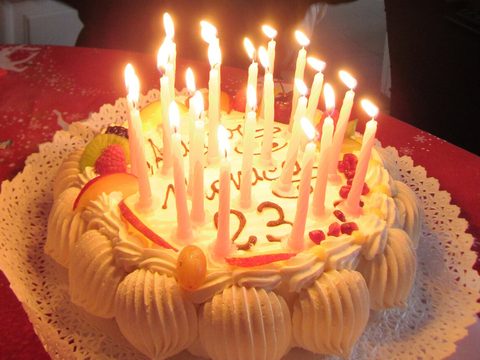 She put five
_____ on the cake and we sang.
She put five
_____ on the cake and we sang. They opened a bottle of
_____ to celebrate.
They opened a bottle of
_____ to celebrate. Dad filled twenty pink and blue
_____ with air for the party.
Dad filled twenty pink and blue
_____ with air for the party. On the table there were small chocolate
_____ in paper cups.
On the table there were small chocolate
_____ in paper cups.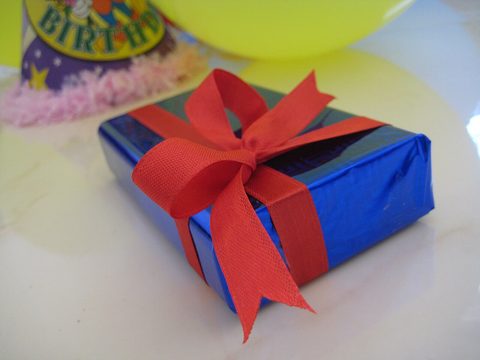 For her birthday, he gave his mother a
_____: a new watch in a small box.
For her birthday, he gave his mother a
_____: a new watch in a small box.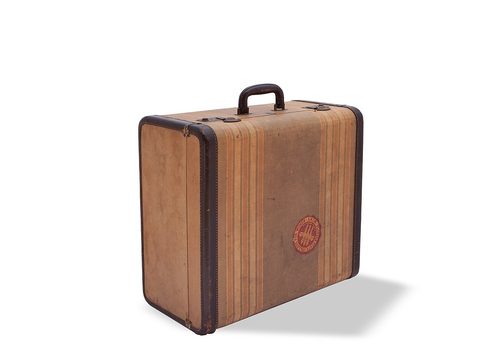 All my clothes were in one
_____ at the airport.
All my clothes were in one
_____ at the airport.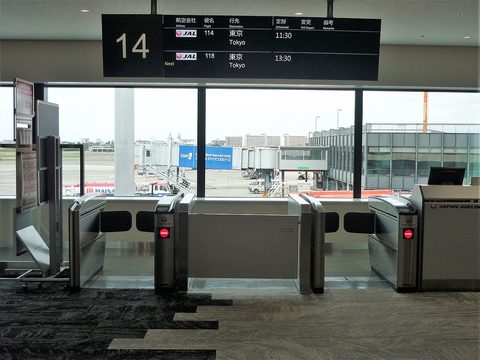 We waited at the
_____ and boarded the plane.
We waited at the
_____ and boarded the plane.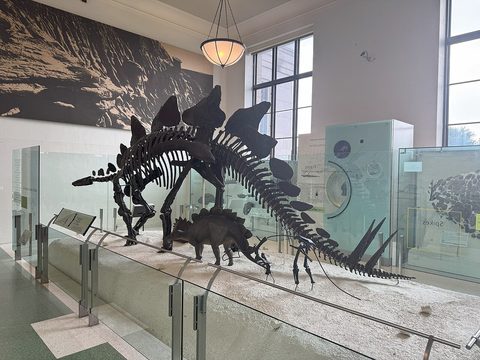 You can see old things from history in a
_____.
You can see old things from history in a
_____.
Six classes in one page
Read it once before the exercises, and once again at the end.
Six classes, and the biggest jump in the whole course. Before Class 29 you could only talk about now. Everything since then has been about what already happened.
Class 28 was about places. There's a table in the kitchen. There are two sofas in the living room. There aren't any books on the shelves.

Class 29 gave you two words: was and were. I was at school. They were at the party. My friends and I were in a café last Saturday.
Class 30 added the dates. The fifteenth of April, fourteen fifty-two. The number takes a -th, and the year comes out in two halves.
Class 31 was the big one: regular verbs. Add -ed, and remember that in the negative and the question the verb goes straight back to normal.
Class 32 was the list you simply have to learn: went, had, gave, ate, drank, made, found, spent, got, did. And could, which never takes did.
And Class 33 put all of it into one story. Jonna Jinton made a decision, left a city, moved to a village of ten people and found her passion there.
Do you remember?
Click an answer and you get the result right away, with the reason.

-
Which structure says what exists in a place?
Portuguese uses tem for it, which is why the mistake is so common.
-
Some or any in a question?
Negatives and questions take any; positive sentences take some.
-
Which persons take was?
The other three take were. That is the whole rule.
-
What do we add to a number to make a date?
Except for first, second and third.
-
How do we say the year 1452?
Two halves. It is faster and it is what people say.
-
What do we add to a regular verb for the past?
And it is the same for every person.
-
In a negative or a question, the past verb:
Did and didn't already carry the past.
-
Which of these takes did?
Be and could make their own negatives and questions.
-
The past of can is:
And the negative is couldn't, with a silent l.
-
Which pair is irregular?
You cannot see the verb inside the past form at all.
-
Where did Jonna Jinton move to?
Grundtjärn, in the north of Sweden.
-
What is the biggest change in these six classes?
Half the language opened up, and it opened up in Class 29.
Part one: places and the past of be
Classes 28, 29 and 30. Fourteen questions.

Two verbs here never touch do or did: be and can. If you see did next to was or could, the sentence is wrong.
-
Are there ______ chairs in the garden?
A question, and a plural noun.
-
Is there ______ TV in your bedroom?
One TV, and the letter T is said /tiː/, so a, not an.
-
There ______ two sofas in the living room.
Two, so plural.
-
______ there a car in the garage?
One car.
-
David ______ very angry last class.
One person, and last class puts it in the past.
-
Kim and Kylie ______ very young in the video.
Two people is the same as they.
-
I ______ eleven years old in the photo.
I takes was, even though I am in the present.
-
They ______ at work yesterday. They aren't working this week.
Yesterday decides it, not the sentence after.
-
______ a leader?
The question mark means the verb has to come first.
-
Was Queen Victoria born in 1919?
The answer repeats the verb from the question. She was born in 1819.
-
______ Leonardo da Vinci and Michelangelo artists?
Two people, in the past, with the verb be.
-
I ______ at home. I was at school yesterday.
The second sentence tells you it is the past.
-
How do you write "the twentieth of August" in numbers, day first?
Day first, then month — the order this course uses.
-
How do you say 9th?
Nine loses its e. The third one is a different number.
Part two: the past simple
Classes 31, 32 and 33. Fourteen questions.

-
The bus ______ in the center.
One vowel, one consonant: the p doubles.
-
Anthony ______ soccer.
A vowel before the y, so the y stays.
-
Sarah ______ a coffee.
After didn't the verb has no ending at all.
-
______ the match last night?
Last night makes it past, and the verb stays plain.
-
______ travel on your last vacation?
Travel is a normal verb, so it needs did, not were.
-
I ______ my homework last night.
Here did is the real verb, not a helper.
-
He ______ his mother a present yesterday.
Irregular verbs never take -ed on top.
-
We ______ a delicious chocolate cake last Sunday.
Eat–ate, said like the number eight.
-
James ______ breakfast with us this morning.
This morning is already over, so it is the past.
-
She ______ find her phone yesterday.
She looked and did not succeed — and the day is over.
-
______ his last birthday?
One past marker per question. Did is enough.
-
"Where were you born?"
Where asks for a place. The other two answer when.
-
"Were you at home yesterday?"
The question says were because of you; the answer says was because of I.
-
I ______ to school yesterday morning.
The most irregular verb in the language, and the most used.
Dates, both ways
First five: write the date in numbers, day first, like 14/01. Last six: write it in words, like the fourteenth of January.

Two zeros to remember. The first of July is 01/07, not 1/7, in this format. Two digits for the day, two for the month.
numbersThe first of July
numbersThe ninth of September
numbersThe twentieth of August
numbersThe third of May
numbersThe seventeenth of October
words2/12
words24/10
words10/6
words1/3
words13/11
words5/4
Collocations, odd one out, verbs
Three short tasks in one. Read the cue before each line — it tells you what to write.

finish itbook ______ (the plane)
finish itenjoy ______ (the whole vacation)
finish itpack ______ (before you leave)
finish itarrive ______ (two hours early)
finish itwant ______ (you are hungry)
odd one outnineteen · twenty · second · thirty
which is a star sign?Leo · fish · cat · whale
odd one outfirst · fifth · seventh · three
odd one outFebruary · May · Tuesday · December
past ofget
past ofgo
past ofcome
past ofbuy
past offind
Everything, out loud
Now the same nine things from the warm-up, but in full. Take your time and use complete sentences.
Useful language
A day I remember
80–120 words. Choose one day from your life that you remember well: a birthday, a trip, a first day. Say when it was, where you were, what there was, what you did, and what you couldn't do. Every past form from these six classes has a place in it.

My results
Check your score, then copy it and send it to your teacher on WhatsApp.

Read the two grammar sections again next week, not today. A review you repeat after seven days is worth three reviews on the same afternoon. That is not an opinion — it is how memory works.