The Story of My Life
A woman leaves a city of half a million people for a village of ten. Her story is told almost entirely in one tense — and it uses both kinds of past verb, regular and irregular, in the same breath.
Warm-up
Short answers. Tap a card when you have answered it.

This is the class where the two pasts meet. Regular verbs from Class 31, irregular verbs from Class 32 — and in a real story they arrive mixed together, in the same sentence, with no warning.
Useful language
Words from the story
Click a word, then click its meaning. Correct pairs turn green.
Complete the sentences
Click a past verb in the bank, then click a gap. Every one of these eight is irregular.

- Last month my sister _____ a big decision: she stopped eating meat.
- I _____ my umbrella at the restaurant, so I got wet on the way home.
- My cousin _____ to my house for dinner on Friday and stayed until midnight.
- The movie _____ very boring, so I fell asleep.
- My shoes _____ very wet after the long walk in the rain.
- I looked for my keys for an hour, and finally I _____ them under the couch.
- When I was five, I _____ swim, but I couldn't read.
- I _____ a new phone with my credit card because my old one was broken.
From a city to a village of ten
Watch the video, then read. The comprehension questions have the minute written on them.
Jonna Jinton is a Swedish photographer and artist. In 2010 she made the most important decision of her life: she left the city of Gothenburg.
She left her apartment and quit her studies. Her heart, she says, was longing for something else — nature, and silence.
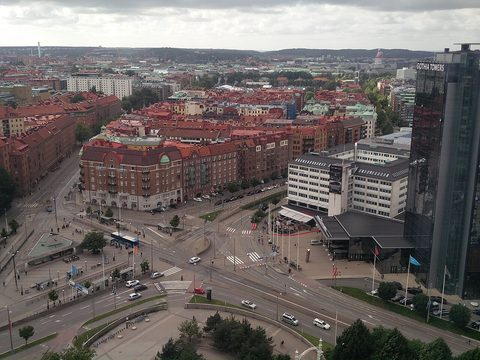
She moved to Grundtjärn, a village of ten people in the north of Sweden, where her family had lived for twelve generations. So it was like coming home.
When she first came there she had no plan, no money and no job. But she had a dream: to find a way to stay in that place.
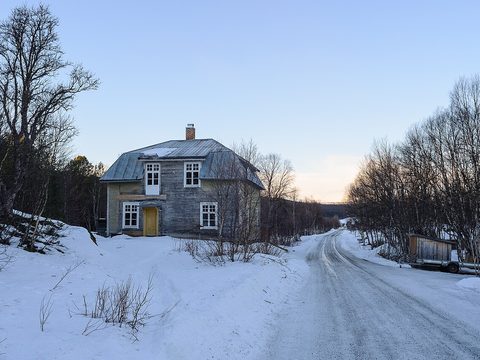
The first years were hard. Long cold winters, constant worry about money, and an old house where keeping warm was a full-time job on its own.
During that time she found her passion. She started with photography, filming and writing, and a little blog. She also bought a dog, Nanook, her best friend ever.
Eight years later she still lives there, with her mother working in her business, a partner called Johan, two cats and a cow named Stjärna — star, in Swedish.
Multiple choice
Click an answer and you get the result right away, with the reason. The blue number is where to look in the video.

-
0:02Jonna Jinton is a Swedish:
She says it in her first sentence.
-
0:08When did she make the most important decision of her life?
Two thousand and ten. Careful with the other one.
-
0:12Which city did she leave?
The third one is the village she moved to.
-
0:23What was her heart longing for?
Two words, said very slowly, with a long pause between them.
-
0:30How many people live in Grundtjärn?
Ten. Not a small town — a village.
-
0:39Moving to the village felt like:
Her family had lived there for twelve generations.
-
0:44When she first arrived she had:
Three things, and she names all three.
-
1:03The winters were:
And the old house was a full-time job just to keep warm.
-
1:20What did she start with?
The painting and the music came later.
-
1:34Nanook is her:
She has two cats and a cow as well, but Nanook is the dog.
-
3:22What does Stjärna mean in Swedish?
It is the name of the cow, and she translates it for you.
-
4:08Who built the bridge where she took the IKEA photo?
Eighty years before she stood on it with a camera.
Both kinds of past verb, together

Look at one of her own sentences: I made the decision and I decided to leave. Irregular, then regular, four words apart. Real English does this constantly.
- Regular: play → played · dance → danced · study → studied · move → moved · create → created
- Irregular: go → went · have → had · give → gave · come → came · take → took · leave → left · buy → bought · find → found
- (-) and (?) use the base form for both: She didn't go to the countryside. · Did he come to the party?
- The past of be is different: was / were, with wasn't and weren't, and no did.
- So is could: could / couldn't, and no did either.
-
Which one is regular?
You can see the -ed.
-
Which one is irregular?
Buy becomes bought, which looks like nothing at all.
-
"She ______ to the countryside." (not go)
The base form comes back the second didn't appears.
-
"______ he ______ to the party?" (come)
Same rule in the question as in the negative.
-
"The first years ______ very hard."
Years is plural, and be never takes did.
-
"I created a blog so I ______ write about my new life."
The rest of the sentence is in the past, so this one has to be too.
-
Which sentence is correct?
Had goes straight back to have.
-
The past of leave is:
The third one is a different verb altogether: live.
Regular or irregular?
Every verb below is from Jonna's story. Decide which group it belongs to.

-
decide → decided
It already ends in e, so we only add the d.
-
take → took
The vowel changes and there is no ending.
-
move → moved
Same pattern as decided.
-
find → found
And careful: it has nothing to do with fund or funny.
-
start → started
And it takes the extra syllable, because start ends in t.
-
get → got
One of the most common verbs in English, and of course it is irregular.
-
create → created
Two syllables in the present, three in the past — create ends in a t sound, so the ending is an extra syllable.
-
buy → bought
The gh is silent, so it sounds like bawt.
The rest of Jonna's story
Write the past of the verb in the cue. Some are regular and some are not — that is the whole exercise.

When you don't know, guess regular first. Most verbs in English are regular. Then check it against the list — if it is on the list, it is one of the exceptions.
startI ______ to love the life near nature
getand ______ interested in art.
moveI ______ here eight years ago and today I still live here.
createI ______ my page on social media
canand ______ reach a million people every week.
findI ______ Johan, the love of my life,
decideand we ______ to start our jewelry brand.
takeI ______ this photo
bewhen I ______ near my house.
beIt ______ a magical moment.
Ten irregular verbs
Write the past of each one. These ten cover most of the past tense you will ever need at this level.

get
do
make
go
have
take
leave
come
buy
find
A day in my life
Imagine you started a channel and you are recording a vlog about yesterday. These are your script questions. Answer them in order, out loud.
Useful language
My vlog script
80–120 words. Use your answers from the speaking cards and write the script of your vlog, from getting up to going to bed. Use at least six irregular verbs and mark them for me.

My results
Check your score, then copy it and send it to your teacher on WhatsApp.

Tell your own story in five sentences this week. Where you were born, where you studied, where you worked, when you moved, what you found. Five sentences, all past. That is your version of Jonna's video.