Final Review
The last class. Sixty questions from the whole course, thirty on grammar and thirty on vocabulary, plus thirty-five things you should now be able to say out loud without stopping.
Six from the first six classes
Start where the course started. If any of these six is slow, that is the most useful thing you will learn today.

Forty classes ago you could not say your own name in English. Today you can talk about yesterday, about right now, and about next Friday. Take one minute to notice that before we start.
Useful language
Words from the whole course
One from each part of the year. Click a word, then click its meaning.
Mixed practice
Click a word in the bank, then click a gap. Click a filled gap to clear it.

 My father's mother is my
_____.
My father's mother is my
_____. My mother's son is my
_____.
My mother's son is my
_____. There aren't any
_____ on my bed, so my head is on the sheet.
There aren't any
_____ on my bed, so my head is on the sheet.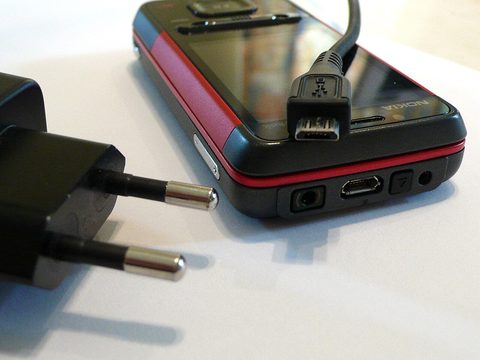 Is there a
_____ in your bag? My phone has no battery.
Is there a
_____ in your bag? My phone has no battery.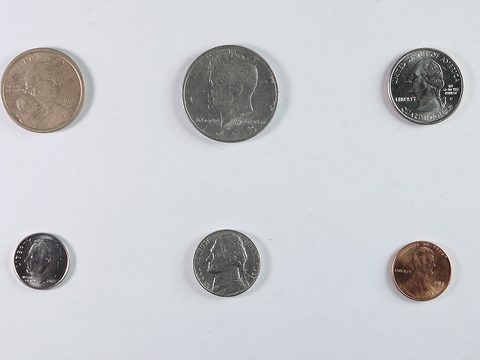 The eggs are $2.50: two dollars and fifty
_____.
The eggs are $2.50: two dollars and fifty
_____. My zodiac sign is
_____. Its symbol is a lion.
My zodiac sign is
_____. Its symbol is a lion. I
_____ my flight on the internet last week.
I
_____ my flight on the internet last week.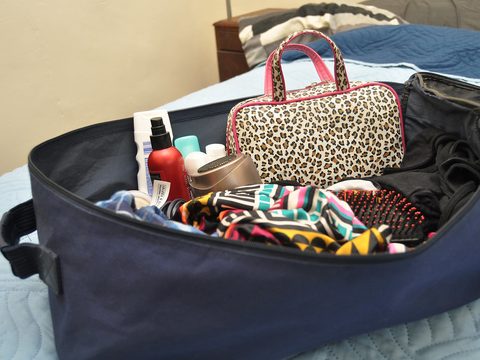 We
_____ our bags last night, before the trip.
We
_____ our bags last night, before the trip.
Forty classes, in seven paragraphs
Read it once now and once at the end of the class. Then read it again in a month.
Forty classes ago you could not say your own name in English. Today you can talk about yesterday, about right now, and about next Friday.
In the first ten classes you learned the verb be, articles, plurals, possessives, and how to say a number and a price. That is the floor everything else stands on.
Classes eleven to twenty gave you the present simple: your job, your routine, your food, your free time. How often, what time, and who does what.
Classes twenty-one to twenty-seven were about can, about ordering a coffee politely, and about the tense that says what is happening at this exact second.
Classes twenty-eight to thirty-four opened the past. Was and were, dates, regular verbs with -ed, and the irregular list you had to learn by heart.
And the last classes gave you the future, which turned out not to be a new tense at all — only the present continuous, with a different word for when.
That is a complete A1. From here, almost everything new you meet is a variation on something already in this list.
Do you remember the course?
Click an answer and you get the result right away, with the reason.

-
What was in the first ten classes?
The floor everything else stands on.
-
Which tense came in classes eleven to twenty?
Routines, jobs, food, free time.
-
Which word did classes twenty-one to twenty-three work on?
Ability, then polite requests, then permission. One word, three jobs.
-
Which classes opened the past?
Starting with was and were, which are the easiest of all.
-
What is surprising about the future in English?
The present continuous does the job, with a different time word.
-
Which two verbs never borrow do or did?
If you remember one rule from forty classes, make it this one.
-
What do we add to a regular verb for the past?
And it has three different sounds, but only one spelling.
-
After did or didn't, the verb:
Did you go? — never Did you went?
-
Which one is a future arrangement?
A ticket, a day, and it has not happened yet.
-
What structure says what exists in a place?
The one Portuguese speakers forget most often.
-
Which level does the text say you have finished?
A complete one, with nothing missing from it.
-
What does the text say about everything you learn from here?
Which is why going back over these forty is never wasted time.
Grammar, questions 1 to 15
The first half of the final grammar test. Classes 1 to 22.

Do all thirty without stopping, then look at the reasons. If you stop to read after every question you will learn less — the point of a test is to find the holes, not to fill them one at a time.
-
She ______ a pop star from Brazil.
One person, third person.
-
Hello! I ______ Olivia.
I has its own form, and only I uses it.
-
______ you Chinese?
You always takes are, one person or ten.
-
In my bag, ______
A sentence needs a person and a verb. The other two are missing one.
-
She is famous. ______ name is Millie.
The word matches the owner, not the thing.
-
They ______ their homework in the evening.
They takes the plain form.
-
My sister ______ English at university.
Consonant plus y: it becomes -ies.
-
Pedro ______ work on Saturdays.
Work is a normal verb, so it needs doesn't.
-
The teacher ______ angry.
With the verb be, the frequency word comes after it.
-
Where ______ your brother live?
One brother, and live is a normal verb.
-
I'd ______ the salad, please.
I'd like is one fixed phrase. Nothing goes between the two words.
-
What coffee ______ you ______?
Would you like is how you offer somebody something.
-
"Are you ready to order?"
The other two say what you think of steak, not what you want tonight.
-
______ you help me, please?
A polite request, from Class 22.
-
Can I have ______?
The adjective goes before the noun, and iced starts with a vowel sound.
Grammar, questions 16 to 30
The second half. Classes 24 to 39.

-
It ______. Let's stay at home.
Right now, out of the window.
-
Come here in December. It never ______ in December.
Never, so it is a fact about every December.
-
There aren't ______ books on the shelves.
Negative and plural.
-
I ______ at school yesterday morning.
I takes was, and the not comes after it.
-
We ______ in a restaurant yesterday.
We, and yesterday.
-
Joana ______ French with our teacher last year.
Consonant plus y again, this time in the past.
-
We ______ to the supermarket to buy Luisa's birthday cake.
The third is real English, but only for emphasis. Here it is just went.
-
Brenda ______ breakfast with us yesterday.
Didn't plus the base form.
-
What time ______?
One past marker is enough, and it is did.
-
Where ______ you last night?
No other verb in the sentence, so it is be, in the past.
-
The children ______ the bus to school yesterday.
Irregular, and one of the ten you learned by heart.
-
______ with Jack tonight.
Both halves, and the y in study stays.
-
What ______ today?
Today, so it is this one meal, not your cooking in general.
-
What time ______ tomorrow?
A future arrangement with a time in it.
-
I ______ Mary for lunch. Would you like to come?
Meet somebody for lunch is the collocation. You go to lunch, but you meet a person.
Vocabulary, twenty questions
Thirteen of these are answered from a picture in the original test. Here the picture is described in italics.

Vocabulary is the half nobody revises. Grammar you can work out; a word you either have or you don't. When you miss one here, write it down — that list is your homework.
-
My daughter is 12 years old.
Careful with twelve, twenty and twelfth.
-
My teacher is ______, from Berlin.
Germany is the country; a person is German.
-
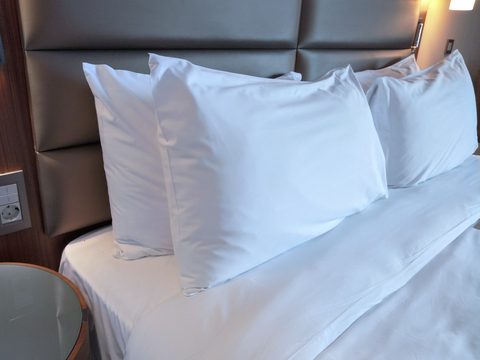
There aren't any ______ in my room. (two soft yellow ones, for your head)
Any needs a plural, so the other two cannot fit anyway.
-
Is there a ______ in your bag? (a white plug with a cable)
The picture decides this one: a plug and a cable.
-
How much are the eggs? They are $2.50.
The third is British money, and the sign says dollars.
-
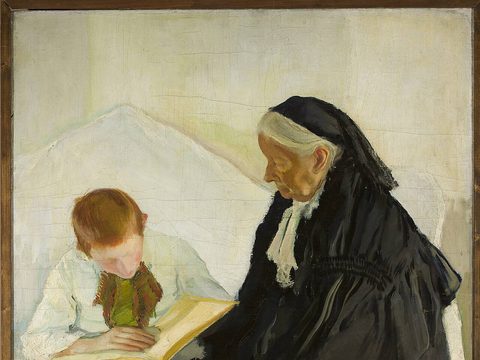
My father's mother is my ______.
One generation further back.
-
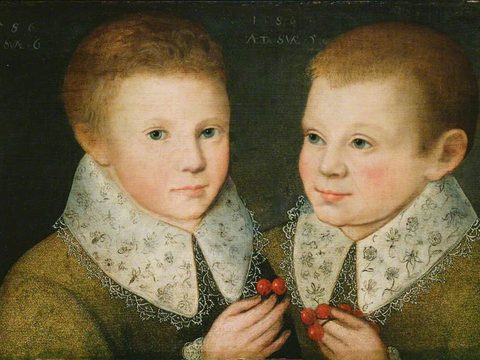
My mother's son is my ______.
Same mother as you, so he is your brother.
-
This dog is ______. (it is looking at a full bowl of food)
Food, not water. Thirsty is for drinking.
-
I usually have ______ and coffee for breakfast. (a loaf of bread and a dish of butter)
The bread in the picture is not toasted.
-
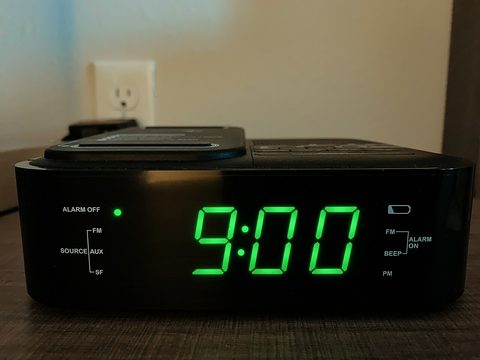
What time is it? (the long hand points to 10, the short hand is just before 2)
The long hand at 10 means fifty minutes, so ten minutes before the hour.
-
My father is ______. (orange hi-vis jacket and a hard hat)
And note an, because engineer starts with a vowel sound.
-
______ is my favorite hobby! (a board with four wheels)
All three are hobbies; only one has wheels.
-
______ the sausages and bacon in a pan.
You make a cake but you cook meat in a pan.
-
On a menu there are appetizers, side dishes and ______.
The other two are the two commonest wrong versions of it.
-
I ______ for 30 minutes every day. (a person running on a gym machine)
And the third one should be lift weights, with an s.
-
You ______ here. (a round red sign with 20 in the middle)
A speed limit does not close the road; it only slows you down.
-
A ______. (a thick knitted top with black and white stripes)
Thick and knitted, with no buttons.
-
It's ______ today. (a cloud with snowflakes falling from it)
White, and falling slowly.
-
She is in the ______. (a small girl standing next to a bed, by a window)
The bed decides it.
-
They were ______ yesterday. (people standing between the seats of a bus)
And it is on a bus, never in one.
The last ten, written out
No options this time. Write the missing word or words yourself.

Typing is harder than choosing, and that is the point. If you can produce these ten with no options in front of you, the vocabulary is really yours.
coffeeA coffee with a lot of hot milk is a ______.
dateThe test is on 22/11. Say the date in words.
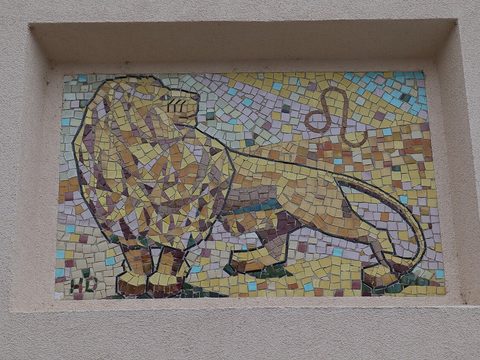
zodiacI was born on August 10th. My zodiac sign is ______.
bookI ______ my flight on the internet.
packWe ______ our bags last night.
haveWe ______ a fantastic party last night.
buyI ______ my daughter's birthday cake at this shop.
meetI'm ______ a friend for lunch tomorrow.
two wordsJulia has ______ with the doctor this afternoon.
buyI'm ______ sunscreen before the trip.
Twenty things you can now say
Tap a card only when you have said it out loud, in a full sentence, with no long pause. This is the real end-of-course test.
Useful language
Who I am, in one page
120–150 words. Introduce yourself completely: your name, where you are from, your family, your job, your routine, one thing you can do well, one thing you did last year, and one thing you are doing next month. This is the piece you keep.

My results
Check your score, then copy it and send it to your teacher on WhatsApp.

Keep the writing from Exercise 11. In a year, write the same paragraph again without looking at the old one, and put them side by side. That comparison will tell you more about your English than any test.