Academy Awards Through the Years
A small golden statue, heavier than most newborn babies, and almost a hundred years of records. You read the story of the Oscars and learn to say who is the youngest, the oldest and the best.
Warm-up
Ask and answer with a partner, or with me. Tap a card when you have answered it.

And the Oscar goes to… Today you read almost a hundred years of Oscar records: the youngest winner, a very long speech, a very short one and a small statue that weighs more than a baby. And you learn how English talks about number one: with superlatives.
Useful language
Words of the big night
Click a word, then click its meaning. Correct pairs turn green. The audio button says the word.
Complete the sentences
Click a word in the bank, then click a gap. Click a filled gap to clear it.

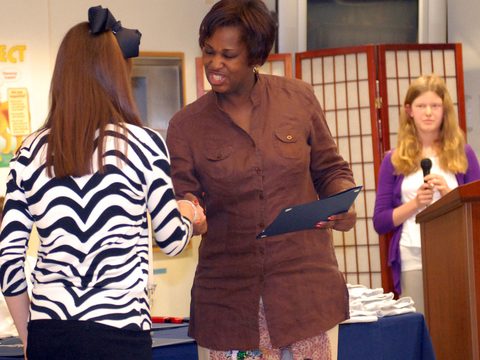 Our school gives an
_____ every year to the student with the best grades.
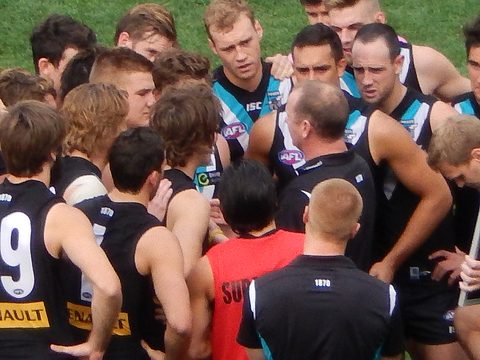 Before the game, the coach gave a short
_____ to the players: "Play together and never give up!"
 At the end of the concert, the band got a ten-minute
_____: the whole audience stood up and clapped.
 Lily is only four. She can drive her toy car, but she is too
_____ to drive a real one.
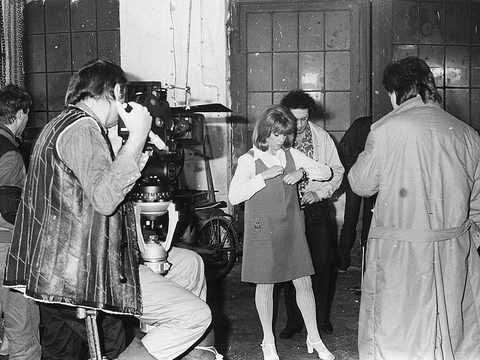 Emma plays a doctor in a TV series, but she isn't a real doctor. She's an
_____.
 The
_____ of the movie tells the actors where to stand and when to start. Everybody listens to her.
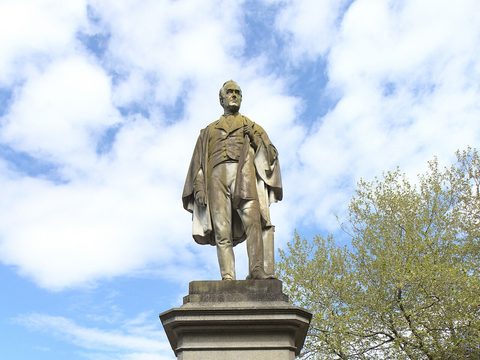 In the middle of the park, there is a big
_____ of the man who started the city. It's made of stone.
 The wedding
_____ was short: the couple said "I do," kissed, and everybody went to the party.
The little golden statue
The story of the Oscars, told from an infographic full of dates and records. The superlatives are in bold. Tap a dotted word to see what it means.
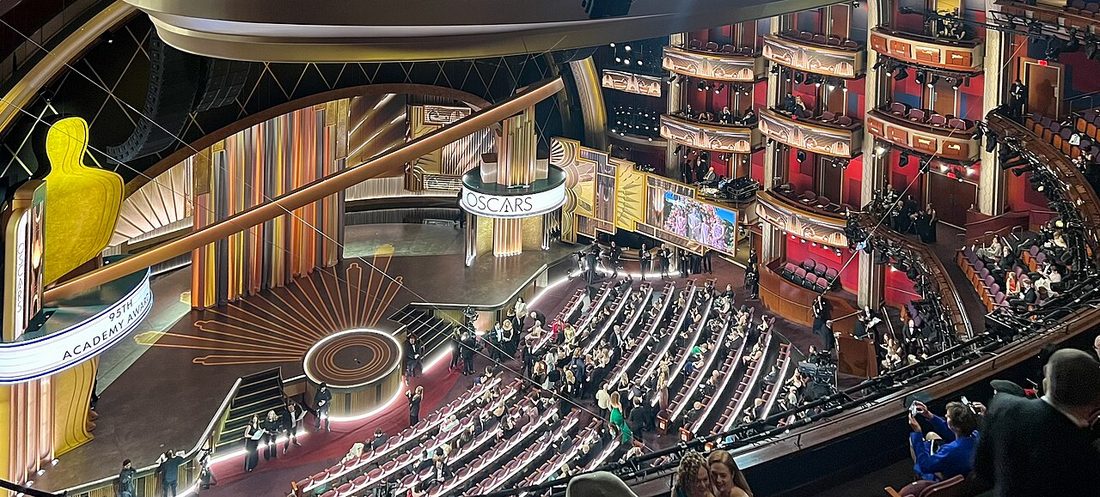
One evening in 1929, movie people in Hollywood met for the first Academy Awards. Each winner got a small golden statue, later called the Oscar.
The statue is small, only 13.5 inches tall, but it weighs 8.5 pounds. That's heavier than a bowling pin or most newborn babies!
Soon everybody in the movies wanted that little statue. Walt Disney won the most in history: 22 Oscars for his cartoons and movies.
Even a child could get one. In 1935, Shirley Temple got a special Oscar at six. She is still the youngest person to receive one.
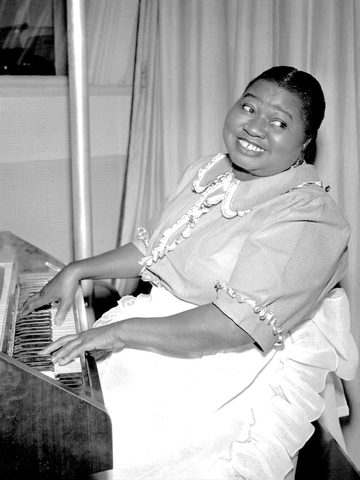
Five years later, the statue made history again: Hattie McDaniel, from Gone with the Wind, became the first Black person to win an Oscar.

Every winner wanted to thank people on stage, and some speeches got very long. In 1943, Greer Garson spoke for about five and a half minutes!
After that speech, the Academy set a time limit for speeches. Ten years later, in 1953, the ceremony was on TV for the first time.
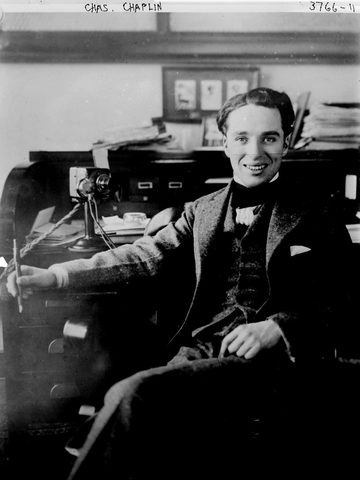
Now people at home saw every moment. In 1968, Alfred Hitchcock only said "Thank you." In 1972, Charlie Chaplin got the longest standing ovation in Oscar history.
The biggest TV audience in Oscar history came in 1998, the year of Titanic. That night, the movie won 11 Oscars, still the record.
But not everybody wins. At 87, Titanic's Gloria Stuart became the oldest actress ever nominated, but she didn't win. Peter O'Toole lost eight times!
Multiple choice
Click an answer and read why.

-
What did each winner get at the first Academy Awards, in 1929?
Each winner got a small golden statue. The name "Oscar" came some years later.
-
What is surprising about the Oscar statue?
Only 13.5 inches tall, but 8.5 pounds: heavier than a bowling pin and heavier than most newborn babies. In Exercise 08 you compare the three.
-
Who won the most Oscars in history?
Twenty-two Oscars for his cartoons and movies, more than any other person. He also got four special Oscars, so he has 26 in total.
-
Why is Shirley Temple special in Oscar history?
She got a special Oscar in February 1935, at six, for her movies of 1934. The youngest means that nobody is younger, and that is still true today.
-
Hattie McDaniel was the first Black person to win an Oscar. Which movie did she win for?
The movie is from 1939. She won five years after Shirley Temple, in 1940, as best supporting actress.
-
Why did the Academy set a time limit for speeches?
In 1943, Greer Garson spoke for about five and a half minutes. After that speech came the time limit. The infographic says it was 45 seconds.
-
What happened in 1953?
Ten years after the time limit. And in 1966, people at home saw the ceremony in color for the first time.
-
What was Alfred Hitchcock's speech in 1968?
He only said "Thank you." It was one of the shortest speeches in Oscar history. He got a special Oscar for all his work, not for one movie.
-
What did the audience do for Charlie Chaplin in 1972?
That is a standing ovation, and his was the longest in Oscar history. He got a special Oscar and came back to the United States after twenty years away.
-
Why was 1998 a special year for the Oscars?
About 55 million people watched it in the United States, more than ever. And that same night, Titanic won 11 Oscars.
-
What do Gloria Stuart and Peter O'Toole have in common?
Gloria Stuart was 87, and she is still the oldest actress ever nominated, but another actress won that night. Peter O'Toole was nominated eight times and never won. (In 2003, the Academy gave him a special Oscar for his whole career.)
-
Which sentence best summarizes the story?
The story goes from one small statue in 1929 to a TV night for millions, with the youngest, the oldest, the longest and the biggest. Disney won 22, not almost all of them, and Disney was not an actor.
Movie words
Part A: put each word in its group. Then say one more word for each group out loud. Part B: match four words from the infographic with their meanings.
-
Gone with the Wind is…
A movie from 1939. Hattie McDaniel won her Oscar for it.
-
awarded is…
To award = to give a prize: The Academy awarded her an Oscar.
-
Titanic is…
The 1997 movie about the famous ship. It won 11 Oscars.
-
director is…
The person who tells the actors what to do. The verb is direct.
-
actor is…
A person who acts. The verb is act.
-
win is…
win – won – won. The person is a winner.
-
actress is…
A woman who acts, like Gloria Stuart or Shirley Temple.
-
supporting actor is…
An actor in a smaller role, not the main character. The Oscars have Best Supporting Actor and Best Supporting Actress.
-
nominated is…
To nominate = to choose someone as one of the few who can win. First the nominations, then the winner.
-
The Lord of the Rings is…
Three fantasy movies. The third one, The Return of the King, won 11 Oscars, like Titanic.
-
recorded is…
To record = to put sound or pictures on a device, or to write down a number: the biggest audience ever recorded.
- Titanic, Ben-Hur and The Lord of the Rings: The Return of the King have the record for the most wins for one movie: 11 each. They are tied.
- The Turning Point and The Color Purple had 11 nominations each and zero wins: the record for snubs for a movie.
- Peter O'Toole has the record for the most snubs for an actor: eight nominations and no wins.
Superlative adjectives

Number one in a group. Short adjectives take -est, long adjectives take the most, and the always comes first: the youngest, the most famous. The infographic is full of them, because every record is a superlative.
- Short adjectives, + -est: small → the smallest · cheap → the cheapest
- Ending in -e, + -st: large → the largest · safe → the safest
- One vowel + one consonant at the end: double the consonant: thin → the thinnest · wet → the wettest
- Ending in -y: y → i, + -est: easy → the easiest · busy → the busiest
- Long adjectives (most with two syllables or more): the most: expensive → the most expensive · popular → the most popular
- Irregular: a few adjectives don't follow these rules: far → the farthest. Two more are very common, and you know one from "my best friend".
- After a superlative: in + a place or a group, of + a number: the smallest country in the world · the cheapest of the three
-
"Shirley Temple is the youngest person to receive an Oscar." Is anybody younger with an Oscar?
The youngest is number one in the group of all winners: nobody is younger. It was true in 2011, and it is still true today.
-
Which ending turns young into a superlative?
young → younger compares two people. young → the youngest is number one in the whole group.
-
sad — which superlative is correct?
One vowel and one consonant at the end (s-a-d), so the d doubles, like thin → the thinnest.
-
funny — which superlative is correct?
Funny ends in -y: the y becomes i, then -est.
-
interesting — which superlative is correct?
A long adjective (in-ter-est-ing), so the most. The more is not a superlative.
-
Which sentence is correct?
Tall is short, so -est, with the in front. And a class is a group: in her class.
Inside the infographic
Read the box about the original text and its numbers. Then answer: some questions are about the text, and some are about inches, feet and pounds.
- The facts in the story come from "Academy Awards Through the Years", a big blue picture published on the news website NJ.com in February 2011. It has a timeline of dates, rows of small statues with numbers, and a part called "About Oscar" that compares three things:
- The Oscar statue: 13.5 inches tall · 8.5 pounds
- A bowling pin: 15 inches tall · 3.5 pounds
- An average newborn baby: 20 inches long · 7 pounds
- Inches, feet and pounds: people in the United States use them every day. 1 inch = 2.54 cm · 1 foot = 12 inches = about 30 cm · 1 pound = about 0.45 kg · 1 kg = about 2.2 pounds.
-
What type of text is the original?
An infographic shows information with pictures, numbers and very short texts: dates on a timeline, statues in rows, a statue next to a baby.
-
What is the purpose of the original text?
It gives many facts, fast: dates, records and numbers. It sells nothing, and it gives no instructions.
-
Of the three, which is the tallest?
20 inches, more than the pin (15) and the statue (13.5). The statue is the shortest of the three.
-
Of the three, which is the heaviest?
8.5 pounds, more than the baby (7) and the pin (3.5). Small, but heavy!
-
Of the three, which is the lightest?
Only 3.5 pounds. The pin is taller than the statue, but much lighter.
-
The statue is 13.5 inches tall. In centimeters, that's about…
13.5 × 2.54 = 34.3. Hold your hand about 34 cm over the table: that is an Oscar.
-
A person is 1.60 m tall. In feet and inches, that's about…
160 cm ÷ 2.54 = 63 inches, and 63 inches = 5 feet (60 inches) + 3 inches. Americans write it 5'3".
-
A suitcase weighs 23 kg. In pounds, that's about…
23 × 2.2 = 50.6. That's why many airlines have a limit of 23 kg, or 50 pounds, for a checked bag.
Write the superlative
Use the adjective on the left. Write the and the superlative: one, two or three words.

-
fastThe cheetah can run up to 70 miles an hour. It's ___ animal on land.
-
niceOur neighbor helps everybody and always smiles. She's ___ person on our street.
-
bigWe have parties in the living room because it's ___ room in the apartment.
-
happyMy wedding day was ___ day of my life.
-
beautifulFor me, this beach is ___ place in Brazil.
-
famousEverybody in the country knows her songs. She's ___ singer we have.
-
goodThis place has ___ pizza in town. There's always a line at the door.
-
badIt rained all week and I lost my wallet. It was ___ vacation of my life.
Class superlatives
Let's do a survey! Find out who in your class has each "award". In a one-to-one class, choose people from your family or your work. Then hold a mini Oscar ceremony: give each award with a short speech — the time limit is 45 seconds! You can invent more categories too.
Useful language
And the Oscar goes to…
Part A is about the story. Part B is about you: answer with one more detail. Part C is for your opinions. Use a superlative when you can. Tap a card when you have answered it.

Useful language
My own awards
40–70 words. Hold your own awards night. Choose five winners — movies, series, actors, songs or people you know — and write one sentence with a superlative for each, and a reason. Example: The funniest series I know is…, because…
My results
Check your score, then copy it and send it to your teacher on WhatsApp.

One job for this week. Every day, give one award out loud, in English: the best coffee, the longest meeting, the funniest video, the worst traffic. One superlative a day, and by Friday they come out without thinking.