Packing a Suitcase
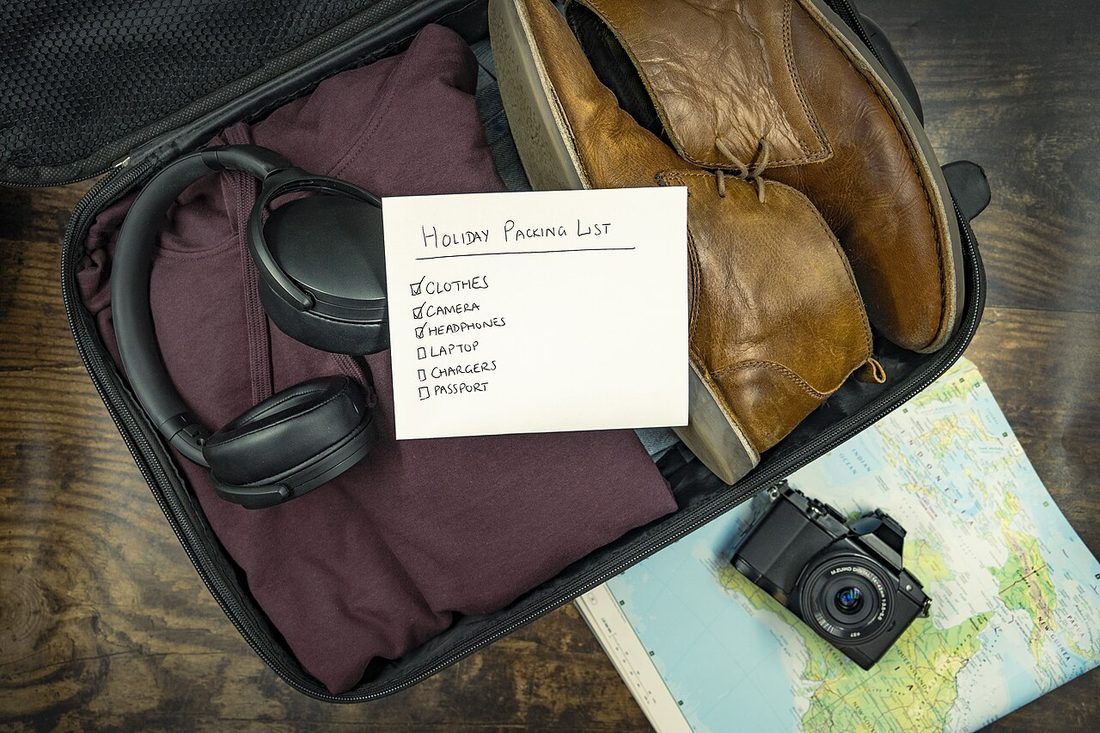
A flight tomorrow morning, a mountain of clothes on the bed, and fifteen tips to make it all fit. Plus the small sentences that say what is in the suitcase and what isn't: there is, there are, some and any.
Warm-up
Ask and answer with a partner, or with me. Tap a card when you have answered it.

Open suitcase, closed suitcase. Today you learn what goes in, in which order, and how to say what is inside it: there is, there are, some and any.
Useful language
Packing helpers
Eight small things that make a suitcase better. Click a word, then click its meaning. Correct pairs turn green. The audio button says the word.
Complete the sentences
Click a word in the bank, then click a gap. Click a filled gap to clear it. Read the whole sentence first: it tells you which word fits.

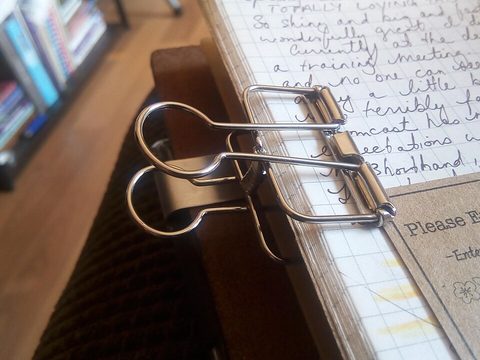 These twenty pages are all loose. Put a
_____ on them, so they stay together.
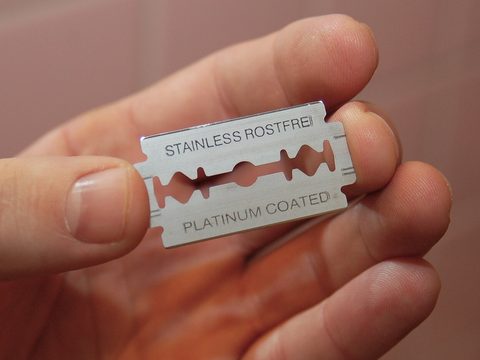 Be careful with that
_____: it is very sharp, and it can cut your finger.
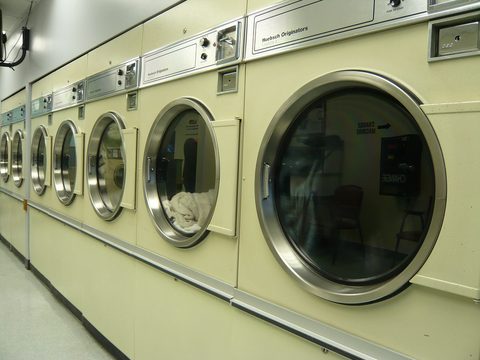 The clothes are clean now. Put them in the dryer with a
_____, and they come out soft and smelling nice.
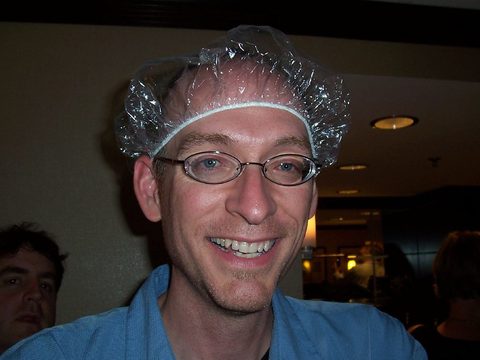 I don't want to wash my hair tonight, so I'm wearing a
_____ in the shower.
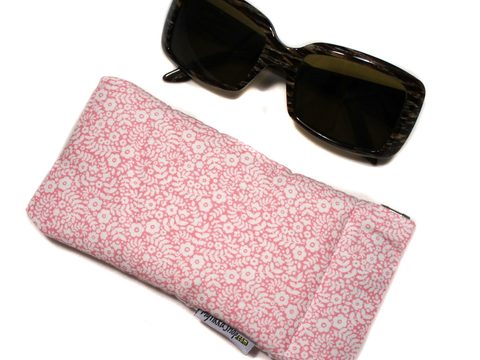 There is only room for one pair of glasses in this small
_____.
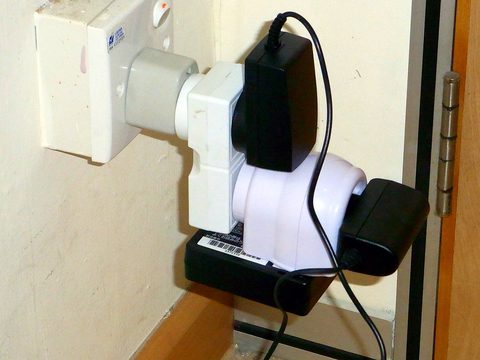 The wall outlets in this country are different, so my charger doesn't fit without the right
_____.
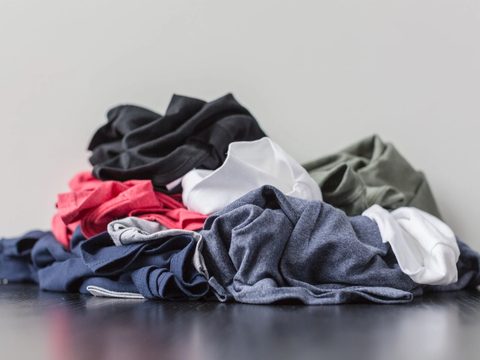 There is no
_____ left, so I can't wash my dirty clothes today.
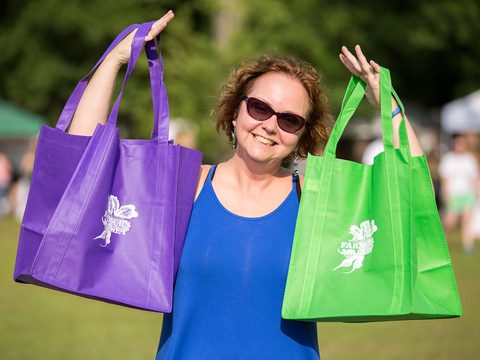 At the farmers' market, she puts the fruit and the vegetables in her cloth
_____, not in plastic bags.
The suitcase that doesn't close
Fifteen packing tips from a Business Insider infographic, told as the story of one night of packing. Read only the first sentence of each paragraph first: they tell the whole story. Then read everything. The words from Exercise 02 are in bold. Tap a dotted word to see what it means.
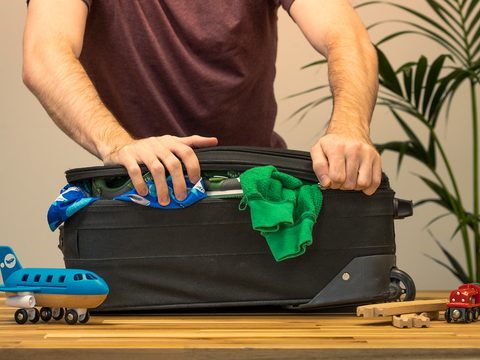
It's the night before your flight. Your suitcase is open on the bed, next to a mountain of clothes, shoes and bottles.
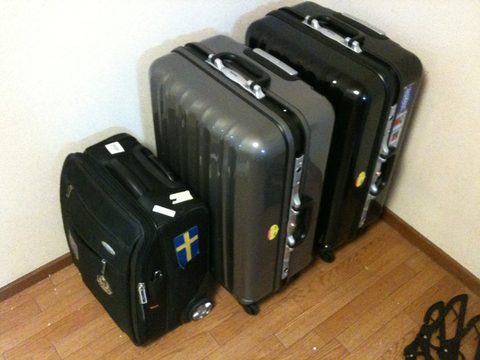
You push everything in, but the suitcase doesn't close. So you find a packing infographic online. One tip is for next time: a lightweight suitcase.
So everything comes out, and you start at the bottom, with the shoes. They go foot-to-toe: this saves space and keeps the suitcase balanced.
But the soles are dirty from the street, so each shoe gets a shower cap. Rolled-up socks go inside, so the shoes keep their shape.
Now the clothes can go on top, rolled up and safe from the dirt. Air-compression bags squeeze the air out of them.
Suddenly there is space, but not for more clothes. Pick wrinkle-free ones in similar colors, to mix and match. A rolled-up belt inside a collar keeps it stiff.
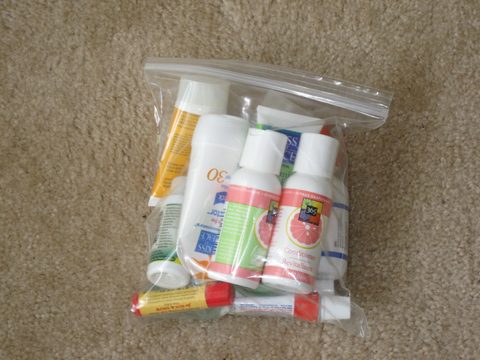
Your toiletries can spill on those clean clothes. So big bottles stay home: you buy shampoo when you arrive. Travel-sized ones go in one bag inside another.
Your toiletry bag has a razor blade too, and your hand goes in without looking. So a binder clip covers the blade, and nobody gets nicked.
All that saved space leaves a corner for chargers and cables. A glasses case keeps them neat. Going abroad? Add a universal adapter.
The last space is for later, when clothes get dirty: empty tote bags, packets of laundry detergent and a dryer sheet against odors. The suitcase closes!
Multiple choice
Click an answer and read why.

-
What is the problem at the start of the story?
You push everything in, and it doesn't close. So everything comes out again, and the packing starts one more time, this time with a plan.
-
Which tip is for next time?
You can't buy a new suitcase tonight. A heavy suitcase is heavy before you pack a single thing, so the infographic says: buy a lightweight one.
-
Why do the shoes go foot-to-toe at the bottom?
Foot-to-toe: one shoe points one way and the other shoe points the other way. The pair takes less space, and the weight is the same on both sides. And the shoes are not clean at all: their soles are the next problem.
-
Why does each shoe get a shower cap?
A shower cap is a plastic hat for the shower, but here it covers the sole, the bottom of the shoe. The dirt stays inside the cap, away from your clean clothes.
-
Why do rolled-up socks go inside the shoes?
Clean socks or dirty socks is not the point. The socks fill the empty shoes, so the shoes don't get flat under all the clothes.
-
What do the air-compression bags do?
The bags are for the rolled-up clothes, not for the toiletries: the bottles go in one normal bag inside another. With no air inside, the clothes take very little room.
-
Why pick clothes in similar colors?
With similar colors, every top goes with every pair of pants, so a few pieces make many outfits. The infographic also says: pack light clothes that you can wear one on top of the other.
-
What happens to the big bottles?
Big bottles are heavy, and they can spill. The small ones that travel are travel-sized: three ounces or less, about 90 milliliters.
-
Why does a binder clip go over the razor blade?
To get nicked is to get a very small cut, by accident. The binder clip, the metal clip for papers, covers the sharp blade, and it protects the blade too.
-
Where do the chargers and cables go?
A hard glasses case keeps the cables neat and easy to find. For a trip abroad, the infographic says a universal adapter with many plugs is best.
-
What goes in the last space?
All three are for dirty clothes. Empty tote bags carry the dirty laundry, and the souvenirs too. Small packets, not a big bottle, let you wash clothes on the trip. And the dryer sheet stops the clean clothes from taking the smell of the dirty ones.
-
The best title for this story would be:
The story is about packing, not buying, and there is no backpack in it. It starts with a suitcase that doesn't close and ends with one that does, thanks to fifteen tips.
Which bag is it?
Six bags from the warm-up. Read the description of each drawing and choose its name.
-
A flat, hard purple bag with one handle and a small gold lock, for papers and a laptop.
A briefcase is the office bag: flat, hard, and often with a lock, for documents and a computer.
-
A big green case with a handle and travel stickers all over it: a sun, a plane, a heart.
The stickers say it all: this case travels. A suitcase is the big case you check in at the airport.
-
An orange bag with two straps that go over your shoulders, so you carry it on your back.
Back + pack: you pack it and you carry it on your back. Two straps, one for each shoulder.
-
A small yellow bag on a belt with a buckle. You wear it around your waist.
A fanny pack is the small bag on a belt, around your waist. Very popular with tourists, because your hands are free.
-
A simple pink cloth bag with two long handles and the words "eco friendly" printed on it.
A tote bag is open at the top, made of cloth, with two long handles. In the reading, empty tote bags carry the dirty laundry home.
-
A brown leather bag with two short handles and metal rings, the kind you carry on your arm.
In American English, a purse is the bag a woman carries with her wallet, keys and phone. In British English, a purse is only the small wallet.
Words from the infographic
Questions 1–4 describe four photos: choose the word for each one. Questions 5–8 ask for a word in the text with the same meaning. Look back at the reading if you need to.

-
Photo 1: a blue shirt full of lines and folds, with a big X over it. The X says the clothes you want are…
A wrinkle is a line or fold in the cloth. Wrinkle-free clothes come out of the suitcase without them.
-
Photo 2: the bottom part of a black boot, the part that touches the ground.
The sole is the bottom of a shoe, the dirty part. That is where the shower cap goes.
-
Photo 3: two hands turn a piece of green clothing into a tight tube, next to other tubes of colored cloth.
Fold makes a flat square; roll up makes a tube. The infographic says roll, and then the air-compression bag squeezes the air out.
-
Photo 4: four pairs of socks, red, yellow, green and blue, each pair in a small ball.
Rolled-up socks go inside the shoes to keep their shape. The rolled-up belt goes inside a shirt collar.
-
Which word in the text means clean and organized?
"A glasses case keeps them neat": neat is clean and in order. A neat suitcase is the opposite of a mess.
-
Which word in the text means smells, usually bad ones?
"A dryer sheet against odors": an odor is a smell, and the word usually goes with bad smells, like the smell of dirty clothes.
-
Which word in the text means cut a little, by accident?
"Nobody gets nicked": a nick is a very small cut, the kind a razor blade makes when your hand goes into the bag without looking.
-
Which word in the text means hard, not easy to bend?
"A rolled-up belt inside a collar keeps it stiff": a stiff collar stands up and doesn't bend. The belt inside does that job.
What goes where?
Things we usually pack. Choose the category for each one. Then say two more words for each category out loud.
-
toothpaste
Toothpaste is for your teeth: self-care. It goes in the small bag with the shampoo and the razor.
-
pants
Pants are clothes, and so are jeans. The word is always plural, like jeans: a pair of pants. British English says trousers.
-
flip-flops
Flip-flops are the open rubber shoes for the beach. Shoes, sneakers, high heels and flip-flops all go in the same category.
-
necklace
A necklace goes around your neck. Jewelry, belts and sunglasses are accessories: extras that go with the clothes.
-
passport
A passport is not electronic, but it is in the "other" group with the credit cards. And it is the most important thing in the suitcase.
-
shower gel
Shower gel is liquid soap for the shower: a toiletry, and one of the bottles that need to be travel-sized.
-
high heels
High heels are shoes with a tall heel. They go foot-to-toe at the bottom, like all the other shoes.
-
belt
A belt is an accessory: you don't need it to be dressed, but it goes with the clothes. Rolled up inside a collar, it has a second job.
-
credit cards
Credit cards go with the passport in the "other" group: small, flat and very important.
-
cables
Cables and chargers are electronics. In the reading, they travel neat inside a glasses case.
There is, there are + a, an, some, any

Look at the noun that comes next. One thing: there is and a or an. More than one: there are with some, or with any in a negative or a question. In a question the verb be goes first, and you never need do or does.
- One thing: there is (there's) / there isn't + a / an: There's a toothbrush in the small bag. · There isn't an umbrella.
- More than one: there are / there aren't + some / any: There are some T-shirts. · There aren't any towels.
- Questions: the verb be goes first, with no do or does: Is there a hair dryer in the room? · Are there any tickets in the envelope? · What is there in your suitcase?
- Some or any? Some in positive sentences. Any in negatives and questions.
- Short answers: Yes, there is. / No, there isn't. · Yes, there are. / No, there aren't.
Choose the correct words. Look at the noun, and look at the end of the sentence: a period or a question mark?
-
___ a passport in the front pocket?
A question with a question mark, and a passport is one thing: Is there.
-
___ any flip-flops in your bag?
Flip-flops is plural, and it is a question, so be goes first: Are there. The word any is a clue too.
-
There aren't ___ sunglasses in the case.
A negative with a plural noun: aren't any. Some is for positive sentences.
-
There's ___ ID card in the wallet.
One card, and ID starts with a vowel sound: an ID card.
-
___ some jeans and a jacket on the bed.
A statement, not a question. In a list, the first thing decides: jeans is plural, so There are.
-
There isn't ___ comb in the toiletry bag.
One comb, and c is a consonant: a comb. Any goes with plural nouns.
-
Is there ___ necklace in the small box?
A question, but the noun is singular: one necklace. Any is for plural nouns, so here a is the word.
-
Which sentence is correct?
A positive sentence takes some, and sweaters is plural, so the verb is are.
-
"Are there any credit cards in the wallet?" Which short answer is correct?
The answer repeats there and the verb of the question: Are there…? Yes, there are.
-
Which question is correct?
No do: the verb be makes the question alone, and it goes in front of there.
What is there in the suitcase?
Write the whole sentence with there is or there are. Use a or an with one thing, some in positive sentences and any in negatives and questions. Example: white sock, positive → There is a white sock.
-
negativeblue shirts
-
questionshower caps
-
negativebottle of shampoo
-
positivechargers and cables
-
positiverazor blade
-
questionadapter
-
negativepair of sneakers
-
negativesouvenirs
Guess my suitcase
Student A chooses a destination and secretly packs a suitcase: eight things on a piece of paper. Student B asks where A is going, then tries to guess what is in the suitcase. First write B's questions. Example: a hat? → Is there a hat?

-
awhere / you / going?
-
ba swimsuit?
-
chiking boots?
-
da winter coat?
-
ean English dictionary?
-
fgloves?
-
ga camera?
Your suitcase, your rules
Part A is about the tips. Part B is about you. Part C is for your opinions. Tap a card when you have talked about it.
Useful language
My suitcase for my next trip
40–70 words. Say where you are going, then describe your suitcase: three things there are, two things there aren't, and one question for me about my suitcase. Example: There are some flip-flops, but there isn't a jacket.

My results
Check your score, then copy it and send it to your teacher on WhatsApp.

One job for this week. Open your closet, or your bag, and say five sentences out loud: three with there is or there are, two with there isn't or there aren't. Thirty seconds, in English.