Pizza Facts
From Naples to the whole world: more than five billion pizzas a year, one pizza with gold on top, and the two small words you need at the pizzeria — how many slices, how much cheese.
Warm-up
Ask and answer with a partner, or with me. Tap a card when you have answered it.

Everybody has a pizza opinion. Thin or thick, with your hands or with a knife and fork, pineapple or no pineapple. Today you say yours, you read how pizza traveled from Italy to the whole world, and you learn two small words for the pizzeria: many and much.
Useful language
Pizza toppings
A topping is what goes on top of the pizza. Click a topping, then click its meaning. Correct pairs turn green. The audio button says the word.
Complete the sentences
Click a topping in the bank, then click a gap. Click a filled gap to clear it. Read the whole sentence: the clues tell you which topping it is.

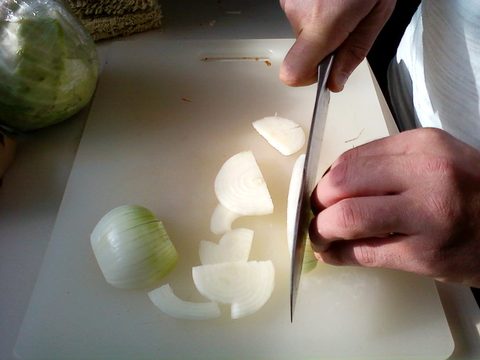 Every time I cut an
_____, my eyes start to water, and I cry like a baby.
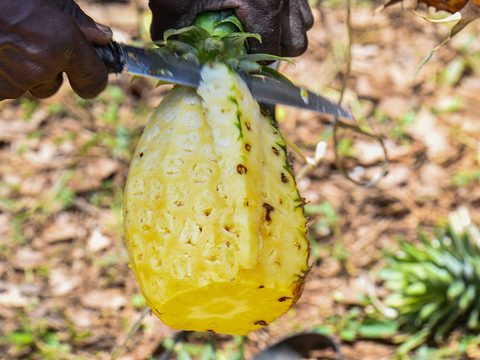 The kids wanted fresh juice, so I cut a big
_____ into pieces and put the sweet yellow pieces in the blender.
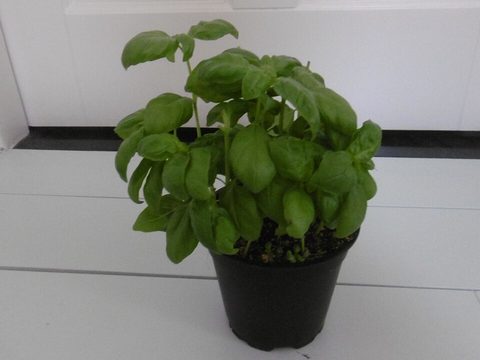 My neighbor grows
_____ in a pot by her kitchen window, and she puts the fresh leaves on her tomato salad.
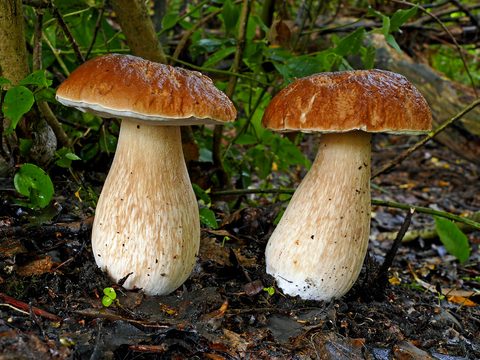 We found a
_____ under a tree after the rain, but we didn't eat it: some of them can make you very sick.
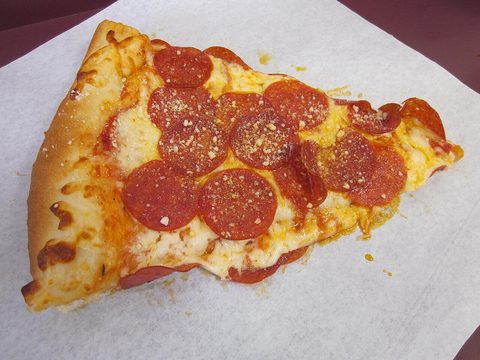 My little brother hates spicy sausage, so he takes every slice of
_____ off his pizza.
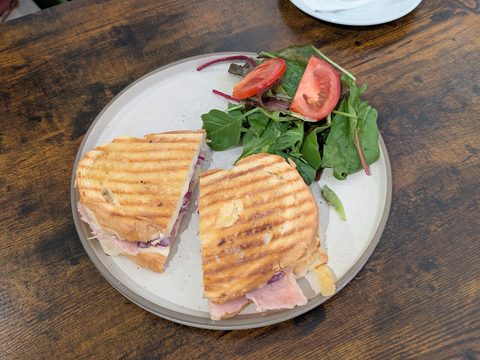 For breakfast, Dad makes a
_____ and cheese sandwich with two thin pink slices of meat.
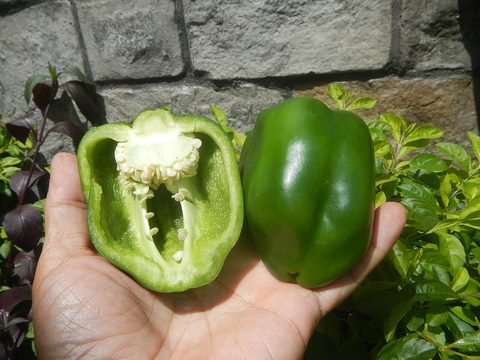 Cut the
_____ in half, take out the small white seeds, and slice it into long green strips.
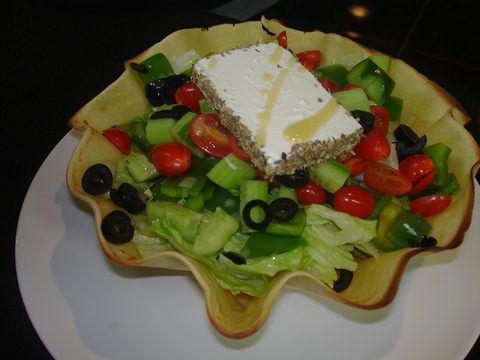 Be careful with the
_____ in your salad: some of those little dark ones still have a hard pit inside.
From Naples to the world
The facts come from an infographic, a poster of pizza facts made by a pizza restaurant from Chicago. Read only the first sentence of each paragraph first: they tell the whole story. Then read everything. Many and much are in bold. Tap a dotted word to see what it means.
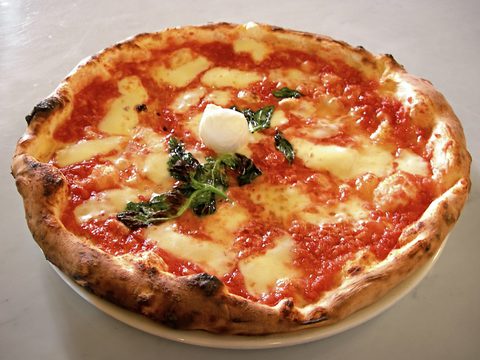
Most people say pizza was born in Naples, in Italy, but some say the ancient Greeks made it first. Later, pizza crossed the ocean to America.
The first American cities to sell it were on the East Coast: New York, Boston, New Haven and Trenton. From there, pizza spread across the country.
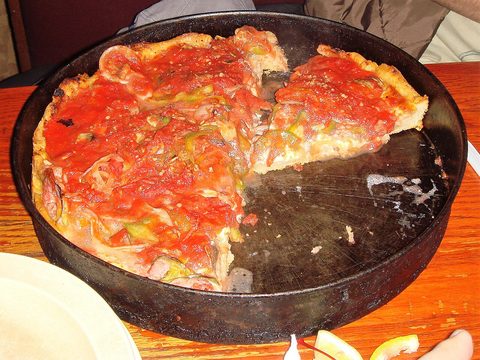
In Chicago, cooks gave pizza a new shape. The first deep dish pizzas appeared there in 1943: thick, tall and baked in a deep pan.
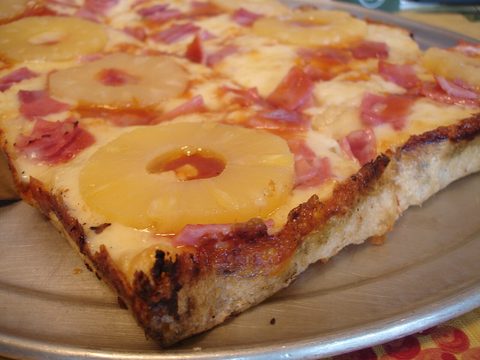
New ideas came from other countries, too. In 1962, a Greek man with a pizza place in Canada put ham and pineapple on a pizza: the Hawaiian.
Pizza kept traveling, and many countries added their own toppings. In Japan, two popular ones are squid and "mayo jaga": mayonnaise, potatoes and bacon.
So today, pizza is a world food. People buy more than five billion pizzas a year, and Americans eat about 350 slices every second.
Most Americans want meat on their pizza, and for many people, pizza is a habit. 62% prefer meat toppings, and 40% eat pizza at least once a week.
But not everybody wants meat. The other 38% prefer veggie toppings, like mushrooms, onions and peppers, and women choose veggie pizza twice as often as men.
Meat or veggie, almost every pizza has cheese. Mozzarella is about 80% of all the Italian cheese made in the US.
With so much pizza in the world, some pizzas broke records. The most expensive one cost $2,745, with gold, lobster and caviar on top.
Multiple choice
Twelve questions about the story. Click an answer and read why.

-
Was New York one of the first American cities to sell pizza?
Yes: the first four were all on the East Coast. So the sentence "New York was not one of the first cities to sell pizza" is false. Chicago came later.
-
What happened in Chicago in 1943?
Thick, tall and baked in a deep pan. Chicago didn't invent pizza: it gave pizza a new shape. So the deep dish was really created in Chicago.
-
When was the Hawaiian pizza invented?
In 1962, almost twenty years after the first deep dish pizzas in Chicago.
-
Who invented the Hawaiian pizza?
The name says Hawaii, but the pizza was born in Canada, and the man came from Greece. Three countries, one pizza: ham and pineapple.
-
Which one is a popular pizza topping in Japan?
Squid, and also "mayo jaga": mayonnaise, potatoes and bacon. Ham and pineapple are on the Hawaiian pizza, from Canada.
-
How many pizzas do people buy around the world every year?
More than five billion pizzas every year. The number 350 is about slices: Americans eat about 350 slices every second.
-
How often do 40% of Americans eat pizza?
At least once a week, so the sentence "Americans eat pizza every day" is false for most people. But all together, Americans eat pizza all the time: 350 slices every second!
-
What do most Americans prefer on their pizza?
62% prefer meat, 38% prefer vegetables. And one meat is everywhere: Americans eat about 252 million pounds of pepperoni a year, about 0.8 pounds per person (one pound is about 450 grams).
-
Who chooses veggie pizza more often?
Women choose it twice as often as men: two times more. The text says nothing about children.
-
Which cheese is about 80% of all the Italian cheese made in the US?
Mozzarella, the soft white cheese of the Margherita pizza. So parmesan, also an Italian cheese, can't be the number one Italian cheese made in the US.
-
How much did the most expensive pizza cost?
$2,745, with gold, lobster and caviar on top. And the biggest pizza in the world? It weighed 51,257 pounds and was 131 feet across: longer than a big truck.
-
Which sentence best summarizes the story?
From Naples to the East Coast, Chicago, Canada and Japan, and today more than five billion pizzas a year. Pizza is everywhere, not only in the US.
Which pizza? Which crust?
Four famous pizzas and four kinds of crust. The crust is the bread part of the pizza. Read the description, choose the name and read why.
-
Ham and pineapple. Which pizza is it?
The pizza from the reading: born in Canada in 1962, with a name from Hawaii.
-
Fresh mozzarella, tomatoes and basil. Which pizza is it?
Red tomatoes, white mozzarella and green basil: the colors of the Italian flag.
-
Green peppers, mushrooms, eggplant and onions. Which pizza is it?
Only vegetables, no meat. Veggie is short for vegetable.
-
Chicken and barbecue sauce. Which pizza is it?
BBQ is short for barbecue. The sauce is sweet and smoky.
-
A very thin, crispy crust, cut into small squares, not triangles. Which crust is it?
The name says it: square cut. The pieces are small, so it's good for a party.
-
The edge of the crust has cheese inside it. Which crust is it?
Stuffed means full of something inside. Here, the edge is full of cheese.
-
A thick, soft crust baked in a pan with oil, so the bottom gets crispy. Which crust is it?
The pan gives the name. The oil makes the bottom crispy, and the middle stays soft.
-
A very tall pizza, baked in a deep, round pan, with a lot of cheese and sauce. Which crust is it?
The Chicago pizza from the reading, first made in 1943. A pan pizza is thick too, but a deep dish is much taller.
Much and many

One question decides it: can I count it? One onion, two onions: many. Ham, water, time: no plural, so much. And for prices, How much works alone: How much is it?
- many + plural countable noun: How many tomatoes do you need? · That girl has many cousins.
- much + uncountable noun: How much juice would you like? · I don't have much time.
- How much for prices: no noun after it. How much does it cost?
- In questions and negatives, much and many are very common. In positive sentences, people usually say a lot of: She has a lot of cousins. Much alone sounds strange there, but so much and too much are fine: I have so much work!
- Some nouns are both: We ordered two pizzas (two round pizzas: countable) · Do you want some pizza? (a part of one: uncountable). Slices are always countable.
-
Which one is countable?
One mushroom, two mushrooms. Garlic and ham have no plural: you say some garlic, a slice of ham.
-
Which one is uncountable?
You can count the leaves, but not the basil: some basil, a leaf of basil. Onions and olives have a plural.
-
How ___ slices of pizza can you eat?
Look at the noun right after the gap: slices. One slice, two slices: countable, so many.
-
How ___ milk do you put in your coffee?
Milk has no plural: you can't say
two milks. Uncountable, so much. -
There aren't ___ olives on my half of the pizza!
Olives is a plural countable noun, and the sentence is negative: not many.
-
"How ___ is the large pizza?" "Twenty dollars."
The answer is a price. How much asks about money, with no noun after it.
-
Which sentence is WRONG?
One olive, two olives: countable. It has to be How many olives.
-
Which sentence sounds the most natural?
Work is uncountable, so never many. And much alone in a positive sentence sounds strange: say a lot of, or so much.
Write much or many
One word in each gap. Look at the noun after the gap first: can you count it?
-
aHow ___ onions do you need?
-
bHow ___ ham should I buy?
-
cHow ___ brothers and sisters do you have?
-
dThere aren't ___ stores in my town.
-
eDo you get ___ homework?
-
fHe doesn't have ___ books.
-
gHow ___ pieces of candy are there in the bag?
-
hHow ___ water would you like?
-
iI have so ___ work to do!
-
jLet's go! We don't have ___ time.
Ask the question
Read the answer, then write the question with How much or How many and the words on the left. Check the tense in the answer.

-
mushrooms / you / want___? — Ten, please. I love them!
-
garlic / we / need___? — Just a little. It's very strong.
-
slices / you / eat___ last night? — Four. I was really hungry!
-
the large pizza / cost___? — Twenty dollars.
-
cheese / there / be___ in the fridge? — Not much. We need to buy some.
-
pizzas / we / need___ for the party? — Three. There are eight of us.
At the pizzeria
Part A is about the story, Part B is about you, and Part C asks for your opinion. Use much, many and a lot of in your answers. Tap a card when you have answered it.
Useful language
My perfect pizza
40–70 words. Describe the perfect pizza you planned in Exercise 10: the crust, the sauce, the cheese, the toppings, and one thing you never want on it. Use much and many at least once each.

My results
Check your score, then copy it and send it to your teacher on WhatsApp.

One job for this week. The next time you order or eat pizza, say it in English, in your head or out loud: How many slices? How much cheese? No onions, please. Then ask one friend the six questions from Exercise 09.