





A2 COURSE · CLASS 16

What's Your Personality Type?

A new coworker who says almost nothing, a friend who thinks he is rude, and a quiz video that shows the real person. Twenty words for personality, and one small question: be or do?

A2 60–70 min Focus: be or do · personality adjectives Home
EXERCISE 01Speaking

Warm-up

Answer in full sentences. Tap a card when you have answered it.

Teacher Alvaro

Think of three words that describe you. Funny? Quiet? Patient? Today you learn twenty words for personality, and you learn when to ask Are you…? and when to ask Do you…?

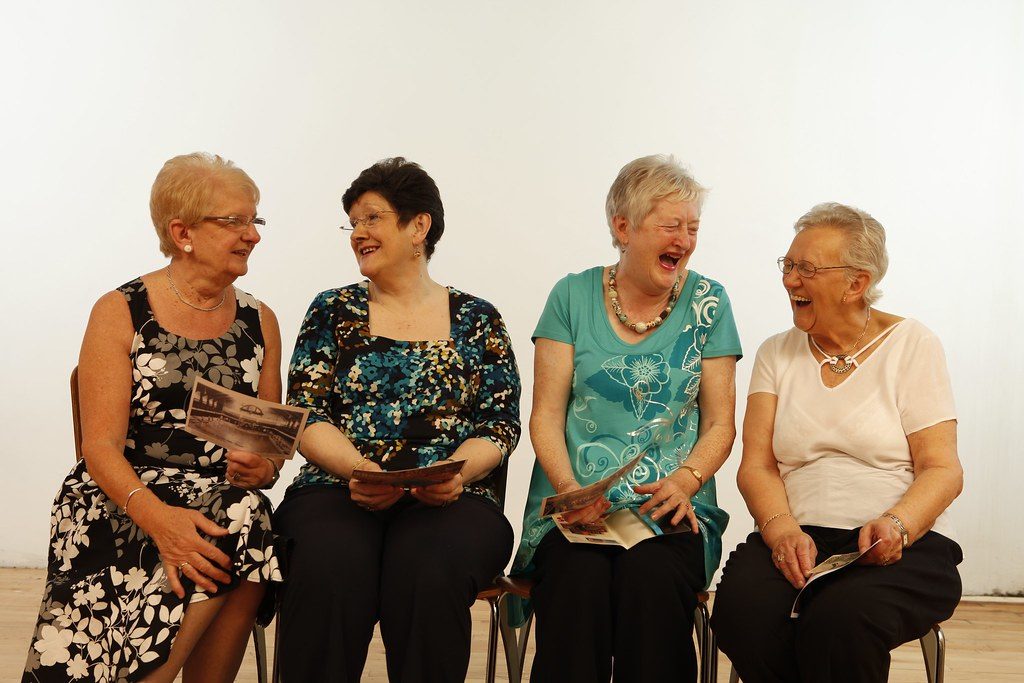
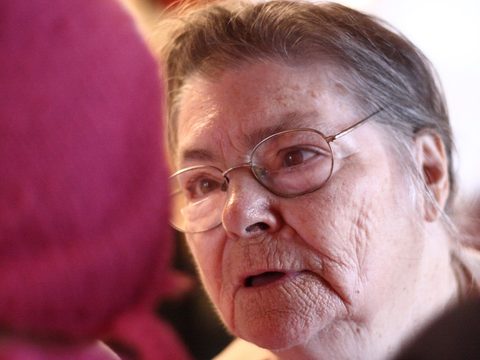
Four older women sit in a row on chairs, laughing and talking together
Useful language
I'm quite / very / really …My friends say I'm … At work I'm …, but at home I'm …I think I'm a little … I'm like my mom because …
0 / 0
EXERCISE 02Vocabulary

Personality adjectives

Click a word, then click its meaning. Correct pairs turn green. The audio button says the word.

Word
Meaning
EXERCISE 03Vocabulary in context

Complete the sentences

Click a word in the bank, then click a gap. Click a filled gap to clear it. These are words to talk about people and what they do.

Teacher Alvaro
  • Lucio loves _____ all the time. He says funny things, and everybody laughs.
  • My family and I have a _____ for the future: a new house in five years.
  • Miriam tells funny stories to _____ her friends when they are sad.
  • I love my children, and I _____ them every night before they go to sleep.
  • My grandmother always listens to me and gives me good _____.
  • Douglas is so _____! Everybody in the restaurant can hear him.
  • The teachers at my school are really _____. They help us in a calm, soft way.
  • My son is very _____. He hides behind the door when visitors come to our house.
EXERCISE 04Listening & reading

The new coworker

First do the quiz in the video with your class: you have ten seconds for each question, so keep your points. Then read the story of three coworkers who do the same quiz. The eight words from Exercise 02 are in bold. Tap a dotted word to see what it means.

It is Monday morning, and Anna is waiting at the office door for Ben, the new coworker. Anna is friendly, funny and patient with everyone.

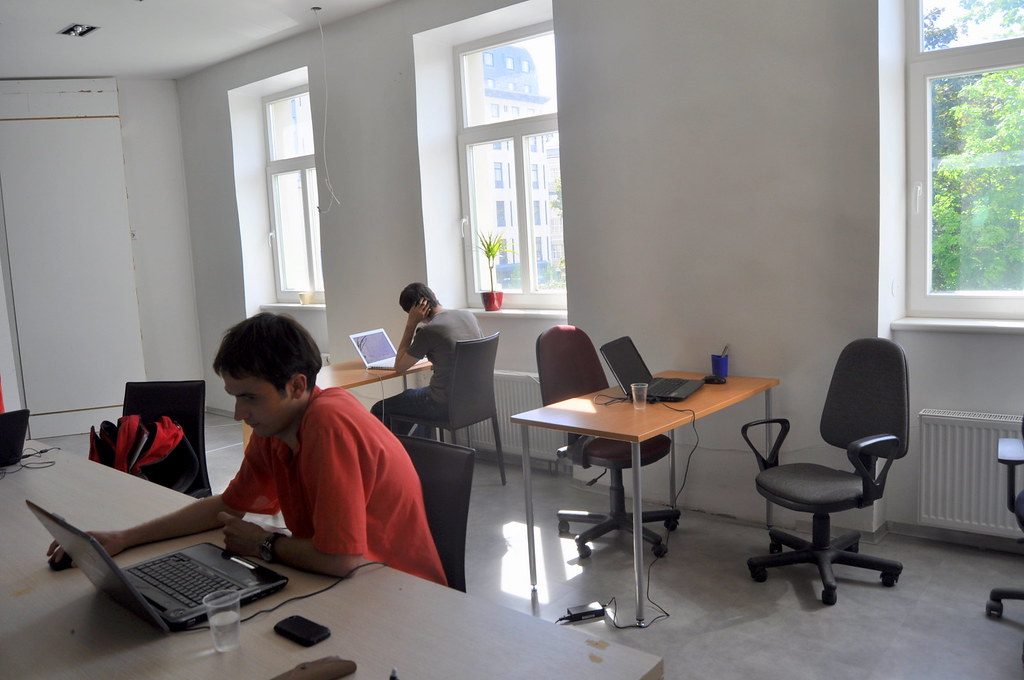
A young man in a red T-shirt works on his laptop in a quiet, bright office, and another man works at a desk behind him
Monday morning at the office
Three coworkers sit around a table with a laptop, and one man talks and moves his hand
The quiz after lunch
Two young men in black T-shirts laugh together at a table with laptops
Ben laughs for the first time

Ben arrives at nine. Anna says hello with a big smile, but Ben only says a quiet "hi" and starts working right away.

All morning, Ben works hard and doesn't talk to anyone. He is hard-working, but he isn't very confident with new people.

Mark, Anna's friend, sits next to Ben and waits for a "good morning." Mark is quiet and a little shy, so he doesn't say it first.

At lunch, Mark tells Anna, "I don't think Ben is polite." Anna says Mark is wrong: for her, Ben is mature and optimistic, just a little nervous.

Anna and Mark sometimes disagree, but they always try to work well together. So Anna looks for a fun way to show Mark the real Ben.

After lunch, she plays a personality quiz video. The three of them pick a word, a color and a room, with ten seconds for each answer.

Ben gets ten points, and the video says he is mature, kind-hearted and considerate. Anna gets seventeen: funny and positive, of course.

Mark is surprised, because "mature" is Anna's word from lunch. Ben laughs for the first time and explains: it's his first job, so he's nervous.

Now Mark understands: Ben isn't rude. He is shy, like Mark. The next morning, Mark says "good morning" first, and Ben says it back.

EXERCISE 05Comprehension

Multiple choice

Click an answer and you get the result right away, with the reason. The stamp shows the second of the video where the answer is.

Teacher Alvaro
  • Why is Anna at the office door on Monday morning?

    Ben starts today. Anna is friendly and patient with everyone, so she is the person who says hello to new people.

  • What does Ben do after his quiet "hi"?

    No coffee, no break, no small talk: he sits down and works, and he doesn't stop all morning.

  • All morning, Ben works and doesn't stop. What kind of worker is he?

    He is hard-working. But he isn't very confident with new people, so he works and says nothing.

  • Mark sits next to Ben. What is Mark waiting for?

    Mark is quiet and a little shy, so he doesn't say it first. And Ben doesn't say it either.

  • At lunch, what does Mark tell Anna?

    No "good morning," so Mark decides Ben is rude. But remember: Mark doesn't say "good morning" either!

  • What does Anna think about Ben?

    She says Mark is wrong. For her, Ben is only a little nervous on his first day.

  • Why does Anna play the quiz video?

    She and Mark sometimes disagree, but they always try to work well together. A fun quiz is a way to know Ben better.

  • How long do you have for each question in the quiz? 00:05

    The video says "You have 10 seconds to choose your answer." So you don't think too much: you pick fast.

  • What do they pick in the quiz? 00:52

    "Pick a word" comes at 00:52, "Pick a color" at 02:08 and "Pick a room" at 02:27. There are also "Which one are you?", a sad friend, a beautiful place, an activity and a face: eight questions in total.

  • Ben gets ten points. What does the video say about his type? 02:48

    From 8 to 11 points, the video says "mature, good temper, kind-hearted and considerate." Funny and adventurous is Anna's type (16 to 19). Ambitious and confident is 20 to 24.

  • Ben laughs and explains. Why is he so quiet?

    He isn't rude. He is shy with new people, just like Mark.

  • What is the story's final message?

    Mark thinks Ben is rude, but Ben is only shy, like Mark. So the next morning, Mark says "good morning" first, and Ben says it back.

EXERCISE 06Vocabulary

Write the opposite

Choose from: lazy · quiet · immature · pessimistic · impatient · serious · insecure · unfriendly · mean. Example: polite → rude.

  • apatient

  • bkind-hearted

  • cfriendly

  • dloud

  • eoptimistic

  • ffunny

  • gconfident

  • hmature

  • ihard-working

EXERCISE 07Vocabulary

What are they like?

Read about the person and write one personality adjective. The first letter is given. The words are in Exercises 02 and 06.

Teacher Alvaro
  • aTom thinks everything is going wrong on our vacation. He is so p___.

  • bIn a restaurant, Paul says, "Excuse me, please. Could I have the check?" He is very p___.

  • cLily is thirty, but she gets upset about small things, like a child. She is i___.

  • dJulia speaks in front of the whole team without fear. She feels very c___ in meetings.

  • eIt's r___ to talk in a loud voice on your cell phone in a quiet place.

  • fMy neighbor never says "hello" and never talks to people. She is really u___.

  • gA student says, "I don't understand this exercise." The teacher explains it again, and again, and again, and she never gets upset. She is very p___.

  • hLeo always gets angry when he has to wait in line. He's i___.

  • iIt's ten o'clock at night, and Sam is still writing his report. He is really h___-w___.

  • jVictor never shares his things, and he often says bad things to people. He can be really m___.

  • kPaulo tells jokes all the time, but his brother is more s___ and doesn't laugh much.

  • lYour cousin always shares his lunch with friends who forget their food. He is so k___-h___.

EXERCISE 08Grammar practice

How much do you know about personality types?

A short article about four personality types. Guess before you learn the rule: write one word in each gap, a form of be (is, are, isn't, aren't) or of do (do, does, don't, doesn't).

  • FriendlyFriendly people like talking. Lisa ___ friendly. She always says hello to everyone.

  • Friendly"___ friendly people easy to talk to?"

  • Friendly"Yes, they are. Friendly people ___ ignore others."

  • Hard-workingHard-working people ___ lazy. They work a lot and try their best.

  • Hard-working"My brother is hard-working. He ___ his homework every day."

  • Hard-working"___ he often take breaks?"

  • Hard-working"No, he ___ take long breaks, because he likes finishing his work."

  • OptimisticOptimistic people believe that good things happen. "___ optimistic people think negatively?"

  • SeriousSerious people ___ smile a lot.

  • Serious"My teacher ___ serious. She likes us to work in silence."

  • Serious"___ she serious all the time?"

  • Serious"No, she ___ serious all the time. Sometimes she tells funny stories."

EXERCISE 09Grammar point

Be or do?

Teacher Alvaro

Look at the word after the gap. An adjective, a noun, a place or an -ing verb? You need be. A verb like like, live or work? You need do or does. Never the two together: not don't is, not is help.

Be and do both make questions and negatives, but with different words after them.
  • Be as the main verb, before an adjective, a noun or a place: Hi, I'm Anna. · He isn't very patient. · Are they optimistic?
  • Be + -ing makes the present continuous: I'm cooking dinner right now. · They aren't studying today. · Is she coming to the party?
  • Questions with be: change the order of be and the subject. She's hard-working. → Is she hard-working?
  • Do / does + verb make questions and negatives in the present simple: Do you like pizza? · Where do they go on vacation? · John doesn't watch TV often.
  • After does and doesn't, no -s on the verb: Where does your brother study?, never Where does your brother studies?
  • Do can also be the main verb: I'm doing the laundry. · Do you do your homework in the morning?
  • ___ you hungry?

    Hungry is an adjective, so be: I'm hungry → Are you hungry? In Portuguese you "have" hunger, but in English you "are" hungry.

  • She ___ like talking to people.

    Like is a normal verb, so the negative needs do. After she, it is doesn't.

  • ___ your brother tall?

    There is no other verb, only the adjective tall. So the question uses be: My brother is tall → Is your brother tall?

  • They ___ know my friends.

    Know is a normal verb, and the subject is they, so don't. Doesn't is only for he, she and it.

  • She ___ smiling in the photo.

    An -ing verb after the gap: that is the present continuous, and it always needs be.

  • My brothers ___ not very talkative, but they are very kind-hearted.

    Talkative is an adjective, and my brothers is plural, so are not, or aren't.

  • Which sentence is WRONG?

    Live is a normal verb, so it needs do: We don't live in a big city.

  • Which sentence is correct?

    The first do makes the question and the second one is the main verb. The others should be Do you like going to the gym…? and Does she speak Portuguese…?

EXERCISE 10Writing practice

Write the sentences

Write the full sentence. Add am, is, are, do or does, and not where you see it. Example: He / often / patient → He is often patient.

  • aShe / always / optimistic.

  • bThey / never / homework.

  • cWhy / he / so serious?

  • dI / doing / the dishes / right now.

  • eWe / not / mean.

  • fWhat / he / do / at work?

  • gMy sister / not / very patient.

  • hWho / she / talking / to?

  • iThey / usually / quiet.

  • jWhy / she / like / this jacket?

EXERCISE 11Writing practice

Find and correct the mistakes

Most sentences have one mistake with be or do. Write the correct sentence. If a sentence is already right, write OK.

Teacher Alvaro
  • aDoes she optimistic about the trip?

  • bThey don't rude, but they're very quiet.

  • cMaria is help her brother now.

  • dDo you know my friend Jamie?

  • eMy brother don't is very impatient.

  • fWhere does she going now?

  • gHe isn't work on Saturdays.

  • hAre you like serious people?

EXERCISE 12Writing & speaking

Is, are or do?

Choose the word for each question. Then ask a partner the questions, and answer them too.

  • What ___ your favorite month of the year?

    Your favorite month is one thing, and there is no other verb: is.

  • When ___ you normally see your friends?

    See is a normal verb in the present simple, so the question needs do.

  • What TV series ___ you watching at the moment?

    Watching and at the moment: present continuous, so be. With you, that is are.

  • How many brothers and sisters ___ you have?

    Have is a normal verb, so do. Never How many brothers are you have?

  • When ___ your birthday?

    Only your birthday after the gap, no verb: My birthday is in May → When is your birthday?

  • What ___ you think people in your family are doing right now?

    The question is about think, a normal verb, so do. The are doing at the end is a second verb, and it already has its be.

  • What ___ your favorite color?

    One color, and no other verb: is.

  • How often ___ you stressed?

    Stressed is an adjective, like tired or hungry, so be: I'm stressed → Are you stressed?

  • ___ you learning another language, not only English?

    Learning is an -ing verb, so be. The question is about now, not about every day.

  • Which question is correct?

    Live needs do, and your parents is plural, so do, not does.

EXERCISE 13Speaking

People and personalities

Answer in full sentences, with a personality adjective in every answer. Use be and do: She isn't lazy. She doesn't stop working.

Teacher Alvaro

A · Anna, Mark and Ben

B · You and the people around you

C · What do you think?

Useful language
I think he's … because he …She isn't …, she's just … I agree with Anna.My score is … points. It depends on the person.
EXERCISE 14Writing

A person I know well

40–70 words. Describe a person you know well with three personality adjectives, and give an example for each one. Use at least one negative with be and one with do. Example: My sister is very patient. She doesn't get angry when I'm late, and she isn't loud.

0 words
ENDEnd of lesson

My results

Check your score, then copy it and send it to your teacher on WhatsApp.

Teacher Alvaro

One job for this week. Choose three people you see every day. For each one, say two sentences, one with be and one with do: My boss is very patient. He doesn't get angry. Six sentences, one minute, every day.