Women in Space
Jerrie Cobb was a great pilot, and her test results were as good as any astronaut's. So why wasn't she on a rocket? The women who helped people leave the Earth, the words for their jobs, and two small verbs for the past: was and were.
Warm-up
How much do you know about space? Do the quiz first — if you don't know, guess.

They were fantastic, and most people don't know their names. Today: women who were pilots, scientists and astronauts — and the two words you need to tell their stories, was and were.
-
In 1961, Yuri Gagarin was the first man to…
He went around the Earth once and came back. The first steps on the moon were eight years later.
-
In 1969, the first man to walk on the moon was…
Buzz Aldrin was second, about twenty minutes after him. Michael Collins was the third man on Apollo 11: he stayed in the spaceship and never walked on the moon.
Now talk. Tap a card when you have answered it.
Useful language
Who does what?
Click a job, then click its meaning. Correct pairs turn green. The audio button says the word.
Complete the sentences
Click a word in the bank, then click a gap. Click a filled gap to clear it.

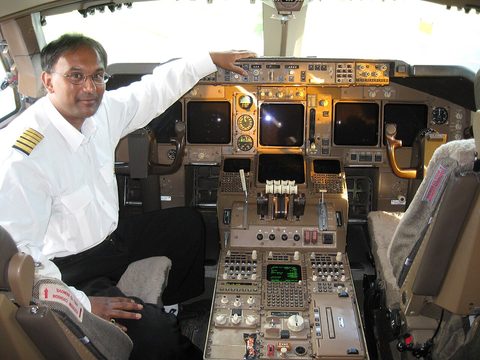 My grandfather was a
_____ for thirty years. He flew planes all over the world.
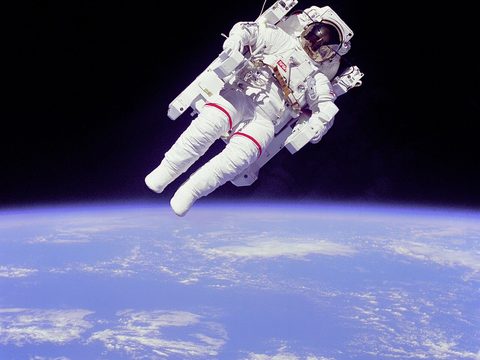 My neighbor was an
_____. For six months, she was in space, high above the Earth.
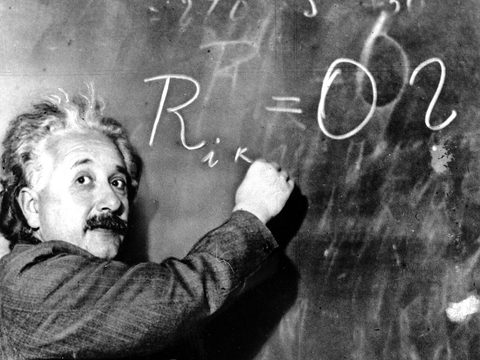 Albert Einstein was a
_____. He studied light, energy and time.
 Numbers and patterns were my aunt's whole life. She was a
_____ at a big university.
 My cousin was a
_____ for ten years. Her lab was full of chemicals, and she mixed them to make new medicines.
 Thomas Edison was a famous
_____. The light bulb was one of his ideas.
 Malala Yousafzai is an
_____. She fights for girls' right to go to school.
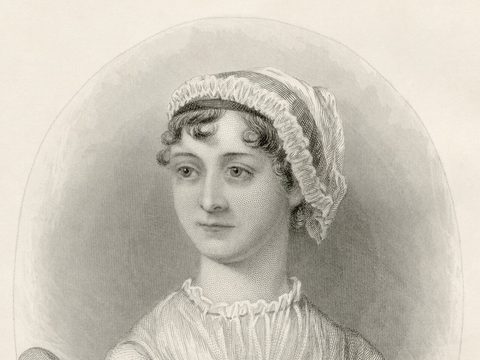 Jane Austen was a
_____. Her books were about love, family and society.
The pilot who never flew to space
Watch the whole video first, with English captions — about four minutes. It is a short history of women in space. Then read one story from it, Jerrie Cobb's (02:20 to 03:46). The two words in bold come from Exercise 02. Tap a dotted word to see what it means.
Jerrie Cobb was an American pilot, and a very good one. She was in the air for more than 7,000 hours and had a world record.
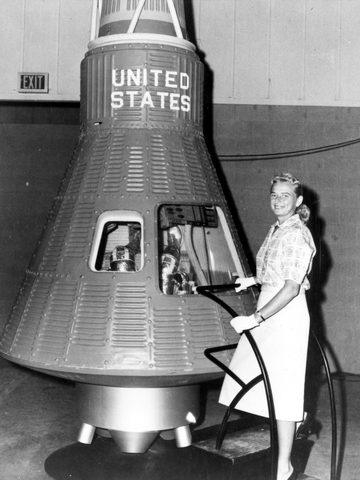
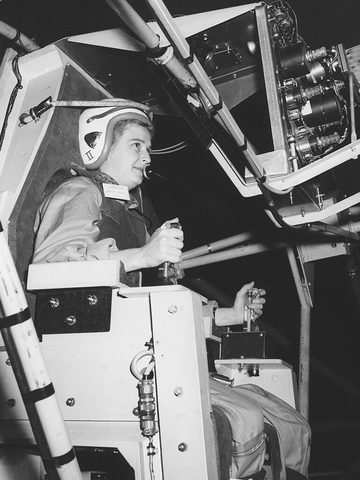
In 1959, there was a new job for great pilots: astronaut. More than 500 pilots wanted to be NASA's first astronauts, and they were all men.
NASA's tests were very difficult, and in the end NASA chose only seven men. They were the famous Mercury 7, and later all of them flew in space.
At the same time, a private program, not NASA, invited a group of women pilots to take the same tests. Jerrie was one of them.
The tests were hard for the women too, but thirteen of them passed. They were all excellent pilots, and some were even better than the men.
Jerrie was one of the thirteen, and she was fantastic. In one test, she was in an isolation tank longer than anybody before her, man or woman.
Her results were clear: she was as qualified as any NASA astronaut. She was ready for space, and she wasn't the only one.
But NASA had a rule: astronauts had to be military jet test pilots, and at that time women weren't allowed in Air Force schools.
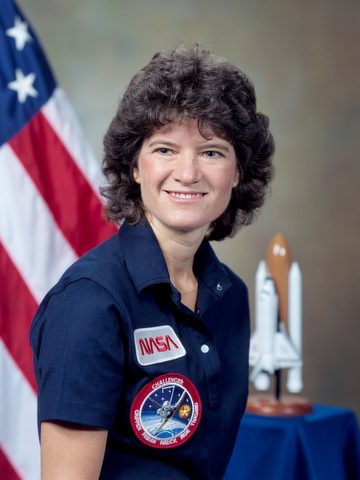
So Jerrie never went to space, and the first American woman in space, Sally Ride, flew more than twenty years later.
After Sally Ride, many more women flew. In one new NASA class, half of the astronauts were women, and they could be the first people on Mars.
Multiple choice
Click an answer and you get the result right away, with the reason.

-
What was Jerrie Cobb's job?
And a very good one: more than 7,000 hours in the air, and a world record for distance flying.
-
In 1959, how many pilots wanted to be NASA's first astronauts?
The video calls them "America's most elite pilots" — the best in the country. And they were all men.
-
How many men did NASA choose?
Seven men, the Mercury 7. Thirteen is a different group: the women, in paragraph 5.
-
Who invited the women pilots to take the tests?
Not NASA: the money came from outside the government. But the tests were the same as the men's, so the results were easy to compare.
-
How did the women do in the tests?
People called them the Mercury 13 — a name like the Mercury 7.
-
Which record did Jerrie break in the tests?
A record for men and women: nobody before her was in the tank for so long.
-
What did Jerrie's results show?
She was ready for space — and the text says she wasn't the only one.
-
What was NASA's rule for its astronauts?
Jerrie was a great pilot, but she wasn't a military jet test pilot.
-
Why was that rule a problem for Jerrie?
No Air Force school, no military jet test pilot — so for a woman, the door was closed.
-
Who was the first American woman in space?
She flew more than twenty years after Jerrie's tests. Valentina Tereshkova was the first woman of all, in 1963, but she was from the Soviet Union.
-
What was different in one new NASA class?
Four of the eight. They came from more than 6,000 people who wanted the job, and they could be the first people on Mars.
-
What is the main idea of Jerrie's story?
Her results were as good as the astronauts'. The problem was never Jerrie — it was the rule.
Women in space
Watch again, in two parts. First 00:00 to 01:07: click a woman, then click her fact. Then watch until 02:20 and answer the questions. The stamp shows the second where you hear the answer.
A · Match each woman to a fact (00:00 to 01:07)
B · Answer the questions (00:52 to 02:20)
-
In 2015, the news called Tim Peake "the first British astronaut". What was wrong? 00:52
Helen Sharman flew years before him. The video says that many newspapers and TV channels "seemed to forget" her.
-
When the video was made, in 2017, how many women were in space in total? 01:04
Fifty-nine women from 1963 to 2017. The number is bigger today.
-
The video says that ___ women helped people travel to space. 01:11
"An enormous amount of women." The video even says that maybe the trip to the moon was only possible because of them.
-
In the late 1800s, many women at the Harvard Observatory worked as… 01:21
Before electronic computers, "computer" was a job: a person who did the calculations. These women made important discoveries about the stars.
-
Many of them were university graduates. How was their pay? 01:48
Less than an office clerk's, and their names weren't famous either: they got very little recognition for their work.
-
What was Margaret Hamilton's job on the Apollo project? 01:51
The video calls her the "lead flight software developer": the boss of the programs in the spaceship's computer.
-
Her work saved the Apollo 11 mission when… 01:55
The video says that Neil Armstrong's steps on the moon were possible because of Hamilton and her team.
-
Katherine Johnson was a physicist and a… 02:06
The video says she "is" one. She died in 2020, at 101, so today we say was.
-
What did NASA ask Katherine Johnson to do? 02:14
Her numbers were so accurate that NASA trusted her more than its machines. She calculated the path of Apollo 11 to the moon, too.
Was or were?

Two words, and the person decides. I, he, she and it take was; you, we and they take were. The negative adds n't, and the question puts the verb first. That is the whole past of be.
- Present → past: is → was · are → were · isn't → wasn't · aren't → weren't
- I / he / she / it + was: My first teacher was very patient.
- you / we / they + were: My parents were at work all day.
- Negative: The bus wasn't late. · We weren't at home.
- Questions — the verb goes first: Was Frida an artist? — Yes, she was. · Were you tired? — No, I wasn't.
- With past time words: yesterday, last year, in 1963, when I was a child. And with born: My grandma was born in Japan in 1940.
-
In 1963, Valentina Tereshkova ___ the first woman in space.
In 1963 says past, and she takes was.
-
Ada Lovelace and Charles Babbage ___ important names in the history of computers.
Two people = they, so were. They both lived in the 1800s, before any electronic computer.
-
The contributions of women in science ___ very important.
The subject is the contributions — plural. Science is only the word right before the verb.
-
Few people knew their names, because many women scientists…
Few people knew their names, so they were NOT popular. And scientists is plural: weren't.
-
Malala was born in 1997. When she got the Nobel Peace Prize in 2014, she ___ only 17.
Her age in 2014 is in the past, so was. She was the youngest person to win it.
-
The show started late, because the actors…
A late show means a problem: they were not ready. Actors is plural, so weren't, never wasn't.
-
Which sentence is WRONG?
My brother and I = we, so were: My brother and I were good at chemistry.
-
Which question is correct?
They takes were, and in a question were goes first. Careful: where is a question word, not the verb.
Build the sentence
Add was, were, wasn't or weren't. (+) is affirmative, (−) is negative and (?) is a question. Example: It / cold yesterday (−) → It wasn't cold yesterday.
-
aHe / a famous painter (+)
-
bThey / at the art museum yesterday (−)
-
cShe / your favorite writer (?)
-
dWe / excited about the exhibition (+)
-
eThe students / in the classroom on Monday (−)
-
fYou / at the concert last night (?)
-
gMy grandfather / a talented musician (+)
-
hThe actors / late for the show (−)
Now or then?
Five short conversations. Present or past? Words like today, now, yesterday and this morning decide. One word in each gap: is, are, isn't, was, were…

-
1A: What day ___ it today? — B: Wednesday.
-
1B: Wednesday. Yesterday ___ Tuesday.
-
2A: Hello. Is your mother at home? — B: No, she ___.
-
2B: She ___ here in the morning, but now she's in the office, at work.
-
3A: I can't find my books for my English class. Where ___ they?
-
3B: I don't know. They ___ on your desk in the afternoon.
-
4B: The new teacher? He ___ born in England…
-
4B: …but his parents ___ born in Singapore.
-
5A: Why ___ your mom angry this morning?
-
5B: Because I ___ late for school.
My grandmother's favorite singer
A family story, told by a grandchild. Write was or were in each gap: look at who or what comes before the verb. Then answer five questions about the story.
-
aMy grandmother loved talking about a singer she admired when she ___ young.
-
bHer name was Elena Marquez, and she ___ a very popular artist in the 1960s.
-
cShe was famous for her beautiful voice and for her romantic songs on the radio. Elena was also an actress, and some of her movies ___ very successful.
-
dMy grandmother often said that Elena ___ kind, friendly and very confident on stage.
-
eHer parents ___ teachers, and they always encouraged her to study music.
-
fHer brother and sister ___ musicians too…
-
g…so their house ___ always full of songs and instruments.
-
hFor my grandmother, Elena was more than a star: she was an inspiration. Her dream ___ to meet her one day, but she never had the chance.
-
iStill, her stories about Elena ___ always exciting…
-
j…and they ___ a big part of my childhood.
About the story
-
When was Elena popular?
When the grandmother was young — sixty years ago, more or less.
-
What were Elena's jobs?
Songs on the radio, and some very successful movies. The teachers in the story were her parents.
-
Why was Elena's house always full of songs?
Look for so: "her brother and sister were musicians too, so their house was always full of songs."
-
What was Elena for the grandmother?
"More than a star": somebody she admired and wanted to be like.
-
Did the grandmother meet Elena?
It was her dream, but it never happened. Her stories about Elena stayed in the family.
Jobs from words

You already know most job words. Take a verb and add -er or -or; take a noun and add -ist or -ian. Say the word first, then the ending — and watch the spelling.
- Verb + -er or -or: work → worker · act → actor · direct → director
- Verb that ends in -e: add only -r: drive → driver · manage → manager
- Noun + -ist or -ian: science → scientist · guitar → guitarist · music → musician · library → librarian
- Careful with spelling: some short verbs double the last letter — run → runner, swim → swimmer. And -ism becomes -ist: tourism → tourist.
-
Look at paint, activism and write. Which two are verbs?
You can paint and you can write: painter, writer. Activism is a noun, so its job ends in -ist: activist.
-
Which job is spelled WRONG?
Sing ends in two consonants, n and g, so nothing doubles: singer.
A · Make the job
Use the word in parentheses. Example: She was a truck ___ (drive) → driver
-
paintFrida Kahlo's pictures were colorful and full of feeling. She was a famous ___.
-
politicsBefore she was president, she was a ___ in the city government.
-
inventThe telephone was his idea. He was a great ___.
-
artHer paintings and drawings were in a big museum. She was a real ___.
-
danceHe was a ___ in a famous ballet company.
-
singHer voice was beautiful, and she was a popular ___ on the radio.
-
playMy grandfather was a soccer ___ when he was young.
-
teachOur English ___ was very patient with us.
B · Go back to the word
Now the other way: which word does each job come from? One word.
-
amathematician ← ?
-
bchemist ← ?
-
cphysicist ← ?
-
deducator ← ?
Five short audios
Listen first, without reading. Then answer: a short answer for the yes/no questions (Yes, she was. / No, they weren't.) and a few words for Where…? Open the scripts only at the end, to check.
- Audio 1
- Audio 2
- Audio 3
- Audio 4
- Audio 5
-
1Was his aunt at school on Friday?
-
2Was the artist at the gallery on Saturday?
-
2Where was he?
-
3Was the restaurant busy?
-
3Where was the chef?
-
4Were the musicians at the studio on Monday?
-
4Where were they?
-
5Was the scientist angry yesterday?
Read the scripts
Audio 1. My aunt was at school on Friday. The classrooms were quiet, and the library was open, so she stayed there for a while.
Audio 2. The artist I like wasn't at the gallery on Saturday. The gallery was open, but he was at home.
Audio 3. Last night the restaurant was very busy. The chef was in the kitchen, and the tables were full.
Audio 4. The musicians weren't at the studio on Monday. They were at a radio station. The program was very popular.
Audio 5. The scientist was in her lab yesterday. The experiments were difficult, but she was very calm.
Then and now
Answer in full sentences, with was or were in every answer: I was born in…, They were…, It wasn't fair.

A · Jerrie and the women in the video
B · You, then and now
C · What do you think?
Useful language
My inspiration
50–80 words. Think about a person who inspired you when you were a child: a family member or a famous person. Use was and were. You can use these starts: When I was a child, my inspiration was… · He / She was… · His / Her job was… · He / She was very… (kind, funny, patient) · I was … years old when… · This person was important to me because…
My results
Check your score, then copy it and send it to your teacher on WhatsApp.

One job for this week. Every night, say five sentences about your day with was and were: where you were, who you were with, how it was. I was at work at nine. The traffic was terrible. My friends were in a good mood.