My Vacation Disaster
A German man at a pool, a phone in the sun, and two hotels with the same name. Five real vacation disasters, the past simple of regular verbs, and the three sounds of -ed.
Warm-up
Read the two words first. Then talk, and click a card when you have answered it.

Americans go on vacation. For them, a holiday is a special day, like Thanksgiving. Today you meet five people whose vacation went wrong — and almost every verb in their stories ends in -ed.
- Vacation (American English): time off from work or school, to rest or to travel.
- Holiday (American English): a special day of celebration, like Christmas, Easter or Thanksgiving.
- Holiday (British English): both things — a day of celebration and time off to travel.

Useful language
Vacation words
Click a word, then click its meaning. Correct pairs turn green. The audio button says the word.
Complete the sentences
Click a word in the bank, then click a gap. Click a filled gap to clear it.

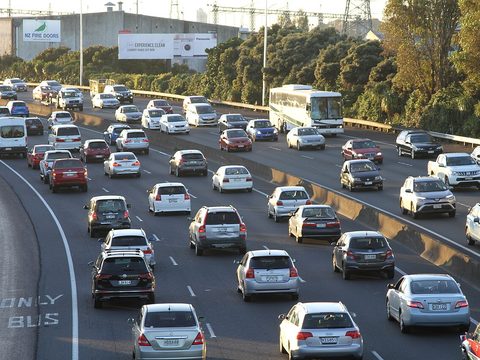 We left early, but there was so much
_____ on the highway that we missed our flight.
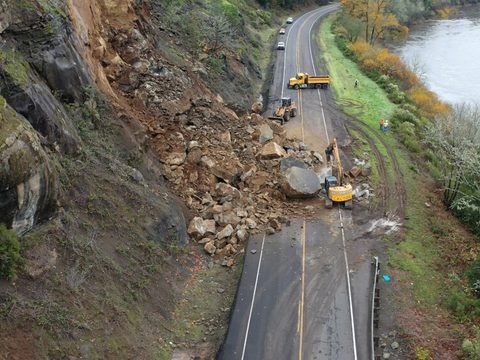 A
_____ pushed rocks and mud down the hill and onto the road, and workers cleaned it up for two days.
 Our hotel room had two soft white
_____ for after the shower.
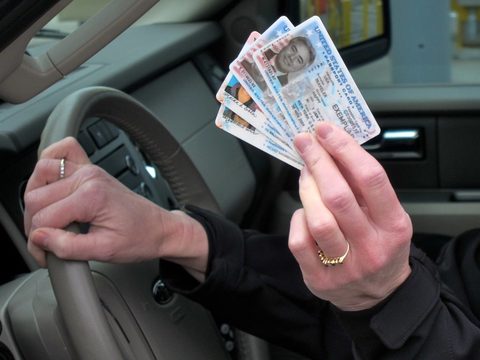 My brother learned to drive, so now he has a
_____ and can drive us to the beach.
 In the Amazon rainforest, colorful
_____ fly over the trees in groups.
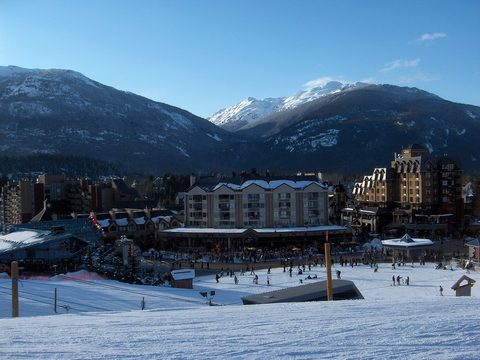 Aspen, in Colorado, is a famous
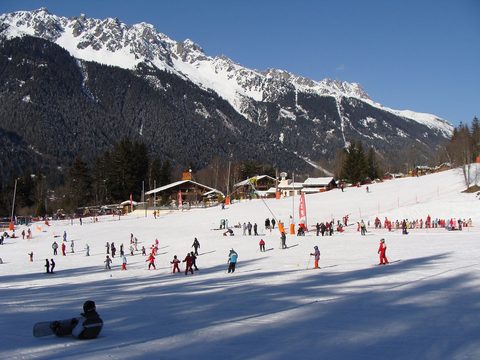
_____, with hotels, restaurants and many slopes.
 This
_____ is for beginners: you can ski down it in two minutes.
 We followed a
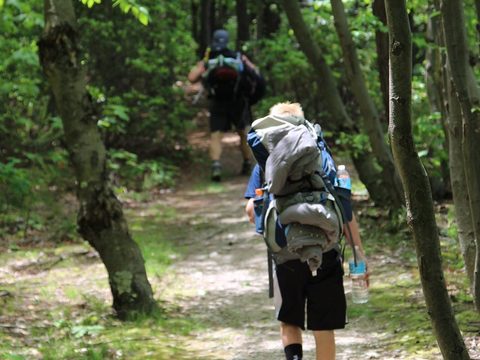
_____ through the forest in our hiking boots.
Two hotels, one name
A true story from a magazine. Read it, or listen one paragraph at a time. Words with a dotted line have a short explanation: click them.
At a hotel pool in Los Angeles, Aoife Dunican asked a German man about ski resorts. He recommended the Hotel Bergblick, in Fiss, Austria.
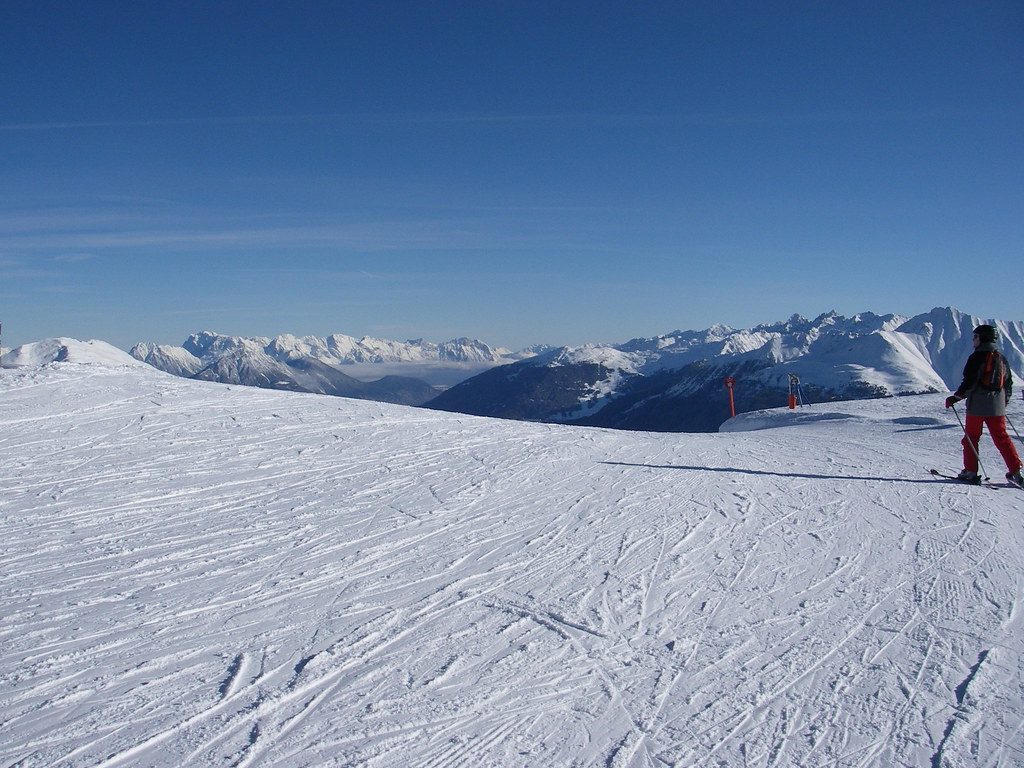
The hotel was “ski in, ski out”, so Aoife booked it on her phone right away. The sun was bright, and she didn't check the address.
In March, Aoife, her husband and their children traveled to Austria. They started the trip on a Wednesday evening, right after work.
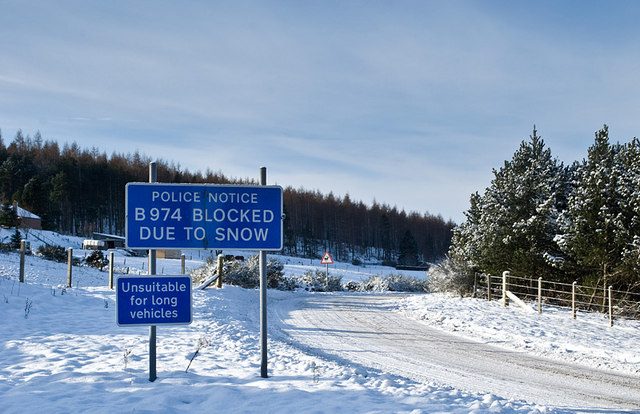
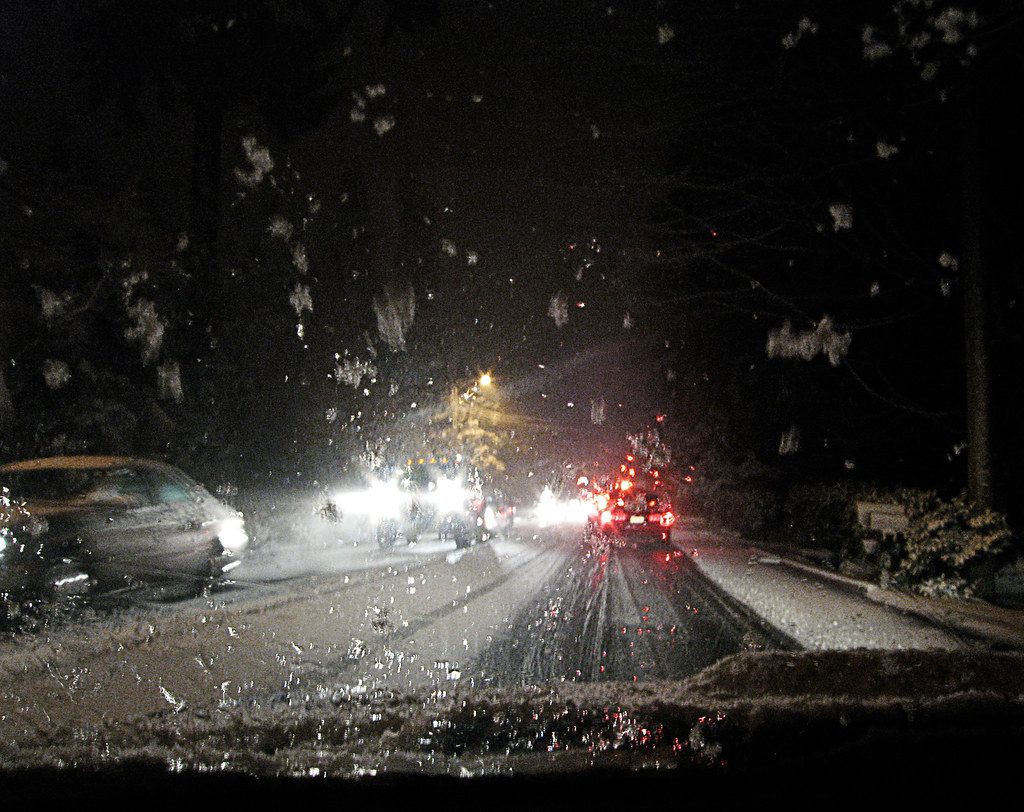
But at midnight, two miles from the hotel, the police stopped their car. The road was blocked, and nobody could pass until the morning.
So Aoife phoned the hotel to explain the delay. The answer was a shock: the hotel had no reservation in her name.
Her husband checked the emails on her phone and discovered the mistake. The booking was for a Hotel Bergblick in a different place: Gran.
Gran wasn't even a ski resort, but their room was there. So the family drove through the night and arrived at three in the morning.
The next morning, Aoife asked about skiing, but the hotel only had hiking trails. The receptionist recommended one ski slope, half an hour away.
So the family skied up and down that one slope all day. The next day, they drove another hour and found one more.
It wasn't the trip Aoife planned. But today her husband has happy memories of it, and he wants to go skiing again.
Multiple choice
Click an answer and you get the result right away, with the reason. The questions follow the story in order.

-
Where did Aoife meet the German man?
At their hotel pool in Los Angeles, in 2017. She asked him for a good ski resort, and he had one ready.
-
What did the German man recommend?
He was German, but the hotel was in Austria: the Hotel Bergblick, in a small village called Fiss.
-
Why didn't Aoife see the problem when she booked?
The sun was on the screen, she booked fast, and she never checked where the hotel was.
-
When did the family start the trip?
Right after work. They flew out that evening and then drove up into the mountains, so they arrived very late.
-
What happened at midnight, two miles from Fiss?
The police stopped them and said: sleep in your car until the morning.
-
What did the hotel in Fiss say on the phone?
The hotel didn't even know who she was — and now the family had no room and no road.
-
Who discovered the real problem?
He asked for her phone and looked at the booking emails.
-
What was the real problem?
Two hotels with the same name, Bergblick, in two different places. The one in Gran was three hours away by car.
-
What time did the family arrive in Gran?
Three hours after the road block. Luckily, the people at the hotel in Gran were very nice.
-
The next morning, what did the receptionist recommend?
The hotel was for hiking: it had a room for hiking boots, not for skis. One slope was the best the receptionist could do.
-
How does Aoife's husband remember the trip today?
A disaster at the time, a good story later. He even asked Aoife about another ski trip.
-
What is the final message of Aoife's story?
The German man's advice was good: Fiss is a real ski resort. The mistake was the booking — the right name in the wrong place.
Four more disasters
Four more people from the same magazine article. Their message: a disaster is not fun at the time, but it makes a great story later. Read, then match each moral to its disaster.
Eva Berg arrived in Costa Rica during Spring Break. Her hotel was one big student party, so she moved to the mountains. There, loud macaws woke her up, and an iguana joined her on her lounge chair every afternoon.
A friend told Emma Kelly to fly, not drive, from New York to Cape Cod with three young kids. But Google Maps said four hours, so they drove. The traffic made it eight hours, and everybody was sick — except her husband.
Sarah Macken booked a lovely hotel on the island of Ischia, in Italy, before the summer season, so the price was great. Then it rained all week, and there were even landslides. The hotel beach was closed, and they sat by the pool in hotel robes to stay warm.
Edel Coffey was too scared to drive on the “wrong” side of the road in Spain, so her boyfriend agreed to drive. But at the car rental desk, his driver's license was expired. So Edel had to drive — and later, the relationship ended.
-
Moral: Always take local advice. Which disaster is it about?
Emma's friend said: fly. Emma listened to Google Maps instead, and the traffic doubled the trip.
-
Moral: Avoid places full of Spring Break students. Which disaster is it about?
Eva dreamed of quiet beaches and found loud music and giant cocktails. The hotel gave her the money back for the rest of the stay.
-
Moral: Find out when summer starts on quiet islands. Which disaster is it about?
Before the season, Ischia was cheap — but also closed: many shops and restaurants didn't open until summer.
-
Moral: When you rent a car, check the driver's license. Which disaster is it about?
Edel's rule was simple: he drives, she doesn't. One old card at the rental desk broke the rule.
-
Why was the price of Sarah's hotel so good?
A lovely hotel at a low price — and a closed beach, rain and card games inside.
-
Why did Edel have to drive?
She was the scared one. Today she drives on the “wrong” side of the road with no problem — in other countries, of course.
The past simple: booked, didn't book, did … book?

One form for everybody. I, you, she and they all use the same verb in the past. The only work is the spelling of -ed — and the little word did in questions and negatives.
- Most verbs + ed: want → wanted · ask → asked
- Verbs that end in e + d: like → liked · close → closed
- Consonant + y → ied: carry → carried · cry → cried
- Vowel + y → just ed: play → played
- Short verbs with one vowel + one consonant → double it: stop → stopped · plan → planned
- American English: two-syllable verbs with the stress at the start don't double — cancel → canceled · visit → visited
- Negative: didn't + the base verb — We didn't want a big hotel. Never
didn't wanted. - Question: Did + person + base verb — Did you close the window? — Yes, I did. / No, I didn't.
-
The German man ___ Gran. He recommended Fiss.
Didn't already shows the past, so the verb goes back to its base form.
-
___ the family arrive in Fiss that night?
A past question with a normal verb (arrive) takes did. And the answer is no: they arrived in Gran.
-
Did the police stop their car? — Yes, they ___.
Short answers repeat the helper from the question: Did …? — Yes, they did.
-
Emma's kids ___ to feel sick after a few hours. (start)
Start ends in two consonants (r + t), so nothing doubles: just + ed.
-
We ___ every minute of the trip. (enjoy)
There is a vowel before the y, so the y stays.
-
Aoife ___ the hotel at night. (phone)
It already ends in e, so you only add d.
-
Which sentence is WRONG?
The past is already in did. Two past forms in one question is one too many.
-
Which sentence is correct?
Rent ends in two consonants, so no double t. And a positive sentence doesn't need did.
Write the past simple
One word in each gap. Most sentences are about the five stories. Look at the end of the verb before you type: + ed, + d, ied or a double letter?
-
dreamFor years, Eva Berg ___ of quiet beaches in Costa Rica.
-
bookAoife ___ the hotel on her phone, in the sun.
-
recommendAt the pool, a German man ___ a hotel in Fiss.
-
stayIt rained all week in Ischia, so Sarah ___ inside a lot.
-
skiThe family ___ on the same slope all day.
-
happenEdel's disaster ___ a long time ago.
-
agreeEdel's boyfriend ___ to do all the driving.
-
imagineThe mountains weren't the beach vacation that Eva ___.
-
travelAoife's family ___ to Austria in March.
-
shopOn the last day, we ___ for souvenirs at the market.
-
worryMy mom ___ about the flight all week.
-
loveIn the end, Emma's family ___ the beaches of Cape Cod.
The three sounds of -ed
Press the audio button, say the verb out loud, then choose the sound of its ending.

- /t/ after a voiceless sound — k, p, s, sh, ch, f: asked · washed · laughed (it ends in an f sound)
- /d/ after a voiced sound — your throat vibrates: l, n, v, g, m and all vowel sounds: called · opened · played
- /ɪd/ after t or d — an extra syllable: want-ed · end-ed
- Careful: only /ɪd/ adds a syllable. Asked is one syllable, not
ask-ed.
-
looked
Look ends in a k sound, and k is voiceless.
-
traveled
It ends in l, a voiced sound. Two syllables — trav-eled — but both come from travel, not from the ending.
-
needed
It ends in d, so you need the extra syllable: need-ed.
-
watched
Ch is voiceless: it sounds like watcht, one syllable.
-
planned
The double n is only spelling. The sound is n, voiced.
-
started
It ends in t: start-ed, two syllables.
-
helped
P is voiceless: put your hand on your throat — nothing moves.
-
cleaned
It ends in n, voiced. One syllable: cleand.
-
visited
It ends in t, so the extra syllable comes in: vis-it-ed.
-
stopped
The police stopped the car — one syllable, ending in a t sound.
-
arrived
The last sound of arrive is v, voiced. The e is silent.
-
Which one is WRONG?
Booked ends in /t/: one syllable, like bookt. Only /ɪd/ adds a syllable.
Positive, negative or question?
Write the whole sentence in the past simple. (+) positive · (–) negative · (?) question.
-
aHe / stay / in an Airbnb (+)
-
bThey / need / new tickets (–)
-
cShe / decide / to go by train (?)
-
dWe / walk / to the beach (+)
-
eI / book / a room with an ocean view (–)
-
fThey / start / their trip early (?)
-
gThe bus / arrive / late (+)
-
hShe / enjoy / the local food (–)
-
iYou / travel / with your family (?)
-
jHe / try / a new hiking trail (+)
Complete with the past simple
Write all the missing words. In questions, use the words in parentheses in the right order. Example: ___ the museum? (they / visit) → Did they visit

-
decideLast year, we ___ to travel to Japan.
-
you / love___ your last vacation in Greece?
-
not expectThey ___ the weather to be so cold.
-
needI ___ to renew my passport before I left.
-
he / join___ the tour of the ancient ruins?
-
not stayShe ___ at the hotel because it was full.
-
tryWe ___ scuba diving for the first time on our trip.
-
they / book___ a table at the restaurant before they arrived?
-
recommendI ___ visiting the local museum on a rainy afternoon.
-
you / imagine___ yourself relaxing on the beach?
Vacation stories
Part A is about the stories, Part B about you, Part C is for opinions. Give your answers in the past simple, and listen to your -ed.
Useful language
My vacation disaster
60–90 words, real or invented. Say where you went, what went wrong and how it ended. Use at least eight regular verbs in the past simple, one sentence with didn't, and First, Then and In the end.

My results
Check your score, then copy it and send it to your teacher on WhatsApp.

One job for this week. Tell somebody the story of your worst trip — in English, in the past simple. Listen to every -ed you say: /t/, /d/ or /ɪd/? Only the verbs that end in t or d get the extra syllable.