The Surprise Party
Nora hates big parties. Her sister Kate loves planning everything. One birthday brings back nine classes: can, the two present tenses, pronouns, love + -ing, was and were and the past simple.
Can you do all of these?
Answer in full sentences. Tap a card when you have answered it.

Nine classes in one lesson. Everything from Class 11 to Class 19 comes back today. Start easy: six questions about you, about now and about this week.

Useful language
Personality
Click a word, then click its meaning. Correct pairs turn green. The audio button says the word.
Complete the sentences
Vacation verbs, in different tenses. Click a word in the bank, then click a gap. Click a filled gap to clear it. The words around each gap tell you the form.

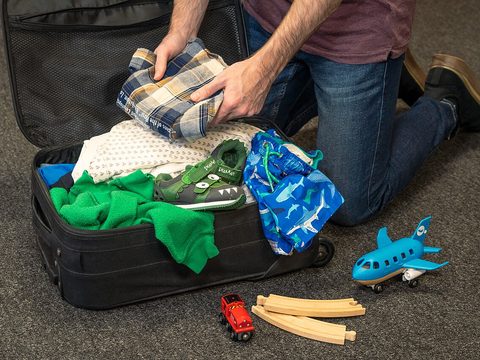 Can you help me
_____ my bags? Our flight is at six!
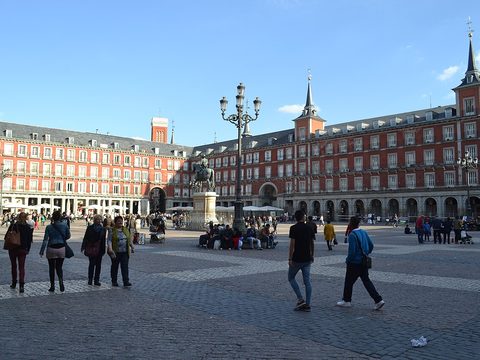 Last summer we
_____ sightseeing in Madrid every day.
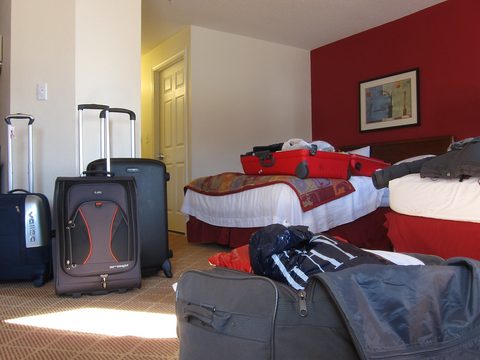 Right now they're
_____ in a small hotel near the beach.
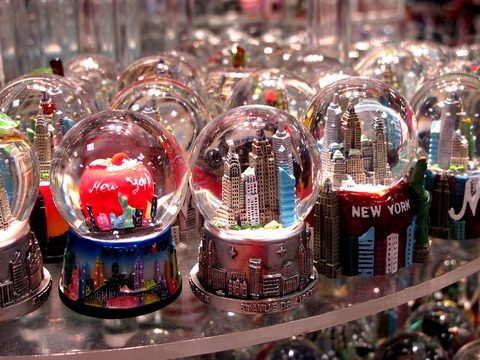 I always
_____ too many souvenirs for my friends, so I never have money at the end of a trip.
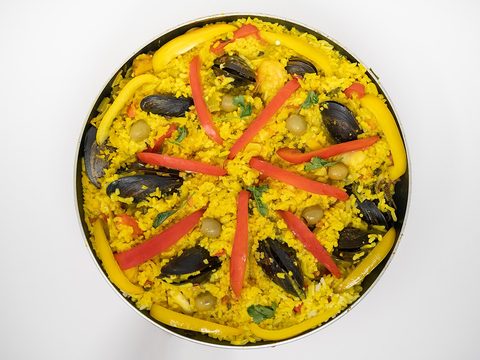 Did you
_____ the paella? — Only one bite, but it was amazing!
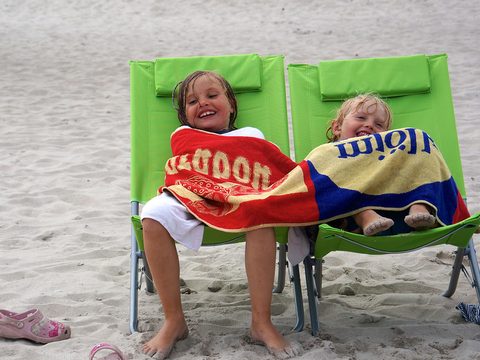 Look! The kids are
_____ on their towels in the sun.
 My daughter loves
_____ pictures of the sunset.
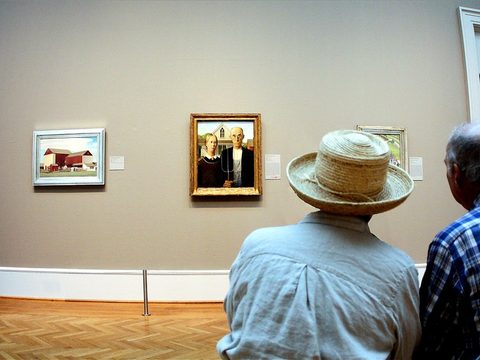 We
_____ three museums in one day, so we were very tired.
The surprise party
One birthday, told in order. Tap a dotted word to see what it means. Look for can, love + -ing and the past simple: they are all here.
Nora's birthday is on May 14th, and she hates big parties. She loves celebrating with her family, so she always has a quiet lunch at her parents' house.
Last year, her sister Kate had a different idea. Kate loves planning everything, so she secretly invited the whole family: cousins, grandparents, kids and even the dogs.
Nora didn't know about it. That morning, she bought a new jacket and shoes, because she wanted to look nice for a quiet lunch.
At one o'clock, she opened the door and couldn't believe it. There were thirty people in the living room, and they all shouted, "Surprise!"
At first, Nora was nervous, because she doesn't like being the center of attention. Everybody wanted to talk to her at the same time.
Then her grandmother hugged her and said, "You can relax. It's only family!" So Nora sat down, ate a lot and enjoyed talking to everyone.
Soon she was having fun, so she recorded a video for her friend: "My parents are cooking, my cousins are playing cards, and Kate is dancing!"
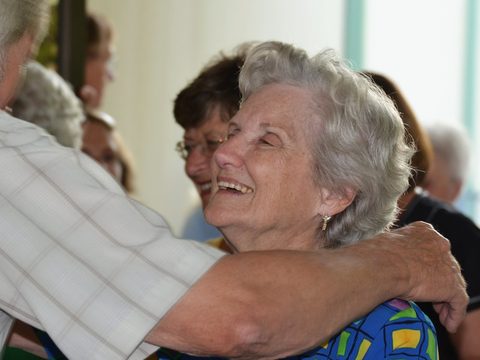
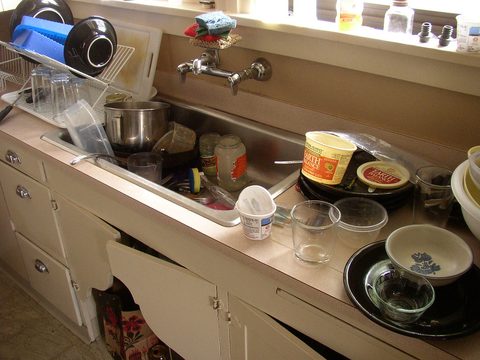
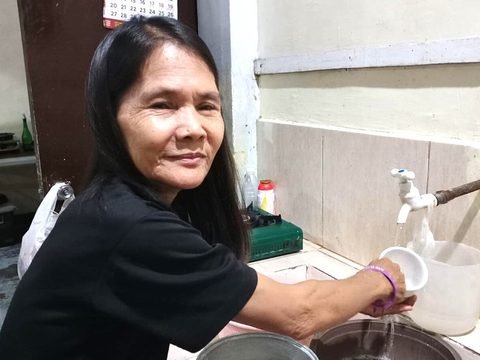
At seven, everybody went home, and Nora looked at the kitchen: dirty plates everywhere! She doesn't mind cooking, but she doesn't like cleaning after parties.
Kate saw her face and laughed: "Don't worry! The party was my idea, so the cleaning is my job." Then she washed every plate.
Now Nora likes big parties, but only when somebody else cleans! And Kate's birthday is on July 20th, so Nora is planning a surprise.
Multiple choice
Click an answer and you get the result right away, with the reason.

-
When is Nora's birthday?
May 14th. July 20th is Kate's birthday, and it comes back at the end of the story.
-
What does Nora usually do on her birthday?
She loves celebrating with her family, but she hates big parties. So every year it is the same quiet lunch.
-
Why did Kate invite the whole family?
Kate loves planning everything, and a surprise party is a very big plan. Nora didn't ask for it. She didn't even know.
-
Why did Nora buy a new jacket and shoes?
She didn't know about the party. For her, it was only lunch with her parents.
-
What happened when Nora opened the door?
There were thirty people in the living room. Kate's plan worked, and Nora couldn't believe it.
-
Why was Nora nervous at first?
Thirty people, and everybody wanted to talk to her at the same time. That is the opposite of her quiet lunch.
-
What helped Nora relax?
"You can relax. It's only family!" After that, she sat down, ate a lot and enjoyed talking to everyone.
-
What did Nora do when she was having fun?
The nervous Nora of the first minutes was gone. She filmed the scene for her friend: her parents, her cousins and Kate, all in one room.
-
In Nora's video, what is Kate doing?
Her parents are cooking and her cousins are playing cards. Nora uses the present continuous because it is all happening while she is recording.
-
What doesn't Nora mind doing?
She doesn't mind cooking, but she doesn't like cleaning after parties. And at seven there were dirty plates everywhere.
-
Who cleaned the kitchen?
The party was Kate's idea, so she said the cleaning was her job. She washed every plate, and Nora didn't clean anything.
-
What is the best summary of the story?
A secret plan, a surprise, a nervous start, a great afternoon, and Kate cleans. So Nora starts her own plan for July 20th. One surprise leads to the next.
Jobs and school subjects
a–g: write the person who does it. Example: paint → painter. h–k: each photo shows one school subject. Choose from: art · biology · chemistry · geography · history · math · physics.
-
apolitics
-
binvent
-
cart
-
ddance
-
esing
-
fplay
-
gteach
-
hPhoto: an old open book and an hourglass.
-
iPhoto: glass bottles and test tubes with red, green and yellow liquids.
-
jPhoto: a DNA spiral.
-
kPhoto: numbers and the signs +, −, × and %.
Can, the present continuous and the present simple

Three classes, one question: when? The present continuous is for right now. The present simple is for every day, every summer, always. Before you choose, look for the time words in the sentence: right now, at the moment, every summer.
- Can + verb, never to: I can cook. · She can't come today. · Can you open the window, please? It talks about ability, possibility and permission, and it makes polite requests.
- Present continuous = am / is / are + -ing, for things happening now: He's talking on the phone right now. · I'm not working at the moment. · What are you reading?
- -ing spelling: run → running · sit → sitting · write → writing · tie → tying
- Present simple for habits and routines: We go to the mountains every winter. · Does she work on Saturdays? · What do you usually do on vacation?
-
Sorry, but I ___ remember how to do this exercise.
Sorry, but… tells you there is a problem, so negative. The negative is can't (or cannot), never
not can. -
___ you ___ me? This exercise is too difficult!
A polite request: Can + person + verb. After can there is no to, and can never goes with do.
-
There's no way I ___ it without a calculator!
There's no way already says no, so the verb stays positive. And can always needs a verb after it: can do it, never
can it. -
I'm binge ___ my favorite TV series at the moment.
I'm + -ing: the present continuous, for something happening in this period of time. At the moment is the clue.
-
She ___ a video call right now.
Right now asks for the present continuous: is / isn't + -ing. Having alone has no be, and doesn't have is for habits.
-
Why ___ the car in the garage?
Two checks. In a question, are comes before you. And stop ends in one vowel + one consonant, so the p doubles: stopping.
-
What ___ every summer?
Every summer is a habit, so the present simple. Your family is like it, so does: What does your family do?
-
Right now, we ___ our bags for the trip.
Right now → present continuous: we are packing. Packing alone is not a complete verb.
-
They ___ on the beach this morning.
Verbs that end in -ie change to -y before -ing: lie → lying, die → dying. The morning is still happening, so the continuous.
-
Which sentence is WRONG?
Can never changes: I can, he can, they can. No -s, and no to after it: He can speak French.
Four jobs of can
Three friends, Lucas, Anna and Tom, make plans for the weekend. What does can do in each moment: ability, possibility, permission or a polite request?
-
Lucas: "What are you doing this weekend?" — Anna: "I'm not sure. Maybe I can visit my grandparents on Saturday."
Maybe is the clue: she isn't sure. It is possible, not a plan yet.
-
Tom: "That sounds nice. I can drive. Would you like a ride?"
Tom knows how to drive: that is an ability. Then he uses it to offer a ride.
-
Anna: "Yes, I would love to! Can you pick me up at nine?"
Can you…? asks another person to do something for you: a polite request. (Can I…? asks for permission.)
-
Lucas: "Guys, are we allowed to go into the school building today?" — Anna: "No, people can't go inside on weekends."
Allowed is the clue. The school doesn't give permission on weekends.
-
Lucas: "Oh, okay. Then maybe we can meet at the park later." — Anna: "Great idea."
Maybe again: it is an idea, something possible. Nobody needs to ask permission to meet at a park.
Pronouns, love + -ing, be or do

Find the verb first. Before it, a subject pronoun; after it, an object pronoun. After love, like, enjoy and don't mind, the next verb takes -ing. And in a question, ask yourself: is there another verb? If not, use be.
- Subject → object: I → me · you → you · he → him · she → her · it → it · we → us · they → them. Tom has new sneakers. He wears them every day.
- love / like / enjoy / don't mind / hate + -ing: I enjoy reading. · He doesn't mind waiting. · Do you like running?
- Be with adjectives, nouns and -ing: Is he shy? · They aren't teachers. · Are you listening?
- Do / does with the other verbs: Does he play the guitar? · I don't eat meat.
-
Sarah is wearing a new dress. I really like ___.
One dress = it. Its means "of it" (its color), and them is for more than one thing.
-
The socks are dirty. Put ___ in the laundry basket.
Socks are plural, and they come after the verb put, so them. They goes before a verb: They are dirty.
-
Mom wants a hat. I'm giving ___ a new one.
Giving who? Mom. After the verb, she becomes her. The hat is a new one.
-
Matt likes ___ Christmas songs with friends.
Like + -ing: likes singing. (Likes to sing is also correct, but never
to singing.) -
She ___ New Year's Eve at home.
After doesn't, the verb goes back to its base form: doesn't like, never
doesn't likes. Then like + -ing. -
What ___ doing on Christmas with your family?
Love is a normal verb, so the question uses do. The -ing goes on the second verb: What do you love doing?
-
___ your brother tall?
Tall is an adjective, and there is no other verb, so be: Is your brother tall?
-
We ___ live in a big city.
Live is a verb, so the negative needs do: we don't live. Aren't goes with adjectives and -ing: we aren't rich.
-
She ___ smiling in the photo.
Smiling is an -ing form, so it needs be: she is smiling, the present continuous.
-
Which question is correct?
Friendly is an adjective, so be. With like, a verb, the question is Does she like pizza?
Nora at the store
The morning of her birthday, Nora is buying the jacket and the shoes from the story. Read the conversation in order and write one pronoun in each gap.
-
ClerkHi! Can I help ___?
-
NoraYes, please. I like this jacket, but I'm not sure about ___.
-
Clerk___ can try it on.
-
ClerkWow! ___ looks good on you.
-
NoraThanks! Can ___ show me those shoes?
-
ClerkOf course. I'll bring ___ to you.
-
NoraOh, I love ___!
-
Nora___ are perfect for my birthday lunch.
-
NoraI think I'll take ___, and the jacket too.
Claire and Anthony
Read about two coworkers. a–e: write Is or Does. f–j: give a short answer that is true for the text, like Yes, they are or No, she doesn't.

-
a___ Claire friendly or shy?
-
b___ Claire enjoy working in a team?
-
c___ Anthony outgoing?
-
d___ Anthony like speaking in public?
-
e___ Anthony get nervous before presentations?
-
fIs Claire helpful?
-
gDoes Anthony prefer working alone?
-
hIs Anthony polite?
-
iDoes Claire like meeting new people?
-
jIs Claire shy?
Dates, both ways
In American English the month comes first: 3/1 is March 1st, and you say March first or the first of March. Write a–d in words. Write e–f in numbers.
-
a5/4
-
b6/2
-
c7/27
-
d9/3
-
eNora's birthday: May fourteenth
-
fKate's birthday: the twentieth of July
Was, were and the past simple

The past has two doors. With adjectives, jobs and places: was and were. With every other verb: the past simple. And when did or didn't is there, it already carries the past, so the verb goes back to normal: didn't go, Did you see…?
- was / were: I / he / she / it was · you / we / they were. Negative: wasn't, weren't. Questions: Was he a singer? · Were they at home?
- Regular verbs + -ed: want → wanted · like → liked · stop → stopped · study → studied
- Irregular verbs, one by one: see → saw · eat → ate · make → made · get → got · write → wrote. The past of can is could.
- Negative and question with did + base verb: She didn't come to the party. · Did they like the music?
-
Marie Curie ___ a famous scientist who discovered radium.
One person, in the past: was. Marie Curie died in 1934, so not are.
-
A: ___ Harriet Tubman a chemist? — B: No, she wasn't.
The answer uses wasn't, so the question uses was: one person, in the past. Harriet Tubman fought against slavery in the United States. She wasn't a chemist.
-
Rosalind Franklin and Harriet Tubman ___ astronauts.
Two people, so were, here in the negative. Did never goes with be: never
didn't be. (Rosalind Franklin was a scientist who studied DNA.) -
Last year, we ___ to travel to Japan.
Last year → past simple. Decide already ends in e, so add only -d.
-
___ you ___ your last vacation in Greece?
Last vacation is the past, and did carries it. So the verb goes back to normal: never
Did you loved. -
We ___ scuba diving for the first time on our trip.
Consonant + y → -ied: try → tried, cry → cried.
-
They ___ tickets early because the festival was very popular.
Buy is irregular: buy → bought.
Buyeddoesn't exist. -
We ___ a good view of the stage because it was very crowded.
A crowd in front of you means no good view, so negative. After didn't, the base form: didn't have.
-
I ___ hear the music from my house.
The past of can is could, and like can it takes the verb without to.
-
I ___ very tired after dancing all night.
Feel → felt. Fell is the past of fall: I fell off my bike.
-
Which sentence is WRONG?
After didn't, the verb goes back to normal: We didn't go to the concert.
A day at the festival
A man tells the story of yesterday, in order. Write the verb on the left in the past simple. Some are regular (-ed), some are irregular.
-
goYesterday, I ___ to a music festival with my girlfriend.
-
arriveWe ___ early and entered the festival around 2 p.m.
-
beThe crowd ___ very excited.
-
stayPeople ___ near the main stage.
-
playThe first band ___ rock music.
-
beTheir songs ___ loud and energetic.
-
comeLater, a famous singer ___ on stage.
-
singShe ___ all her biggest hits.
-
knowEveryone ___ the lyrics and sang together.
-
buyWe ___ food at a food stand and drank soda.
-
takeWe ___ many photos.
-
leaveAt the end of the night, we ___ the festival.
-
haveWe ___ an amazing time.
-
loveWe ___ the experience.
Instruments and kinds of music
a–f: write the instrument in each photo. g–k: write the kind of music. The first letter is given.

-
aPhoto: a gold metal instrument shaped like a big J, with a lot of small keys.
-
bPhoto: a small wooden instrument with four strings, and a long thin bow next to it.
-
cPhoto: a black-and-white electric guitar with a very long neck and only four strings.
-
dPhoto: a wooden instrument with six strings and a round hole in the middle.
-
ePhoto: round blue drums of different sizes, with metal cymbals on top.
-
fPhoto: a flat black machine for a DJ, with two big round wheels, buttons and colored lights.
-
gp___: you hear it on the radio all the time, and a lot of people like it.
-
hr___: a strong beat, electric guitars, drums and powerful vocals. It's full of energy.
-
ij___: a creative style with instruments like saxophones and pianos.
-
jc___: music from a long time ago, often played by an orchestra with violins and cellos.
-
kr___: relaxing music, often from Jamaica, famous for its positive lyrics.
Birthdays, you and your opinion
Answer in full sentences. Part A is about Nora, Part B about you, Part C about what you think.
A · Nora's birthday
B · You
C · What do you think?
Useful language
A special celebration
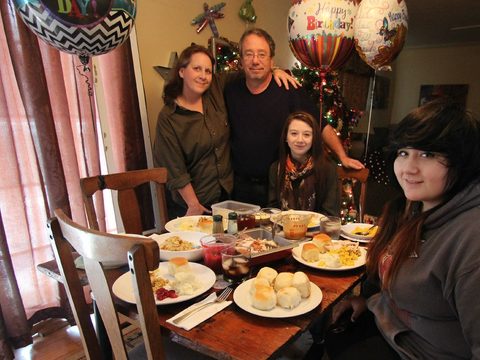
60–90 words. Write about a special day: a birthday, a holiday or a family dinner. Include the date, who was there, what happened, what you liked or didn't like, and one sentence with love, like, enjoy or don't mind.

My results
Check your score, then copy it and send it to your teacher on WhatsApp.

One job for this week. Tell somebody at home the story of your last birthday, in English, in one minute: the date, who was there, what happened and what you loved doing. The past simple for the story, and -ing after love and don't mind.