Too Much Sugar
One can of soda, one nutritionist and one easy trick: divide by four. Eight words for the things food comes in, and the two questions that measure everything — how much and how many.
How often do you eat it?
Answer with every day, once a week, twice a month or never, and say one more thing. Tap a card when you have answered it. The last card is a guess — remember your number.

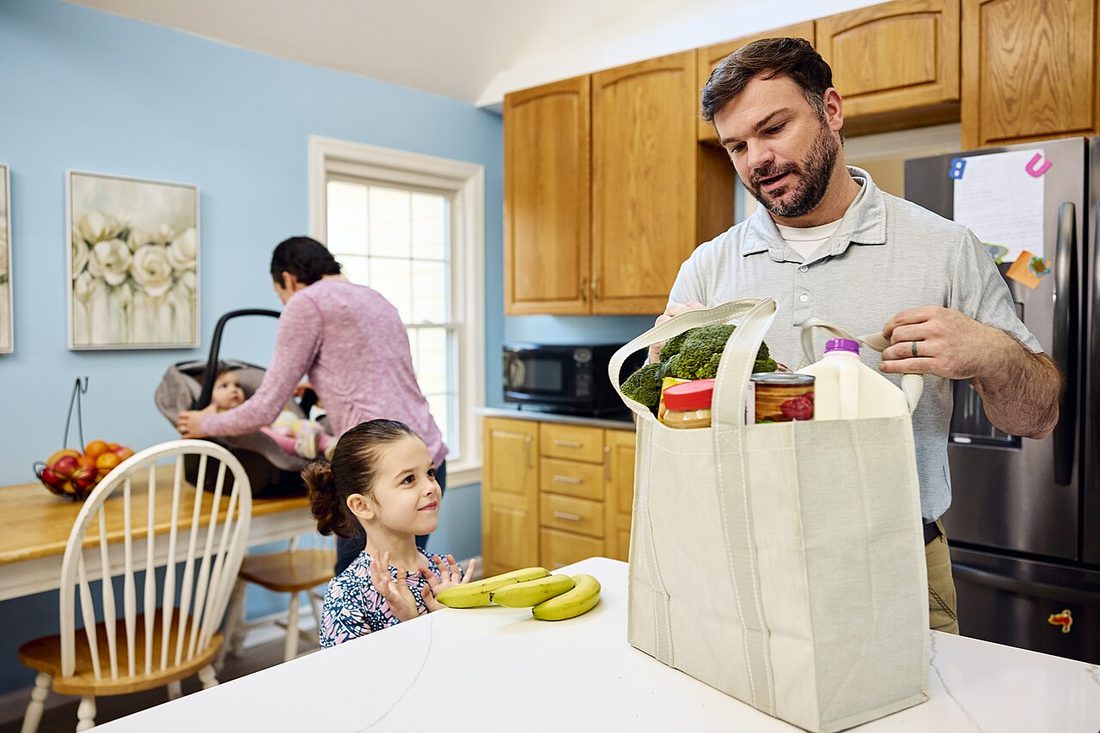
Everything in your kitchen comes in something — a can, a jar, a box. Today you learn the names of those containers, and how much sugar hides inside one of them.
Useful language
Containers
Click a word, then click its meaning. Correct pairs turn green. The audio button says the word.
Complete the sentences
Click a word in the bank, then click a gap. Click a filled gap to clear it. Each word goes in one sentence only.

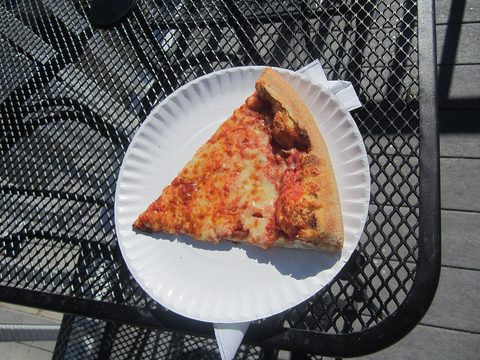 I'm not very hungry. Can you cut me a small
_____ of pizza?
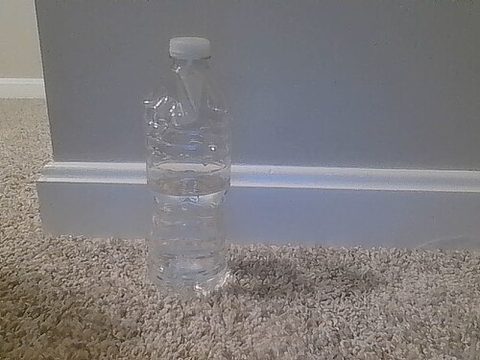 I always carry a plastic
_____ of water in my bag, and I close it with the cap after I drink.
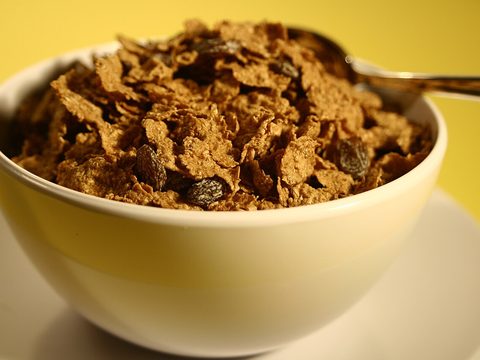 I always eat a
_____ of cereal with fruit.
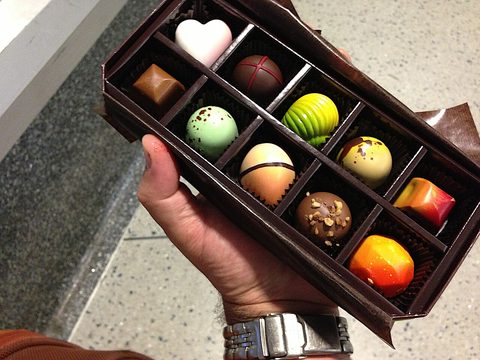 My cousin gave me a big
_____ of chocolates for my birthday. It's made of thick paper and has a lid.
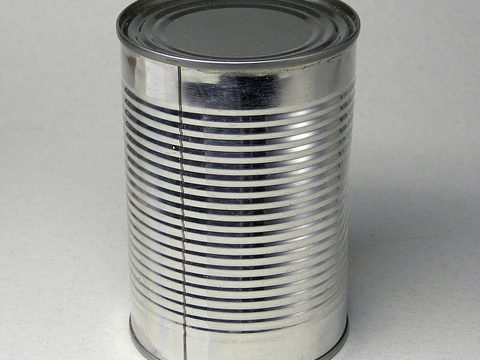 We keep a metal
_____ of beans in the cabinet. It stays good for months.
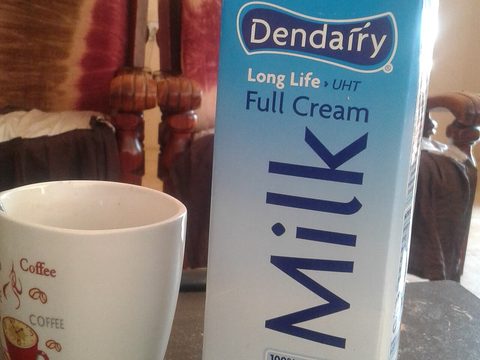 I never buy milk in a plastic bottle. I always buy a paper
_____ of milk.
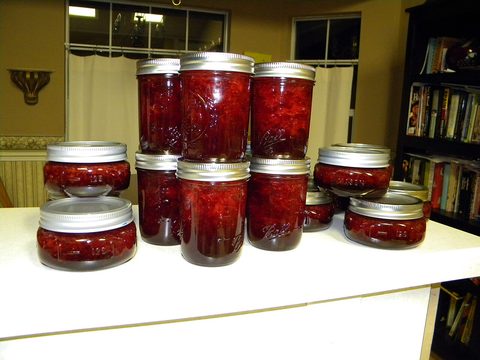 I buy a
_____ of jam every week.
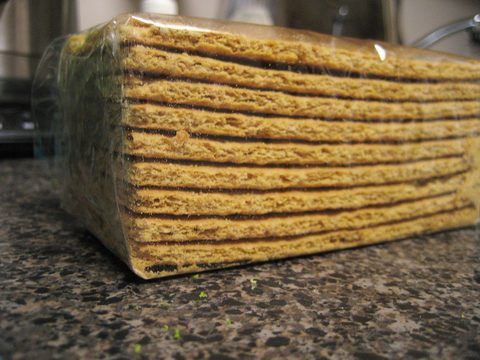 This
_____ of crackers is only thin plastic, so it's easy to open with your hands.
Nine teaspoons in a can
Remember your guess from the warm-up: 5, 7 or 9? Watch the video and check — it is only forty seconds long. Then read Leo's story.
One afternoon at work, Leo opens his usual can of soda and watches a video about sugar by a nutritionist. He drinks one every afternoon.
The nutritionist gives a limit: no more than 40 grams of added sugar a day. Leo thinks: how much sugar is that?
Grams are hard to imagine, so the nutritionist gives a simple trick: divide the grams of sugar by four. The answer is in teaspoons.
Leo tries the trick with the limit first: 40 divided by four is ten. So his daily limit is ten teaspoons of added sugar.
Ten teaspoons sounds like a lot, so Leo isn't worried. He only puts a little sugar in his coffee, and he keeps watching.

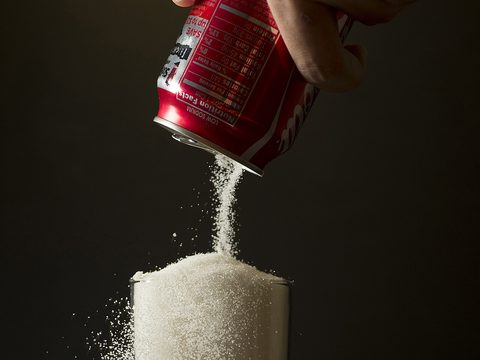

Next, the nutritionist talks about a normal can of soda. It has about 36 grams of sugar. Leo does the math: 36 divided by four is nine.
One can has nine of Leo's ten teaspoons — and he drinks one every afternoon. Now he is worried about the rest of his food.
That evening, Leo reads the labels in his kitchen: a box of cereal, a jar of jam, a package of cookies. All three have added sugar.
Leo can't count every gram, but he can count cans. So he makes one easy change: no more soda at work, just a bottle of water.
A week later, his friends at work ask, "How much soda do you drink now?" Leo smiles: "I don't drink any. Now I divide everything by four!"
Multiple choice
Click an answer and you get the result right away, with the reason. The blue number is where to look in the video.

-
What does Leo drink every afternoon at work?
A can, every afternoon. Remember that can — the video is about to talk about it.
-
In the video, what is the limit for added sugar? 00:03
No more than 40 grams a day of added sugar — the sugar that people or companies put into food. This is the number in the video; other health experts give other limits.
-
Why does the nutritionist give a simple trick? 00:09
He calls the calculation one of the best ways to understand sugar grams. The labels do show grams — the problem is that 40 grams means nothing to most people.
-
What is the trick? 00:15
Divide by four, and the answer is the number of teaspoons. It works because one teaspoon holds about four grams of sugar.
-
So how many teaspoons is Leo's daily limit? 00:18
40 divided by four is ten. The nutritionist does this same example in the video.
-
Why isn't Leo worried at first?
And he only puts a little sugar in his coffee. So he relaxes and keeps watching — until the next number.
-
How much sugar is in a normal can of soda? 00:28
About 36 grams — almost the whole 40-gram limit, in one drink.
-
How many teaspoons is that? 00:33
36 divided by four is nine. Ten is the limit for the whole day, not the sugar in one can. Was your guess in the warm-up right?
-
Why is Leo worried now?
Nine of his ten teaspoons in one can — and he drinks one every afternoon, before dinner and everything else he eats.
-
What does Leo do that evening?
The box of cereal, the jar of jam, the package of cookies — and he finds added sugar in all three.
-
A week later, how much soda does Leo drink at work?
He can't count every gram, but he can count cans: the can of soda is now a bottle of water. I don't drink any means zero.
-
What is the story's final message?
Grams meant nothing to Leo. Divided by four, they became nine teaspoons in one can — and his afternoon soda became a bottle of water.
Which container?
Choose the container that goes with the food. Example: a bowl of oatmeal.
-
a ___ of juice
Juice comes in a paper carton, like milk. A bottle is fine too — but it is not one of these three.
-
a ___ of salmon
Fish that lasts for months on a shelf comes in a closed metal can.
-
a ___ of chips
In American English, chips come in a bag — the soft plastic kind you open at the top.
-
a ___ of pasta
Dry pasta usually comes in a box or a package. You cannot pour it from a bottle or a carton.
-
a ___ of cheese
A thin, flat piece for a sandwich: a slice of cheese.
-
a ___ of granola
You eat it with milk or yogurt, from a round, deep dish.
-
a ___ of cake
You cut it from the whole cake, like a slice of pizza.
-
a ___ of beans
Beans, tomatoes, peas and soda all come in cans.
-
Which one is WRONG?
Jam is too thick for a paper carton: it comes in a glass jar with a lid.
How much or how many?

Can you count it? Then ask how many. If you can't — sugar, milk, rice — ask how much. And look at the first noun: sugar is much, but teaspoons of sugar are many.
- Uncountable: sugar, salt, rice, bread, cheese, juice, money — no a, no plural.
- Question: How much rice do you eat?
- Answers: big quantity — I eat a lot of rice. · medium — I eat a little rice. · small — I don't eat much rice. · zero — I don't eat any rice.
- Countable: eggs, apples, cookies, cans, teaspoons.
- Question: How many eggs do you eat?
- Answers: big quantity — I eat a lot of eggs. · medium — I eat a few eggs. · small — I don't eat many eggs. · zero — I don't eat any eggs.
- Containers count: How much water…? but How many bottles of water…? The first noun decides.
- Lots of = a lot of: She drinks lots of tea. = She drinks a lot of tea.
- American English: candy is usually uncountable — How much candy…? — but How many pieces of candy…?
-
___ salt do you add to your soup?
You can't count salt: no one salt, two salts.
-
___ cups of coffee does he drink a day?
Coffee is uncountable, but cups are not — and cups is the first noun.
-
___ milk is there in the fridge?
Milk is a liquid, so it is uncountable — and the verb is is, not are.
-
___ pieces of candy are in that jar?
Candy alone takes much, but you can count pieces — and the verb are is plural.
-
___ glasses of water did you drink?
One glass, two glasses: you count the glasses, not the water.
-
A: How many bananas do you eat in a week? B: Not ___. Maybe two.
Bananas are countable, so not many. A lot of needs a noun after it; alone, it is a lot.
-
Which question is WRONG?
Rice is uncountable — nobody counts the grains. It has to be How much rice…?
-
A: How much money do you spend on snacks? B: ___
Money is uncountable in English — you count dollars, not money. So not much, never a few.
-
In questions with How many, we use ___ nouns.
Things you can count, in the plural: How many teaspoons?
-
In questions with How much, we use ___ nouns.
Things you can't count, like sugar: How much sugar?
In the kitchen
Write the container — one word in each gap. Think about the food: is it a liquid, is it thick, do you cut it?
-
aShe put some butter on a ___ of bread.
-
bHe opened a ___ of salmon for lunch.
-
cWe always have a ___ of orange juice in the fridge.
-
dCan you bring me a ___ of water, please?
-
eMy grandmother made a big ___ of chicken soup.
-
fThe kids love choosing a ___ of cereal at the supermarket.
-
gThere's a ___ of honey in the kitchen cabinet.
-
hI bought a ___ of tea bags at the store.
-
iWe need to open a ___ of tomatoes for the pasta sauce.
Much, many, a few, a little
Choose the right word or words. First ask yourself: can I count this noun? When there are two gaps, the answer shows both, in order.

-
I don't add ___ sugar to my coffee.
Sugar is uncountable, and the sentence is negative: not much.
-
We don't drink ___ Coke during the week.
Before a noun it is always a lot of — and lot never takes an -s after a.
-
A: ___ bread do you eat in a day? B: ___.
Bread is uncountable, so how much in the question and a little in the answer. A few is for things you count.
-
My sister doesn't eat ___ chocolate.
Chocolate here is the food in general, uncountable — not much.
-
A: ___ apples did you buy? B: I didn't buy ___ apples.
Apples are countable: many twice. A lot before a noun needs of.
-
We eat ___ rice with our meals.
A lot of works with every noun. A little never takes of before a noun: a little rice.
-
A: Do you drink ___ juice at breakfast? B: No, ___.
Juice is a liquid: much in the question and in the short answer.
-
Tim ate some cookies, but he didn't eat ___ crackers.
Crackers are countable, and the verb is negative: not many.
-
A: ___ carrots do you eat every week? B: I don't eat ___. I don't like carrots.
Carrots are countable, and he doesn't like them — so zero: I don't eat any.
-
I usually have tea and ___ cookies in the morning.
Cookies are countable: two or three is a few.
-
Which sentence is WRONG?
Lots of and a lot of mean the same thing, but both need the of.
Ask the question
Write the whole question. Start with How much or How many, then add do, does or did — or is / are for be.
-
ajuice / she / drink / every morning
-
bboxes of cereal / be / in the cabinet
-
cpasta / we / need / for dinner
-
dcookies / they / eat / at the party last night
-
echeese / we / have / for the sandwiches
-
fsugar / be / in a can of soda
-
gteaspoons / be / in 40 grams of sugar
-
hcans of soda / Leo / drink / every afternoon
The sugar game
Take turns. Choose a card, say much or many for the gap, and ask your partner. Answer with a lot of, a few, a little, not much, not many or I don't eat / drink any. Tap the card when it's done.

Useful language
Talking point
Part A is about the video and Leo, Part B about your life, Part C about what you think — always say why. Use a lot of, a few, a little and the containers in your answers.
Useful language
My food diary
50–80 words. Think of what you ate and drank yesterday and write it meal by meal, with a container or a slice each time. Then add two sentences: how much sugar you think you had, and one easy change you could make, like Leo.


My results
Check your score, then copy it and send it to your teacher on WhatsApp.

One job for this week. Before you open a drink or a snack, find the grams of sugar on the label and divide by four. Then say it in English: This bottle has six teaspoons of sugar. One label a day, one sentence.