Travelers' Culture Shocks
A sandwich in ten minutes, dinner at 10 p.m., no trash cans on the street. One traveler, one notebook and eight culture shocks — plus the little -ly that turns quick into quickly.
Warm-up
Read the definition, then talk with a partner. Tap a card when you have answered it.

Everybody who travels comes home with a story like this. The food, the times, the rules — something is always different. Today you read eight of these surprises, and you learn to say how people do things.
- Her first week in Tokyo was a real culture shock.
Useful language
Words for the trip
Click a word, then click its meaning. Correct pairs turn green. The audio button says the word.
Complete the sentences
Click a word in the bank, then click a gap. Click a filled gap to clear it.

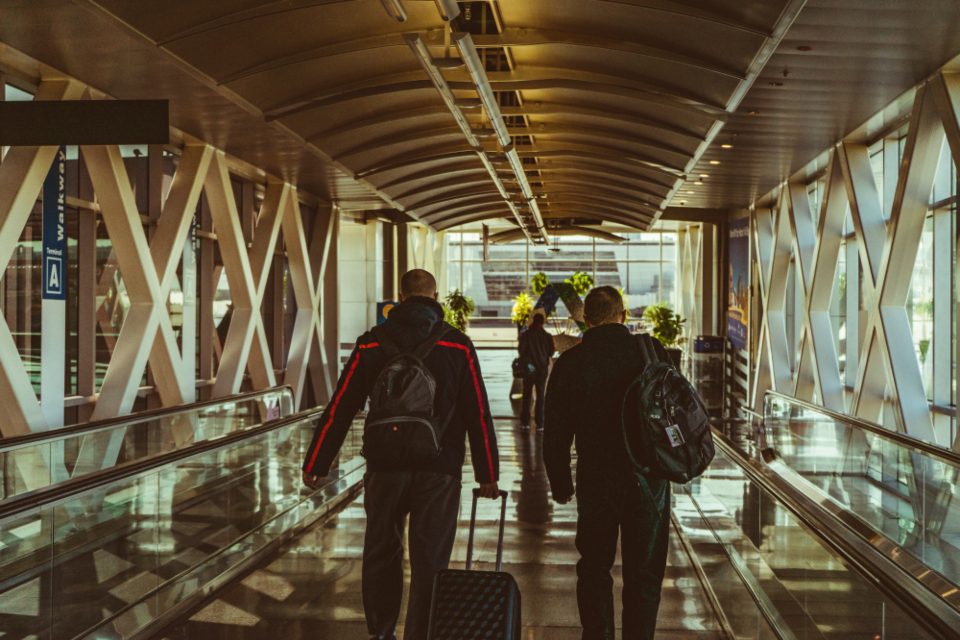
 Our friend from Canada is visiting us. Everything here is new for her: the food, the language, the buses. It's a big
_____!
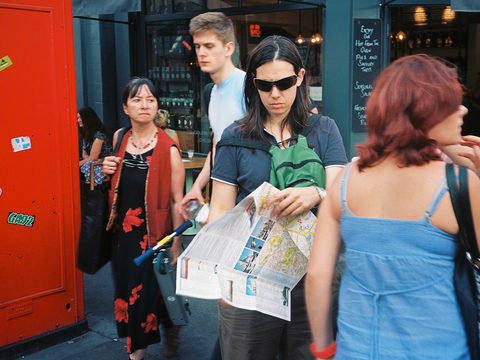
 I have lunch with my
_____ every Friday, at a small restaurant near the office.
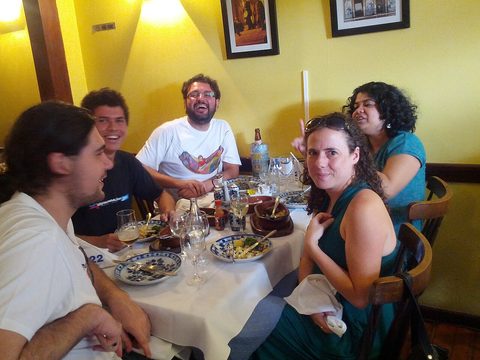
 Don't throw that bottle on the street! Put it in the
_____.
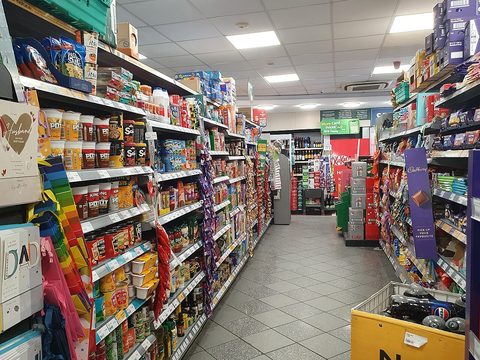 It's midnight and we need milk. The
_____ on our street is open 24 hours.
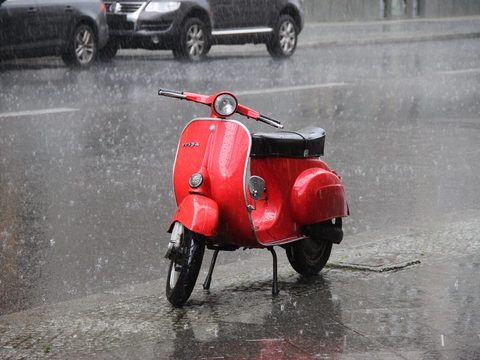 My brother goes to work on a
_____: it's cheaper than a car and easy to park.
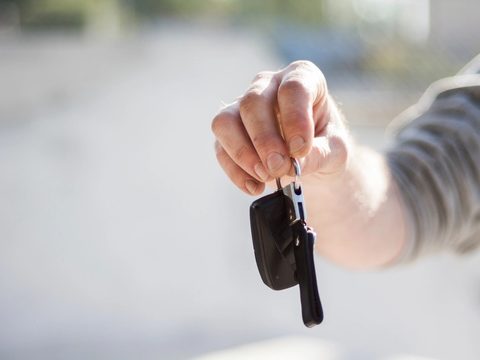 We didn't buy a car for our vacation. We
_____ one for a week.
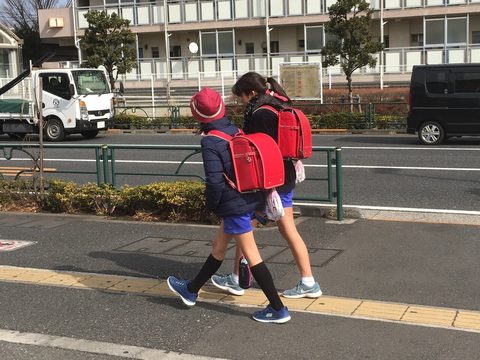 My daughter is only ten, but she's very
_____: she packs her school bag and makes her breakfast without any help.
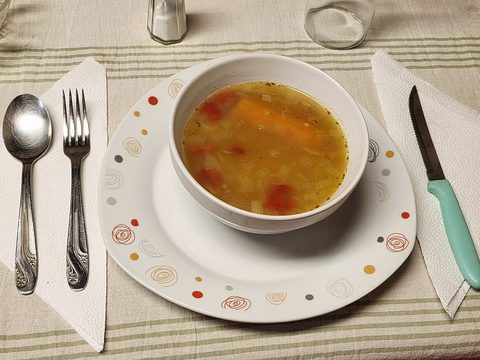 This soup is really
_____! Can I have the recipe?
The culture shock notebook
Inês is not a real person, but every surprise in her notebook comes from real travelers' stories on BuzzFeed. The eight words from Exercise 02 are in bold. Tap a dotted word to see what it means.
When Inês moved from Portugal to London, lunch was her first culture shock. People there ate a sandwich quickly, not a big, hot meal like at home.
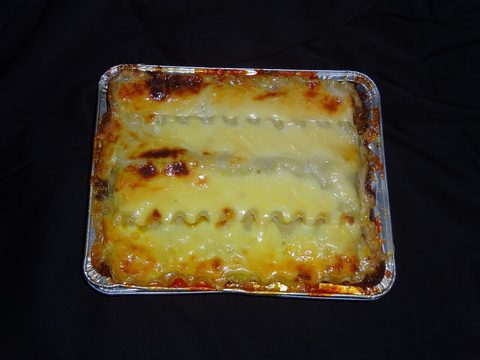
Her coworkers thought her hot lasagna was strange, so Inês started a notebook called "My Culture Shocks." She wanted to fill every page.


So she saved money and flew to Japan, where the streets were really clean. There were almost no trash cans outside, so people took their trash home.
In Japan her money went fast, so in South Korea she ate cheaply. Restaurants were expensive, but convenience store food was cheap and tasty.
With the money she saved, she rented a scooter in China. But people there drove dangerously, with wooden logs, kids and even babies on their scooters!
So Inês drove slowly and carefully, and then she flew to Finland and the Netherlands. People there were so tall that she felt incredibly short.
On the train to Germany, Inês was finally the tall one: young kids were going to school alone. They were very independent!
The next train took her to Belgium, and she arrived hungry. She ordered French fries, and the waiter covered them with mayonnaise instead of ketchup. Delicious!
Her last stop was Spain, next to Portugal, so she expected no surprises. But people there often had dinner at 10 p.m., and that was normal!
With a full notebook, Inês flew back to London. Now she knew that every country looks strange to somebody, so she cooked her lasagna proudly.
Multiple choice
Click an answer and you get the result right away, with the reason. Some reasons tell you more from the travelers' real stories.

-
Why was lunch in London a culture shock for Inês?
At home, lunch is a big, hot meal. In the real story, the traveler from Portugal says lunch at home takes at least an hour — and in the U.K. people have something light, like a sandwich or a salad.
-
What did her coworkers think of her hot lasagna?
For them, lunch is small and quick. The real traveler's British friends were surprised by a lasagna or a big stew at lunchtime.
-
What did Inês do after that?
She called it "My Culture Shocks", and she wanted to fill every page — so she needed a trip.
-
Why were the streets in Japan so clean?
There were almost no trash cans outside, so people carried their trash with them and threw it away at home.
-
Why did Inês eat at convenience stores in South Korea?
Eating out in South Korea is expensive, the article says, but the food in convenience stores is cheap and very tasty.
-
What did she do with the money she saved?
Cheap meals in South Korea left money for a scooter in China.
-
Why was driving a scooter in China scary?
People carried everything on scooters. The real traveler saw big wooden logs, kids eating rice while they rode, and a mom feeding her baby while she drove.
-
How did Inês feel in Finland and the Netherlands?
People there were so tall. The real traveler is medium height at home, but in many mirrors there the traveler could only see the top of their head!
-
What surprised her on the train to Germany?
They were going to school with no adults — that is why Inês was "finally the tall one". In the real story, some kids even went home for lunch, and the traveler says this is very different in the U.S.
-
What was different about the fries in Belgium?
Mayonnaise, not ketchup. The real traveler says the mayonnaise was so delicious that it was life-changing.
-
Spain is next to Portugal. What surprised Inês there?
She expected no surprises so close to home — and then the dinner time surprised her. In Spain, sitting down to dinner at 10 p.m. is completely normal.
-
What is the story's final message?
That is why Inês cooked her lasagna proudly at the end: the trip taught her that "normal" changes from country to country. In London a hot lunch is strange; in Spain a 10 p.m. dinner is normal. Her lasagna is not wrong — it is Portuguese.
Where did it happen?
Read the story again and write the country or the place. Example: the streets are really clean → Japan. Look at the words in bold: you need them in the next exercise.
-
apeople have dinner very late.
-
bchildren live very independently.
-
csome people drive dangerously.
-
da waiter served fries differently.
-
epeople have a meal quickly.
-
fa person felt incredibly short.
-
gyou can buy food cheaply in some stores.
-
hsomeone cooked lunch proudly.
Adjective or adverb?

A lunch is quick, but people eat quickly. Before you choose, ask one question: is the word about a thing, or about how somebody does something? A thing takes the adjective. An action takes the adverb.
- Adjective — before a noun, or after be, feel, look: a quick lunch · The streets were clean. · She felt short.
- Adverb — after the verb: They ate quickly. · She smiled politely.
- Most adverbs are adjective + -ly: slow → slowly · cheap → cheaply · careful → carefully (careful + ly, so two l's). After a consonant, y becomes ily: easy → easily · healthy → healthily.
- Irregular: good → well · fast → fast · hard → hard · late → late. Lately and hardly are different words: lately = recently, hardly = almost not.
- Position: after the verb, or after the verb + its object: He closed the door quietly — not
He closed quietly the door. Adverbs of frequency are different: often, always, never go before the verb (Class 8). - Modifiers — very, really, quite, incredibly, surprisingly — go before an adjective or an adverb: really clean · very late · incredibly short.
- Careful: friendly, lovely and lonely end in -ly, but they are adjectives: a friendly smile. And in everyday American English you hear eat healthy or drive safe — in class and in writing, use healthily and safely.
-
In my country, people speak very ___ on the streets.
Speak how? That is an action, so the adverb.
-
In South Korea, convenience store meals are made ___.
The word describes how the meals are made — a verb, so the adverb.
-
Children are very ___ in Germany.
After be, the word describes the children themselves, so the adjective. Compare: they travel independently.
-
My neighbors are very ___ during family meals.
Are is a form of be, so the adjective. With an action verb it changes: they eat noisily.
-
In Mexico, some foods are ___ for first-time travelers.
The word describes the food, a noun. Spicily exists, but nobody needs it here.
-
Dinner is very ___ in Spain.
Lately means "recently" — a different word. And after be you need the adjective anyway.
-
People drive ___ in my country.
Drive how? The adverb goes right after the verb.
-
He is a ___ driver.
The word describes driver, a noun. Same idea with a verb: he drives carefully.
-
In the U.K., lunch is usually ___.
The lunch is quick — an adjective after be. But people eat it quickly.
-
Which sentence is WRONG?
After the verb you need the adverb, and the adverb of good is well. Very good English is fine: there, good describes the noun.
-
Which sentence is correct?
Friendly ends in -ly, but it is an adjective, and it has no adverb. After a verb, say in a friendly way.
Make the adverb
Change the adjective on the left into an adverb and write it in the gap. One word only. Watch the spelling — and the irregular ones.
-
quietIn Japan, people speak very ___ in public places because it's polite.
-
carefulTourists should walk ___ in busy markets in Morocco, so they don't bump into people.
-
healthyYou can eat ___ in my country because there is a lot of fresh fruit.
-
fastIn China, scooters move ___ through the traffic.
-
slowIn France, people often enjoy their meals ___, with family and friends.
-
goodIn Finland, students speak English ___ because they start at a young age.
-
hardInês worked ___ in London to save money for her trip.
-
perfectThe cook made the fries ___: hot, golden and crispy.
-
easyWith a map on your cell phone, you can find your way ___ in a new city.
-
lateOur bus arrived ___, so we missed the start of the movie.
Put the words in order
Use all the words and write the whole sentence. The adverb goes after the verb, or after the verb + its object — never between the verb and its object. The modifier goes right before its adjective or adverb.

-
acarefully / her / she / drove / scooter
-
bate / the coworkers / quickly / sandwiches / their
-
cwell / very / my sister / English / speaks
-
dvery / have / Spanish families / late / dinner
-
ehard / worked / all year / she
-
fincredibly / were / the people / tall
-
gspoke / surprisingly / the kids / English / well
-
hquietly / talked / on the train / they
Find and correct the mistake
Each sentence has one mistake. Write the whole sentence correctly.
-
aThey ate their lunch very quick.
-
bThe kids crossed carefully the road.
-
cThe fries were deliciously.
-
dThe Korean food was surprising tasty.
-
eWe had dinner very lately.
-
fThe kids were very independently.
-
gShe felt incredible short.
Can you name a country where people…?
Name a country for each card and say why. These are opinions, not facts, so start with I think…, In my experience… or I'm not sure, but… Tap a card when you have answered it.

Useful language
Talking point
Answer with full sentences, and use an adverb or a modifier in every answer you can: quickly, well, really, incredibly…
Part A — the story.
Part B — you and your country.
Part C — agree or disagree? Say why.
Useful language
A tourist in my country
60–90 words. A tourist visits your country for the first time. Write about four things that can surprise them. Use at least four adverbs (quickly, late, well…) and two modifiers (really, very, incredibly…).


My results
Check your score, then copy it and send it to your teacher on WhatsApp.

One job for this week. Choose five things you do every day and say how you do them: I drink my coffee slowly, I walk to work quickly, I cook really well. An adverb about your own life is an adverb you never forget.