The Three Helpers
Be, do and have: three small verbs that make questions, negatives and whole tenses. I'm going. Do you go? Have you gone? Today you put the three side by side and choose the right one every time.
Warm-up
Ask and answer with a partner, or with me. Tap a card when you have answered it.

Three verbs, one lesson. In every question on these cards, look for the first small verb: are, do or have. It tells you the tense, and it tells you how to answer.

Useful language
Things we do
Click an expression, then click its meaning. Correct pairs turn green. The audio button says the words.
Complete the sentences
Click an expression in the bank, then click a gap. Click a filled gap to clear it.

 They love snow, so every January they
_____ in the mountains.
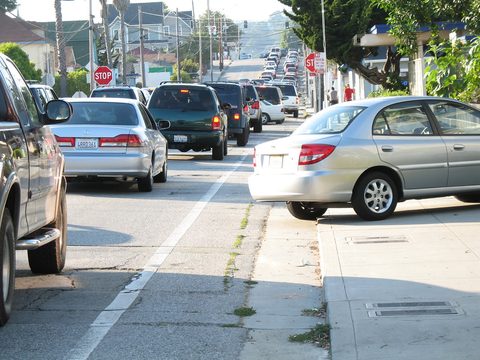 The garage is full, so tonight I have to
_____ on the street.
 The dinner was delicious. Let's call the waiter and
_____.
 Every morning, after I get up, I
_____: sheets, blanket and pillow in their place.
 I
_____ three times a week to run on the machines and use the weights.
 The boss and the whole team
_____ every Monday at nine to talk about the week.
 When I take a good photo, I
_____ on Instagram, and my friends like it.
 The trip takes two days by bus, but only two hours if you
_____.
Be, do and have
Read the three boxes. Each verb has two jobs: it is a helper in one tense, and it is a normal verb with its own meaning.

Three helpers, three jobs. Be goes with -ing and with going to. Do makes questions and negatives in the simple present and the simple past. Have makes the present perfect. And each one is also a normal verb, and that is where the confusion starts.
- Main verb: I am here. · She is Japanese. · They are hungry. · It was cold yesterday.
- Helper in the present continuous (be + -ing): She's posting a picture. · They're watching a movie.
- Helper in the future with going to: We are going to have dinner with Isabela tonight.
- Negative: am not, isn't, aren't · past: wasn't, weren't. He isn't Japanese. · We weren't hungry.
- Question: the verb goes before the subject, or after the question word: Are they hungry? · What is she doing here? · Was the movie good?
- Short answer: Yes, I am. / No, I'm not. · Yes, they were. / No, they weren't.
- Helper in the simple present: Do you study French? · She doesn't drink coffee.
- do for I, you, we, they · does for he, she, it: Do you want to come with us? · Where does Mary work? · Does it rain a lot in your country?
- Past: did, for everybody. Do you go to work in the morning? → Did you go to work yesterday morning? After do, does and did, the other verb stays in its base form: go, not goes or went.
- Main verb too, careful! Do you do your homework in the morning? — No, I do it in the evening. · What do you do? — I'm a lawyer. The first do is the helper; the second one is the action.
- Short answer: Yes, I do. / No, I don't. · Yes, she does. / No, she doesn't. · Yes, we did. / No, we didn't.
- Helper in the present perfect: have for I, you, we, they · has for he, she, it: I have already sent the email. · He hasn't called me yet.
- Question: have / has goes before the subject: Have you made your bed yet? · Has she ever traveled by plane?
- Main verb in the simple present: then the helper is do / does. Compare: Does she have a meeting today? (simple present) · Has she had the meeting yet? (present perfect).
- Past: had, for every subject. I had a cold last week. · They had pizza for dinner. In questions and negatives, the helper is did: Did you have a good weekend? · We didn't have time.
- Short answer: Yes, I have. / No, I haven't. · Yes, she has. / No, she hasn't.
One word for all
Two or three sentences, one gap in each, and the same word completes all of them. Which word is it? The last two questions ask about the correct sentence.
-
Where ___ the teachers from? · The students ___ here to do the test.
Both are be sentences: from and here go with be, and teachers and students are plural. The do in to do the test is a normal verb, not a helper.
-
What school subjects ___ you prefer? · Where ___ we park the car?
Prefer and park are normal verbs in the simple present, so the question needs the helper do. After it, the verb stays in the base form.
-
___ they met you yet? · ___ Clara and Lucas arrived yet?
Met and arrived are past participles, and yet is a present perfect word. Present perfect = have + participle.
-
They ___ going to study in the same class. · ___ the children in bed? · How old ___ you?
Going to always takes be. In bed is a place, and age uses be too: How old are you? — I'm thirty. Never How old do you have?
-
What time ___ you want to have the meeting? · ___ they go to work by bus?
Want and go are normal verbs in the simple present, so the question needs do. In have the meeting, have is the main verb, not the helper.
-
They ___ not been to the USA yet. · You ___ not paid the bill.
Been and paid are past participles: present perfect, with not in the middle. They have not been = They haven't been.
-
Which sentence is correct?
A question needs its subject: Do you play…? And play has no -ing, so are is the wrong helper.
-
Which sentence is WRONG?
Thinking, with -ing, goes with be: aren't thinking. With do, the verb has no -ing: don't think.
Make the sentence with be
Write the whole sentence with the right form of be: (+) is affirmative, (−) is negative, (?) is a question. Look at the time words: today and this week want -ing, next year wants going to, and last night and in the past want was or were.

-
+I / go / to school today
-
+You / do / the wrong exercise
-
+Lady Gaga / a waitress in the past
-
−She / work / with my sister this week
-
?your friends / here last night
-
+We / Australian, from Melbourne
-
?you / thirteen years old
-
−They / go to study with you next year
Now two quick choices. Read all three sentences before you click.
-
Which question is correct?
There is no other verb, so the question uses be, before the subject. Your son is one person: is. Be makes its own questions, without do or did.
-
Which sentence is WRONG?
An English sentence always needs a verb. Here the verb is be: I am, or I'm. Without it, the sentence has no verb.
Do, does or did?
Click a helper in the bank, then click a gap. Look at the subject and at the time words: usually, every day and on Fridays are present; yesterday and last night are past. Click a filled gap to clear it.
- Where _____ Alex usually have lunch?
- _____ you go to the gym on Fridays?
- What _____ your husband cook for dinner last night?
- What _____ Arthur and Leo play at school every day?
- _____ Julia usually get to the office at nine?
- Which class _____ the students have at school yesterday?
- _____ you send her a message yesterday?
- What time _____ Jeremy arrive home every day?
- What time _____ he arrive yesterday?
Now one quick choice. Look at the second verb.
-
Which question is WRONG?
Did already says past. After did, the main verb stays in the base form: get, never got.
Have, has, haven't or hasn't?
Type the right form of have in each sentence. Look at the subject (she and the doctor take has) and at the meaning: but … yet usually wants a negative.

-
aHe's waiting for his girlfriend, but she ___ arrived yet.
-
b___ the doctor talked to you yet?
-
cThey ___ already done all their homework.
-
dI heard that the movie is great, but I ___ watched it yet.
-
eMy brother lives abroad. I ___ seen him for a long time.
-
fMarina ___ written several messages to her family since she moved.
-
gShe has decided which car she wants, but she ___ bought it yet.
-
h___ your parents ever been to Argentina?
Now two quick choices. Is have the helper or the main verb?
-
Which question is correct?
In the simple present, have is the main verb, so the question needs the helper do, and after do the verb stays have. Are is for -ing and going to.
-
Which sentence is WRONG?
She takes has, in the sentence and in the question. Have is for I, you, we and they.
Choose the helper
All three verbs together now. Look at the other verb in the sentence: -ing wants be, a participle wants have, and a base form wants do. Then two questions about the main verb, and two about the correct sentence.
-
___ your parents from Rio?
No other verb: from Rio needs be, and parents is plural, so are.
-
___ your brother have a car?
Have a car is the main verb in the simple present, so the helper is does (he). Has your brother have mixes two forms of the same verb.
-
___ you ever eaten sushi?
Eaten is a past participle, and ever is a present perfect word: Have you ever…?
-
Where ___ you yesterday afternoon?
There is no other verb, so the verb is be, and yesterday makes it past: were. Did needs an action after it.
-
___ your sister doing the dishes right now?
Doing has -ing, and right now is present continuous: be + -ing. Here doing is the main verb (do the dishes), not the helper. With does, no -ing: Does your sister do the dishes every day?
-
___ they finished the report yet?
Finished after the subject, with yet at the end: present perfect, so have.
-
In I do yoga on Sundays, the word do is…
It means "practice". There is no other verb in the sentence, so do is the action itself. The helper only appears in the question: Do you do yoga?
-
In Nina has had a dog for ten years, the word has is…
Has + had (participle) = present perfect. The second word, had, is the main verb: she owns a dog.
-
Which question is correct?
Raining, with -ing, takes be: Is it raining? With does the verb would have no -ing: Does it rain a lot?
-
Which sentence is WRONG?
After doesn't, the verb goes back to the base form: have, not has. The third sentence is the present perfect: has is the helper and had is the main verb.
Question challenge
Part A is the question challenge: finish each question your way, then ask a partner (or me) and listen to the short answer. Part B is about your life. Part C is for your opinions.

Useful language
Three questions, three answers
40–70 words. Write three questions for a classmate: one with are or were, one with do, does or did, and one with have or has. Then answer them about yourself: a short answer and one more sentence. Example: Are you busy today? Yes, I am. I have a meeting at four.
My results
Check your score, then copy it and send it to your teacher on WhatsApp.

One job for this week. Every day, ask yourself three questions out loud: one with are, one with do and one with have. Then answer with a short answer: Yes, I am. No, I don't. Yes, I have. Thirty seconds, in English.