Kuttiyamma Passes the Literacy Test at 104
She never went to school. At 104, she took the state literacy test of Kerala, in India, and scored 89 out of 100. A piece of good news, eight words about age and learning, seven collocations from the report, and one small pronoun that makes your English more formal: one.
Warm-up
Ask and answer with a partner, or with me. Tap a card when you have answered it.

Dreams first, deadlines later. Today's story is about a woman who waited more than a hundred years for her first lesson. Before we meet her, tell me about your own dreams, and whether they have a time limit.
Useful language
Words about age and learning
Click a word, then click its meaning. Correct pairs turn green. The audio button says the word.
Complete the sentences
Click a word in the bank, then click a gap. Click a filled gap to clear it. Read the whole sentence first: the clue is always in it.

 This car has _____ of power: it goes from zero to sixty in under five seconds.
 I'm the youngest of three: I have two _____ siblings, a brother of thirty and a sister of thirty-two.
 Running a marathon is a _____ that I'm not ready to take on yet; I can barely run five kilometers.
 Not having a car is no _____ to getting the job: the office is a ten-minute walk from your apartment.
 Our town's oldest resident will become a _____ next spring, when she celebrates her hundredth birthday.
 Volunteers at the library run free evening classes to promote adult _____: many of the students never learned to read as children.
 Since my son started failing math, we pay a private _____ to come to the house twice a week and go over the homework with him.
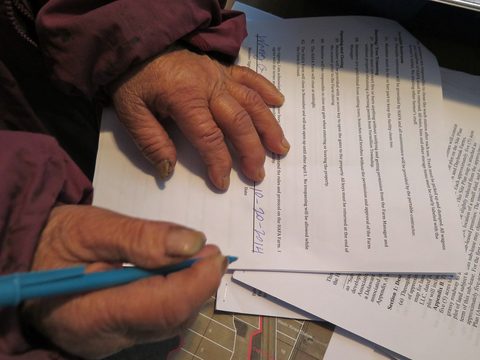 The contract isn't valid until you put your _____ at the bottom of the last page, next to the date.
The student who waited a hundred years
Watch the report first: three minutes of Indian English from India Today's Good News Today. While you watch, make notes on the three cards, then tell me what you found. After that, read the story, which retells the report and the news articles in new words. Dotted words have a definition; the audio button reads each paragraph aloud.
Every morning in Thiruvanchoor, a village in the Indian state of Kerala, a woman of 104 waits for the paperboy. Her name is Kuttiyamma, and until recently she could not read a word.
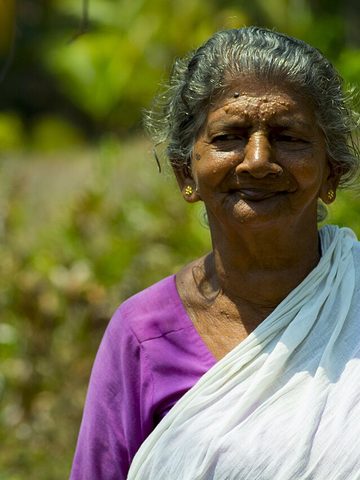

She never went to school. Born into a poor family with eleven brothers and sisters, she married at sixteen, raised five children and spent her days cooking, cleaning and feeding the animals.
The wish to learn never went away, though. She wanted to write her own name and address, and she was sorry that she could not read the newspaper.
The chance finally came from next door. Her neighbor Rehana John, a literacy tutor, noticed how curious the old lady was about her grandchildren's lessons, and offered to teach her at home.
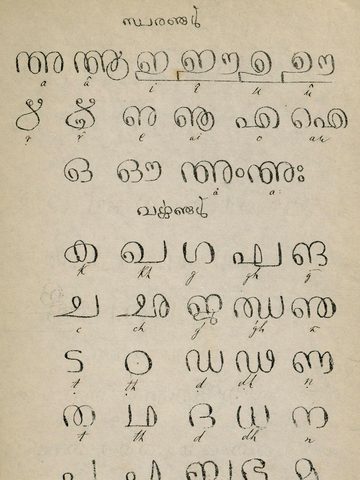
Rehana's oldest student before that had been 85. Kuttiyamma was almost twenty years older, but she kept going, and learned the letters of the Malayalam alphabet one by one.
After about a year of lessons, she was ready for the Kerala State Literacy Mission's test, the exam the state gives to adults who are learning to read and write for the first time.
The result made the news all over India: 89 out of 100. Her tutor says she was overjoyed when she saw her score, and Kerala's education minister sent his congratulations on Twitter.
"Age is no barrier to enter the world of knowledge," he wrote. Officials called her a role model for adult learners, and reporters agreed: there is no wrong moment to begin one's education.
So why study now, at 104? When a reporter asked her, Kuttiyamma did not make a long speech. She gave a simple answer: these days, she has plenty of time.
Today she reads the paper for two hours every morning and sings the prayer songs she knows by heart. Her next goal is the fourth-grade exam: Malayalam, English, environment and math.
Multiple choice
Twelve questions about the story. Click an answer and read why.

-
What does Kuttiyamma do every morning?
The story opens with her waiting for the paperboy. For a hundred years she could not read the paper; now it is the first thing she does each day.
-
Why did she never learn to read as a child?
She never went to school: eleven siblings, a poor family, married at sixteen, five children. The text says nothing about her parents' wishes or about a village without a school.
-
What did she always want to do?
Two wishes: to write her name and address, and to read the newspaper herself. The grandchildren appear later, in the neighbor's story, and the prayer songs she already knew by heart.
-
Who offered to teach her, and why?
Rehana John lived next door and worked as a literacy tutor. She noticed the curiosity; Kuttiyamma did not ask. Nobody in the family is mentioned as her teacher.
-
What was special about Kuttiyamma as a student for Rehana?
The oldest student before her had been 85; Kuttiyamma was almost twenty years older. The text says nothing about speed or money.
-
How long did she study before the test?
"After about a year of lessons." She studied at home with Rehana for about twelve months, not three months or five years, and then took the exam.
-
What is the Kerala State Literacy Mission's test?
The state gives it to adults who are learning to read and write for the first time. The fourth-grade exam is her next goal, not this one.
-
How did people react to her score?
89 out of 100 made the news all over India, and the minister wrote to her on Twitter. A party and people's doubts are not in the text.
-
"Age is no barrier to enter the world of knowledge." Who said this?
The line is from the minister's message of congratulations. The tutor said she was overjoyed, and the reporters' idea was that there is no wrong moment to begin one's education.
-
Why does she study now, according to her own answer?
A simple answer, not a speech. For a hundred years, the house and the animals came first; now there is time.
-
What is her next goal?
Malayalam, English, environment and math. The songs she already knows by heart, and no book is mentioned.
-
Which sentence best summarizes the story?
One thread: no school, a neighbor's offer, a year of lessons, 89 out of 100 and a next goal. The tutor was a neighbor, not a school teacher, and the state's program is for all adults, not only centenarians.
Collocations from the report
Seven pairs of words that go together in the report. First match them. Then use the missing word of each collocation to complete the sentences.
Now complete each sentence with the missing word of one collocation. One word per gap.
-
aShe started studying very ___ in life, but she still passed the test with a high score.
-
bNobody handed her a certificate: like every other learner, she had to ___ an exam.
-
cWhen a reporter asked why she was studying, she gave a ___ answer: she had plenty of time.
-
dMost people in her village never ___ an opportunity like this one.
-
eRaising five children with very little money was one of the many ___ challenges she faced.
-
fIn many families, the ___ son is expected to take care of the parents when they get old.
-
gIt is never too late to ___ your dreams.
One and one's
Describing Kuttiyamma, the reporter says: "Any age is good to start one's education." Answer the four questions to build the rule, read the note, then rewrite the sentences.

A pronoun for everybody. In conversation we say "you never know". In a report, an essay or a formal speech, the same idea often becomes "one never knows": one means people in general, the speaker included. Small word, big change of tone.
-
In "any age is good to start one's education", one is used as…
It stands for a person, like you or somebody. It is not counting anything, and it has no action of its own.
-
In this sense, one refers to…
Anybody, everybody, people in general, including the speaker. The reporter is not talking about one particular person's education.
-
This use of one sounds…
It is common in academic writing, news reports and formal speeches. In everyday conversation, Americans usually say you.
-
One takes a verb in the…
One is, one has, one does, one never knows: exactly the forms you use with he or she.
- Meaning: anybody, everybody, the speaker included. One never knows what the future holds. In conversation: You never know…
- Three forms: one (subject and object), one's (possessive), oneself (reflexive). One should always do one's best and be honest with oneself.
- Verb: third person singular. One is never too old to learn. · One has to be patient.
- Stay consistent: if you start with one, do not switch to you in the same sentence. One should keep one's promises (not your promises). American style also accepts his or her after one.
- When to use it: essays, reports, official advice, formal speeches. In a text message or a chat with friends, one sounds stiff; use you.
- Not the same: one as a number (one exam) or one replacing a noun (the blue one). Those never mean "people in general".
These sentences could appear in academic writing with a small change. Rewrite each one with one or one's in the best place, and keep the rest of the sentence.
-
aIn order to become a doctor, you must complete rigorous education and years of training.
-
bVacations are supposed to allow you to forget about work.
-
cYour health is much more important than having lots of money.
-
dI should not use cell phones when driving.
-
eYou can't learn a language in a week.
-
fIf you want to pass an exam, you have to study for it.
-
gYou should never stop learning, whatever your age.
-
hYou should respect your elders.
Talking points
Part A is about the report and the story. Part B is about your own life. Part C is for your opinions. Tap a card when you have discussed it.
Useful language
A message for Kuttiyamma
60–100 words. Write a message of congratulations to Kuttiyamma, or to any older learner you know: what impressed you, one question you would like to ask, and one thing you would still like to learn yourself. Use at least two words from Exercise 02, one collocation from Exercise 06 and one sentence with one or one's.

My results
Check your score, then copy it and send it to your teacher on WhatsApp.

One job for this week. Find one piece of good news online (a page like Upworthy is full of them) and tell me in English, in five sentences, what it is about and why you chose it. Use plenty, challenge and one sentence with one or one's.