At the Purchaser's Option
A few lines from a newspaper of the 1830s, a mother, a baby, and the song Rhiannon Giddens wrote in that mother's voice. The vocabulary of the body and of work, the difference between buy and purchase, and the numbers behind slavery in the United States.
Warm-up: the word in the title
Quick answers, one card at a time. Tap a card when you have answered it.

Today, one song and one old newspaper ad. The ad is from the 1830s, and it is a hard thing to read: it sells a person. We go slowly, we use the right words, and we keep our respect for the woman in it. First, the word in the title.
Useful language
Words from the song
Seven words from the song and the word from the title. Click a word, then click its meaning. Correct pairs turn green. The audio button says the word.
Complete the sentences
Three words changed form: -ing or plural. Click a word in the bank, then click a gap. Click a filled gap to clear it. Every sentence has its own clue.

 The office closes at six, so if you stay until nine, those three hours count as
_____, and the company pays them at a higher rate.
 The little boy was
_____ so hard that his whole face was wet with tears.
 Your hand is
_____: press this clean cloth on the cut until we get to the hospital.
 His
_____ mind found the answer before I could even open my calculator.
 The dog was so thin that you could see its
_____ under the skin.
 The priest said that her body was old and tired, but her
_____ was young and would live forever.
 The nurse showed the new mother how to hold the baby against her
_____ to feed him.
 The contract says that the
_____ pays half the price today and the other half when the car is delivered.
The ad and the song
Read the note first, then watch the video: four minutes, one single shot, and the words appear in the sky as she sings (captions are on as well). Then read the story. Dotted words have a definition: hover or tap them. The audio button reads each paragraph aloud.
- While you watch: who is speaking in the song? What does she say a buyer can take, and what can he not take?
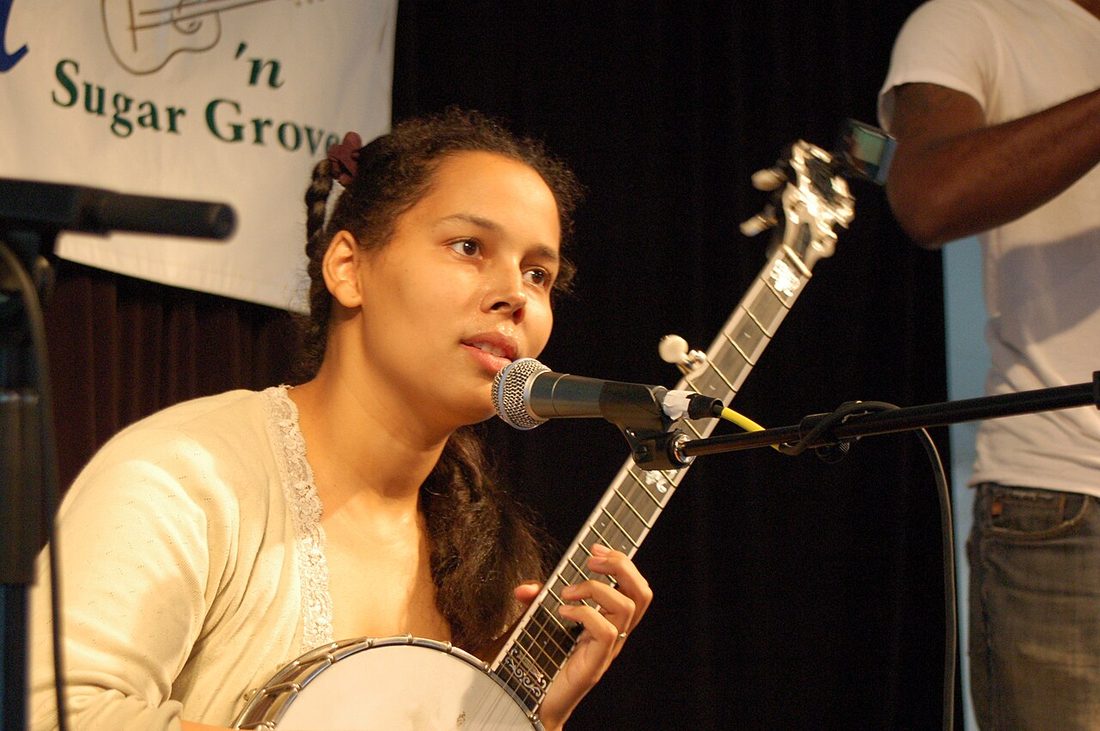
Rhiannon Giddens, a singer and banjo player from North Carolina, came across a short newspaper advertisement from the 1830s. It was only a few lines long, and it was selling a person.
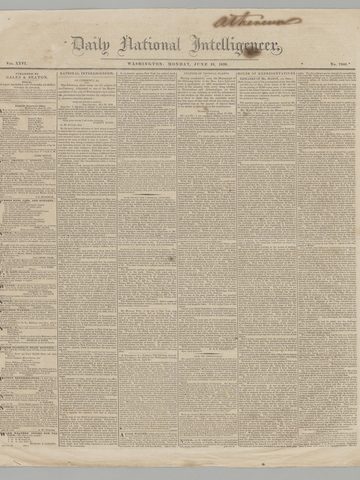


The ad offered a young woman for sale: about twenty-two, healthy, used to housework and farm work, and sold for no fault of her own. Her owner simply had no work for her.
The last line stopped Giddens. The woman had a baby of about nine months, and the child would be "at the purchaser's option": the buyer could take him or leave him behind.
Giddens could not stop thinking about that mother. How does a woman keep her humanity when even her own child is somebody else's decision? She decided to answer with a song.
She wrote it with the songwriter Joey Ryan and sang it in the voice of the woman from the ad. The narrator has no name, only a body, a baby and endless work.
In the verses, the narrator tells her story plainly: adult life was forced on her when she was still a child, she works every minute, and her pain makes other people rich.
Then comes the chorus, and it turns the song around. Everything about her can be bought and used, the narrator admits, except one thing: her soul, which no purchaser will ever own.
The song opens Freedom Highway, the album Giddens released in February 2017. She recorded it in eight days with the producer Dirk Powell, in Louisiana, in wooden rooms built before the Civil War.
The video is one single shot: Giddens sits alone on a chair on a dirt road between tall green fields, while the ad and then the words appear in the sky above her.
Giddens still sings it, including at a benefit for an organization that helps trafficked women. Slavery is not only history, she says: many women today have no control over their bodies or their children.
Multiple choice
Twelve questions about the story. Click an answer and you get the result right away, with the why.

-
What did Rhiannon Giddens come across?
Only a few lines, printed in a newspaper in the 1830s, offering a young woman for sale. Giddens is a musician, but this song started with a document, not with music.
-
According to the ad, why was the woman being sold?
The ad says she was sold "for no fault of her own". Nothing was wrong with her or her work: the owner had nothing for her to do. Not even her sale was about her.
-
What was "at the purchaser's option"?
The buyer could take the child with his mother or leave him behind. That is the "option" in the title: a choice for the purchaser, and no choice at all for the mother.
-
What question did the ad leave in Giddens's mind?
Giddens has said that thinking about this woman, and about how she had to keep her humanity against horrific odds, is what inspired the song. The whole song is her answer.
-
How did Giddens answer that question?
Giddens co-wrote it with Joey Ryan and sings it as the woman herself, in the first person. The narrator has no name: the ad never gave her one.
-
What does the narrator describe in the verses?
Three ideas: a girl forced to become a woman far too early, unpaid work day after day with no end, and a body in pain so that the owners got rich. There is no escape and no kindness anywhere in the song.
-
What is the one thing the narrator says cannot be taken from her?
The chorus lists what a buyer can take: everything physical about her. Her soul is the exception, the essence of a person, which no purchaser can own. Her baby, sadly, can be taken: that is exactly what the title means.
-
What is the narrator's situation with her baby?
Whether she keeps him is not her decision: it depends on the person who buys her, the purchaser's option. That is why the first thing the narrator wonders in the song is whether she will be able to keep her child.
-
How was the album Freedom Highway recorded?
Giddens co-produced it with Dirk Powell at his studio in Louisiana. Eight days, old wooden rooms, and a result rawer and more personal than her first solo album.
-
What does the video look like?
Between tall green fields, alone, barefoot on a chair. The ad appears first, then the words, handwritten in the sky. The camera never cuts away: the story is in the words.
-
Why does Giddens still sing the song at benefits?
She sang it at a gala for an organization that helps trafficked women. Modern slavery is huge, she said, and there are still women with no control over their bodies or their children.
-
Which sentence best summarizes the story?
Giddens is not the woman's descendant, nothing in the story says the song was a hit, and no newspaper apologized. The heart of it: a document that treated a person as an object, answered by a song that gives her a voice.
The words in new places
The eight words again, in situations that have nothing to do with the song. Choose the one that completes each sentence. The words around the gap decide.
-
After the accident, the doctor checked that no ___ was broken before she let him stand up.
Bones break; souls and breasts do not. A broken bone is the phrase you hear at every emergency room.
-
The factory pays ___ at one and a half times the normal rate, so many workers stay late on Fridays.
Extra hours at a higher rate: overtime. Notice the collocations: work overtime, pay overtime, do overtime.
-
Soccer fans say that a good goalkeeper needs ___ feet and a calm head.
Quick and exact movement: nimble feet, nimble fingers, and also a nimble mind, as in Exercise 03.
-
There was so much blood that we could not see where the cut was ___ from.
Blood comes out of a cut, so the cut is bleeding. Word family: bleed (verb), blood (noun), bled (past).
-
The contract must be signed by both the seller and the ___.
The seller and the buyer; in a contract, the purchaser. The ending -er names the person who does the action.
-
He sings with such ___ that even people who don't understand the words feel the song.
Deep feeling, not technique: to sing with soul. The same word names a style of music, soul, born from that idea.
-
In many countries, October is the month of campaigns for the early detection of ___ cancer.
Breast cancer, and the pink ribbon of October. A medical use of a word that the song uses for a mother feeding her baby.
-
At the funeral, the old man stood quietly at the back, ___ without a sound.
Tears at a funeral: weeping. It is quieter and more formal than crying, which is why it fits an old man standing at the back.
Buy or purchase? Formal, everyday and old
Read the note, then choose the word that fits the situation, not just the meaning.

Same meaning, different clothes. Buy and purchase mean the same thing, but one goes to the supermarket and the other goes to court. The warm-up, the ad and the song gave us several pairs like that. Learn both; choose by the situation.
- Everyday → formal: buy → purchase · buyer → purchaser · ask → inquire · get → acquire, obtain · choice → option · cry → weep · quick → nimble · work → employment
- The formal word is not "better". In a text message, I purchased sneakers sounds strange; in a contract, the guy who buys it sounds wrong.
- Old texts use forms we no longer use. The 1830s ad says enquire of the printers (= ask the printers) and for want of employ (= because there is no work). The song also uses old, poetic forms: listen for them.
- Two store signs, two meanings: for sale = you can buy it (a used bike for sale); on sale = at a reduced price (I got these jeans on sale).
- At somebody's option = that person decides. Today: extra cheese at the customer's option, at the customer's request, at your own risk.
-
Which sentence belongs in a contract?
Contracts use the formal noun and the formal verb form shall. The other two are spoken English: the guy, gotta, okay?
-
Text message to a friend: "I just ___ the tickets for Saturday!"
Everyday situation, everyday verb. Purchased is not wrong, but it sounds like a receipt, and acquired sounds like a company buying another company.
-
Sign in a store window: "All winter coats 40% off — ___ this week only."
A reduced price is on sale. For sale only says that something can be bought, and at sale does not exist.
-
Sign in front of a house: "___ — three bedrooms, garage. Call the number below."
The house is available to buy, not discounted. If a house is on sale, the price has been cut, which is a different message.
-
Formal notice in a hotel: "For late check-out, please ___ at the front desk."
Inquire is the formal ask. American spelling is inquire; British texts write enquire, as the 1830s ad does. Ask around is casual, and wonder happens inside your head.
-
"My mom ___ at my graduation, like, the whole time."
Family conversation, everyday verb. Wept is correct English but literary; weeped does not exist, because the past of weep is irregular.
-
In a novel: "She ___ silently by the window until the letter was finished."
Literary context: wept fits the tone. The other two are fine in speech, but they add words a novel would not need, and a lot or so much fights with silently.
-
Which everyday phrase means the same as "at the buyer's option"?
Option = choice, and the possessive says whose choice it is. In the ad, the buyer decided; the mother did not.
-
Which is the most formal way to say "get"?
Acquire and obtain are the formal ones; pick up and grab are the most casual: Can you grab me a coffee?
Word building
Write the correct form of the word in the cue. Some change a lot: bleed has a noun you already know.
-
PURCHASEThe ___ must sign the receipt to show that the goods arrived.
-
BLEEDShe gives ___ twice a year at the local hospital.
-
WEEPThe bride's mother was ___ before the ceremony even started.
-
OPTIONBreakfast is included in the price, but dinner is ___.
-
ADVERTISEThe company paid for a full-page ___ in the Sunday paper.
-
SLAVE___ was abolished in Brazil in 1888, later than in the United States.
-
HUMANThe song is about a woman who keeps her ___ when everything else is taken.
-
FORBIDPhotos are ___ inside the museum, so please put your phone away.
-
CHOOSEIt was not her ___: the buyer decided everything.
-
NIMBLEThe goalkeeper moved ___ across the line and caught the ball with one hand.
Slavery in the U.S., by the numbers
Two minutes from The Washington Post, and almost every sentence is a number. Watch with captions and answer. The stamp shows the moment in the video.

-
Between which years were Africans enslaved in the United States? 00:04
Almost two and a half centuries: from 1619 to 1865, the year slavery was formally abolished, which is the last number in the video.
-
Approximately how many Africans were stolen from their homes? 00:09
Twelve million, on ships that could hold up to 600 people, packed "like sardines". The other numbers are also in the video with different meanings: 600 per ship, and just over 300,000 who arrived in what is now the United States.
-
Where were most enslaved Africans taken? 00:29
Over five million people were taken to Brazil; just over 300,000 to North America. Keep this number for the discussion at the end.
-
What did the Three-Fifths Compromise of 1787 do? 00:36
The number of representatives in Congress depended on population, and an enslaved person counted as three-fifths of a free one. Without the right to vote, as the video says right after.
-
What happened in 1808? 00:49
Bringing people from Africa became illegal in 1808; buying and selling people inside the country did not. That is why ads like the one in the song were still being printed in the 1830s.
-
What does the video say about New York City in 1740? 00:57
"Slavery wasn't exclusive to the South": in 1740, one in five people in New York City was enslaved.
-
By 1860, which state had the highest number of enslaved Africans? 01:06
Virginia first, Georgia second. Mississippi is the state where enslaved people were the majority: 55 percent of the population in 1860.
-
How many revolts does the estimate in the video count? 01:22
One estimate puts the number at 250. The best known is Nat Turner's revolt, in 1831, in which about 51 white people were killed: 1831 is the year, 51 is the number of deaths.
-
What did Abraham Lincoln write in 1862? 01:35
A famous and uncomfortable line: saving the Union came first. Still, the video says that maintaining slavery was the root cause of the war, and that nearly 179,000 Black men fought for the Union.
-
When was slavery formally abolished in the United States? 01:47
The Thirteenth Amendment, December 6, 1865: the last number in the video, and the second half of the answer to question 1.
Conversation time
Part A is about the song and the videos, Part B about your life, Part C is for opinions. Answer with a reason. Before Part A, watch the live version below: five minutes, no captions, just listen.
Useful language
But not my…
Choose one option, or do both. Option 1: four short lines in the spirit of the song: three lines about things that life, work or other people can take from you, and a last line about the one thing nobody can take. Then explain your last line in 60–90 words. Option 2: many songwriters take their subjects from the news of their time. Open a news website, take the first headline you see, and write a short poem of 6–10 lines inspired by it. Use at least three words from Exercise 02.

My results
Check your score, then copy it and send it to your teacher on WhatsApp.

One job for this week. Find one old document about your own city: a photo, an ad, a page from a newspaper. Describe it to me in a thirty-second voice message: what it shows, and what it does not say. Formal words for the document, everyday words for how it makes you feel.