The Best Things to Do in Amsterdam
Two Amsterdams, ten tips from the people who live there, and a swing over the edge of a rooftop. Plus eight adjectives to describe any city in the world, from loud to intriguing.
Warm-up
Talk with a partner, or with me. Tap a card when you have answered it. Then read the six facts about Amsterdam and decide which ones are not true.

Every big city has two versions: the one in the guidebooks and the one the locals know. Today a video takes us into the second Amsterdam, and we learn the adjectives that describe a city, from loud to intriguing. First, a quiz: how much do you know about Amsterdam?
Useful language
-
1 · Amsterdam is built on 11 million wooden poles.
True. The ground is soft, wet clay, so most buildings stand on wooden poles: Central Station on 8,687 of them, and the Royal Palace on 13,659, according to the article the class uses.
-
2 · Amsterdam has the biggest house in Europe.
Not true. It is the opposite: the city is known for a very narrow house, only 2.02 meters wide and 5 meters deep. Houses were taxed by the width of the front, so people built narrow and deep.
-
3 · There are 4 times more bridges in Amsterdam than in Venice.
True, according to the article: Amsterdam has 1,281 bridges over more than 160 canals, four times as many as Venice, the city everybody thinks of first.
-
4 · There are 2,500 houseboats in Amsterdam.
True. Roughly 2,500 houseboats are moored on the canals, and many of them are over a hundred years old. A houseboat is a boat you live on; a boathouse is a building where boats are kept.
-
5 · There are more cars than bikes in Amsterdam.
Not true. There are around 881,000 bikes in the city, four times more bikes than cars, and every year thousands of them are fished out of the canals.
-
6 · Heineken was founded in Amsterdam.
True. Gerard Adriaan Heineken started the company in Amsterdam, in a brewery called The Haystack. Today, one of the company's old breweries in the city is a museum, the Heineken Experience.
Words from the city
All eight appear in the video and in the reading. Click a word, then click its definition. Correct pairs turn green. The audio button says the word.
Complete the sentences
Click a word in the bank, then click a gap. Click a filled gap to clear it. Read the whole sentence: the clues are all there.

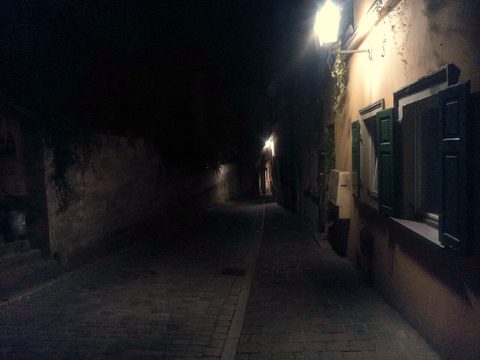 The shortcut to the station is a narrow
_____ between two old buildings, so dark that I never walk through it at night.
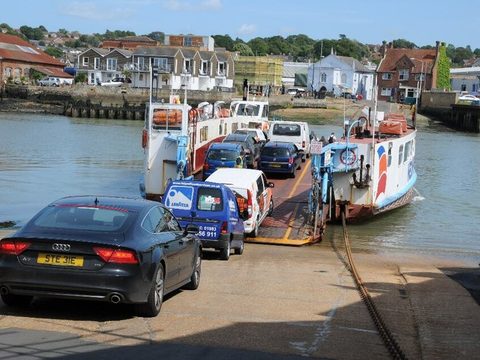 There is no bridge to the island, so cars and passengers cross on a
_____ that leaves the port every half hour.
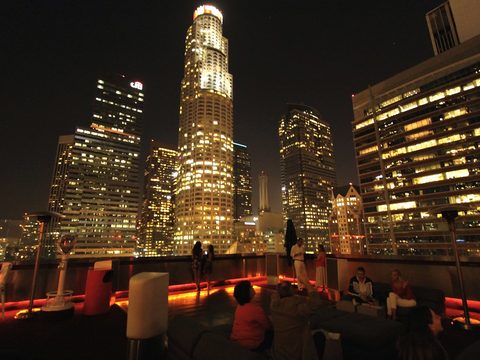 From the
_____ of the hotel you can see the whole city, and they serve breakfast up there when the weather is good.
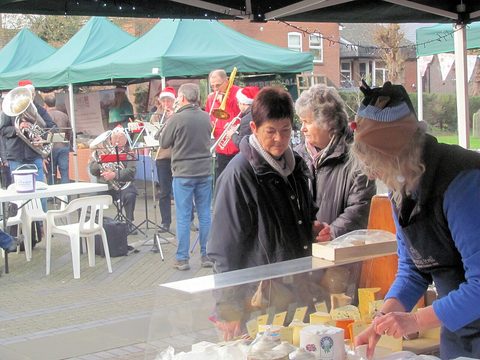 The farmer's
_____ at the Saturday market sells honey, eggs and cheese, all from her own farm.
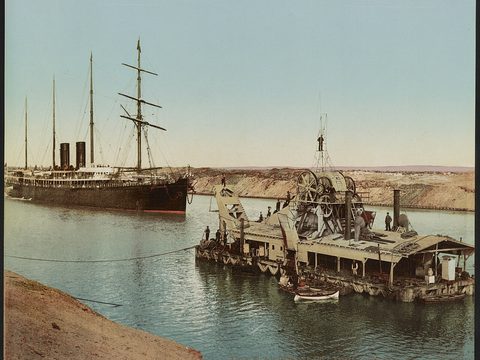 Boats couldn't get from one river to the other, so in the nineteenth century engineers dug a
_____ to connect them.
 Put the
_____ on top of your hot coffee for a minute: the steam melts the caramel inside, and the cookie gets soft.
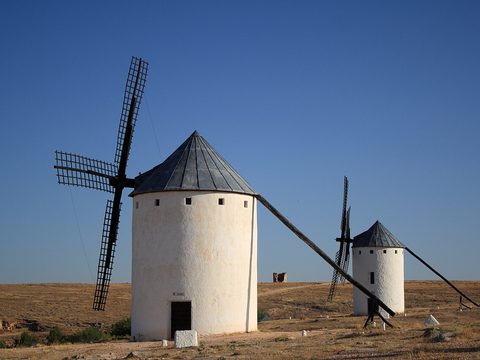 The old
_____ on the hill hasn't ground any grain since the 1950s, but its four sails still turn when the wind blows.
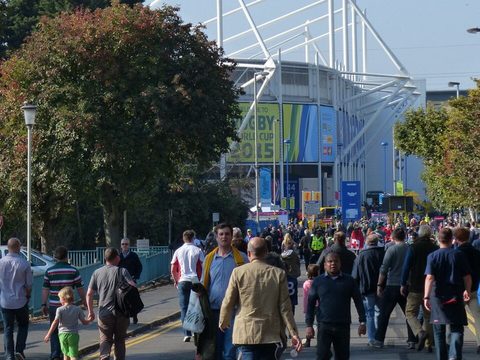 A
_____ of fans waited outside the stadium for hours, and when the team bus arrived, nobody could move.
Two Amsterdams
Watch the video first: six minutes, with captions on. Then read the story of the ten tips. Dotted words have a definition: hover or tap them. The audio button reads each paragraph aloud.
The presenter, a young man in a red checked shirt, starts with a warning: there are two Amsterdams. One is touristic, loud and welcoming; the other is local, respectful and intriguing.
Because he wanted the second one, he asked locals he trusted to help him build an insider list. It starts early: get up before everyone else and watch the old town wake up.
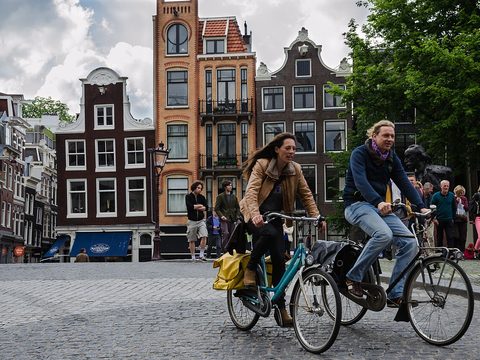
Sunday is best, because even at eight in the morning the city is still asleep. Two rules for cycling: never stop in the middle of the road, and use your bell.
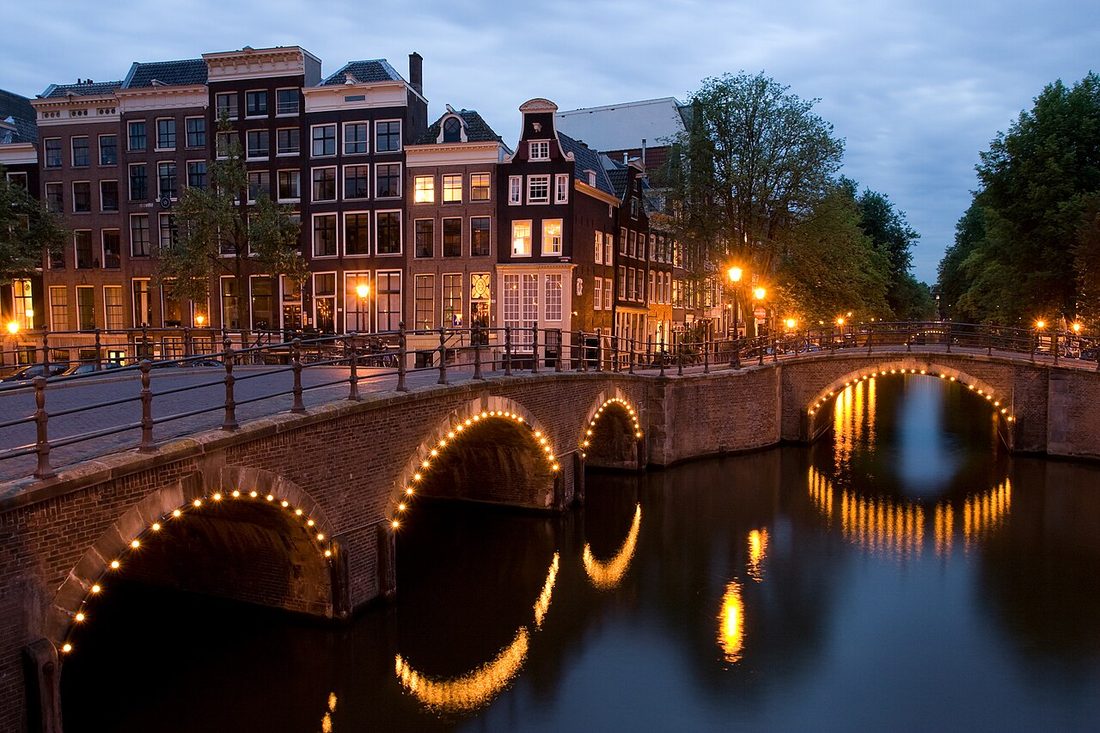
When the streets fill up, locals get off the road and into the canals. Skip the touristic boats, they say, and let a local guide pilot you through a maze of winding waterways.
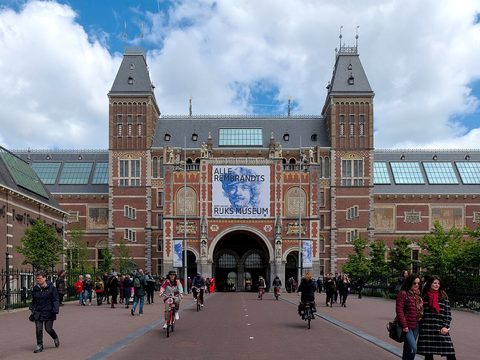
Art comes next. On Museumplein, the museum square, the Rijksmuseum, the Van Gogh Museum and the Stedelijk stand side by side; the locals call the last one "the bathtub".
Art also lives outside museums and galleries, on the walls of NDSM, a former boat factory. A free fifteen-minute ferry from Central Station takes you to its street art and cafés by the water.
All that walking makes you hungry, so the next stop is a stroopwafel, a famous Dutch delicacy, at one of the oldest stands on Albert Cuyp Market. After the sugar rush, go shopping.
Locals prefer smaller markets, like Ten Kate Market in the west, next to a food hall with over twenty stalls. When the sun comes out, they run to the parks; Vondelpark has a real Picasso.
The top three start with a cheese tasting: smell, structure, flavor, and a glass of Dutch wine. Number two is a twenty-minute train ride to Haarlem, a smaller, cuter Amsterdam with a windmill.
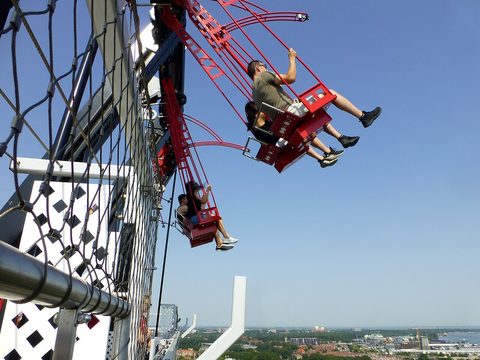
Number one is the Red Light District without the crowd: leave the main streets for a brewery in an alley, an old church, a Buddhist temple. The day ends on a rooftop swing, Europe's highest.
Multiple choice
The stamp shows the moment in the video. Click an answer and read why.

-
According to the presenter, why are there "two Amsterdams"? 00:02
"A touristic Amsterdam, loud and welcoming, and a local one, respectful and intriguing." The whole video is an invitation to the second one.
-
What did he do to build his list? 00:11
He asked trusted locals to help him create "an insider list": tips from people who live there, not from guidebooks or tour companies.
-
What is the first suggestion? 00:21
"Have the city for yourself and observe how the old town is slowly waking up in front of you." His local friend admits that waking up is the hardest part, but says it is well worth it.
-
Why does he recommend doing it on a Sunday? 00:36
"Even at 8:00 in the morning, the city will still be asleep." On a Sunday, the empty streets last longer.
-
What are the two rules for safe cycling in Amsterdam? 00:42
Two rules, and "that's it, you'll be fine". Nothing about helmets: very few people in Amsterdam wear one.
-
What does he say about boat rides on the canals? 00:52
"Skip the touristic offerings and trust the locals": a local guide pilots you through the maze of canals. Kids love it, and a sunset ride, he promises, becomes the highlight of the visit.
-
How do you get to NDSM? 01:57
"Just hop on one of the free ferries that will take you from the central station to NDSM in only 15 minutes." NDSM is across the water, in Amsterdam North.
-
Where does he eat his stroopwafel? 02:31
"Where else but here, on the Albert Cuyp Market, at this place, one of the oldest on the street." The food hall comes later, after the sugar rush.
-
What happens to the parks as soon as the sun shines? 03:20
"As soon as the sun shines through gray skies, and especially on the weekends, parks are full of people running away from the city bustle." For the Dutch, parks are a big part of the culture, not just a leafy retreat.
-
According to the local expert, what is Dutch cheese tasting all about? 03:57
"The smell, the structure, the flavor", and, in combination with some Dutch wine, "that's of course the best". Cheers.
-
How does the presenter describe Haarlem? 04:25
Twenty minutes by train, and you are "surrounded by quaint buildings, cobbled streets, and even a windmill. It's like Amsterdam got shrunk into a more manageable, cuter version of itself."
-
Which sentence best summarizes the video?
Ten tips handpicked by locals, "from early morning hours to long into the starry night". There is food in it, and there are museums, but the point is to experience the city like a local.
The countdown
The video counts down from ten to one: the "first suggestion" is number ten, and the last three are announced as "number three", "number two" and "number one". Watch again and write the number of each tip, from 1 to 10.
-
MuseumpleinVisit Amsterdam's masterpieces.
-
Ten Kate MarketExplore the local markets.
-
OosterdokskadeCruise the canals on a private boat.
-
Red Light DistrictSee the Red Light District without the crowd.
-
Abraham Kef'sTaste the finest Dutch cheese.
-
JordaanBike with the early birds.
-
HaarlemSpend a day out of town.
-
Albert Cuyp MarketHunt the yummiest stroopwafel.
-
VondelparkEnjoy Amsterdam's park life.
-
NDSMFeel the vibe of Amsterdam Noord.
In which place…?
Each statement is true about one of the ten tips. Choose the place, then read why. The last two questions are about the bonus tip at the end of the video.

-
There's a building with an unusual design.
The Stedelijk, the modern art museum, sits inside what looks like a giant bathtub. "At least that's how the locals call it."
-
There are several kinds of food.
Next to Ten Kate Market there is a food hall "filled with more than 20 international food stalls, from street food to Michelin-star concepts and vegan choices".
-
It's recommended to do this with local people, not tourist companies.
"When hopping on a boat, skip the touristic offerings and trust the locals." A local guide pilots the boat.
-
There is a restaurant that once was a church.
In central Haarlem, "a former church transformed into a modern brewery and restaurant". The Red Light District has an old church too, but it is still a church, visited for its artwork, peace and silence.
-
It's suggested to explore it in a different way.
Number one on the list: "explore the Red Light District differently". Don't follow the main streets; cross them, and go left where others go right.
-
It's best at a specific time of day, and getting up is the hardest part.
Early in the morning, before everyone else, ideally on a Sunday. "Waking up is the hardest part, but trust me, it's well worth it."
-
People can see a real Picasso sculpture.
Not in a museum: in the biggest park in Amsterdam, "full of attractions and art pieces. Here you will even find a real Picasso sculpture."
-
It's all about the smell, the structure and the flavor.
Number three, "taste some fine Dutch cheese": the local expert names the three things that matter, and adds a glass of Dutch wine.
-
One of the oldest stands on the street sells a famous Dutch delicacy.
"The one thing you have to try is the stroopwafel, a very famous Dutch delicacy", at one of the oldest places on Albert Cuyp Market. His personal favorite.
-
People can see an old factory.
"The NDSM area is this former boat factory", today an artist hotspot with local initiatives, cafés looking out over the water and street art everywhere.
-
The bonus tip: what does it suggest that visitors do at the end of the day? 05:17
"Get higher and observe this beautiful city from a rooftop." On a sunny day, a beer garden in Amsterdam East; in any weather, A'DAM Lookout in Amsterdam North. The oldest gay bar in town, worth a visit at night, is the tip just before the bonus.
-
What can brave visitors do at A'DAM Lookout for five euros extra? 05:37
"The view is unbeatable, but if you are a brave heart, pay an extra €5 for Europe's highest swing to peek over the edge."
Adjectives to describe cities
Four sentences from the video, eight adjectives. Read the note, match each adjective to its meaning, then choose the right adjective for each new sentence.

"Nice" says nothing. The presenter never calls Amsterdam nice: it is loud, welcoming, respectful, intriguing, picturesque. One precise adjective paints the picture; a vague one leaves it blank. Watch the endings, too: -ing describes the thing, so the city is intriguing and you are intrigued.
- a) "There are at least two Amsterdams for guests to explore: a touristic Amsterdam, loud and welcoming, and the local one, respectful and intriguing."
- b) "Slowly soak in the view of picturesque Amsterdam…"
- c) "Amazing street art everywhere."
- d) "City parks aren't just a leafy retreat but a big part of our culture."
- touristic is what the presenter says; in everyday American English, a place full of tourists is usually touristy, and it is not a compliment: The harbor is too touristy in July.
- welcoming, intriguing and amazing end in -ing because they describe what the place does to you. The person feels welcome, intrigued, amazed.
- leafy comes from leaf + -y, like hilly, rainy or sandy: full of that thing.
- picturesque is stronger than pretty: the place looks like a picture. Old streets, canals and squares are picturesque; a new shopping mall is not.
- respectful describes people and their behavior. A city is respectful when its people respect each other and their visitors.
-
The old town of Prague is so ___ that every corner looks like a postcard.
Every corner looks like a postcard, that is, like a picture: picturesque. Old towns are the classic example.
-
Rome in August is very ___: long lines everywhere, and menus in six languages.
Lines everywhere and menus in six languages mean tourists everywhere. In casual American English, you would probably say touristy.
-
Our neighborhood is ___, with big old trees along every street.
Big old trees along every street: full of leaves, leafy. The second half of the sentence gives it away.
-
The hosts were so ___ that we felt at home in five minutes.
They made you feel at home: welcoming. A person can be welcoming; a person cannot be picturesque.
-
Kyoto is ___: quiet temples next to neon streets, and I still don't understand how it works.
Something you find fascinating and don't fully understand is intriguing. The speaker is intrigued; the city is intriguing.
-
Downtown at rush hour is ___: horns, sirens and street music all at once.
Horns, sirens and music: a lot of sound, loud. The video uses it for the touristic Amsterdam.
-
The view from the top of the mountain was ___: I had never seen anything like it.
"I had never seen anything like it" is surprise and admiration: amazing. You were amazed by the view.
-
Visitors must be ___ inside the temple: quiet voices, no photos, shoes off.
Quiet voices, no photos and shoes off are signs of respect. The visitors are respectful; the temple is not asking them to be welcoming.
A city for each adjective
With a partner, or with me: think of a city, in Brazil or abroad, for each adjective, and say why it fits. Tap a card when you have found one.
Useful language
Talking points
Part A is about the video, Part B is about you, and Part C is for your opinions. Use the adjectives from Exercise 08 whenever you describe a place.

Useful language
A four-day itinerary in Amsterdam
100–150 words. Plan four days in Amsterdam: where you are going to stay, where you are going to eat and what you are going to visit, one paragraph per day. Use the tips from this lesson and do some research of your own. Describe at least two places with adjectives from Exercise 08. Then present your itinerary to the class.
My results
Check your score, then copy it and send it to your teacher on WhatsApp.

One job for this week. Describe your own neighborhood in three sentences, with three of the eight adjectives, and send them to me. No nice allowed.