The Class That Redrew the Balance
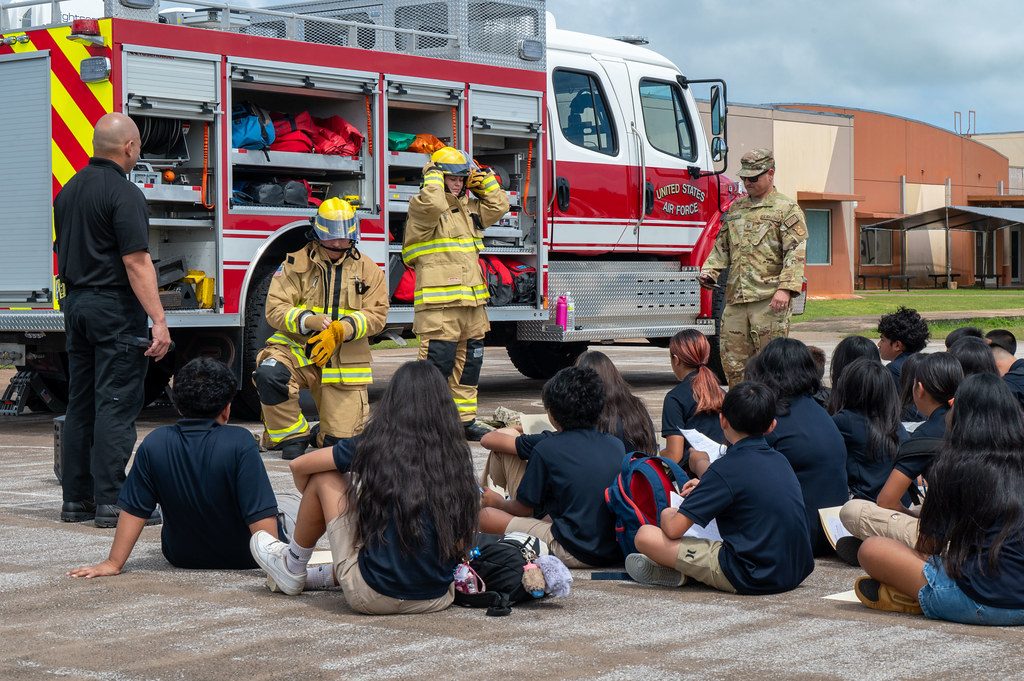
A teacher asks a class of young children to draw a firefighter, a surgeon and a fighter pilot. Then three visitors walk in, and the drawings suddenly look very different. A two-minute video about jobs and gender roles, and the small pieces that go in front of words: prefixes.
Warm-up
Four jobs, one card each, and a fifth card to compare them. Talk with a partner, or with me, and tap a card when you have answered it.

Every job has a shape in our heads. Today we test that shape: you describe four jobs, a class of children draws three, and then we see who walks through the door. Along the way, the small pieces that go in front of words: re-, over-, pre-, under-, pro- and auto-.
Useful language
Jobs and their tools
All eight come from the children's drawings in the video. Click a word, then click its definition. Correct pairs turn green. The audio button says the word.
Complete the sentences
Click a word in the bank, then click a gap. Click a filled gap to clear it. Read the whole sentence: the clues are all there.

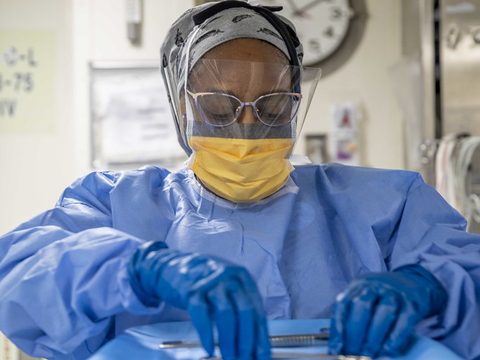 Before the operation, the
_____ washed her hands, put on a mask and gloves, and asked for the first instrument.
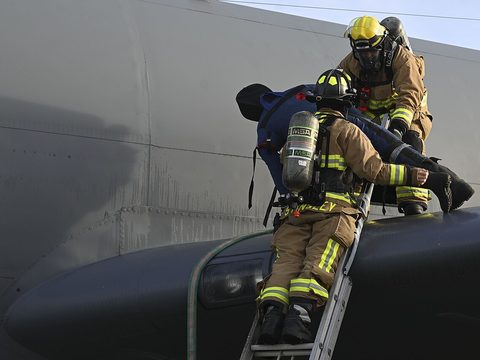 The
_____ climbed the ladder to the third floor and carried the old man out through the smoke.
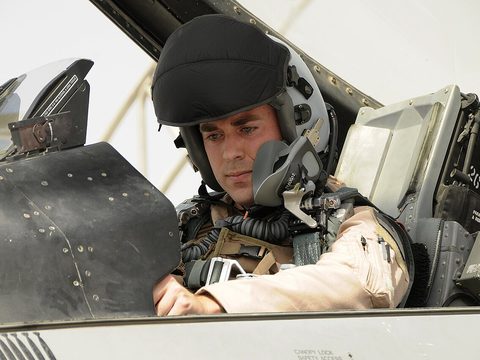 A
_____ has to stay calm at 900 miles an hour, so the training takes years and only a few people finish it.
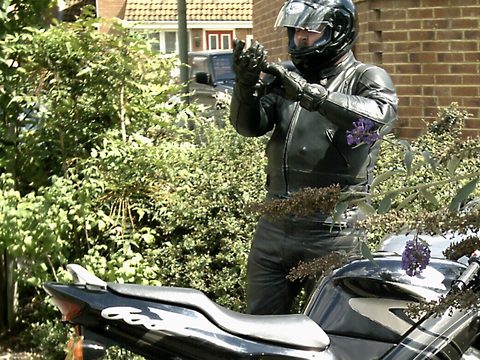 Put your
_____ on before you get on the motorcycle: if you fall, it is the only thing between your head and the road.
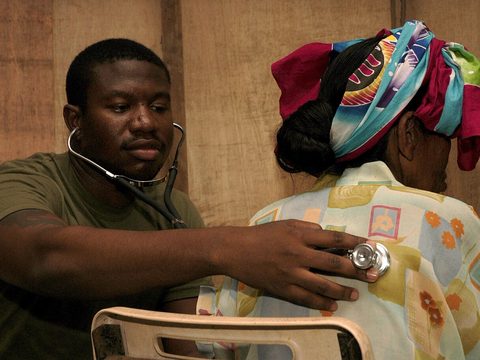 The doctor put the cold
_____ on my back and told me to breathe in and out slowly.
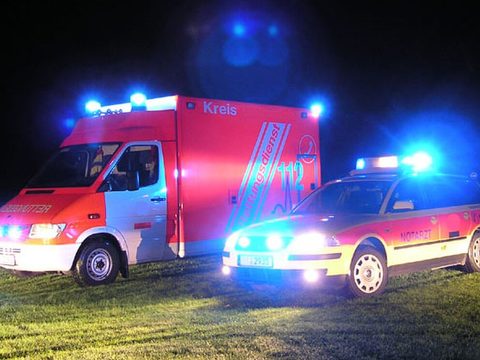 When the man collapsed in the street, someone called an
_____, and it arrived in six minutes with its siren on.
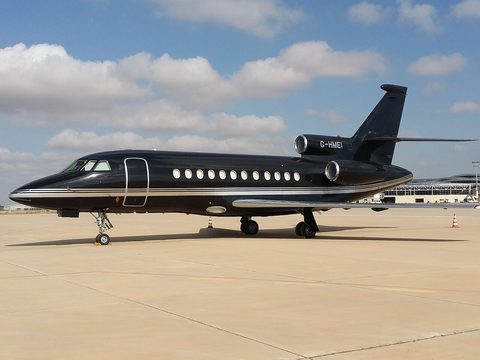 The private
_____ crossed the Atlantic in under six hours, faster than any car, train or ship could.
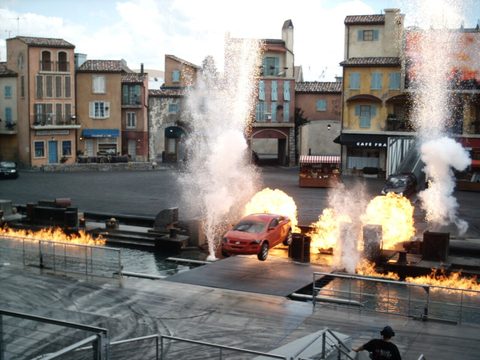 In that movie, the actor did every
_____ himself: he jumped from the roof and drove the car into the river.
Draw me a firefighter
Watch the video first: two minutes, with captions, and the accents are British. Then read the story, which retells the video in its own words. Tap a dotted word to see what it means.
One afternoon, in a classroom in England, a teacher gives a group of young children a drawing task: people doing different jobs. The first job on the list is a firefighter.
The children think about what a firefighter looks like and start to draw. They give their firefighters names: Gary, Stan, Simon. One is big and strong, and another has a big helmet on his head.
Next comes a surgeon. The children name him Jim Bob. He is a brain surgeon, he wears a stethoscope, he gives you medicine, and he even has his own ambulance.
The last job is a fighter pilot, with his jet plane. He rescues people, and he likes to do stunts in the air. In every description, the firefighter, the surgeon and the pilot are "he".
Then the teacher asks a question: who would like to meet these people for real? The children shout yes, the door opens, and three visitors in uniform walk in. The children gasp.
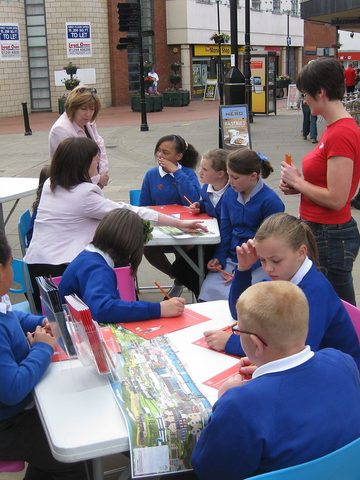
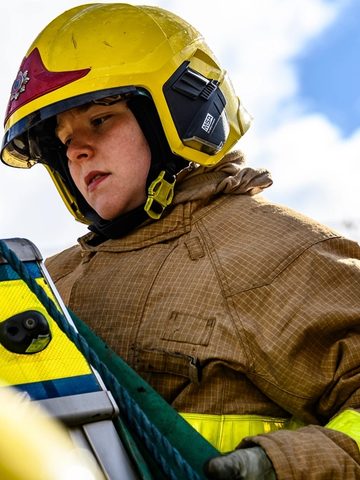
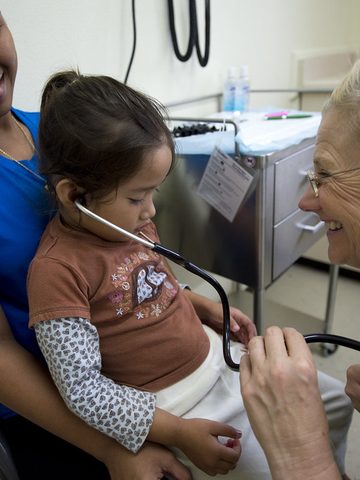
The first reaction is disbelief. "Fake!" says one child. "They're dressed up," says another. The three visitors are women, and nothing in the children's drawings had prepared them for that.
Then the visitors introduce themselves. Tamsin is a surgeon in the NHS, the British public health service. Lauren is a pilot in the Royal Air Force. Lacey is a firefighter in the London Fire Brigade.
Disbelief turns into curiosity. Who wants to learn how an operation works? Who wants to try the stethoscope? Soon a girl has it in her ears, listening, with a big smile on her face.
At the end, the video shows the numbers. Sixty-one of the children's pictures showed a man. Only five showed a woman. The class had drawn men almost every time.
That is why the video ends with a challenge: it's time to redraw the balance. If children meet a Firefighter Lacey early enough, the next drawing might look a little different.
Multiple choice
The stamp shows the moment in the video. Click an answer and read why.

-
What task does the teacher give the class? 00:02
"This afternoon we're going to draw people doing different jobs," the teacher says, and the first one is a firefighter. Nobody writes anything, and nobody draws a family.
-
What names do the children give their firefighters? 00:13
"What's your firefighter called?" Firefighter Gary, Firefighter Stan, Firefighter Simon. Jim Bob comes later, at 00:29: he is the surgeon.
-
How does one child describe his firefighter? 00:20
"He's big and strong," one boy says, and another adds a big helmet. Big, strong, brave: the children's firefighter is a classic action hero.
-
According to the children, what does the fighter pilot do? 00:46
"He rescues people," one child says, and "he likes to do stunts in the air and stuff." His jet plane appears at 00:43. The children are not sure what a fighter pilot really does, so they mix a rescue helicopter with an air show.
-
What does the teacher ask when the drawings are finished? 00:51
"Who would like to meet these people for real?" Everybody says yes. The question is the trap: the children are expecting three men.
-
What do the children say when the three visitors walk in? 01:06
"Fake!" "They're dressed up." The children think the women are wearing costumes, because in their heads a real firefighter, surgeon or pilot is a man. That is the moment the video was made for.
-
Where does Tamsin work? 01:08
"My name's Tamsin and I'm a surgeon in the NHS." The NHS is Britain's public health service. The Royal London Hospital is never mentioned.
-
Who is the pilot? 01:11
Lauren is the pilot, and she flies for the Royal Air Force, not for the London Fire Brigade. Lacey is the firefighter: the two names are easy to mix up, so listen twice.
-
And Lacey? 01:13
"My name's Lacey. I'm a firefighter in the London Fire Brigade." So the firefighter with the big helmet is Lacey, not Gary, Stan or Simon.
-
What happens after the introductions? 01:23
"Who wants to try my stethoscope?" The surgeon lets a girl put it in her ears: "Can you hear that?" "Yeah. It's really good." Just before, at 01:21, she asks who wants to know how to do an operation.
-
What do the numbers at the end of the video show? 01:35
The card at 01:35 says it in two lines: "61 pictures were drawn as men. 5 were drawn as women." Sixty-six drawings, five women. An earlier card, at 01:19, gives the reason for the whole experiment: children form their gender stereotypes between the ages of five and seven.
-
Which sentence best summarizes the story?
The drawing lesson and the visit are the two halves of one experiment: first the children show what they expect, then reality walks in. The video is not about drawing technique, and the visitors do not give a talk; they let the children try their tools.
Watching for detail
Watch the first minute again, until 00:56, and complete what the children and the teacher say. Type the missing word or words; the stamp shows the moment.
-
a"What's your ___ called?" 00:13
-
b"He's ___." 00:20
-
c"Next, we're going to draw a ___." 00:25
-
d"He's a ___ surgeon." 00:30
-
e"I think he would wear a ___." 00:32
-
f"He gives you ___." 00:36
-
g"That's his ___." 00:37
-
h"Okay. Next, we're going to draw a ___." 00:40
-
i"This is his ___." 00:43
-
j"He ___ people." 00:46
-
k"He likes to do ___ in the air and stuff." 00:48
-
l"Okay, now who would like to ___ these people for real?" 00:51
Prefixes: re-, over-, pre-, under-, pro-, auto-
Read the box, then answer the nine questions. Choose the option that fits.

A prefix is a small piece that goes in front of a word and changes its meaning. The video's last line has one: re-draw, draw again. Learn six today, and every new word that starts with one of them is already half known.
- re- = again: replay, reuse, reconnect. "It's time to redraw the balance."
- over- = too much: overeat, overcrowded, overpriced. The bus was overcrowded, so I waited for the next one.
- pre- = before: preview, prepay, preheat.
- under- = below, not enough: underwater, underline, underweight.
- pro- = forward, in favor of: proceed, propel, pro-democracy.
- auto- = self, by itself: autograph, automatic, autocorrect.
- Spelling: most words take no hyphen (replay, overeat). Use one when the base word starts with a capital letter or the two vowels would meet (pro-American, re-enter).
-
Your manager says, "Please reread the email before you send it." She wants you to…
Re- = again: reread is read again, just as the video's redraw is draw again. Before would be pre-, and too much would be over-.
-
The alarm rang at six, and you woke up at eight. You ___.
Two hours more than planned: over-, too much. Reslept and preslept are not words.
-
A ___ animal lived before written history.
Pre- = before. Dinosaurs are prehistoric: they lived before anybody could write history down.
-
"Nurses are underpaid." This means they…
Under- = below, not enough. Underpaid means paid below the level the work deserves. Paid before would be prepaid; paid twice would be overpaid.
-
Which word means "the story of your own life, written by you"?
Auto- = self. A biography is written by somebody else; an autobiography is written by the person themselves.
-
The pro- in progress and promote means…
Progress is movement forward, and to promote somebody is to move them forward, to a better position. Pro- also means "in favor of": pro-democracy.
-
The soup is ___: it needs five more minutes on the stove.
Five more minutes means it has not cooked enough: under-. Overcooked soup needs less time, not more, and precooked food was cooked before you bought it.
-
Prejudice is literally a judgment made ___ you know the facts.
Pre- + judice (from the Latin for "judgment"): a judgment made before. The children's "Fake!" was a small prejudice: they judged before they knew.
-
The city will ___ the old bridge after the flood.
The flood destroyed it, so the city will build it again: re-. Prebuild and underbuild do not exist in everyday English.
Add a prefix
Write the word on the left with one of the six prefixes: re-, over-, pre-, under-, pro- or auto-. Read the whole sentence: it tells you which one. Some items need an -ed ending.

-
VALUECaregivers are ___ in most countries: the work is essential, but the pay is low.
-
WORKHalf the team is ___ and exhausted; sixty hours a week is too much.
-
BIOGRAPHYIn her ___, the pilot tells the story of her own life, from her first flight to her last.
-
JUDICEDeciding that a woman can't be a firefighter before you see her work is pure ___.
-
FILEHer online ___ lists her job, her city and a photo, but not her age.
-
WRITEThe editor hated the first version of my article, so I had to ___ it from the beginning.
-
HISTORICThe paintings in this cave are ___: people made them thousands of years before anyone could write.
-
SLEEPI ___ this morning and missed the first bus.
-
PILOTOn long flights, the plane flies on ___ for hours while the pilots monitor the systems.
-
ESTIMATEDon't ___ her: she looks small, but she carries people out of burning buildings every week.
Talking point
Part A is about the video, Part B is about your world, and Part C is for your opinions. Five of the cards contain a word from Exercise 08; use it in your answer.
Useful language
Did the experiment work?
80–120 words. Describe the teacher's experiment in three or four sentences, then say whether it was successful and why. Use at least four words with a prefix from Exercise 07 (redraw, prejudice, undervalued, overworked, autobiography, preview…). Then read it to the class.

My results
Check your score, then copy it and send it to your teacher on WhatsApp.

One job for this week. Every day, catch one word with a prefix in the news or on your phone (rebuild, overpriced, preview, underpaid, promote, automatic) and say what the prefix adds. Seven words, six prefixes, and the balance is redrawn.