I Accidentally Became a Meme
A five-year-old smiles at a camera while a house burns behind her. Years later, the whole internet knows her face. The true story of Disaster Girl, told by the girl herself, and the tenses that tell any story from the past.
Warm-up
Three of the cards describe famous memes. Talk about them with a partner, or with me. Tap a card when you have answered it.

Every meme has a real person in it. Today one of them tells her own story, from a normal day in 2005 to the whole internet. Listen to how she tells it: that is the grammar of this class.
Useful language
Words from the story
All eight words are in today's story. Click a word, then click its definition. Correct pairs turn green. The audio button says the word.
Complete the sentences
Click a word in the bank, then click a gap. Click a filled gap to clear it. Each sentence has its own clues: only one word fits.

 When you hear a
_____ behind you on the road, move to the side and let the ambulance pass.
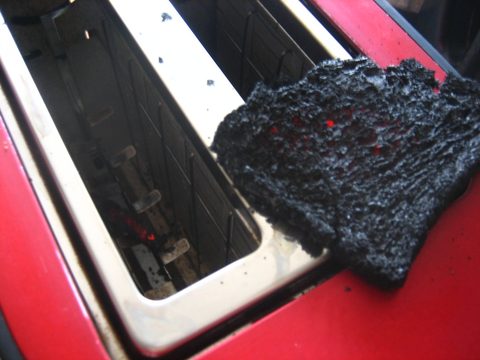 Nothing was on fire, but the
_____ from the burnt toast set off the alarm in the kitchen.
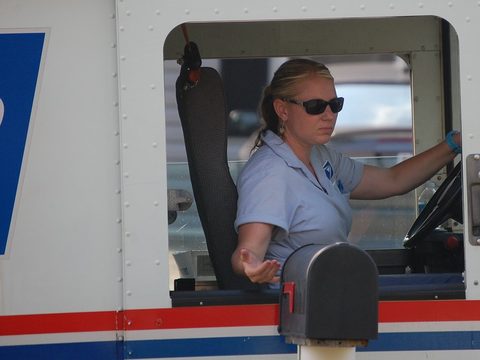 The letter isn't on the table. Check the
_____ outside; the mail carrier came by at ten.
 She buys the same fashion
_____ every month and keeps the old issues on a shelf.
 More than two hundred bakers entered the
_____, but only one cake won first prize.
 The flood was the worst natural
_____ in the region's history: it destroyed roads, bridges and thousands of homes.
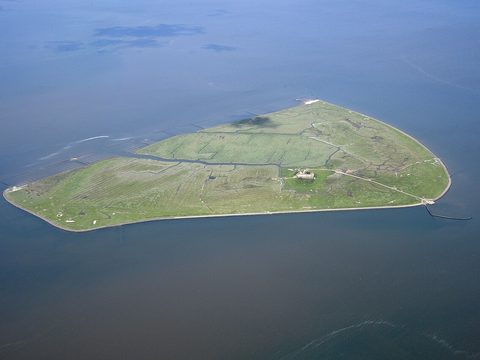 Instead of a fiction movie, we watched a two-hour
_____ about real families who live on small islands.
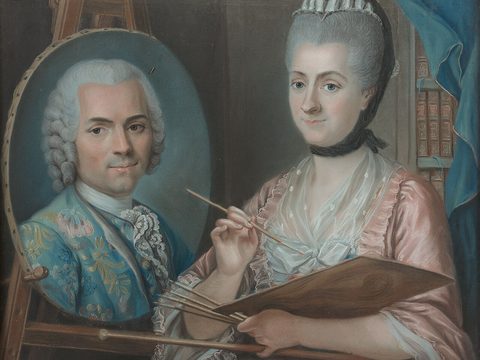 The painter needs three more sessions to finish my
_____; the eyes are still not right.
The smile behind the meme
Watch the video first: four minutes with Zoe Roth, the girl in the photo, with captions. Then read the story. The past continuous and the past perfect are in bold. Tap a dotted word to see what it means.
In 2005, Zoe Roth was five years old. It was a normal day: she was at home with her brother and her parents, and they were watching TV.
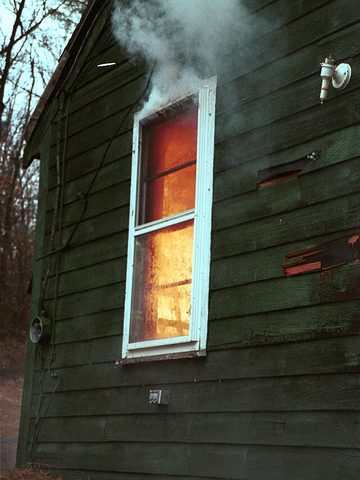

Suddenly, they heard fire sirens. They walked outside and saw thick smoke just two blocks away, so they went to check it out. Her dad had just gotten a new camera.
Down the road, a house was on fire. The family thought it was real, but the firefighters were not in a hurry: they were walking around calmly and even letting some kids fight the fire.
The firefighters were calm for a reason: the fire was a test burn. The owners had donated the house to the fire department to clear their land. Five-year-old Zoe did not know that.
Her dad was taking pictures of the burning house with the new camera. Then he asked Zoe to smile. She made her usual smile, which looked a little evil, and he took the photo.
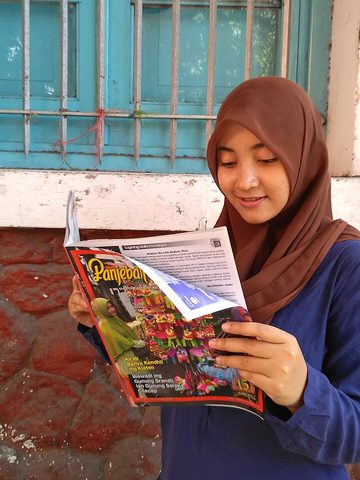
Three years later, in 2008, a magazine arrived in the family's mailbox. Zoe flipped through it and, halfway through, found her own picture. It was the first time she had ever seen it.
Her dad had entered the photo in a competition called Emotion Capture, in JPG Magazine, and it had won. Zoe took the magazine to school, showed everybody and told them she was famous.
Then the photo went online, and a trend started. People Photoshopped her picture onto different disasters, like a burning airship, dinosaurs going extinct and an atomic bomb. Later, they just added funny text.
Because of these edits, some strangers think she is evil or started the fire. A few edits make her uncomfortable, but she can't stop them, so she doesn't let them get to her.
Today the meme brings her fun moments. She has been flown out to make a documentary, her followers write mostly from Indonesia, Poland and Brazil, and somewhere in Portugal there is a portrait of her.
Multiple choice
The stamp shows the moment in the video. Click an answer and read why.

-
What was Zoe doing when the story began? 00:10
The story begins on a normal day in 2005: Zoe, five years old, at home with her brother Tristan and her parents, in front of the TV. Then the sirens changed everything.
-
What had Zoe's dad just gotten? 00:24
A small detail with a big result: without the new camera, there is no photo and no meme. Zoe mentions it right after the sirens, but had just gotten tells you he got it a little before that day.
-
Why weren't the firefighters in a hurry? 00:39
The owners wanted to clear their land, so they gave the house to the fire department for a test burn. That is why the firefighters were walking around and letting kids help. At the time, the family thought it was a real fire.
-
Did Zoe plan her famous smile? 01:00
Her dad said it was her turn and asked her to smile, and she made the face she always made. She says any photo of her from that time shows the same slightly evil smile.
-
How did Zoe first see the photo? 01:15
Three years after the fire, a magazine came in the mail, and halfway through it there was her picture. She had never seen the photo after her dad took it.
-
What was the name of the magazine? 01:29
Emotion Capture was the photo competition inside the magazine, and Disaster Girl is the name the internet gave Zoe later. In the video, the name sounds like "JPEG": that is how people say it.
-
What did the photo win? 01:32
Her dad submitted the picture to Emotion Capture, it won, and that is why it was printed in the magazine. Zoe was in second grade at the time.
-
What did Zoe do with the magazine? 01:45
She showed it to her classmates, to people in the halls and to all her teachers. She says she has never felt as famous as she did that day.
-
What was the first wave of the meme? 02:01
Her face stayed in the corner, and something horrible went behind it: the Hindenburg airship exploding, the dinosaurs going extinct, the atomic bomb. The funny text came later, in the second wave.
-
How does she deal with the edits she doesn't like? 02:52
A few hateful edits make her uncomfortable, and she would never approve of them. But she knows she can't really do anything about them, so she doesn't let them upset her.
-
Where are most of her Instagram followers from? 03:13
Most of her followers, comments and messages come from these three countries, and she has no idea why. Portugal is in the story for another reason: there is a portrait of her somewhere in the country.
-
The best title for this story would be:
Every paragraph is one step of the same story: a normal day, a smile, a magazine, a trend, and a woman who lives with it today. The text never teaches photography, and the firefighters leave the story after the fire.
Put the story in order
The story starts with this sentence: The story started in 2005. She was five years old. Then each group has three moments from the video, out of order. Write the letters in the order things happen, separated by spaces: for example, c a b. The stamp shows where the group starts in the video.
-
100:10
a · Suddenly, they heard fire sirens. They went outside and decided to check it out.
b · It was a normal day. She and her family were at home watching TV.
c · They started to walk down the road and saw that there was a house on fire. -
200:30
a · Zoe's dad was taking pictures of the house and asked her to smile. He took the picture.
b · Although there was a fire, the firefighters weren't really in a hurry to put it out.
c · The house on fire was, in reality, a donation for a test burn. -
301:15
a · After that day, Zoe felt really famous.
b · Zoe found her photo in the magazine. She had never seen it before. That was the first time.
c · Years later, in 2008, they got a magazine in their mailbox. -
402:01
a · An online trend started, and people were Photoshopping her picture onto different disasters.
b · Nowadays, she is pretty happy with the opportunities she got because of the photo.
c · Zoe felt a little uncomfortable with some of the memes, but she didn't let them affect her.
Narrative tenses

A story has three layers. The background, with was and the past continuous. The events, one after the other, with the past simple. And what had happened before, with the past perfect. Questions 1 to 5 use the sentences from Exercise 06; from question 6 on, it's your turn.
- The past of be: was / were, for states in the past. The weather was perfect. · We were tired after the trip.
- There was / there were: something existed in a place. There was a cat on the roof. · There were two cars in the parking lot.
- Past simple, regular (-ed): finished events, one after the other. We walked to the beach and played volleyball.
- Past simple, irregular: the same job, with a special form. I found my keys. · They went home early.
- Past continuous (was / were + -ing): an action in progress, often the background for a sudden event. It was raining, and people were running for the bus.
- Past perfect (had + past participle): an earlier past than the main story. I was hungry because I had skipped breakfast.
- Background, then event: She was walking home when it started to rain. The long action takes the past continuous; the short one, the past simple.
- Event, then what came before it: When Mom came home, we had already cleaned the kitchen. First the cleaning, then Mom.
- Signal words: while, as often go with the past continuous; suddenly, then, after that with the past simple; already, just, never, before, by the time with the past perfect.
-
"It was a normal day. She and her family were at home watching TV." Why the past continuous?
Watching TV is the background: it was going on when the sirens started. A habit would take used to or the past simple, and an action finished before the story would take the past perfect.
-
"The story started in 2005. She was five years old." What does was describe?
Being five is not an action: it is how things were at that time. For states, we use the past of be: was with I, he, she and it; were with you, we and they.
-
"Although there was a fire, the firefighters weren't really in a hurry." What does there was do here?
There was + a singular noun says that something existed: a fire. With a plural noun, it becomes there were: There were kids near the house.
-
"They started to walk down the road and saw that there was a house on fire." Which is true?
Two finished events, one after the other: past simple. Regular verbs add -ed (start → started); irregular verbs have their own form (see → saw), and you learn them one by one.
-
"Zoe found her photo in the magazine. She had never seen it before." What does the past perfect tell us?
The past perfect looks back from a moment in the past: up to the day of the magazine, zero times. Her dad took the photo in 2005, and she never saw it until 2008.
-
When you called me at eight last night, we ___ dinner, so I didn't answer the phone.
The call came in the middle of dinner: an action in progress takes the past continuous. With had, dinner would start after the call; with had had, dinner would already be over, and then there is no reason not to answer.
-
When we got to the movie theater, the movie ___, so we missed the first ten minutes.
We missed ten minutes, so the movie began before we arrived: an earlier past takes the past perfect. With started, it would begin as we arrived; with was starting, it would be just beginning. In both cases, we would miss nothing.
-
First, Zoe ___ the magazine to school. Then she ___ it to everybody.
First and then give two finished events, one after the other, in the main line of the story: past simple. Take is irregular (took), show is regular (showed).
-
By the time we got to the station, the train ___, so we took a taxi.
By the time + past simple marks a moment in the past; what was already complete at that moment takes the past perfect. Has left looks from now, and leaves is the present.
-
Which sentence is correct?
There were goes with a plural noun (three fire trucks); there was goes with a singular or uncountable one. The other two have the pair the wrong way around: there were many people, there was a strange smell.
-
Which sentence is WRONG?
The layers are upside down: the long background action (watching TV) takes the past continuous, and the sudden event (hearing the sirens) takes the past simple. Hear is also a verb we don't usually use in the continuous.
Another accidental meme: Hide the Pain Harold
A gray-haired man smiles at a laptop, but his eyes look sad. The internet calls him "Hide the Pain Harold". His real name is András Arató, and this is his story, in order. Write the verb on the left in the right form: read the whole sentence first, because the other verbs tell you the time.
-
takeWhile he was on vacation, András Arató ___ photos of his trip and uploading them to social media.
-
seeHis friends ___ the photos, and so did a professional photographer.
-
look forThe photographer contacted him and explained that he ___ a model for a photo shoot.
-
offerHe ___ Arató an invitation to a shoot, and Arató accepted it.
-
likeThe photographer took some photos, and both men ___ them, so more shoots followed: over a hundred stock photos in the end.
-
askMany internet users thought his smile looked fake. They didn't know that the photographer ___ him to smile.
-
becomeArató said later that during the shoot he ___ tired of smiling so much.
-
beAt first, Arató ___ unhappy about people adding funny text to his photos.
-
sayHe didn't enjoy the jokes, ___ that he was not really a "funny guy".
-
hopeHe ___ that everyone would forget about his photos.
-
not / happenBut that ___: users in the United States posted his photos first, and then they spread to Europe and the rest of the world.
-
acceptAfter six years, he finally ___ his meme status.
-
find outOne day, an internet user ___ Arató's true identity and emailed him.
-
there / beThe user explained that ___ many people online who believed Harold was not a real living person.
-
see · passiveArató posted a photo of himself holding a sign that said "I'm alive". Just a few hours later, the photo ___ by more than ten thousand people.
Talking points
Talk for about a minute about each card and ask your partner follow-up questions. Part A is about the video and the story, Part B about your life, Part C about memes and the people in them. Tell every story with the three layers: background, event, what had happened before.

Useful language
The story behind a meme
100–140 words. With a partner, choose one of these famous meme photos and invent the story behind it: a baby in a green shirt with a fist full of sand and a determined face; a toddler in a car seat giving a worried side glance; or a gray-haired man smiling at a laptop with sad eyes. Say what was happening (past continuous), what happened suddenly (past simple) and what had happened before (past perfect), and use there was at least once. Then write the story here.
Want the real stories? The baby and the toddler are in the same video series, with captions. Optional, and there are no questions: watch after you write, and compare.
My results
Check your score, then copy it and send it to your teacher on WhatsApp.

One job for this week. Every evening, tell one small story from your day in three sentences: what was happening, what happened, and what had happened before. "I was making coffee when the phone rang. My boss had forgotten the meeting." Out loud, in English.