The Nurse Who Inspired Her Children
Linda Udeagbala was a nurse for seventeen years, and four of her five children followed her into the profession. Her family tells her story in under three minutes. The words that describe a person's character, and five expressions from that story.
Warm-up
Ask and answer with a partner, or with me. Tap a card when you have answered it.

Today we meet a family of nurses, and the mother who started it all. On the way, we collect the words that describe a person's character, and five expressions her family uses to tell her story.
Useful language
Personality traits
Eight of the twelve adjectives from the class deck. Click a word, then click its definition. Correct pairs turn green. The audio button says the word.
Complete the sentences
Click a word in the bank, then click a gap. Click a filled gap to clear it. Each sentence has its own clues: only one word fits.

 One minute he is laughing, the next he refuses to speak to anyone: my teenage son is really
_____ these days.
 My brother worked two jobs for years so that I could go to college, and never bought anything for himself. Caring is not a strong enough word for him: he is truly
_____.
 My sister is really
_____: at every party, she is the first to introduce herself to people she has never met.
 The boys laughed at the little dog and threw stones at it just to see it run. How can anyone be so
_____?
 You can tell she is a
_____ person: she always notices when someone is upset and asks if they are okay.
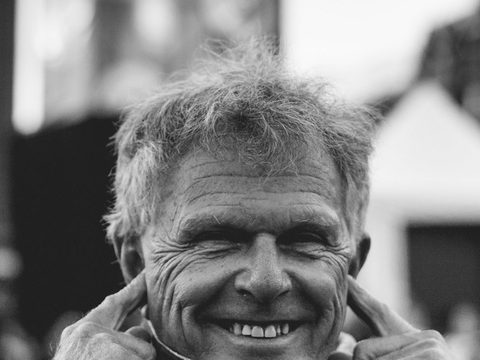 He never listens to other people's ideas because he is sure that nobody in the room is as smart as he is. I can't stand
_____ people.
 My grandfather was a
_____ man: even alone in his workshop, he was whistling, singing and smiling at nothing in particular.
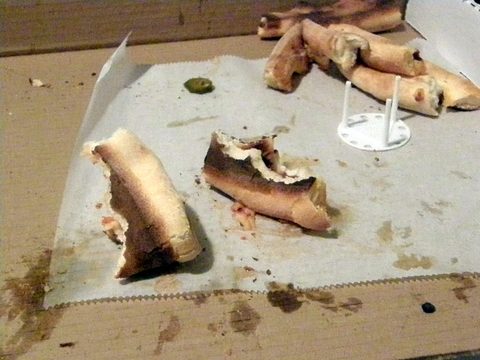 She didn't want to hurt her brother when she ate the whole pizza; she just never thinks about anyone but herself. She is so
_____.
Everything to us
Watch the video first: two minutes and fifty seconds, with captions. Linda's family speaks; the captions are automatic, so a word or two may be wrong. Then read the story. The three expressions in bold come back in Exercise 09. Tap a dotted word to see what it means.
Linda Udeagbala, from Croydon in south London, was a nurse. She worked for the NHS, Britain's public health service, for seventeen years, and she and her husband, Francis, had five children.
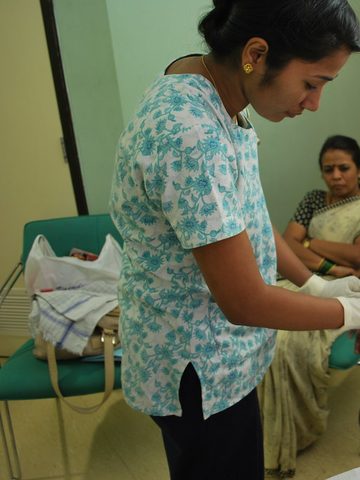
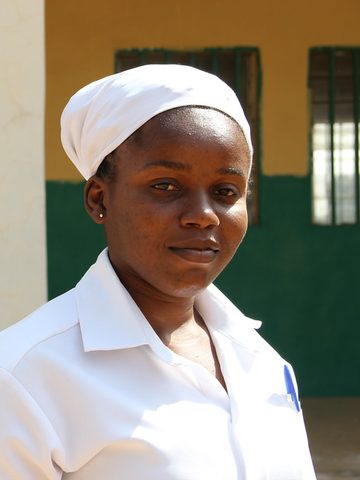
Nursing and raising five children at the same time made her a superhero in her children's eyes. She worked, she cooked, she was Mom, and no matter what happened, she stayed positive.
Growing up so close to her, the children learned where that strength came from: love. They describe her as kind, caring and loving, and say she had motherly love in abundance.
That love did not stay at home. Outgoing and joyful, she was happiest around people, and looking after them was not just her job: it was what she loved doing.
Her children could see how happy the work made her, and that got them thinking. If their mother loved it so much, why not follow suit? Maybe they would find happiness too.
So four of the five children followed in her footsteps and joined the NHS, with her massive encouragement. Their choice made their mother extremely happy. Only Marvin, the fifth, chose a different path.
With their father, Francis, a psychiatric nurse, they became a family of nurses. Cheyrinne trained as a midwife, Angelica as a pediatric nurse, and Gerard and Colin as mental health nurses.
Having so many nurses in the family gave one of them a moment to remember: seeing all their names together on the nurses' register. It was "one wonderful feeling."
Then Covid-19 arrived, and her family warned her she was at risk. But full of confidence and faith, and sure that nothing could happen to her, she carried on caring for people.
In February 2021, at sixty, she died with the virus, doing what she loved. Her children say she is still here in spirit, and they will carry on everything she gave them.
Multiple choice
The stamp shows the moment in the video. Questions without a stamp come from the BBC report, retold in the reading. Click an answer and read why.

-
Where did Linda work, and for how long?
Seventeen years in the NHS, Britain's public health service. Forty is the number of years she was married to Francis, and five is the number of her children.
-
Why did her children see her as a superhero? 00:15
"She's working, she was mom, she would cook." A superhero because she did everything at the same time, not because of one heroic moment.
-
Which three words do her children use to describe her? 00:04
"The embodiment of someone who was kind, caring, loving." At 01:04, two of them, caring and loving, come back, with two more: forgiving and selfless.
-
What did Linda like, according to her family? 00:41
"She likes to be with friends, and she liked a lot of company." Just before that, at 00:39, her family calls her outgoing and joyful.
-
What made the children think about becoming nurses? 01:47
"What if mother is so happy doing this thing and loving it? Why don't we follow suit? Maybe we find happiness as well." The idea came from her example, not from an order or a family rule.
-
How did Linda react when her children followed in her footsteps? 01:54
"With her massive encouragement, and that made her extremely happy." No worry and no silence: she pushed them forward.
-
How many of her five children work in health care?
Four: Cheyrinne, a midwife, Angelica, a pediatric nurse, and Gerard and Colin, both mental health nurses. In the video, one of them says "all followed in her footsteps", but the BBC report is exact: Marvin, the fifth, is self-employed.
-
What did one of the children love to see on the NMC register? 02:03
"Looking on the NMC register and just seeing all of our names there: one wonderful feeling." The NMC is the Nursing and Midwifery Council, which keeps the official list of nurses and midwives in the UK.
-
What did the family tell Linda during the pandemic, and how did she respond? 01:21
"All of us will try to say to her, this time you're at risk. But she was full of confidence. She believed in her faith." She felt that nothing could happen to her, so she kept caring for people.
-
What happened to Linda in the end?
She died with Covid-19 in February 2021, at sixty, after seventeen years in the health service. At 01:12, her family says she died doing what she loved: caring for people.
-
What do her children say they will carry on? 02:20
"She's given us so much hope and so many things that we will carry on in our own lives." She is not here physically, they say, but she is here in spirit.
-
Which sentence best summarizes the story?
One thread: why her children saw her as a hero, why they followed her into nursing, and what they carry on now. Nobody explains how to become a nurse, and Linda was a nurse, not a doctor.
Match the sentence halves
Five sentences from the video, cut in two. Match each beginning to its ending, then watch again and check: they come at 00:08, 00:15, 00:48, 01:54 and 02:11.
Positive or negative?
The twelve personality words from the class deck. Is each one a good thing or a bad thing to say about a person? Click, then read the meaning.

-
cruel
Someone who enjoys causing pain. A cruel joke hurts on purpose.
-
kind
Generous and friendly: a kind neighbor helps you carry your bags without being asked. The first of the three words in the video, at 00:06.
-
arrogant
Sure of being better than everyone else. Arrogant people rarely listen.
-
selfless
The opposite of selfish: other people's needs come before your own. Linda's family uses exactly this word at 01:08.
-
egocentric
Interested only in yourself: every conversation comes back to you. Close to the Portuguese word, and just as negative.
-
caring
Ready to look after others. In the video, it comes right between kind and loving.
-
selfish
Only your own wishes matter: the last slice of pizza, every time.
-
loving
Full of affection: hugs, warm words, attention. "That motherly love" is the example in the video.
-
angry
As a personality trait, an angry person is someone who gets mad all the time, not just once.
-
outgoing
Sociable, friendly, easy to talk to. "She's very outgoing and joyful," the video says at 00:39.
-
joyful
Full of joy, and showing it. Same sentence in the video, right after outgoing.
-
moody
Changing mood without warning: sunny at breakfast, storm by lunch.
Five jobs in the health service
The BBC report names five jobs in the health service, all in one family. Who does what?
-
Who takes care of a woman before, during and after the birth of her baby?
A midwife's work starts before the birth and continues after it. Cheyrinne is the midwife in the family.
-
A pediatric nurse works with…
Pediatrics is the branch of medicine for children. Angelica is the pediatric nurse; the BBC spells it the British way, paediatric.
-
Gerard and Colin are mental health nurses. Their patients have problems with…
Mental health: depression, anxiety and other illnesses of the mind, not of the body.
-
Francis, Linda's husband, is a psychiatric nurse. Which of his children work in the closest area to his?
Psychiatric nurse and mental health nurse are two names for very similar work: patients with illnesses of the mind. So the father and two of his sons are in the same area.
-
What does NHS stand for?
The National Health Service: the public health system of the United Kingdom, where Linda worked for seventeen years.
Five expressions from the story
Read the examples first, then match each expression to its meaning. The questions below show the difference between the two that look alike.

All five are in the video. Three of them are in bold in the reading, too. Two of them are about doing what someone else did, but they are not the same: one is a whole path, and the other is a single action. The examples tell you which is which.
- take someone's life (away) — Covid took her life away. · One of her children never thought Covid could take her life (00:20).
- follow in someone's footsteps — They followed in their mother's footsteps and became nurses.
- Why don't you…? / Why don't we…? — Why don't you come with us? · Why don't we order a pizza tonight?
- follow suit — In 2020, China started a lockdown, and other countries quickly followed suit.
- carry on (something) — You can never carry on as if nothing's happened. · She carried on working. · We carried on the conversation after dinner.
-
"Why don't we follow suit?" one of the children says. What did they mean? 01:50
Why don't we…? is a suggestion, not a real question. And follow suit means doing the same thing.
-
One of her children never thought Covid could take her life. What did this child never imagine? 00:20
Take someone's life = kill. It is a serious, respectful way to talk about a death, often used for illness, accidents and violence.
-
"He followed in his father's footsteps." What did he probably do?
The footsteps here are a career, not a walk and not a new address. The person who came first is usually older, often a parent.
-
"When the CEO started working from home, the managers ___ the same week."
They copied one action, right away. Footsteps is a whole path: they would want her career, which is not what the sentence says.
-
"The accident ___ two young lives."
Take a life = kill. News reports use it this way: The storm took three lives.
-
Which sentence makes a suggestion?
Why don't you…? = I suggest that you… . Why didn't you…? is a real question about the past, often a complaint.
-
Which sentence is correct?
Carry on with works as one block, and the noun comes after it: carry on with your work. With a verb, no with: carry on working.
-
"She wants to be a doctor like her mother. She wants to follow in her mother's ___."
The idiom is fixed: footsteps, plural. Footprints are marks in the sand.
Complete with the expression
The cue on the left gives the expression in its base form. Write it in the gap in the right form: tense, pronoun, and the small words it needs.
-
follow / footstepsMy mother was a lawyer, and last year I ___ and went to law school.
-
follow suitOne airline stopped charging for bags, and within a week its competitors ___.
-
carry onIt started to rain during the game, but the players ___ playing until the final whistle.
-
take / lifeMy uncle fought for months, and the doctors did everything they could, but the disease ___ in less than a year.
-
why / you / takeYou look exhausted. ___ a day off tomorrow?
-
why / we / giveThis restaurant is full. ___ the Italian place across the street a try?
-
carry onWhen their grandfather retired, the two sisters decided to ___ the business he had built.
-
follow / footstepsHer sister opened a bakery in 2015; three years later, she ___ and opened one too.
Talking points
Part A is about the video and the story, Part B about your own life and work, Part C about the ideas behind them. Talk for about a minute about each card and ask your partner follow-up questions.

Useful language
The person who inspires you
100–140 words. Describe the person who inspires you the most: who the person is, three adjectives that describe him or her, one story that shows that personality, and whether you would follow in that person's footsteps. Use at least four adjectives from Exercise 07 and two expressions from Exercise 09. Example: My grandmother was caring and selfless, and I followed in her footsteps.
My results
Check your score, then copy it and send it to your teacher on WhatsApp.

One job for this week. Every day, describe one person you met with two adjectives from the lesson, and say one thing you will carry on doing tomorrow. Thirty seconds, out loud, in English.